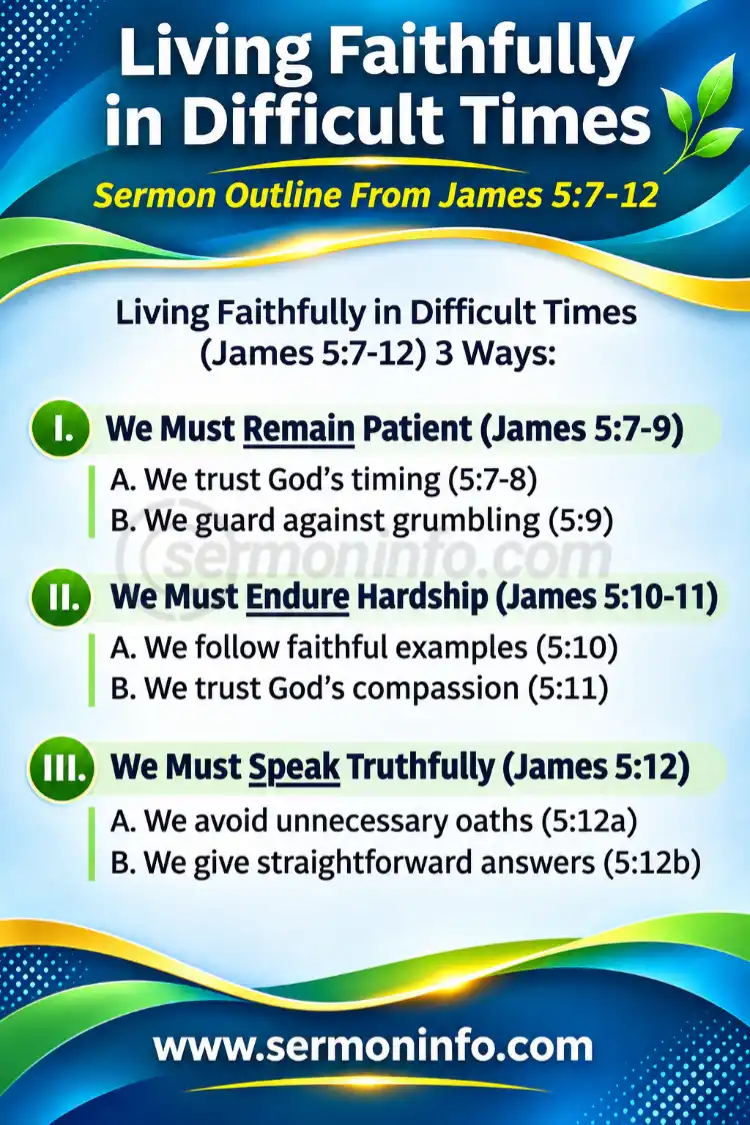
Sermon Outline From James 5:7-12 teaches that living faithfully in difficult times involves three responsibilities: remaining patient, enduring hardship, and speaking truthfully. Believers must trust God’s timing, follow faithful biblical examples, and demonstrate integrity in their words. These qualities reveal genuine faith and encourage consistent Christian living, even during suffering and uncertainty.

Key Takeaways – Sermon From James 5:7-12
- We Must Remain Patient (James 5:7-9): Trust God’s timing and remain patient as you await Christ’s return. Guard against complaining and strengthen your faith through life’s challenges.
- We Must Endure Hardship (James 5:10-11): Follow the faithful examples of the prophets and Job when facing suffering. Remember that God’s compassion and mercy remain constant, even during difficult trials.
- We Must Speak Truthfully (James 5:12): Honor God through honest words and trustworthy actions. Avoid unnecessary oaths, speak with integrity, and let your yes mean yes and your no mean no.
Sermon Outline From James 5:7-12
Life does not always go according to our plans. We face unexpected problems, painful disappointments, and trials that test our faith. Sometimes, we wonder why God allows difficulties to continue when we faithfully follow Him. Yet God never promises an easy life. Instead, He calls us to trust His wisdom, depend on His grace, and remain faithful through every trial. Difficult times may test our faith, but they also provide opportunities to demonstrate our trust in God.
In James 5:7-12, James provides three practical instructions for living faithfully during difficult times. First, we must remain patient and trust God’s timing as we await Christ’s return. Second, we must endure hardship by following faithful examples and trusting God’s compassion and mercy. Finally, we must speak truthfully and demonstrate integrity in our daily conversations. These principles remind us that faithfulness matters most when life becomes difficult.
1. We Must Remain Patient (James 5:7-9)
“Therefore be patient, brethren, until the coming of the Lord. See how the farmer waits for the precious fruit of the earth, waiting patiently for it until it receives the early and latter rain. You also be patient. Establish your hearts, for the coming of the Lord is at hand. Do not grumble against one another, brethren, lest you be condemned. Behold, the Judge is standing at the door! (James 5:7-9)
A. We Trust God’s Timing (James 5:7-8)
James compares our patience to a farmer who waits for the precious fruit of the earth. The farmer plants his seed and waits for the rains to nourish the soil. He cannot force the harvest to come early. Likewise, we must trust God’s timing when life becomes difficult. James reminds us that Christ’s return is drawing near.
Waiting on God does not mean doing nothing. James tells us to establish our hearts and remain strong in faith (James 5:8). We can continue praying, serving, and trusting God while we wait for His promises. When answers seem delayed, remember that God remains faithful. His timing is perfect, and His promises never fail.
B. We Guard Against Grumbling (James 5:9)
James warns believers against grumbling about one another because the Judge stands at the door. Difficult circumstances often test our patience and affect how we treat others. When life becomes frustrating, we may blame those closest to us. However, James reminds us that Christ will judge our attitudes and actions (James 5:9). Our suffering never excuses sinful behavior.
We must guard our hearts against bitterness, complaining, and resentment. Think about how easily frustration at work can affect our relationships at home. Instead of criticizing others, we should demonstrate patience, kindness, and forgiveness. Ephesians 4:32 encourages us to treat one another with kindness and compassion. Our patience with others reflects our trust in God. (Source Material: William MacDonald, Believer’s Bible Commentary, pp. 2240-2241)
This material provides some ideas and thoughts for a sermon outline from James 5:7-12 (Living Faithfully in Difficult Times).
2. We Must Endure Hardship (James 5:10-11)
“My brethren, take the prophets, who spoke in the name of the Lord, as an example of suffering and patience. Indeed we count them blessed who endure. You have heard of the perseverance of Job and seen the end intended by the Lord—that the Lord is very compassionate and merciful.” (James 5:10-11)
A. We Follow Faithful Examples (James 5:10)
James points to the prophets as examples of patience and endurance during suffering. These faithful servants proclaimed God’s Word despite facing rejection, opposition, and persecution. Jeremiah endured imprisonment, while Elijah faced threats against his life (Jeremiah 38:6; 1 Kings 19:2). Yet these men continued serving God through difficult circumstances. Their examples remind us that faithfulness does not guarantee an easy life.
Like the prophets, we may face opposition, disappointment, or hardship because of our faith. However, God calls us to remain faithful rather than give up when circumstances become difficult. Hebrews 12:1 encourages us to run our race with endurance. We honor God when we remain faithful, even when following Him comes at a personal cost.
B. We Trust God’s Compassion (James 5:11)
James reminds us of Job, who endured terrible suffering without understanding why these trials had entered his life. Job lost his possessions, children, and health, yet he continued seeking God. Although Job struggled with painful questions, he refused to abandon his faith. James 5:11 directs our attention to the Lord’s compassion and mercy, which Job experienced through God’s final dealings with him.
When suffering enters our lives, we may wonder whether God still cares about us. Yet Job’s experience reminds us that God’s compassion never disappears during hardship. Psalm 103:13 compares God’s compassion to a father’s tender care for his children. We may not understand every trial, but we can trust His loving character. God’s mercy remains certain, even when our circumstances seem uncertain. (Source Material: John MacArthur, The MacArthur Bible Commentary, pp. 1893-1895)
3. We Must Speak Truthfully (James 5:12)
“But above all, my brethren, do not swear, either by heaven or by earth or with any other oath. But let your “Yes” be “Yes,” and your “No,” “No,” lest you fall into judgment.” (James 5:12)
A. We Avoid Unnecessary Oaths (James 5:12a)
James warns believers against swearing by heaven, earth, or anything else to strengthen their promises. In those days, people sometimes used impressive oaths to convince others they were telling the truth. However, James reminds us that our words should reflect honesty without additional assurances. Jesus taught the same principle in Matthew 5:34-37. Our truthfulness should make unnecessary oaths needless.
Today, people sometimes say, “I swear I’m telling the truth,” hoping others will believe them. Yet our daily conduct should provide stronger evidence than impressive promises. When we consistently tell the truth, others learn they can trust our words. God wants our honesty to reflect our faith in Him, even when telling the truth comes at a cost.
B. We Give Straightforward Answers (James 5:12b)
James teaches believers to let their yes mean yes and their no mean no. Our answers should communicate honesty without confusion, exaggeration, or hidden intentions. This instruction reflects Jesus’ teaching in Matthew 5:37. When we speak truthfully, we demonstrate integrity and respect for others. James reminds us that God takes our words seriously and holds us accountable.
Think about the promises we make to our family, friends, or employers. Do we honor our commitments, or do we make excuses when keeping them becomes difficult? Proverbs 12:22 reminds us that lying lips offend the Lord, but faithful conduct pleases Him. Our words should match our actions because truthful speech demonstrates genuine faith in everyday life. (Source Material: John F. Walvoord and Roy B. Zuck, The Bible Knowledge Commentary: New Testament, pp. 833-834)
Conclusion
James reminds us that difficult times provide opportunities to demonstrate genuine faith in God. We must remain patient, trusting God’s timing as we await Christ’s return. We must endure hardship by following faithful examples and remembering the Lord’s compassion and mercy. Finally, we must speak truthfully, allowing our words to reflect honesty and integrity. Faithfulness means trusting God, even when life becomes difficult.
As we reflect on God’s Word, we must ask ourselves how faithfully we respond to life’s challenges. Are we trusting God’s timing, remaining faithful through suffering, and speaking truthfully in our daily conversations? Whatever difficulties we face, God calls us to trust His promises and obey His Word. Our circumstances may test our faith, but God’s grace will help us remain faithful.
Closing Prayer
Heavenly Father, we thank You for Your faithfulness, compassion, and mercy throughout every season of life. We know that difficult times can test our patience and challenge our faith. Help us to trust Your perfect timing and remain steadfast as we await our Savior’s return. When trials come, strengthen our hearts and remind us that You never abandon Your children. Teach us to follow the faithful examples of those who endured hardship while trusting Your promises.
Lord, help us to guard our hearts against complaining, bitterness, and discouragement. Give us the courage to endure suffering and the wisdom to speak truthfully in every situation. May our words and actions reflect Your grace, love, and holiness. Whatever challenges we face, remind us that Your compassion never fails and Your promises remain sure. Help us to live faithfully in difficult times, bringing honor and glory to Your name. In Jesus’ precious name, we pray. Amen.
Frequently Asked Questions (FAQ)
Q: What does James 5:7-12 teach us?
A: James 5:7-12 teaches believers to remain patient, endure hardship, and speak truthfully. We must trust God’s timing as we await Christ’s return, follow faithful examples during suffering, and demonstrate integrity in our words. These responsibilities help us live faithfully during difficult times.
Q: Why does James compare patience to a farmer?
A: James compares patience to a farmer who waits for the harvest (James 5:7-8). Just as farmers depend on seasonal rains, believers must trust God’s timing. This illustration encourages us to strengthen our hearts, remain faithful, and patiently await Christ’s promised return.
Q: Why does James warn against grumbling?
A: James warns against grumbling because complaining about others can damage relationships and reveal impatient hearts (James 5:9). He reminds believers that the Lord is the righteous Judge. Instead of blaming others during hardship, we should demonstrate patience, kindness, and trust in God’s justice.
Q: What does Job teach us about enduring suffering?
A: Job teaches us to persevere through suffering while trusting God’s compassion and mercy (James 5:11). Although Job experienced tremendous loss and hardship, he continued seeking God. His example reminds believers that difficult circumstances do not change God’s loving character or faithfulness.
Q: What does James 5:12 mean by letting your yes be yes?
A: James 5:12 teaches believers to speak honestly without depending on unnecessary oaths or exaggerated promises. Our yes should mean yes, and our no should mean no. God calls us to demonstrate integrity through truthful words, clear answers, and trustworthy conduct in everyday life.
BONUS: Why is perseverance essential during suffering?
Perseverance helps us remain faithful when suffering tests our trust in God. James 1:2–4 teaches that trials develop patience and spiritual maturity. As we continue obeying God, we grow stronger in faith. We may not understand our circumstances, but we can trust His character.
James 5:11 points to Job’s endurance and the Lord’s compassion. Job experienced deep sorrow, yet he continued turning toward God. Perseverance does not require us to hide our pain. It calls us to trust God through pain while we await Christ’s return.
BONUS: Why persevere in suffering without retaliation?
Retaliation seeks to repay hurt with hurt, but Jesus shows us another way. First Peter 2:23 explains that He neither threatened His enemies nor answered their insults with insults. Instead, He entrusted Himself to God, who judges righteously. We follow His example when we refuse personal revenge.
Romans 12:19 calls believers to leave vengeance with God. We can pursue justice, report wrongdoing, and seek protection without cultivating hatred. Refusing retaliation does not mean approving evil or remaining in danger. It means trusting God’s judgment while responding with truth, courage, and grace.
BONUS: Why is perseverance required even in times of injustice?
Injustice does not cancel our responsibility to obey God. James condemns wealthy oppressors in James 5:1–6, then urges believers toward patience in James 5:7–8. Their suffering did not escape God’s attention. They could remain faithful because the Lord would come and hold people accountable.
Perseverance keeps injustice from directing our conduct or destroying our hope. James 5:9 warns us against turning frustration toward one another. We can challenge wrongdoing through proper means while refusing bitterness and dishonesty. God calls us to faithful obedience even when justice seems slow.
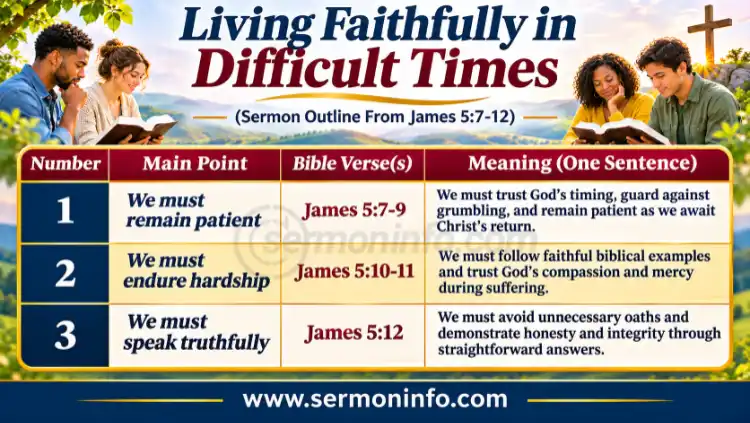
| Sermon Outline From James 5:7-12 – Sermons From James | |||
|---|---|---|---|
| Number | Main Point | Bible Verse | Meaning |
| 1 | We must remain patient | James 5:7-9 | We must trust God’s timing, guard against grumbling, and remain patient as we await Christ’s return. |
| 2 | We must endure hardship | James 5:10-11 | We must follow faithful biblical examples and trust God’s compassion and mercy during suffering. |
| 3 | We must speak truthfully | James 5:12 | We must avoid unnecessary oaths and demonstrate honesty and integrity through straightforward answers. |
Source Material
William MacDonald, Believer’s Bible Commentary, rev. ed. (Nashville: Thomas Nelson, 1995), 2240-2241
John MacArthur, The MacArthur Bible Commentary (Nashville: Thomas Nelson, 2005), 1893-1895
John F. Walvoord and Roy B. Zuck, eds., The Bible Knowledge Commentary: New Testament (Colorado Springs, CO: David C. Cook, 1985), 833-834