The coming of Jesus Christ (Sermon Outline From John 1:6–13) reveals Him as the true Light who entered the world. John testified about Him, yet many rejected Him. Those who receive Christ through faith become God’s children, and God alone gives them new spiritual life.

Key Takeaways – Sermon From John 1:6-13
- Point others to Jesus, the true light. John testified about the true Light so people would believe (John 1:6–8). Let your words and actions encourage others to trust the Savior.
- Respond to Jesus with personal faith. The world failed to recognize Jesus, and His own people largely rejected Him (John 1:9–11). Examine your response; religious knowledge cannot replace personal trust.
- Rest in God’s gift of new life. Those who receive Christ through faith become God’s children (John 1:12–13). Trust His grace, not your background or achievements, and face each day knowing you belong to Him.
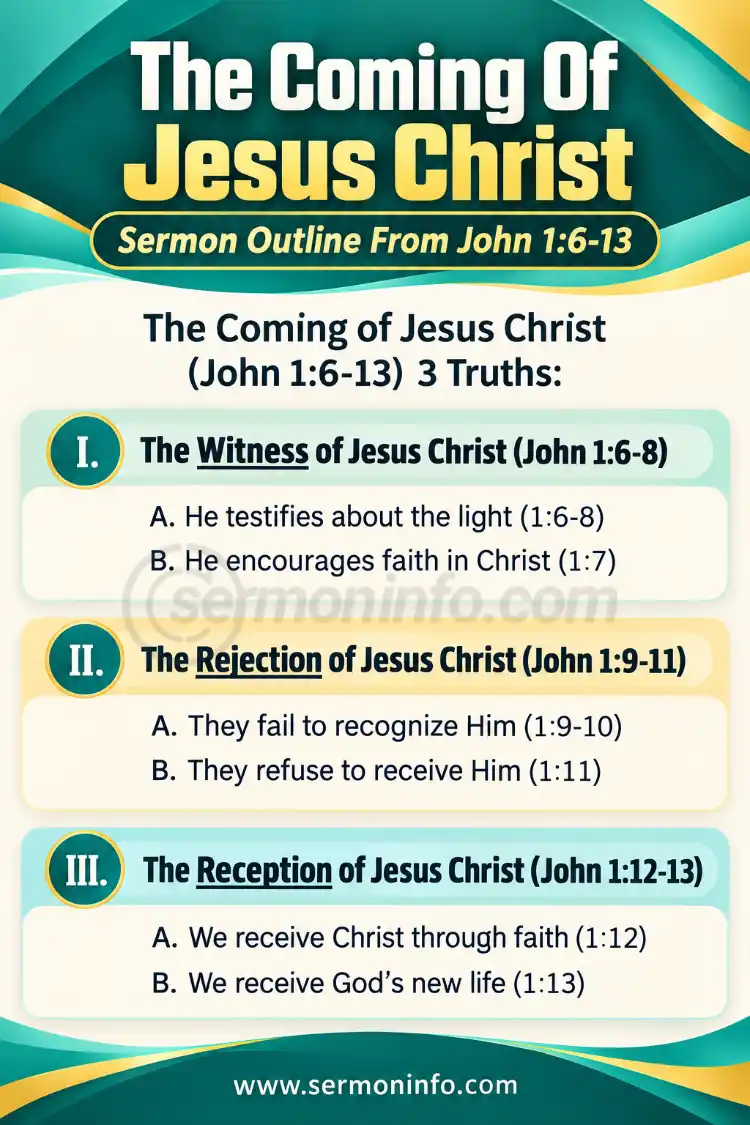
Sermon Outline From John 1:6-13
God alone gives spiritual birth, and this new life flows from His gracious work (John 1:13). We cannot earn it through good deeds or inherit it from our parents. What we cannot achieve, God freely provides through Christ. His grace gives us hope because our salvation rests upon His power, not our performance.
John 1:6–13 shows how people responded when Jesus Christ came into the world. We will consider John’s witness, the world’s rejection, and the reception of Christ through faith. As we explore these truths, consider your own response to Jesus. Let us begin with the man God sent to point others toward His Son.
1. The Witness of Jesus Christ (John 1:6–8)
“There was a man sent from God, whose name was John. This man came for a witness, to bear witness of the Light, that all through him might believe. 8 He was not that Light, but was sent to bear witness of that Light.” (John 1:6-8)
A. He testifies about the Light (John 1:6–8)
God sent John the Baptist to prepare people for Jesus, Israel’s promised Messiah. John understood his assignment: he would bear witness to the Light, not claim that place himself (John 1:6–8). Jesus alone reveals God and brings life into our spiritual darkness. Like a signpost, John directed attention beyond himself to the Savior.
We follow John’s example when our words and actions direct people toward Jesus. When someone praises your patience during hardship, explain how Christ sustains you. You do not need impressive words or a perfect life to speak about His goodness. Even through tears, you can help someone see the Savior who gives you hope.
B. He encourages faith in Christ (John 1:7)
John testified so people would believe in Jesus through his message (John 1:7). His goal reached beyond gaining listeners; he wanted them to trust the Savior. Later, John identified Jesus as God’s Lamb who takes away the world’s sin (John 1:29). His testimony directed sinners toward the One who could save them.
Our testimony should also help people trust Jesus, rather than simply admire our experiences. When a friend shares a painful struggle, listen carefully and explain why you trust Christ. Tell how His death and resurrection provide forgiveness and lasting hope. Trouble may continue, but everyone who receives Him becomes God’s child (John 1:12). (Source Material: William MacDonald, Believer’s Bible Commentary, pp. 1466-1467)
This material provides some ideas and thoughts for a sermon outline from John 1:6-13 (The Coming of Jesus Christ).
2. The Rejection of Jesus Christ (John 1:9–11)
“That was the true Light which gives light to every man coming into the world. He was in the world, and the world was made through Him, and the world did not know Him. He came to His own, and His own did not receive Him. (John 1:9-11)
A. They fail to recognize Him (John 1:9–10)
Jesus entered the world He created, yet people failed to recognize their Creator (John 1:10). The true Light stood among them, revealing God’s character and exposing sin. Their blindness reflected humanity’s sinful response to God, not any failure in Christ. Imagine a builder entering his own house while everyone treats him as a stranger.
We can know facts about Jesus yet overlook His authority over our daily lives. When trouble comes, fear can crowd His promises from our thoughts. Open His Word and remember who He is. The Creator who entered our world understands our weakness. We can trust Him even when we cannot understand our circumstances.
B. They refuse to receive Him (John 1:11)
Jesus came to His own people, Israel, whose Scriptures pointed toward the promised Messiah. Yet many refused to welcome Him (John 1:11). They possessed God’s promises but rejected the One who fulfilled them. This rejection was widespread, but not universal. John and other Jewish believers received Jesus, showing that some recognized their Messiah.
Religious knowledge and family traditions cannot replace personal faith in Jesus. We may hear Scripture regularly yet resist what Christ says. Ask yourself, “Do I welcome His truth when it challenges my plans?” If others reject you for following Him, remember that Jesus understands rejection. Keep trusting the Savior who welcomes everyone who receives Him (John 1:12). (Source Material: John MacArthur, The MacArthur Bible Commentary, pp. 1343-1346)
3. The Reception of Jesus Christ (John 1:12–13)
“But as many as received Him, to them He gave the right to become children of God, to those who believe in His name: who were born, not of blood, nor of the will of the flesh, nor of the will of man, but of God. (John 1:12-13)
A. We receive Christ through faith (John 1:12)
Although many rejected Jesus, others welcomed Him through faith. John explains that receiving Christ means believing in His name (John 1:12). We trust who He is: God’s Son and our Savior. Jesus grants believers the right to become God’s children. This privilege comes through His grace, never through our achievements.
Faith means more than admiring Jesus or agreeing with facts about Him. We entrust ourselves to the Savior who died for our sins and rose again. When hardship leaves you feeling forgotten, remember that you belong to God’s family. Your Father knows your needs. His care gives you reason to trust Him through uncertain days.
B. We receive God’s new life (John 1:13)
John makes clear that God alone gives this spiritual birth (John 1:13). Neither Jewish ancestry nor any other family heritage can make someone God’s child. Human effort and another person’s decision cannot produce new life. Jesus later tells Nicodemus that the Spirit gives spiritual birth (John 3:5–6). Salvation depends upon God’s gracious work.
Perhaps you grew up hearing Scripture, or perhaps you have only recently discovered its message. Either way, you need the new life God gives through Christ. You cannot earn it by improving yourself. Come to Jesus in faith. If you already belong to Him, remember that your struggles do not place you beyond your Father’s care. (Source Material: John F. Walvoord and Roy B. Zuck, The Bible Knowledge Commentary: New Testament, pp. 271-273)
Conclusion
John testified about Jesus, the true Light, so people would believe in Him. Yet the world failed to recognize its Creator, and many among His own people refused to receive Him. Those who receive Christ through faith become God’s children. God alone gives this new life through His gracious work (John 1:12–13).
As we read God’s Word, let us seek Christ, trust His promises, and obey His teaching. Biblical knowledge cannot replace personal faith in the Savior. If you have never received Him, turn from sin and trust Jesus today. As God’s children, we can rest in His care during hardship and point others toward His Son.
Closing Prayer
Heavenly Father, thank You for sending Jesus, the true Light, into our dark world. Forgive us when we resist Your Word or draw attention to ourselves. Help us point others toward Your Son, as John did. Open hearts to receive Christ through faith and experience the new life that You alone give.
Father, strengthen our trust when trials come, and remind us that we belong to Your family. Teach us to understand Your Word and obey it with willing hearts. Give us courage to share the gospel and compassion for those who need Your grace. May our words and actions honor Jesus, in whose name we pray. Amen.
Frequently Asked Questions (FAQ)
Q: What is the main message of John 1:6–13?
A: John 1:6–13 presents Jesus as the true Light whom John the Baptist proclaimed. Although the world rejected its Creator, those who receive Jesus through faith become God’s children. The passage highlights our response to Christ and God’s gracious work of giving spiritual life.
Q: Why did John the Baptist testify about Jesus?
A: God sent John the Baptist to testify about Jesus so people would believe through his message (John 1:6–8). John was not the Light; he directed attention toward Christ. His example teaches believers to help others trust Jesus rather than draw attention to themselves.
Q: What does “His own did not receive Him” mean?
A: John 1:11 explains that Jesus came to His own people, Israel, yet many refused to welcome Him. Their rejection contrasts with those who received Him through faith. The passage reminds us that religious heritage and knowledge cannot replace personally trusting Jesus as Savior.
Q: What does it mean to receive Jesus in John 1:12?
A: Receiving Jesus means believing in His name and trusting Him as Savior, rather than merely knowing facts about Him. John 1:12 connects this faith with becoming God’s children. We depend upon Christ for salvation instead of relying on family background, religious activity, or achievements.
Q: What does “born of God” mean in John 1:13?
A: “Born of God” means that God gives believers new spiritual life and brings them into His family. John 1:13 excludes ancestry and human power as sources of this birth. Neither our parents nor our efforts can produce it; new life comes from God’s grace.
BONUS: What does it mean that Jesus is the true Light in John 1:9?
Jesus is the true Light because He perfectly reveals God and exposes humanity’s spiritual darkness (John 1:9). John the Baptist pointed toward this Light, but Jesus Himself brings God’s truth and life. Unlike human teachers, Jesus speaks with divine authority and shows us the Father (John 14:9).
Christ’s light reveals our sin and directs us toward salvation. His coming does not mean everyone automatically receives eternal life; we must believe in Him (John 1:12). When confusion or hardship clouds your path, turn to His Word. Jesus promises that His followers will have the light of life (John 8:12).
BONUS: Why did Jesus Christ come into the world?
Jesus Christ came into the world to reveal the Father and save sinners (John 1:18; 1 Timothy 1:15). He fulfilled God’s promises concerning Israel’s Messiah and brought salvation to people from every nation. Through His death and resurrection, He provides forgiveness and eternal life for everyone who believes (John 3:16).
Jesus did more than offer an example of kindness; He gave His life to rescue us from sin (Mark 10:45). We cannot earn the salvation He provides. Turn from sin and trust His finished work. When trials come, remember that His purpose reaches beyond present comfort to eternal life with God.
BONUS: Are all people God’s children, or only believers?
God created every person in His image, so every human life carries dignity and worth (Genesis 1:27). However, John 1:12 reserves membership in God’s spiritual family for those who receive Christ through faith. Creation makes us His creatures; the new birth makes believers His children (John 1:13).
Neither Christian parents nor religious habits can give us this family relationship. God gives new life, and believers enjoy the privilege of calling Him Father (Romans 8:15–16). If you trust Christ, rest in your Father’s care. Treat others with compassion and invite them to know the Savior who welcomes all who believe.
BONUS: What does John 1:6–13 mean?
John 1:6–13 describes John the Baptist’s witness, humanity’s rejection of Jesus, and God’s gift of new life. God sent John to point people toward Jesus, the true Light. Although Jesus created the world, people failed to recognize Him. Many among His own people, Israel, also refused to receive Him.
Yet rejection does not end the passage. Jesus grants those who receive Him through faith the right to become God’s children (John 1:12). God alone produces this spiritual birth; ancestry and human effort cannot achieve it (John 1:13). The passage calls us to trust Christ and depend upon God’s saving grace.
BONUS: What are the main lessons learned from John 1:6–13?
John’s example teaches us to direct attention toward Jesus rather than ourselves (John 1:6–8). The world’s rejection warns us that people can encounter truth yet resist its message. Israel’s response also reminds us that religious privilege cannot replace personal faith. We must recognize Christ’s authority and respond to Him.
The passage also teaches that God gives believers a new identity as His children (John 1:12–13). We cannot earn this relationship through good works or inherit it from our parents. Therefore, trust His grace, rest in His fatherly care, and help others understand who Jesus is and why they need Him.
BONUS: How can Christians effectively witness for Christ today?
Christians witness effectively when they explain the gospel clearly and reflect Christ’s character in daily life. Like John, we should point people toward Jesus rather than ourselves (John 1:7). Explain that Jesus died for our sins and rose again (1 Corinthians 15:3–4). Invite people to turn from sin and trust Him.
Begin with prayer, listen carefully, and speak with gentleness and respect (1 Peter 3:15). A conversation with a neighbor or coworker can open an opportunity to share your faith. Describe how Christ has changed your life, but keep His saving work central. Trust God with the results; He gives spiritual life.
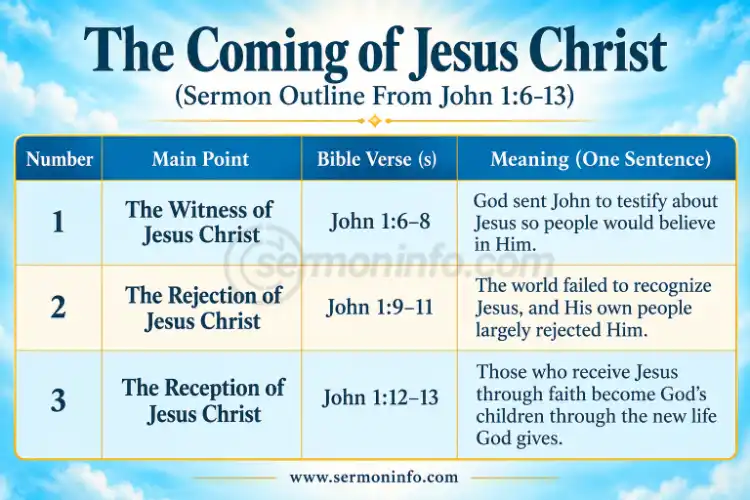
| Sermon Outline From John 1:6-13 – Sermons From John | |||
|---|---|---|---|
| Number | Main Point | Bible Verse | Meaning |
| 1 | The Witness of Jesus Christ | John 1:6–8 | God sent John to testify about Jesus so people would believe in Him. |
| 2 | The Rejection of Jesus Christ | John 1:9–11 | The world failed to recognize Jesus, and many among His own people rejected Him. |
| 3 | The Reception of Jesus Christ | John 1:12–13 | Those who receive Jesus through faith become God’s children through the new life God gives. |
Source Material
William MacDonald, Believer’s Bible Commentary, rev. ed. (Nashville: Thomas Nelson, 1995), 1466-1467
John MacArthur, The MacArthur Bible Commentary (Nashville: Thomas Nelson, 2005), 1343-1346
John F. Walvoord and Roy B. Zuck, eds., The Bible Knowledge Commentary: New Testament (Colorado Springs, CO: David C. Cook, 1985), 271-273