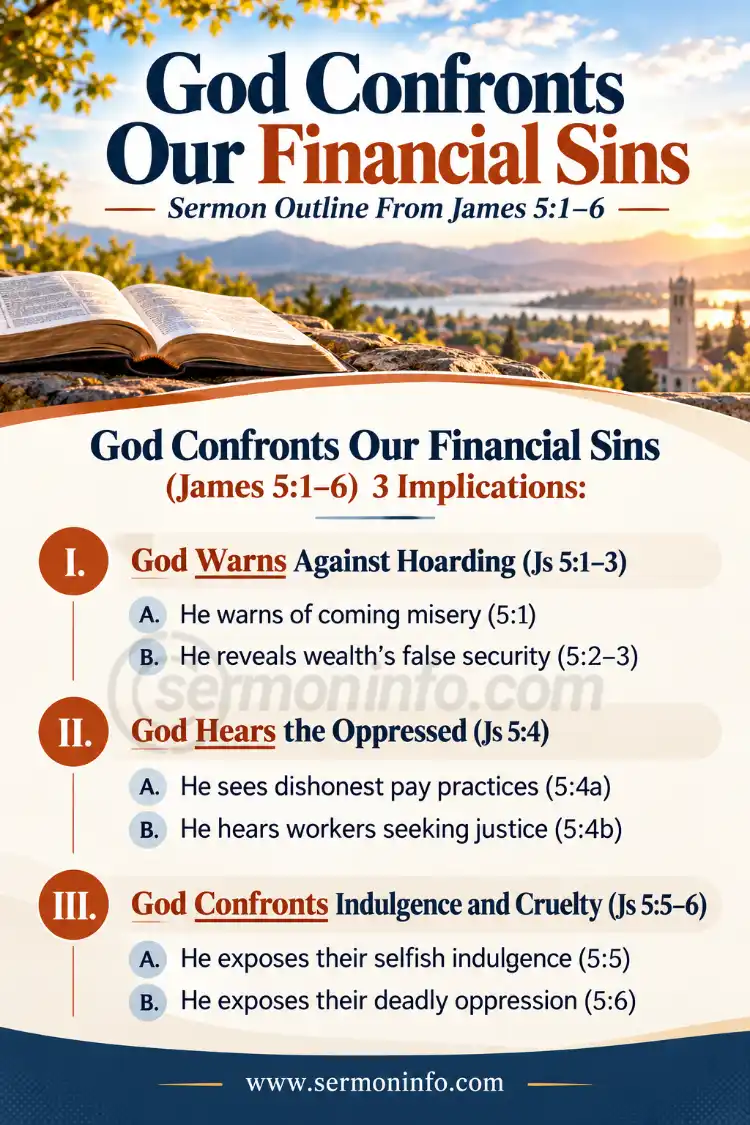
The Sermon Outline From James 5:1–6 reveals God’s judgment against wealthy oppressors who hoard riches, withhold wages, and mistreat innocent people. God condemns the sinful misuse of wealth, not wealth itself. He expects us to practice financial honesty, treat workers fairly, and manage our possessions responsibly.

Key Takeaways – Sermon From James 5:1-6
- God Warns Against Hoarding (James 5:1–3): Earthly wealth cannot protect us from God’s judgment. Trust God rather than riches, and use His blessings wisely.
- God Hears the Oppressed (James 5:4): God sees financial injustice and hears the cries of mistreated workers. Practice honesty, pay others fairly, and treat everyone with compassion.
- God Confronts Indulgence and Cruelty (James 5:5–6): God condemns selfish pleasure and the misuse of wealth and power. Reject greed, pursue righteousness, and use your resources to help others.
Sermon Outline From James 5:1-6
Money can provide comfort, security, and opportunities, but it can never guarantee lasting peace or happiness. Many people spend their lives building wealth, believing their possessions will protect them from life’s uncertainties. Yet riches can disappear overnight, and no amount of money can protect us from God’s judgment. Jesus reminds us that true life does not depend on our possessions (Luke 12:15).
In James 5:1–6, God confronts the dangers of trusting wealth and using it selfishly. James warns against hoarding riches, reveals God’s concern for oppressed workers, and condemns selfish indulgence and cruelty. These warnings challenge us to examine our hearts and how we handle money. As we explore this passage, let us discover why trusting God matters more than accumulating wealth.
1. God warns against hoarding (James 5:1–3)
“Come now, you rich, weep and howl for your miseries that are coming upon you! Your riches are corrupted, and your garments are moth-eaten. Your gold and silver are corroded, and their corrosion will be a witness against you and will eat your flesh like fire. You have heaped up treasure in the last days.” (James 5:1-3)
A. He warns of coming misery (James 5:1)
James begins with a serious warning to wealthy people who use their riches to oppress others. He calls them to weep and howl because God’s coming judgment will bring terrible misery. Their wealth cannot protect them from God’s righteous judgment. Their selfish actions will testify against them when God holds them accountable (James 5:1–3).
God does not condemn people simply because they possess wealth. He condemns those who trust riches and mistreat others. Today, we must examine how we earn, manage, and use our money. Are we honoring God or serving ourselves? Remember, every person must give an account to God (Romans 14:12).
B. He reveals wealth’s false security (James 5:2–3)
James describes riches that rot, garments that moths destroy, and gold and silver that corrode. These powerful pictures reveal how quickly earthly possessions lose their value. The wealth these oppressors treasured will become evidence against them. Their stored riches expose selfish hearts that trusted money rather than God (James 5:2–3).
Think about someone who spends a lifetime building wealth but neglects God and the needs of others. Jesus warned against this foolishness in the parable of the rich fool (Luke 12:16–21). Money can provide temporary comfort, but it cannot secure eternal life. Therefore, let us trust God and use His blessings to help others. (Source Material: William MacDonald, Believer’s Bible Commentary, pp. 2239-2240)
This material provides some ideas and thoughts for a sermon outline from James 5:1-6 (God Confronts Our Financial Sins).
2. God hears the oppressed (James 5:4)
“Indeed the wages of the laborers who mowed your fields, which you kept back by fraud, cry out; and the cries of the reapers have reached the ears of the Lord of Sabaoth.” (James 5:4)
A. He sees dishonest pay practices (James 5:4a)
James confronts wealthy landowners who cheat their workers by withholding their rightful wages. These laborers worked hard in the fields, but their employers refused to pay them fairly. God sees this injustice and holds those responsible accountable. Leviticus 19:13 reminds us that God forbids withholding a worker’s wages.
Imagine working long hours to support your family, only to discover that your employer refuses to pay you. Such dishonesty causes hardship and reveals a selfish heart. God expects employers to treat workers fairly and honor their agreements. Whether we employ others or manage money, we must practice honesty and integrity (Colossians 4:1).
B. He hears workers seeking justice (James 5:4b)
James reminds these wealthy oppressors that the cries of their workers have reached the Lord of hosts. This title reveals God’s supreme authority and power over all creation. Although powerful employers may ignore their workers, God hears every cry for justice. Their suffering never escapes His attention, and He will hold their oppressors accountable.
What comfort this truth brings when others treat us unfairly! Perhaps someone has cheated you, ignored your concerns, or taken advantage of your kindness. Remember, God hears your cries and understands your suffering. Psalm 34:17 reminds us that the Lord hears the righteous when they cry for help. Therefore, trust His justice and continue doing what is right. (Source Material: John MacArthur, The MacArthur Bible Commentary, pp. 1895-1896)
3. God confronts indulgence and cruelty (James 5:5–6)
“You have lived on the earth in pleasure and luxury; you have fattened your hearts as in a day of slaughter. You have condemned, you have murdered the just; he does not resist you.” (James 5:5-6)
A. He exposes their selfish indulgence (James 5:5)
James confronts wealthy oppressors who live in luxury while ignoring the suffering they cause others. They enjoy their riches without considering God’s coming judgment. James compares them to animals fattening themselves for slaughter. Their selfish pleasures only prepare them for the day when God will judge their sinful actions.
Imagine someone enjoying expensive meals while refusing to pay workers who struggle to feed their families. Such selfishness reveals a heart that values pleasure above people. God does not condemn wealth itself, but He condemns its sinful misuse. First Timothy 6:17 reminds us to trust God rather than uncertain riches.
B. He exposes their deadly oppression (James 5:6)
James exposes the terrible cruelty of wealthy oppressors who condemn and kill innocent people. These powerful individuals use their influence to destroy those who cannot defend themselves. Their victims offer no resistance, yet their oppressors continue their wicked actions. Proverbs 22:22–23 reminds us that the Lord will defend those who suffer injustice.
Today, people still misuse wealth and power to exploit those who cannot defend themselves. Perhaps you have suffered unfair treatment from someone who holds greater influence or authority. Remember, God sees every injustice and will judge those who practice evil. Therefore, trust His righteous judgment and follow Christ’s example of compassion and mercy (1 Peter 2:23). (Source Material: John F. Walvoord and Roy B. Zuck, The Bible Knowledge Commentary: New Testament, pp. 832-833)
Conclusion
James reminds us that wealth cannot provide lasting security or protect us from God’s judgment. God warns against hoarding riches, hears the cries of oppressed workers, and condemns selfish indulgence and cruelty. These warnings reveal God’s concern for justice, honesty, and compassion. He calls us to value people above possessions and trust Him rather than earthly wealth.
Therefore, let us examine our hearts and consider how we earn, manage, and use our money. Are we honoring God through generosity, fairness, and kindness toward others? Remember, everything we possess comes from God’s gracious hand (James 1:17). May we trust Christ, turn from selfish desires, and use God’s blessings to bring glory to His name.
Closing Prayer
Heavenly Father, thank You for reminding us that true security comes from You, not from earthly wealth. Forgive us when we trust money more than Your promises or place our desires above the needs of others. Help us reject greed, selfishness, and dishonesty. Teach us to manage Your blessings wisely and treat others with fairness, kindness, and compassion.
Lord, give us hearts that seek Your righteousness and hands that willingly help those in need. Strengthen those who suffer injustice, and remind them that You hear their cries. Guide us to live with integrity, practice generosity, and trust Your faithful provision. May our lives honor You and reflect the love and grace of Jesus Christ. In His precious name, we pray. Amen.
Frequently Asked Questions (FAQ)
Q: What is the main message of James 5:1–6?
A: James 5:1–6 warns against greed, dishonest wealth, and the oppression of others. God condemns those who hoard riches, cheat workers, and pursue selfish pleasures. This passage reminds believers to trust God, practice financial honesty, and treat others with fairness and compassion.
Q: Why does James warn the rich in James 5:1–3?
A: James warns wealthy oppressors because they trust their possessions while ignoring God’s judgment. Their decaying riches reveal the false security of earthly wealth. God calls them to mourn because their selfish actions will testify against them. True security comes from trusting God.
Q: Is being wealthy a sin according to the Bible?
A: The Bible does not condemn wealth itself. However, James 5:1–6 condemns greed, dishonest gain, and the selfish misuse of riches. First Timothy 6:17–19 encourages wealthy believers to trust God, practice generosity, and help others. God values faithful stewardship above earthly possessions.
Q: What does James 5:4 teach about treating workers fairly?
A: James 5:4 teaches that God sees employers who cheat workers by withholding their rightful wages. The Lord of hosts hears the cries of those who suffer financial injustice. God expects employers to practice honesty, pay workers fairly, and respect their dignity.
Q: How can Christians apply James 5:1–6 today?
A: Christians can apply James 5:1–6 by rejecting greed, practicing financial honesty, and showing compassion toward others. God calls believers to use their possessions responsibly and treat workers fairly. Instead of trusting earthly riches, we should depend on God’s provision and pursue righteousness.
BONUS: Who is James addressing in James 5:1–6?
James addresses wealthy oppressors who hoard riches, withhold wages, indulge themselves, and condemn innocent people. He announces God’s judgment against their wicked conduct (James 5:1–6). His rebuke targets their greed and injustice, rather than everyone who possesses wealth.
These warnings also challenge believers to examine their financial choices. God sees how we earn, save, and spend money. The passage comforts suffering believers because God hears their cries and will judge their oppressors. James then encourages patience until the Lord’s coming (James 5:7–8).
BONUS: When does saving money become sinful hoarding?
Saving money becomes sinful hoarding when greed controls our decisions and we accumulate wealth while neglecting our responsibilities toward others. Scripture commends wise preparation (Proverbs 21:20), but James condemns selfish accumulation that accompanies exploitation (James 5:2–4). The issue concerns our motives and conduct, not simply our savings balance.
Jesus warned against storing treasures for ourselves while failing to live richly toward God (Luke 12:16–21). Ask whether your saving serves responsible provision or feeds fear, pride, and endless desire. Honor God by meeting obligations, helping others, and practicing generosity (1 Timothy 6:17–19).
BONUS: What does the Lord of Sabaoth mean in James 5:4?
“Lord of Sabaoth” means “Lord of hosts” or “Lord of armies.” This title declares God’s sovereign power over heavenly armies. James uses it to show that exploited workers’ cries reach the Almighty, who has authority to judge their powerful oppressors (James 5:4).
Wealthy employers may silence workers, but they cannot silence God or escape His judgment. This title comforts those who suffer injustice and warns those who exploit others. We can bring our troubles to Him, pursue honest dealings, and trust His perfect justice.
BONUS: Is being wealthy a sin?
Being wealthy does not automatically make someone sinful. Scripture condemns loving money, trusting riches, and gaining wealth through injustice (1 Timothy 6:9–10, 17). James confronts wealthy people who hoard possessions, cheat workers, and harm innocent people (James 5:1–6). Their sinful attitudes and actions bring God’s judgment.
God calls wealthy believers to trust Him, practice generosity, and help others (1 Timothy 6:17–19). Examine how you earn money and what you treasure most. Use your resources to provide responsibly, meet genuine needs, and support gospel ministry. Wealth carries responsibility before God.
BONUS: Will those in authority today who inflict pain on the innocent receive judgment?
God will hold rulers and others in authority accountable for the suffering they unjustly cause. James 5:4–6 shows that God hears victims and sees oppression. Position, influence, and wealth cannot shield anyone from His justice. God will judge every deed, including hidden wrongdoing (Ecclesiastes 12:14).
God may bring consequences now, but final judgment remains certain even when earthly justice fails (Romans 2:5–6). Those who repent and trust Christ receive forgiveness through His sacrifice, though earthly consequences may remain. We should protect vulnerable people, pursue justice, and leave personal vengeance to God (Romans 12:19).
BONUS: Why is it that the sinful seem to accumulate wealth?
Some sinful people gain wealth through exploitation, while others prosper through ability, opportunity, or inheritance. Financial success does not prove God’s approval. Asaph struggled when he saw wicked people prosper (Psalm 73:3–12). His experience reminds us that outward comfort can hide spiritual poverty and coming judgment.
God helped Asaph understand their final outcome, which changed his perspective (Psalm 73:16–19). James likewise shows that hoarded riches cannot protect anyone from judgment (James 5:1–3). Resist envy when dishonest people prosper. Seek contentment, pursue honest work, and treasure your relationship with God above temporary wealth.
| Sermon Outline From James 5:1-6 – Sermons From James | |||
|---|---|---|---|
| Number | Main Point | Bible Verse | Meaning |
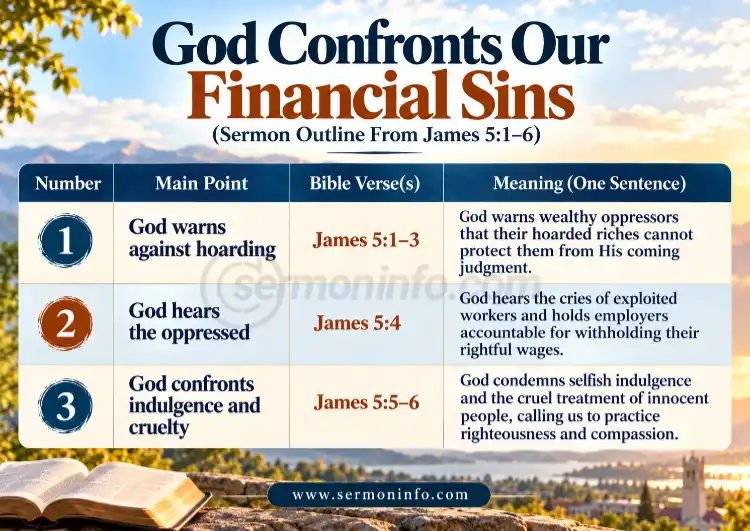
| 1 | God warns against hoarding | James 5:1–3 | God warns wealthy oppressors that their hoarded riches cannot protect them from His coming judgment. |
| 2 | God hears the oppressed | James 5:4 | God hears the cries of exploited workers and holds employers accountable for withholding their rightful wages. |
| 3 | God confronts indulgence and cruelty | James 5:5–6 | God condemns selfish indulgence and the cruel treatment of innocent people, calling us to practice righteousness and compassion. |
Source Material
William MacDonald, Believer’s Bible Commentary, rev. ed. (Nashville: Thomas Nelson, 1995), 2239-2240
John MacArthur, The MacArthur Bible Commentary (Nashville: Thomas Nelson, 2005), 1895-1896
John F. Walvoord and Roy B. Zuck, eds., The Bible Knowledge Commentary: New Testament (Colorado Springs, CO: David C. Cook, 1985), 832-833