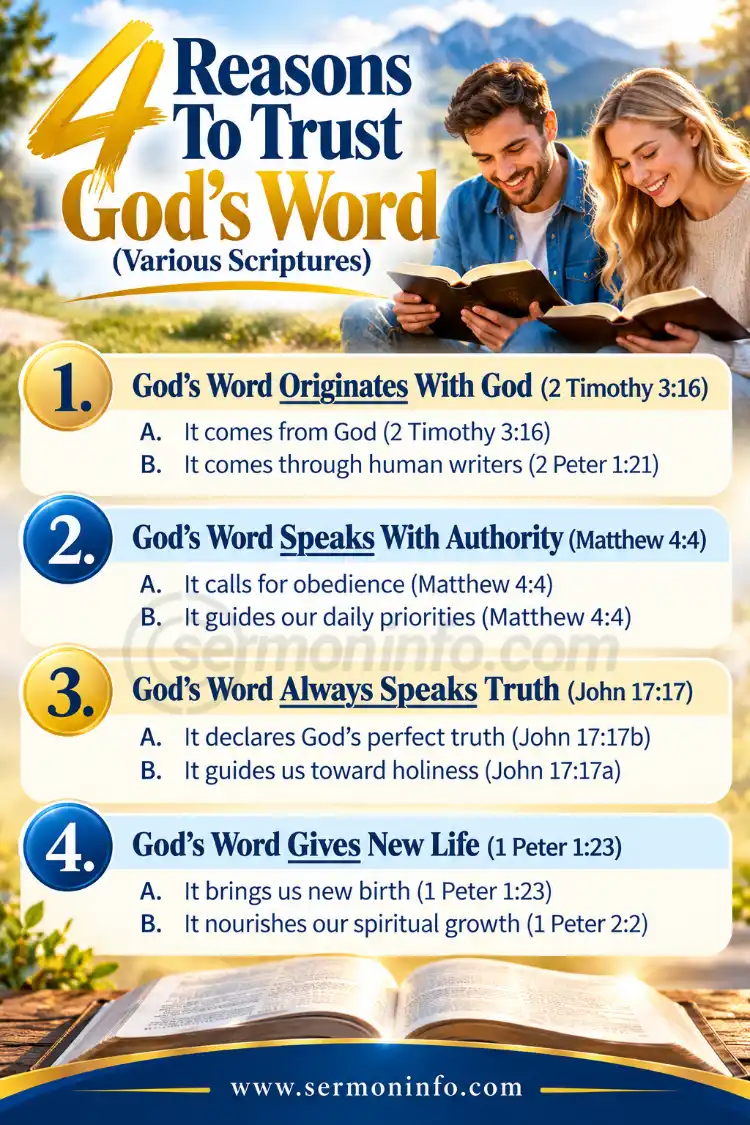
4 Reasons To Trust God’s Word because it comes from God, speaks with divine authority, reveals His unchanging truth, brings new life. Scripture provides a trustworthy foundation for faith and daily living. Through His Word, God brings new spiritual life to those who believe in Jesus Christ and strengthens believers as they grow in faith and obedience.

Key Takeaways – 4 Reasons To Trust God’s Word
- God’s Word Originates With God (2 Timothy 3:16): Scripture comes from God through human writers guided by the Holy Spirit. We can trust the Bible because God Himself stands behind its message.
- God’s Word Speaks With Authority (Matthew 4:4): Scripture teaches us to trust and obey God’s commands above our personal desires. We honor God when we allow His Word to guide our daily choices and priorities.
- God’s Word Always Speaks Truth (John 17:17): Scripture reveals God’s perfect and unchanging truth. As we read and obey His Word, God shapes our character and helps us grow in holiness.
- God’s Word Gives New Life (1 Peter 1:23): God uses the gospel to bring new spiritual life through faith in Jesus Christ. His Word also strengthens our faith and helps us grow toward spiritual maturity.
4 Reasons To Trust God’s Word
People have many opinions about life, faith, and what really matters. Yet human wisdom changes, popular ideas come and go, and even trusted voices sometimes fail us. So, where can we find truth that never changes? God’s Word provides the answer. Unlike human opinions, Scripture comes from God and speaks with truth and authority. We can trust His Word because God Himself stands behind every promise.
Today, we will consider four important reasons why we can trust God’s Word. We will discover its divine origin, its authority, its perfect truth, and its power to give new life. These truths remind us that Scripture deserves more than our attention. It deserves our trust and obedience. So, let’s consider why God’s Word remains our sure foundation for faith and everyday living.
1. God’s Word Originates With God (2 Timothy 3:16)
“All Scripture is given by inspiration of God, and is profitable for doctrine, for reproof, for correction, for instruction in righteousness.” (2 Timothy 3:16)
A. It comes from God (2 Timothy 3:16)
Paul reminds Timothy that “All Scripture is given by inspiration of God” (2 Timothy 3:16). The word inspiration means that God breathed out Scripture. Although human writers recorded its words, God Himself stands behind its message. Therefore, we can trust the Bible because its truth comes from the God who cannot lie (Titus 1:2).
Think about what this means for us today. When we open our Bibles, we encounter more than human wisdom or religious opinions. We hear God’s truth speaking into our lives. When difficulties arise and answers seem uncertain, we can turn to Scripture with confidence. The God who gave us His Word remains faithful to every promise.
B. It comes through human writers (2 Peter 1:21)
Peter explains that holy men of God spoke as the Holy Spirit moved them (2 Peter 1:21). God used human writers with different backgrounds, personalities, and experiences to communicate His message. Yet the Holy Spirit guided them so they faithfully recorded what God intended. Scripture carries divine authority because God directed its message through these human instruments.
Consider how God used Moses, David, Isaiah, and Paul to communicate His truth across different generations. Each writer served God’s purpose, yet Scripture presents one unfolding message of redemption through Jesus Christ. This reminds us that God’s Word remains trustworthy despite the passing of centuries. We can confidently build our faith and daily decisions upon its truth. (Source Material: John MacArthur and Richard Mayhue, eds., Biblical Doctrine: A Systematic Summary of Bible Truth (Wheaton, IL: Crossway, 2017), 69–126)
This material provides some ideas and thoughts for a message outline about trusting God’s word (4 Reasons To Trust God’s Word).
2. God’s Word Speaks With Authority (Matthew 4:4)
“But He answered and said, ‘It is written, Man shall not live by bread alone, but by every word that proceeds from the mouth of God.'” (Matthew 4:4)
A. It calls for obedience (Matthew 4:4)
When Satan tempted Jesus in the wilderness, Jesus answered with the authority of Scripture. He declared, “Man shall not live by bread alone” (Matthew 4:4). Although Jesus had fasted forty days, He refused to satisfy His hunger outside His Father’s will. His example reminds us that God’s Word deserves our complete trust and obedience.
We face similar choices whenever our desires conflict with God’s commands. We may feel tempted to compromise our convictions, follow popular opinions, or take an easier path. Yet Jesus reminds us that obedience to God’s Word matters more than satisfying our immediate desires. When we trust His authority, we choose what pleases Him rather than what feels convenient.
B. It guides our daily priorities (Matthew 4:4)
Jesus taught that life requires more than physical food. We also need every word that proceeds from God’s mouth (Matthew 4:4). Our daily responsibilities matter, but they must never replace our devotion to God. Proverbs 3:5–6 encourages us to trust the Lord wholeheartedly and acknowledge Him in all our ways. His wisdom should guide our priorities.
Think about how easily work, family responsibilities, and financial pressures can fill our days. These concerns deserve attention, but they should never push God’s Word aside. When we begin each day seeking His wisdom, we learn to make better choices. Even during difficult times, we can trust God to direct our paths as we follow His Word. (Source Material: John MacArthur and Richard Mayhue, eds., Biblical Doctrine: A Systematic Summary of Bible Truth (Wheaton, IL: Crossway, 2017), 69–126)
3. God’s Word Always Speaks Truth (John 17:17)
“Sanctify them by Your truth. Your word is truth.” (John 17:17)
A. It declares God’s perfect truth (John 17:17b)
As Jesus prayed for His disciples, He declared, “Your word is truth” (John 17:17). Jesus knew His disciples would face opposition, confusion, and spiritual challenges. They needed a trustworthy foundation for their faith. God’s Word provides that foundation because His truth never changes. Unlike human opinions, Scripture communicates the perfect truth of our faithful God.
We live in a world where people constantly challenge what is true. Popular opinions change, cultural values shift, and human wisdom often fails. Yet God’s Word remains trustworthy through every generation. Psalm 119:160 reminds us that the entirety of God’s Word is truth. When uncertainty surrounds us, we can confidently build our lives upon His unchanging promises.
B. It guides us toward holiness (John 17:17a)
Jesus prayed, “Sanctify them by Your truth” (John 17:17). He wanted His disciples to grow in holiness as they served Him in a hostile world. God’s Word plays a vital role in this process. As we read, understand, and obey Scripture, the Holy Spirit uses its truth to shape our character and guide our conduct.
Think about how a mirror reveals things we cannot see without its reflection. God’s Word works similarly by exposing sinful attitudes, selfish desires, and wrong choices. James 1:22–25 encourages us to become doers of the Word rather than hearers only. As we respond with obedience, God helps us grow in holiness and reflect Christ in everyday life. (Source Material: Wayne A. Grudem, Systematic Theology: An Introduction to Biblical Doctrine, 2nd ed. (Grand Rapids, MI: Zondervan Academic, 2020), 47–138)
4. God’s Word Gives New Life (1 Peter 1:23)
“Having been born again, not of corruptible seed but incorruptible, through the word of God which lives and abides forever.” (1 Peter 1:23)
A. It brings us new birth (1 Peter 1:23)
Peter reminds believers that God gives them new birth through His living and enduring Word (1 Peter 1:23). This new birth comes through the gospel message, which reveals Jesus Christ as our Savior. Through His death and resurrection, Jesus provides forgiveness and eternal life. When we place our faith in Him, God gives us new spiritual life.
Think about how a seed produces new life when it takes root in good soil. Similarly, God uses the gospel message to bring spiritual life to those who believe. First Peter 1:25 identifies this message as the gospel preached to us. No matter our past failures, God offers forgiveness and new life through faith in Jesus Christ.
B. It nourishes our spiritual growth (1 Peter 2:2)
Peter encourages believers to desire the pure milk of God’s Word, just as newborn babies crave milk (1 Peter 2:2). A baby needs regular nourishment to grow strong and healthy. Likewise, believers need Scripture to develop spiritual strength and maturity. As we read, understand, and obey God’s Word, He strengthens our faith and helps us grow.
Spiritual growth does not happen overnight. We grow as we spend time in Scripture, trust God’s promises, and apply His truth. During difficult seasons, God’s Word reminds us of His faithfulness and strengthens our hope. Just as our bodies need daily food, our souls need regular nourishment from Scripture to grow in Christ. (Source Material: Wayne A. Grudem, Systematic Theology: An Introduction to Biblical Doctrine, 2nd ed. (Grand Rapids, MI: Zondervan Academic, 2020), 47–138)
Conclusion
God’s Word gives us every reason to trust Him. Scripture comes from God, speaks with His authority, and declares His perfect truth. Through His Word, God brings new life to those who believe in Jesus Christ. He also uses Scripture to strengthen our faith and guide our spiritual growth. Unlike human opinions, God’s Word never changes, and His promises never fail.
So, how should we respond to these wonderful truths? We should read God’s Word regularly, understand its meaning, and apply its teaching to our daily lives. When difficulties arise, we can trust His promises rather than follow our fears. As we obey Scripture, God shapes our character and strengthens our faith. The more we know God’s Word, the more confidently we can walk with Him.
Closing Prayer
Heavenly Father, thank You for giving us Your precious Word. We praise You because Your Word speaks with authority, declares perfect truth, and gives new life through Jesus Christ. Thank You for guiding us through Scripture and revealing Your wonderful promises. Help us to treasure Your Word, trust its truth, and obey its commands. May we never allow human opinions or worldly wisdom to take its place in our hearts.
Lord, help us to grow in our understanding of Scripture and apply its truth to our daily lives. When we face difficulties, strengthen our faith and remind us of Your promises. Give us hearts that desire Your Word and lives that reflect Your holiness. May Your Holy Spirit guide us toward spiritual maturity and greater obedience. Above all, help us to honor You in everything we say and do. In Jesus’ precious name, Amen.
Frequently Asked Questions (FAQ)
Q: Why should we trust God’s Word?
A: We can trust God’s Word because Scripture comes from God, who always speaks truth. Second Timothy 3:16 teaches that God inspired all Scripture. Unlike human opinions, God’s Word provides a trustworthy foundation for faith, obedience, and daily living. His promises remain faithful through every generation.
Q: How do we know the Bible is inspired by God?
A: The Bible teaches that God guided its human writers through the Holy Spirit. Second Peter 1:21 explains that holy men spoke as God directed them. Second Timothy 3:16 confirms Scripture’s divine origin. Therefore, believers can trust the Bible as God’s authoritative Word.
Q: Why does God’s Word have authority over our lives?
A: God’s Word carries divine authority because its message comes from God Himself. In Matthew 4:4, Jesus answered Satan’s temptation with Scripture. His example teaches us to obey God’s commands above our personal desires. Scripture provides guidance for our choices, priorities, and daily responsibilities.
Q: Is God’s Word always true?
A: Yes. Jesus declared, “Your word is truth” (John 17:17). God’s Word reveals His perfect character, unchanging promises, and righteous standards. Psalm 119:160 confirms that the entirety of God’s Word is truth. Believers can confidently trust Scripture even when human opinions and cultural values change.
Q: How does God’s Word change our lives?
A: God uses His Word to bring spiritual life through faith in Jesus Christ (1 Peter 1:23). Scripture also strengthens our faith, corrects sinful attitudes, and encourages obedience. First Peter 2:2 teaches believers to desire God’s Word so they can grow toward spiritual maturity.
BONUS: Why Is God’s Word More Sure Than Our Feelings, Emotions, and Experiences?
Our feelings and emotions can change from day to day, but God’s Word remains forever true. Second Peter 1:19 describes Scripture as a sure prophetic word that guides us through spiritual darkness. While our experiences may influence how we think, God’s truth never changes. We can confidently trust Scripture because God Himself stands behind every promise.
Sometimes our circumstances make us feel afraid, discouraged, or uncertain about the future. Yet God’s Word reminds us that His promises remain trustworthy despite our emotions. Proverbs 3:5 encourages us to trust the Lord with all our hearts rather than depend on our own understanding. When feelings overwhelm us, Scripture provides the truth we need to remain faithful.
BONUS: What Is the Difference Between the Living Word and the Written Word?
The Living Word refers to Jesus Christ, the eternal Son of God who became flesh and lived among us. John 1:1 identifies Jesus as the Word who existed with God and is God. John 1:14 reveals that the Word became flesh. Jesus perfectly reveals God’s character, truth, and saving purpose through His life, death, and resurrection.
The written Word refers to the Bible, which God inspired through human writers (2 Timothy 3:16). Scripture reveals God’s truth and points us toward salvation through faith in Jesus Christ (2 Timothy 3:15). Jesus is the divine Person, while Scripture is God’s written revelation. Both communicate God’s truth, but we must distinguish the Savior from the Scriptures that reveal Him.
BONUS: Why Do People Misunderstand God’s Word?
People sometimes misunderstand God’s Word because they approach Scripture with personal opinions, wrong expectations, or limited biblical knowledge. Others overlook the historical setting or ignore the original meaning of a passage. Second Timothy 2:15 calls believers to handle God’s Word correctly. We must carefully study Scripture and understand each passage within its proper context.
We can also misunderstand Scripture when we allow personal desires to influence our interpretation. Instead, we should approach God’s Word with humility, prayer, and a willingness to obey. Psalm 119:18 asks God to open our eyes to His wonderful truths. As we compare Scripture with Scripture, the Holy Spirit helps us understand and apply God’s truth faithfully.
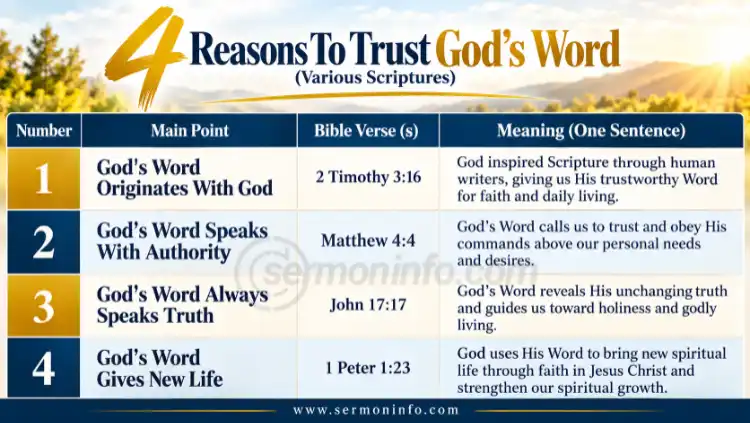
| 4 Reasons To Trust God’s Word – Sermons That Work | |||
|---|---|---|---|
| Number | Main Point | Bible Verse | Meaning |
| 1 | God’s Word Originates With God | 2 Timothy 3:16 | God inspired Scripture through human writers, giving us His trustworthy Word for faith and daily living. |
| 2 | God’s Word Speaks With Authority | Matthew 4:4 | God’s Word calls us to trust and obey His commands above our personal needs and desires. |
| 3 | God’s Word Always Speaks Truth | John 17:17 | God’s Word reveals His unchanging truth and guides us toward holiness and godly living. |
| 4 | God’s Word Gives New Life | 1 Peter 1:23 | God uses His Word to bring new spiritual life through faith in Jesus Christ and strengthen our spiritual growth. |
Source Material
MacArthur, John, and Richard Mayhue, eds. Biblical Doctrine: A Systematic Summary of Bible Truth. Wheaton, IL: Crossway, 2017, pp. 69–126.
Grudem, Wayne A. Systematic Theology: An Introduction to Biblical Doctrine. 2nd ed. Grand Rapids, MI: Zondervan Academic, 2020, pp. 47–138