Sermon Outline From James 3:17–18 (Godly Wisdom For Everyday Life) teaches that godly wisdom comes from above and reflects God’s holy character. This wisdom influences our decisions, promotes peaceful relationships, and encourages genuine mercy. Unlike earthly wisdom, which produces confusion and selfish ambition, heavenly wisdom produces righteous attitudes and actions that demonstrate spiritual growth.

Key Takeaways – Sermon From James 3:17-18
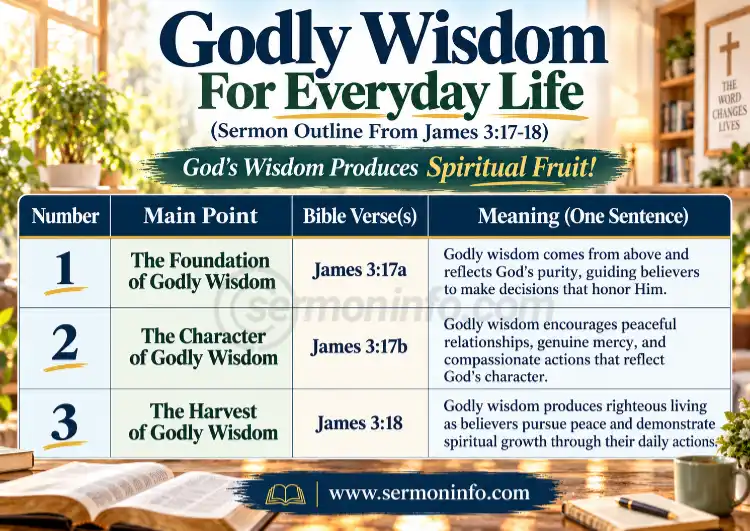
- Godly Wisdom Comes From Above (James 3:17a): True wisdom comes from God and reflects His holiness. Seek His guidance through Scripture and prayer to make everyday decisions that honor Him.
- Godly Wisdom Produces Godly Character (James 3:17b): Heavenly wisdom promotes peaceful relationships, gentleness, and genuine mercy. Practice patience, show compassion, and forgive others as God has forgiven you through Christ.
- Godly Wisdom Produces Righteous Living (James 3:18): God’s wisdom bears spiritual fruit through righteous actions and peaceful relationships. Follow His Word, pursue peace, and demonstrate His character in your daily life.
Sermon Outline From James 3:17-18
Every day, we face decisions that require wisdom, understanding, and good judgment. However, godly wisdom involves more than human knowledge, education, or personal experience. We may know many things and still make foolish choices. True wisdom comes from God and reflects His holy character. James 3:17–18 reminds us that heavenly wisdom guides our decisions, shapes our relationships, and produces righteous living.
So, how can we recognize godly wisdom and apply it to everyday life? James provides three important truths that help us answer this question. First, we will examine the foundation of godly wisdom and discover its heavenly source. Second, we will consider the character of godly wisdom in our relationships. Finally, we will explore the harvest of godly wisdom as we pursue righteous living and peace.
1. The Foundation of Godly Wisdom (James 3:17a)
“But the wisdom that is from above is first pure.” (James 3:17a)
A. It comes from above (James 3:17a)
James reminds us that true wisdom comes from God, not from human knowledge or personal experience alone. Earlier, James contrasts earthly wisdom, which produces envy and selfish ambition, with the wisdom that comes from above (James 3:14–17). God invites us to seek His guidance, especially when life presents difficult choices.
When we face family problems, financial pressures, or uncertain decisions, we need more than human advice. We need God’s wisdom to guide our steps. James 1:5 encourages us to ask God for wisdom because He gives generously. Therefore, seek His guidance through Scripture and prayer, trusting Him to direct your decisions.
B. It reflects God’s purity (James 3:17a)
James describes heavenly wisdom as “first pure” because it reflects God’s holy character. Unlike earthly wisdom, which often promotes selfish ambition, godly wisdom calls us to examine our hearts. It challenges dishonest motives, sinful desires, and attitudes that dishonor God. Psalm 51:10 reminds us to seek a clean heart before the Lord.
This means godly wisdom affects what we think, say, and do each day. Before making decisions, we should ask whether our motives honor God or serve selfish desires. Philippians 4:8 encourages us to focus on what is true, pure, and praiseworthy. As we follow God’s Word, our lives increasingly reflect His holiness. (Source Material: William MacDonald, Believer’s Bible Commentary, pp. 2234-2235)
This material provides some ideas and thoughts for a sermon outline from James 3:17-18 (Godly Wisdom For Everyday Life).
2. The Character of Godly Wisdom (James 3:17b)
“Then peaceable, gentle, willing to yield, full of mercy and good fruits, without partiality and without hypocrisy.” (James 3:17b)
A. It promotes peaceful relationships (James 3:17b)
James describes godly wisdom as peaceable, gentle, and willing to yield. These qualities stand against the envy and selfish ambition that James condemns in James 3:14–16. Heavenly wisdom helps us value people above personal pride. Instead of demanding our way, we seek understanding, speak with kindness, and pursue peace without compromising God’s truth.
Think about the disagreements we face at home, at work, or among fellow believers. A harsh word can deepen conflict, but a gentle response can calm angry hearts. Proverbs 15:1 reminds us that a soft answer turns away wrath. Therefore, ask God for wisdom to listen patiently, speak graciously, and restore peaceful relationships.
B. It practices genuine mercy (James 3:17b)
James also describes heavenly wisdom as full of mercy and good fruits. Genuine mercy reflects God’s compassion and moves us beyond kind words into loving action. Rather than judging others harshly, we seek opportunities to forgive and help them. Ephesians 4:32 reminds us to forgive one another, just as God forgave us through Christ.
Consider someone struggling with illness, financial hardship, or personal failure. Godly wisdom encourages us to notice their needs and respond with practical compassion. We might offer encouragement, provide a meal, or help carry their burdens. James 2:15–17 reminds us that genuine faith expresses itself through action. Therefore, let God’s mercy shape how you treat others. (Source Material: John MacArthur, The MacArthur Bible Commentary, p. 1891)
3. The Harvest of Godly Wisdom (James 3:18)
“Now the fruit of righteousness is sown in peace by those who make peace.” (James 3:18)
A. It produces righteous fruit (James 3:18a)
James describes righteousness as a harvest that grows when believers follow God’s wisdom. Unlike selfish ambition, which produces confusion and conflict (James 3:16), heavenly wisdom produces godly character. Just as a healthy tree produces good fruit, God’s wisdom shapes our attitudes and actions. This fruit reveals genuine spiritual growth and a growing desire to please God.
As we follow God’s Word, others should see patience, kindness, honesty, and self-control in our daily lives. Galatians 5:22–23 describes the fruit that the Holy Spirit produces in believers. These qualities do not earn our salvation, but they demonstrate God’s transforming grace. Therefore, seek His wisdom daily and allow His truth to shape your character.
B. It flourishes through peacemaking (James 3:18b)
James reminds us that those who make peace sow the fruit of righteousness in peace. Like a farmer planting seeds in good soil, peacemakers create conditions where godly relationships can grow. Instead of spreading jealousy and conflict, they encourage understanding, forgiveness, and unity. Jesus also calls peacemakers blessed in Matthew 5:9.
Consider how a peaceful home or a restored friendship can encourage spiritual growth. When we listen patiently, forgive offenses, and speak with kindness, we plant seeds that honor God. Romans 12:18 encourages us to live peaceably with everyone whenever possible. Therefore, become a peacemaker who helps others grow in righteousness and experience God’s grace. (Source Material: John F. Walvoord and Roy B. Zuck, The Bible Knowledge Commentary: New Testament, p. 829)
Conclusion
James reminds us that godly wisdom begins with God and reflects His holy character. Unlike human wisdom, heavenly wisdom promotes peaceful relationships, genuine mercy, and righteous living. As we follow God’s guidance, our attitudes and actions begin to reflect His truth. Like a fruitful harvest, godly wisdom produces lasting results that honor God and bless others.
Therefore, let us seek God’s wisdom through His Word and apply His truth to everyday life. When decisions become difficult, ask God for guidance and trust His promises (James 1:5). When relationships become strained, choose gentleness, mercy, and forgiveness. Above all, remember that godly wisdom involves more than knowing God’s Word. It means living according to His truth.
Closing Prayer
Heavenly Father, we thank You for the wisdom that comes from above. Forgive us when we depend upon our own understanding rather than seeking Your guidance. Help us to recognize Your truth, reject selfish motives, and make decisions that honor You. Give us hearts that reflect Your holiness and lives that demonstrate Your love, mercy, and grace.
Lord, teach us to pursue peace, show genuine compassion, and treat others with kindness and understanding. May Your Word guide our thoughts, shape our attitudes, and direct our actions each day. Help us to grow in righteousness and produce spiritual fruit that brings glory to Your name. We ask these things in the precious name of our Lord and Savior, Jesus Christ. Amen.

Frequently Asked Questions (FAQ)
Q: What is the main message of James 3:17–18?
A: James 3:17–18 teaches that true wisdom comes from God and produces purity, peace, mercy, and righteous living. Unlike earthly wisdom, which promotes selfish ambition and conflict, heavenly wisdom reflects God’s character. Believers demonstrate godly wisdom through their decisions, relationships, and daily actions.
Q: What are the characteristics of godly wisdom?
A: According to James 3:17, godly wisdom is pure, peaceable, gentle, willing to yield, merciful, fruitful, impartial, and sincere. These qualities reflect God’s holy character and guide believers toward righteous living. True wisdom influences how we think, make decisions, and treat others.
Q: How can we apply godly wisdom in everyday life?
A: We apply godly wisdom by seeking God’s guidance through Scripture and prayer. James 1:5 encourages believers to ask God for wisdom. As we follow His Word, we learn to make wise decisions, reject selfish motives, practice mercy, and pursue peaceful relationships.
Q: What is the difference between godly wisdom and worldly wisdom?
A: James 3:14–17 contrasts godly wisdom with worldly wisdom. Worldly wisdom promotes envy, selfish ambition, and confusion, while heavenly wisdom produces purity, peace, and mercy. Godly wisdom seeks to honor God and serve others, while worldly wisdom often places personal desires above God’s truth.
Q: What does the fruit of righteousness mean in James 3:18?
A: The fruit of righteousness in James 3:18 refers to godly attitudes and actions that grow through peaceful relationships. Like seeds planted in good soil, godly wisdom produces spiritual growth. Believers cultivate this fruit by practicing peace, demonstrating mercy, and following God’s Word.
BONUS: What does James 3:17–18 mean?
James 3:17–18 teaches that true wisdom comes from God and reflects His holy character. Unlike earthly wisdom, which produces envy and selfish ambition (James 3:14–16), heavenly wisdom promotes purity, peace, gentleness, and mercy. Godly wisdom influences our decisions, shapes our relationships, and produces righteous living that honors God.
These verses remind us that genuine wisdom involves more than biblical knowledge. We must apply God’s truth to our everyday lives. When we seek His guidance, practice mercy, and pursue peace, we demonstrate spiritual growth. Therefore, ask God for wisdom and allow His Word to guide your thoughts, attitudes, and actions.
BONUS: What type of wisdom does James 3:17 describe?
James 3:17 describes heavenly wisdom that comes from God rather than human reasoning or personal experience alone. James identifies this wisdom as pure, peaceable, gentle, willing to yield, full of mercy, and good fruits. It also rejects partiality and hypocrisy. These qualities reflect God’s character and stand against selfish ambition.
Godly wisdom helps us respond to life’s challenges with patience, humility, and understanding. Instead of demanding our own way, we seek God’s will and consider the needs of others. James 1:5 encourages us to ask God for wisdom. As we follow His guidance, our decisions and relationships increasingly reflect His truth.
BONUS: What is James 3:18 telling us?
James 3:18 teaches that those who pursue peace help produce a harvest of righteousness. Like farmers who plant seeds and expect a harvest, peacemakers cultivate relationships where godly character can grow. This verse contrasts the confusion of selfish ambition with the righteous fruit that heavenly wisdom produces.
Therefore, James encourages us to become peacemakers who demonstrate God’s wisdom through righteous actions. When we forgive offenses, speak kindly, and resolve disagreements, we help create opportunities for spiritual growth. Romans 12:18 encourages believers to live peaceably with everyone whenever possible. Our peaceful actions can honor God and strengthen others.
BONUS: What does James 3:17–18 say in the New King James Version of the Bible?
James 3:17–18 (NKJV) describes heavenly wisdom as pure, peaceable, gentle, merciful, impartial, and sincere. James also explains that peacemakers sow the fruit of righteousness through peaceful relationships. These verses reveal how godly wisdom shapes our character and produces righteous living.
This passage reminds us that godly wisdom involves more than knowledge or understanding. True wisdom influences how we think, speak, and treat others. As we follow God’s Word, we learn to practice mercy, pursue peace, and demonstrate righteous actions. Our daily conduct should reflect God’s holy character.
BONUS: What are the two kinds of wisdom in James 3:13–18?
James 3:13–18 contrasts two kinds of wisdom: earthly wisdom and heavenly wisdom. Earthly wisdom promotes envy, selfish ambition, confusion, and sinful behavior (James 3:14–16). Heavenly wisdom comes from God and produces purity, peace, gentleness, and mercy (James 3:17). These contrasting qualities reveal the true source of our attitudes and actions.
Therefore, we must examine the wisdom that guides our everyday decisions. Selfish desires often lead to conflict, but God’s wisdom encourages humility and peaceful relationships. James 1:5 reminds us to ask God for wisdom. As we follow His guidance, we learn to reject sinful motives and pursue what pleases Him.
BONUS: What lessons can we learn from James 3:17–18?
James 3:17–18 teaches three important lessons about godly wisdom. First, true wisdom comes from God and reflects His purity. Second, heavenly wisdom shapes our character through gentleness, mercy, and peaceful relationships. Third, godly wisdom produces righteous fruit as believers pursue peace and demonstrate spiritual growth.
These lessons encourage us to seek God’s guidance and apply His Word to everyday life. When disagreements arise, choose gentleness instead of anger and mercy instead of judgment. Romans 12:18 encourages us to pursue peace whenever possible. As we practice godly wisdom, our lives increasingly reflect God’s character and bring glory to Him.
Source Material
William MacDonald, Believer’s Bible Commentary, rev. ed. (Nashville: Thomas Nelson, 1995), 2234-2235
John MacArthur, The MacArthur Bible Commentary (Nashville: Thomas Nelson, 2005), 1891
John F. Walvoord and Roy B. Zuck, eds., The Bible Knowledge Commentary: New Testament (Colorado Springs, CO: David C. Cook, 1985), 829