Sermon Outline From Joel 1:13–20 teaches three important responses when God confronts His people: humility, obedience to His warnings, and dependence upon Him through prayer. The devastation in Judah revealed the seriousness of God’s judgment and the people’s need for repentance. These lessons remind believers to respect God’s holiness, obey His Word, and trust His provision.

Key Takeaways – Sermon From Joel 1:13-20
- Humble Yourself Before God (Joel 1:13–14): God calls His people to recognize their spiritual needs, turn from sin, and seek Him with sincere hearts through prayer.
- Take God’s Warnings Seriously (Joel 1:15–18): God’s judgment reminds us of His holiness and calls us to examine our lives, repent of sin, and obey His Word.
- Seek God’s Help Through Prayer (Joel 1:19–20): When difficulties overwhelm us, we must cry out to God, trust His wisdom, and depend upon His faithful provision.
Sermon Outline From Joel 1:13-20
God sometimes uses difficult circumstances to remind us of our need for Him. When troubles come, we need humility to examine our hearts, wisdom to heed His warnings, and faith to pray. God never wants us to ignore His Word or trust only in our own strength. Instead, He calls us to humble ourselves and seek His help.
In Joel 1:13–20, God confronts Judah through a devastating locust plague that brings suffering and loss. Through Joel, God calls His people to respond with humility, take His warning seriously, and seek His help through prayer. These three responses remind us that God deserves our attention, obedience, and trust, especially when life becomes difficult.
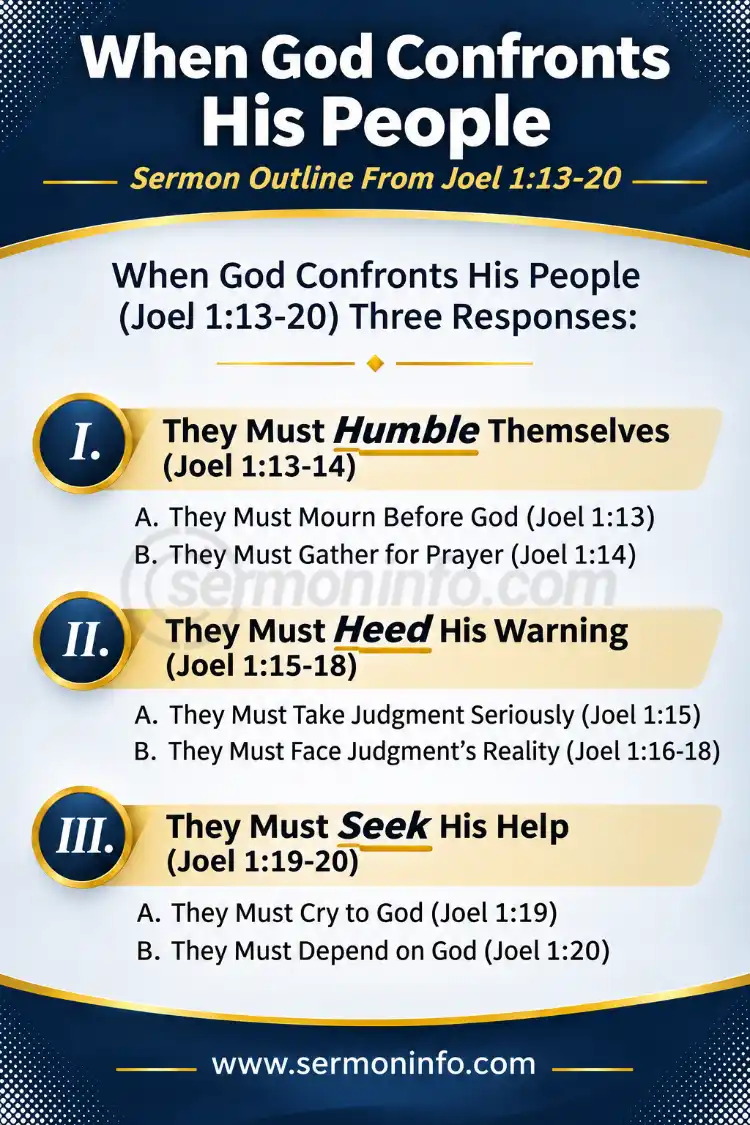
1. They Must Humble Themselves (Joel 1:13–14)
God calls His people to express sincere sorrow and gather before Him in humble prayer. (Summary Statement)
A. They Must Mourn Before God (Joel 1:13)
Joel calls the priests to put on sackcloth and mourn before the Lord. The locust devastation had destroyed the crops and stopped the grain and drink offerings at the temple. Their worship had suffered, and Joel urged them to recognize the seriousness of their situation. God wanted more than outward sorrow. He wanted hearts that humbled themselves before Him.
We also need to examine our hearts when difficulties interrupt our lives. Sometimes, God uses painful circumstances to awaken us to spiritual needs we have neglected. Psalm 51:17 reminds us that God will not despise a broken and contrite heart. Rather than ignore His correction, we should humble ourselves and seek His mercy.
B. They Must Gather for Prayer (Joel 1:14)
Joel commands the priests to declare a fast and call a sacred assembly. They must gather the elders and everyone living in Judah to cry out to the Lord. Their desperate situation required more than human effort. Through fasting and united prayer, the people would acknowledge their need for God’s mercy and help.
When troubles overwhelm us, prayer should become our first response rather than our last resort. We need personal prayer, but we also need to gather with other believers and seek God together. Philippians 4:6 encourages us to bring every concern before God through prayer and supplication. Humble hearts seek God’s help because they recognize their need for Him. (Source Material: William MacDonald, Believer’s Bible Commentary, p. 1109)
This material provides some ideas and thoughts for a sermon outline from Joel 1:13-20 (When God Confronts His People).
2. They Must Heed His Warning (Joel 1:15–18)
God’s people must take His approaching judgment seriously and recognize the warning conveyed through their present devastation. (Summary Statement)
A. They Must Take Judgment Seriously (Joel 1:15)
Joel announces that the day of the LORD is near and warns of destruction from the Almighty. The locust plague had already devastated Judah, but Joel pointed toward an even greater day of divine judgment. God wanted His people to recognize His holiness and take His warnings seriously. They could not afford to ignore His message.
God’s warnings remind us that sin carries serious consequences and that His judgment is certain. Although we live under grace, we must never treat God’s holiness lightly. Romans 14:12 reminds us that each person will give an account to God. We should respond to His warnings with repentance, reverence, and renewed obedience.
B. They Must Face Judgment’s Reality (Joel 1:16–18)
Joel describes a heartbreaking scene of ruined harvests, empty storehouses, and suffering animals. The fields produced no food, and the people lost their joy and gladness. Even the cattle groaned because they had no pasture. These terrible conditions revealed the devastating consequences of God’s judgment upon Judah and demanded a serious response.
When life becomes difficult, we often look for quick solutions instead of examining our hearts before God. Not every hardship comes from personal sin, but every trial reminds us of our need for Him. Hebrews 12:11 teaches that God’s loving discipline produces righteousness in those who receive it. We must trust His wisdom and respond with humble obedience. (Source Material: John MacArthur, The MacArthur Bible Commentary, pp. 987-988)
3. They Must Seek His Help (Joel 1:19–20)
Joel’s prayer and the animals’ cries point the people toward God as their source of help. (Summary Statement)
A. They Must Cry to God (Joel 1:19)
Joel personally cries out to the Lord as fire consumes the pastures and flames destroy the trees. The devastation had left Judah helpless, but Joel knew where to turn. Rather than surrender to despair, he brought his distress before God. His prayer showed the people that their greatest need was to seek the Lord.
When troubles surround us, we should follow Joel’s example and cry out to God. We may not understand our circumstances, but we can trust the One who hears our prayers. Psalm 50:15 reminds us to call upon God in the day of trouble. Our difficulties should drive us toward God, not away from Him.
B. They Must Depend on God (Joel 1:20)
Joel describes the wild animals crying out because the streams had dried up and fire had destroyed their pastures. Even the animals suffered from the terrible drought and desperately needed water and food. Their cries reminded Judah that every living creature depends upon God’s provision. Without His sustaining care, neither people nor animals could survive.
We often forget our dependence upon God until life’s difficulties reveal how little we control. Just as the animals needed water, we need God’s daily care, strength, and provision. Philippians 4:19 reminds believers that God supplies their needs according to His riches in glory by Christ Jesus. When our resources fail, we can still trust God’s faithful care. (Source Material: John F. Walvoord and Roy B. Zuck, The Bible Knowledge Commentary: Old Testament, pp. 1414-1415)
Conclusion
Joel 1:13–20 reminds us that God calls His people to respond when He confronts them. First, they must humble themselves through sincere sorrow and prayer. Second, they must heed His warning and recognize the seriousness of His judgment. Third, they must seek His help and depend upon His provision. These responses teach us to trust God rather than ourselves.
Today, we must take God’s Word seriously and allow His truth to guide our lives. When difficulties come, we should examine our hearts, listen to His Word, and seek Him through prayer. Not every hardship reflects God’s judgment, but every trial offers an opportunity to trust Him. God remains faithful, and we can confidently place our lives in His hands.
Closing Prayer
Heavenly Father, we thank You for Your Word and the lessons You teach us through the prophet Joel. Help us humble ourselves before You and recognize our need for Your grace and mercy. Give us hearts that listen to Your warnings and respond with sincere repentance and obedience. When difficulties come, remind us to seek You first and trust Your wisdom.
Lord, teach us to depend upon Your strength rather than our own understanding. Help us remain faithful when life becomes difficult and trust Your loving care through every trial. May Your Word guide our decisions, strengthen our faith, and draw us closer to You each day. We thank You for Your goodness and faithfulness. In Jesus’ precious name, we pray. Amen.
Frequently Asked Questions (FAQ)
Q: What is the main message of Joel 1:13–20?
A: Joel 1:13–20 teaches that God’s people must humble themselves, heed His warnings, and seek His help through prayer. The devastating locust plague revealed God’s judgment upon Judah and called the people to repentance. Today, believers should respond to God’s Word with humility, obedience, and trust.
Q: Why did Joel call the priests to mourn and fast?
A: Joel called the priests to mourn because the locust plague had destroyed the crops and interrupted temple offerings (Joel 1:13–14). He commanded them to fast, gather the people, and seek God’s mercy. Their response would demonstrate sincere sorrow, humility, and dependence upon the Lord.
Q: What does the day of the LORD mean in Joel 1:15?
A: The day of the LORD refers to God’s intervention in human affairs through judgment and, ultimately, blessing. In Joel 1:15, the approaching judgment warned Judah of greater destruction. This warning also points toward the future day when God will judge the nations and fulfill His promises to Israel.
Q: How does God confront His people today?
A: God confronts His people primarily through the truth of Scripture, exposing sin and calling believers to repentance and obedience (2 Timothy 3:16–17). He also uses loving discipline to encourage spiritual growth (Hebrews 12:6). Believers should examine their hearts, obey His Word, and trust His wisdom.
Q: What can believers learn from Joel 1:19–20?
A: Joel 1:19–20 teaches believers to seek God’s help and depend upon His provision during difficult times. Joel cried out as drought and fire devastated Judah. His example reminds us that prayer expresses our trust in God’s power, wisdom, and faithful care when circumstances overwhelm us.

BONUS: What Is the Prophetic Significance of the Day of the LORD in Joel 1:15?
Joel warns that the day of the LORD is near, bringing destruction from the Almighty (Joel 1:15). Judah’s devastating locust plague serves as a warning of God’s judgment. The disaster calls His people to recognize His holiness, take His warnings seriously, and respond with repentance.
Prophetically, the day of the LORD also points toward God’s future judgment upon the nations (Joel 3:12–16). God will judge evil, deliver Israel, and fulfill His promises of restoration (Joel 3:17–21). This coming day reminds believers that God’s judgment is certain and His sovereign purposes will prevail.
BONUS: How Does the Book of Joel Relate to Us Today?
The book of Joel reminds us that God desires sincere repentance, humble hearts, and faithful obedience. Judah faced devastating circumstances, but Joel called the people to seek God’s mercy through fasting and prayer (Joel 1:13–14). Today, believers should examine their hearts, obey God’s Word, and trust His wisdom.
Joel also reveals God’s mercy toward those who sincerely turn to Him (Joel 2:12–13). Not every hardship comes from personal sin, but difficult circumstances remind us of our need for God. When troubles arise, we should seek His help, trust His promises, and depend upon His faithful care.
BONUS: What Are the Key Lessons We Can Learn From Joel?
The book of Joel teaches three important lessons: take God’s warnings seriously, return to Him with sincere repentance, and trust His promises. Joel calls God’s people to humble themselves and seek His mercy (Joel 2:12–13). These lessons remind us that God values genuine faith and heartfelt obedience.
Joel also teaches that God remains sovereign over judgment, restoration, and the future of His people. He promises to restore Israel and pour out His Spirit according to His purposes (Joel 2:25–29). Today, believers can trust God’s faithfulness, seek His guidance, and live with confidence in His promises.
| Sermon Outline From Joel 1:13-20 – Sermons From Joel | |||
|---|---|---|---|
| Number | Main Point | Bible Verse | Meaning |
| 1 | They Must Humble Themselves | Joel 1:13–14 | God calls His people to express sincere sorrow, humble themselves, and seek Him through prayer. |
| 2 | They Must Heed His Warning | Joel 1:15–18 | God warns His people to take His judgment seriously and recognize the devastating consequences of sin. |
| 3 | They Must Seek His Help | Joel 1:19–20 | God calls His people to cry out to Him and depend upon His faithful care and provision. |
Source Material
William MacDonald, Believer’s Bible Commentary, rev. ed. (Nashville: Thomas Nelson, 1995), 1109
John MacArthur, The MacArthur Bible Commentary (Nashville: Thomas Nelson, 2005), 987-988
John F. Walvoord and Roy B. Zuck, eds., The Bible Knowledge Commentary: Old Testament (Colorado Springs, CO: David C. Cook, 1985), 1404-1415