An Introduction to The Book of Joel in the Bible reveals God’s sovereign judgment, His call to repentance, and His promise of restoration. Through a devastating locust plague, Joel warns Judah about the coming Day of the LORD. The book highlights God’s mercy toward those who repent and His faithfulness to fulfill His future promises to Israel.
Key Takeaways – Introduction to the Book of Joel
- God Warns His People About Judgment: The Book of Joel uses a devastating locust plague to warn Judah about the coming Day of the LORD and God’s judgment against sin (Joel 1:4, 15).
- God Calls His People to Repentance: Joel reminds us that God desires genuine repentance. We must turn from sin, seek His mercy, and return to Him wholeheartedly (Joel 2:12–13).
- God Promises Future Restoration: Joel reveals God’s faithfulness to Israel through His promises of restoration, spiritual blessing, and future deliverance. We can trust God to fulfill His purposes (Joel 2:25–32).
Introduction to the Book of Joel in the Bible
The Book of Joel reminds us that God rules over every nation and calls His people to return to Him. Through a devastating locust plague, Joel warns Judah about God’s coming judgment and the Day of the LORD. Yet, amid these warnings, God reveals His mercy and promises restoration to those who sincerely repent.
As we explore the Book of Joel, we will consider its author, historical background, and central themes. We will discover how God uses difficult circumstances to awaken His people and call them to repentance. Most importantly, we will see God’s faithfulness to Israel and His promises of future restoration and blessing.
1. The Author of Joel
The prophet Joel wrote the Book of Joel, the second of the twelve Minor Prophets. His name means “The LORD is God.” Joel identifies himself as the son of Pethuel (Joel 1:1). Scripture provides few details about his personal life, family, or background. However, God appointed Joel to proclaim His Word to His people.
Joel directed his message primarily to Judah and Jerusalem. His frequent references to the temple, priests, and worship suggest that he lived in Judah, possibly Jerusalem (Joel 1:13–14; 2:15–17). Joel emphasized God’s holiness, His righteous judgment, and His willingness to forgive those who sincerely repent. (Source Material: William MacDonald, Believer’s Bible Commentary, pp. 1107-1108)
2. Historical Background of Joel
Joel ministered during a devastating locust plague and severe drought that destroyed Judah’s crops (Joel 1:4–12). These disasters brought widespread suffering and disrupted temple worship. Joel called the people to recognize God’s warning, humble themselves, and seek His mercy through genuine repentance (Joel 1:13–14; 2:12–13).
The exact date of Joel’s ministry remains uncertain because he mentions no reigning king. Some conservative scholars place his ministry around 835–800 BC, during the reign of King Joash. Others favor a date after the Babylonian exile, around the fifth century BC. Regardless of the date, Joel connected Judah’s suffering with God’s coming judgment. (Source Material: John MacArthur, The MacArthur Bible Commentary, pp. 983-985)
3. The Themes of Joel
The central theme of Joel is “The Day of the LORD” (Joel 1:15; 2:1, 11; 3:14). This day involves God’s judgment against sin and His ultimate victory over evil. Joel also emphasizes repentance, God’s mercy, and spiritual restoration. He urges God’s people to return wholeheartedly to Him rather than merely practice outward religion (Joel 2:12–13).
Joel also reveals God’s future purposes for Israel and the nations. He promises restoration, the outpouring of the Holy Spirit, and judgment against Israel’s enemies (Joel 2:25–32; 3:1–21). Peter connects Joel’s prophecy with Pentecost (Acts 2:16–21). Joel’s message ultimately points toward God’s faithfulness and His future kingdom blessings for Israel. (Source Material: John F. Walvoord and Roy B. Zuck, The Bible Knowledge Commentary: Old Testament, pp. 1409-1413)
Conclusion
The Book of Joel reminds us that God remains sovereign over history and faithful to His promises. Through Joel’s message, we discover how God warned Judah about coming judgment and called His people to repentance. Yet God also revealed His mercy, promised restoration, and assured Israel of future blessings. His faithfulness never fails.
As we reflect on Joel’s message, we must examine our hearts and respond to God’s Word. God calls us to turn from sin, seek His mercy, and trust His promises. Even during difficult circumstances, we can rest in His sovereign care. Above all, let us remain faithful to the Lord, knowing He always accomplishes His purposes.
Frequently Asked Questions (FAQ)
Q: Who wrote the Book of Joel in the Bible?
A: The prophet Joel, son of Pethuel, wrote the Book of Joel (Joel 1:1). He delivered God’s message to Judah and Jerusalem, warning about judgment and calling for repentance. Scripture reveals little about Joel’s personal life, and scholars disagree about the date of his ministry.
Q: What is the main message of the Book of Joel?
A: The Book of Joel emphasizes God’s judgment, genuine repentance, and future restoration. Through a devastating locust plague, Joel warns Judah about the coming Day of the LORD. He also reveals God’s mercy, His promise to restore Israel, and future spiritual blessings (Joel 2:12–13, 25–32).
Q: What does the Day of the LORD mean in Joel?
A: The Day of the LORD describes God’s intervention in judgment and deliverance. Joel warns that God will judge sin and confront the nations (Joel 3:1–16). He also promises future restoration for Israel, reminding us to repent, trust His Word, and remain faithful to Him.
BONUS: What Are the Key Points in the Book of Joel?
The Book of Joel emphasizes three central truths: God’s judgment against sin, His call to genuine repentance, and His promise of restoration. Joel uses a devastating locust plague to warn Judah about the coming Day of the LORD. He urges God’s people to return wholeheartedly to Him (Joel 1:15; 2:12–13).
Joel also reveals God’s future plans for Israel and His judgment of the nations. He promises spiritual blessings, restoration, and the outpouring of His Spirit (Joel 2:25–32). These truths remind us that God remains sovereign over history and always fulfills His promises.
BONUS: What Is the Most Famous Verse in Joel?
One of the most famous verses in Joel is Joel 2:25, where God promises to restore the years the locusts destroyed. This verse reveals God’s mercy and His willingness to restore His repentant people. God gave this promise to Judah following a devastating season of destruction and suffering.
Another well-known verse is Joel 2:28, where God promises to pour out His Spirit upon all flesh. Peter quoted this prophecy on the Day of Pentecost (Acts 2:16–21). Both passages reveal God’s faithfulness and encourage believers to trust His sovereign purposes.
BONUS: How Does the Book of Joel Apply to Us Today?
The Book of Joel reminds us that God takes sin seriously and calls everyone to genuine repentance. Joel 2:13 encourages us to return to the Lord because He is gracious and merciful. We must examine our hearts, confess our sins, and seek God’s forgiveness through Jesus Christ (1 John 1:9).
Joel also teaches us to trust God’s faithfulness during difficult circumstances. Although God gave His restoration promises directly to Israel, His character remains unchanged. We can depend on His wisdom, mercy, and sovereign care. Above all, we should live faithfully and remain ready for Christ’s return (Titus 2:13).
BONUS: When Will the Day of the LORD Take Place?
The Day of the LORD describes God’s intervention in judgment and deliverance (Joel 1:15; 2:1). Joel’s devastating locust plague foreshadowed a greater future judgment. Scripture points to its ultimate fulfillment during the coming Tribulation and Christ’s return to establish His kingdom (Joel 3:14–16; Zechariah 14:1–9).
God has not revealed the exact date of these future events (Matthew 24:36). The Day of the LORD will bring judgment against wickedness and fulfill God’s promises to Israel. Meanwhile, we must repent, trust Jesus Christ, and live faithfully as we await His glorious return (1 Thessalonians 5:2–6).
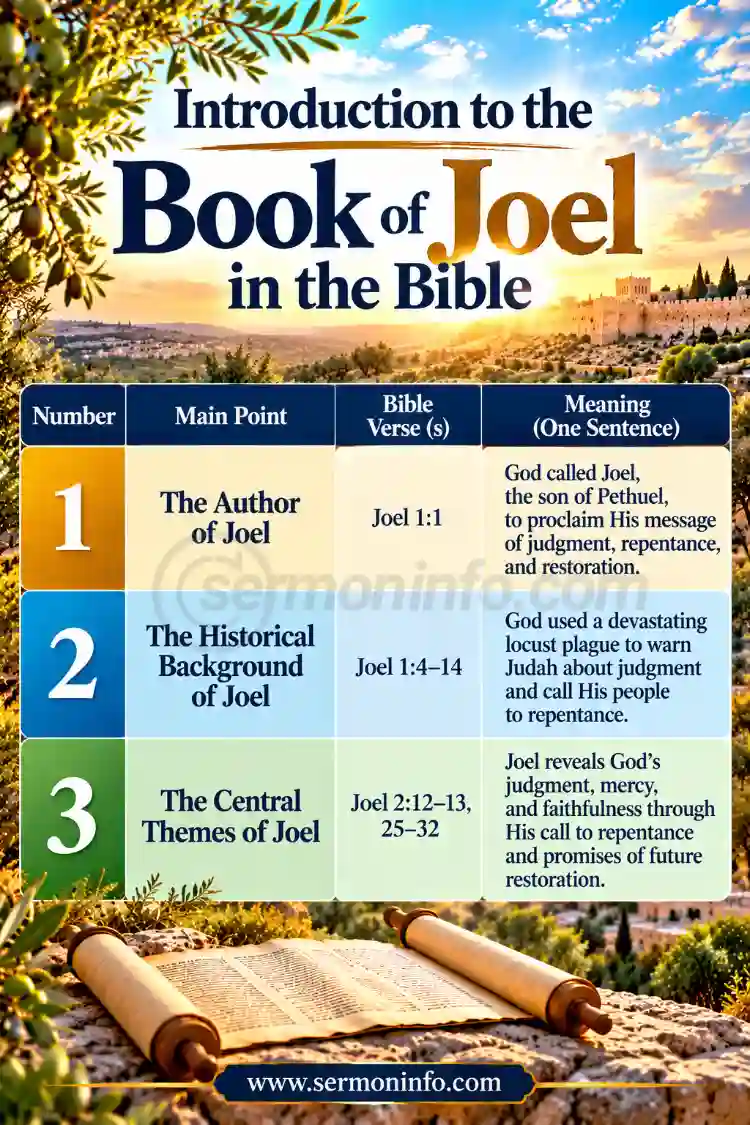
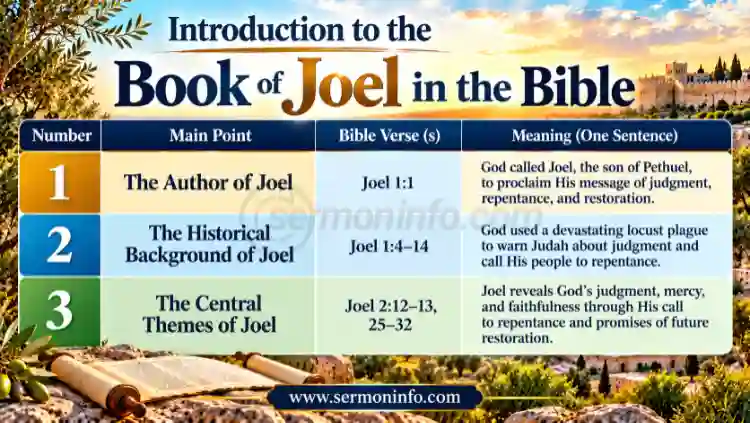
| Introduction to the Book of Joel in the Bible – Sermons From Joel | |||
|---|---|---|---|
| Number | Main Point | Bible Verse | Meaning |
| 1 | The Author of Joel | Joel 1:1 | God called Joel, the son of Pethuel, to proclaim His message of judgment, repentance, and restoration. |
| 2 | The Historical Background of Joel | Joel 1:4–14 | God used a devastating locust plague to warn Judah about judgment and call His people to repentance. |
| 3 | The Central Themes of Joel | Joel 2:12–13, 25–32 | Joel reveals God’s judgment, mercy, and faithfulness through His call to repentance and promises of future restoration. |
Source Material
William MacDonald, Believer’s Bible Commentary, rev. ed. (Nashville: Thomas Nelson, 1995), 1107-1108
John MacArthur, The MacArthur Bible Commentary (Nashville: Thomas Nelson, 2005), 983-985
John F. Walvoord and Roy B. Zuck, eds., The Bible Knowledge Commentary: Old Testament (Colorado Springs, CO: David C. Cook, 1985), 1409-1413