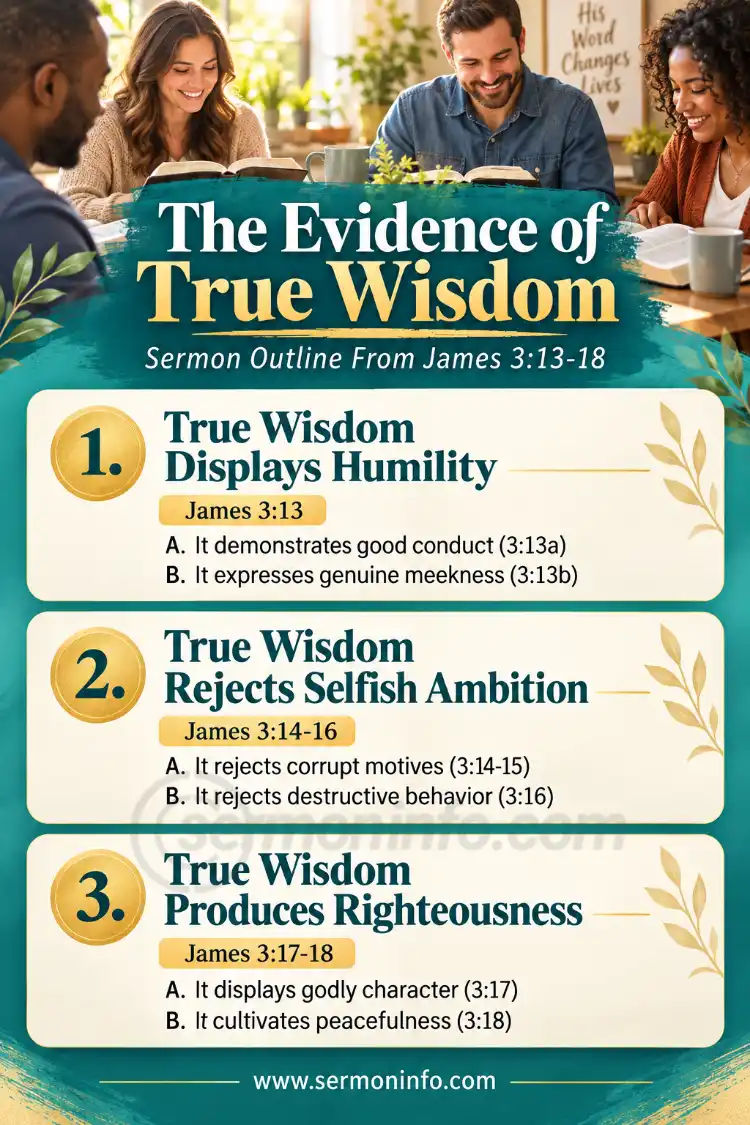
Sermon Outline From James 3:13–18 identifies humble conduct and righteous fruit as evidence of true wisdom. Earthly wisdom produces envy and disorder. Wisdom from God produces pure motives, merciful actions, and peaceful relationships.

Key Takeaways – Sermon From James 3:13-18
- True wisdom displays humility (James 3:13). Show godly wisdom through good conduct, gentle responses, and service that seeks no praise.
- True wisdom rejects selfish ambition (James 3:14–16). Examine your motives, confess envy, and reject behavior that creates division or harms others.
- True wisdom produces righteousness (James 3:17–18). Practice purity, mercy, and sincerity while pursuing peace without compromising God’s truth.
Sermon Outline From James 3:13-18
When someone challenges us, worldly wisdom urges us to protect our pride and put ourselves first. Godly wisdom calls us to respond with humility, purity, and peace. James confronted this tension among his readers, and we face it in our homes and daily decisions. Our responses reveal which wisdom guides our hearts.
In James 3:13–18, we discover the evidence of true wisdom: it displays humility, rejects selfish ambition, and produces righteousness. God calls us to reflect His wisdom through everyday actions. As we explore these truths, let us examine our motives and welcome His correction. We begin with humility, where wise words find their proof in godly conduct.
1. True Wisdom Displays Humility (James 3:13)
“Who is wise and understanding among you? Let him show by good conduct that his works are done in the meekness of wisdom.” (James 3:13)
A. It demonstrates good conduct (James 3:13a)
James challenges anyone who claims wisdom to show it through good conduct. His readers needed actions that matched their words, especially among those who wanted to teach others (James 3:1). Godly wisdom becomes visible through a consistent pattern of faithful choices. Like footprints along a path, our actions reveal the direction of our lives.
Consider how you respond when work becomes stressful or family troubles grow. Divine wisdom guides you to speak honestly, keep promises, and help others, even when obedience costs you something. God gives wisdom to those who ask Him in faith (James 1:5–6). Trust Him today, and let your next decision reflect His Word.
B. It expresses genuine meekness (James 3:13b)
James connects wise conduct with the “meekness of wisdom” (James 3:13). He calls his readers to act with gentleness and humility. Worldly wisdom often pursues recognition, but wisdom from above shapes how we treat people. Jesus describes Himself as “gentle and lowly in heart” (Matthew 11:29), showing us the character that should guide our actions.
When someone criticizes you, pride urges you to strike back. Meekness helps you listen carefully, answer gently, and admit your mistakes. You can stand firmly for truth while speaking with kindness. During difficult conversations, trust God with the outcome. A gentle answer can quiet anger and open the door to understanding (Proverbs 15:1). (Source Material: William MacDonald, Believer’s Bible Commentary, pp. 2233-2235)
This material provides some ideas and thoughts for a sermon outline from James 3:13-18 (The Evidence of True Wisdom).
2. True Wisdom Rejects Selfish Ambition (James 3:14–16)
“But if you have bitter envy and self-seeking in your hearts, do not boast and lie against the truth. This wisdom does not descend from above, but is earthly, sensual, demonic. For where envy and self-seeking exist, confusion and every evil thing are there.” (James 3:14-16)
A. It rejects corrupt motives (James 3:14–15)
James warns his readers against claiming wisdom while harboring bitter envy and selfish ambition. These motives reflect earthly, unspiritual, and demonic wisdom (James 3:15). Worldly wisdom seeks personal advantage, even at another person’s expense. Wisdom from above leads us to honor God. We cannot honestly claim godly wisdom while defending motives that oppose His character.
When someone else receives recognition, envy can quietly take root. We may question their success or promote ourselves through criticism. Instead, confess those desires and ask God to change your heart. God gives wisdom generously when we ask Him (James 1:5). Trust His care, celebrate another person’s blessings, and serve without demanding attention.
B. It rejects destructive behavior (James 3:16)
James connects corrupt motives with destructive results: envy and selfish ambition produce confusion and “every evil thing” (James 3:16). Wherever this worldly wisdom governs, disorder and every kind of evil find fertile ground. Rivalry feeds gossip, dishonesty, and division. True wisdom opposes these practices because they dishonor God and harm people He calls us to love.
Think about a disagreement at home or work. When winning matters more than truth, harsh words can deepen the conflict. Divine wisdom directs us to reject gossip, speak honestly, and seek forgiveness. Practice the meekness of wisdom by answering gently, even under pressure. Trust God with your reputation while you choose conduct that honors Christ. (Source Material: John MacArthur, The MacArthur Bible Commentary, pp. 1890-1891)
3. True Wisdom Produces Righteousness (James 3:17–18)
“But the wisdom that is from above is first pure, then peaceable, gentle, willing to yield, full of mercy and good fruits, without partiality and without hypocrisy. Now the fruit of righteousness is sown in peace by those who make peace.” (James 3:17-18)
A. It displays godly character (James 3:17)
James directs his readers from destructive rivalry to the character of heavenly wisdom. Wisdom from above expresses purity, peace, gentleness, teachability, mercy, good fruit, impartiality, and sincerity (James 3:17). Purity comes first because peace must never excuse sin. Divine wisdom shapes both our hearts and our conduct, helping us treat others with fairness and genuine care.
When someone corrects you, godly wisdom helps you listen without becoming defensive. Mercy moves you to help someone who struggles, while sincerity keeps your kindness honest. Worldly wisdom seeks an advantage; heavenly wisdom seeks another person’s good. God gives wisdom when we ask Him (James 1:5), so seek His help when difficult relationships test your character.
B. It cultivates peacefulness (James 3:18)
James uses the picture of sowing and harvesting to explain how peacemaking nurtures righteous living (James 3:18). His readers needed peaceful actions that would overcome their destructive rivalry. Like a gardener tending a crop, a peacemaker patiently encourages what honors God. True wisdom cultivates relationships where honesty, mercy, and obedience can grow.
Perhaps tension has settled over your home, and every conversation feels difficult. Practice the meekness of wisdom by listening carefully, admitting your wrongs, and speaking truth gently. Pursue peace as far as your responsibility allows (Romans 12:18). You cannot control another person’s response, but you can trust God while faithfully sowing seeds of peace. (Source Material: John F. Walvoord and Roy B. Zuck, The Bible Knowledge Commentary: New Testament, pp. 828-829)
Conclusion
James reminds us that true wisdom displays humility, rejects selfish ambition, and produces righteousness. God reveals His wisdom through our conduct, motives, and relationships. When we welcome His instruction, we learn to serve gently, resist envy, and pursue peace. These qualities show the fruit of wisdom from above.
As we read God’s Word, let us seek His meaning and respond with willing hearts. Ask God to expose selfish motives and guide your next step of obedience. Choose one truth from this passage to practice today, especially in a difficult relationship. Trust His wisdom when pride urges another response, and let your actions reflect the character of Christ.
Closing Prayer
Heavenly Father, thank You for revealing Your wisdom through Your Word. Forgive our pride, bitter envy, and selfish ambition. Search our hearts and teach us to welcome Your correction. Help us display humility through good conduct and respond to others with gentleness. Give us wisdom to honor You when difficulties test our faith.
Lord, grow purity, mercy, and sincerity within us. Help us pursue peace without compromising Your truth. Guide us to practice Your Word in our homes, workplaces, and relationships. When conflict arises, help us trust You and reflect Christ’s character. May our lives bear righteous fruit for Your glory. We pray in Jesus’ name, amen.
Frequently Asked Questions (FAQ)
Q: What is the main message of James 3:13–18?
A: James 3:13–18 teaches that true wisdom comes from God and reveals itself through humble conduct and righteous living. Earthly wisdom encourages envy, selfish ambition, and disorder. Heavenly wisdom produces purity, mercy, and peace. Believers should examine their motives and demonstrate wisdom through everyday actions.
Q: What is the difference between godly wisdom and worldly wisdom?
A: Godly wisdom comes from above and promotes humility, purity, and peace. Worldly wisdom reflects earthly, unspiritual, and demonic influences through envy and selfish ambition. James 3:14–18 distinguishes these sources by their results: worldly wisdom produces disorder, while godly wisdom nurtures righteous character and conduct.
Q: What are the characteristics of wisdom from above?
A: James 3:17 describes wisdom from above as pure, peaceable, gentle, willing to yield, merciful, fruitful, impartial, and sincere. These qualities reveal God’s influence on our conduct. Believers demonstrate heavenly wisdom by welcoming correction, helping others, treating people fairly, and pursuing peace without compromising biblical truth.
Q: What does “the meekness of wisdom” mean?
A: The meekness of wisdom means expressing understanding through humble, gentle conduct. James 3:13 connects genuine wisdom with good works and a spirit free from arrogance. Believers practice this meekness when they listen carefully, accept correction, and serve others without demanding recognition or asserting their importance.
Q: What does James 3:18 teach about peacemaking?
A: James 3:18 teaches that peacemakers sow in peace and cultivate a harvest of righteousness. Godly wisdom encourages relationships where obedience, mercy, and honesty grow. Believers apply this truth by addressing conflict gently, seeking forgiveness, and pursuing reconciliation while remaining faithful to God’s Word.
BONUS: Why does true wisdom matter?
True wisdom matters because it guides us to honor God through our choices, motives, and relationships. James contrasts earthly wisdom’s destructive results with the righteous fruit of heavenly wisdom (James 3:13–18). Knowledge alone cannot produce godly living. We need God’s wisdom to apply His truth with humility, purity, and love.
When conflict tests your patience, true wisdom helps you answer gently and pursue peace without compromising truth. It turns biblical understanding into faithful action. Ask God for wisdom when you face difficult decisions (James 1:5). Follow His Word, trusting Him to shape your character and guide your conduct.
BONUS: How can I know if wisdom is from God?
You can recognize wisdom from God by testing it against Scripture and examining the motives and conduct it encourages. James identifies purity, peace, gentleness, teachability, mercy, good fruit, impartiality, and sincerity as its qualities (James 3:17). Envy and selfish ambition reveal earthly wisdom, even when someone presents convincing arguments.
Ask whether your decision obeys Scripture, honors God, and shows genuine concern for others. Welcome correction when biblical truth challenges your preferences. Personal confidence, pleasant feelings, or favorable circumstances cannot establish God’s approval. Pray for wisdom and let His Word direct your steps (Psalm 119:105).
BONUS: Why is true wisdom connected to God?
True wisdom connects to God because He supplies it and defines what is right. Proverbs 2:6 teaches that the Lord gives wisdom, knowledge, and understanding. James calls godly wisdom “the wisdom that is from above” (James 3:17). Its purity, mercy, and sincerity reflect God’s character and guide us toward His purposes.
Knowing God teaches us to view life through His truth rather than our limited understanding. Reverence for Him begins wisdom (Proverbs 9:10), and Christ holds all wisdom’s treasures (Colossians 2:3). As you study Scripture, trust Christ, and obey His teaching, you grow in wisdom that honors God.
BONUS: How can Christians know whether their wisdom comes from God?
Christians recognize godly wisdom by comparing their motives, conduct, and decisions with Scripture. James contrasts bitter envy and selfish ambition with purity, mercy, and peace (James 3:14–17). Wisdom from God agrees with His Word and produces conduct that reflects His character. Strong feelings or personal success alone cannot confirm God’s guidance.
Ask yourself whether your choices honor God, serve others, and welcome biblical correction. When disagreements arise, notice whether you pursue truth gently or demand your own way. Ask God for wisdom, trusting His generous provision (James 1:5). Let Scripture guide your response, even when obedience challenges your pride.
BONUS: Why does James connect true wisdom with humility?
James connects true wisdom with humility because wise conduct reveals both what we do and how we do it. He challenges those who claim understanding to demonstrate good works through the “meekness of wisdom” (James 3:13). Humility acknowledges our dependence on God and keeps knowledge from becoming a platform for pride.
Jesus models this humility through His gentle and lowly heart (Matthew 11:29). Following His example means listening carefully, accepting correction, and serving without demanding praise. Meekness never requires surrendering biblical truth. Instead, it teaches us to express firm convictions with kindness and trust God when others challenge us.
BONUS: What are the characteristics of true wisdom in James 3:17?
James describes wisdom from above as pure, peaceable, gentle, willing to yield, and full of mercy and good fruits. He adds that it acts without partiality and hypocrisy (James 3:17). Together, these qualities reveal moral purity, teachability, compassion, fairness, and sincerity. Godly wisdom shapes our character and our treatment of others.
Purity comes first, so pursuing peace never excuses sin or compromises God’s truth. Willingness to yield welcomes sound correction without abandoning biblical convictions. Mercy moves us to help others, while sincerity keeps our actions honest. Practice these qualities in difficult conversations, remembering that peacemakers cultivate righteous fruit (James 3:18).
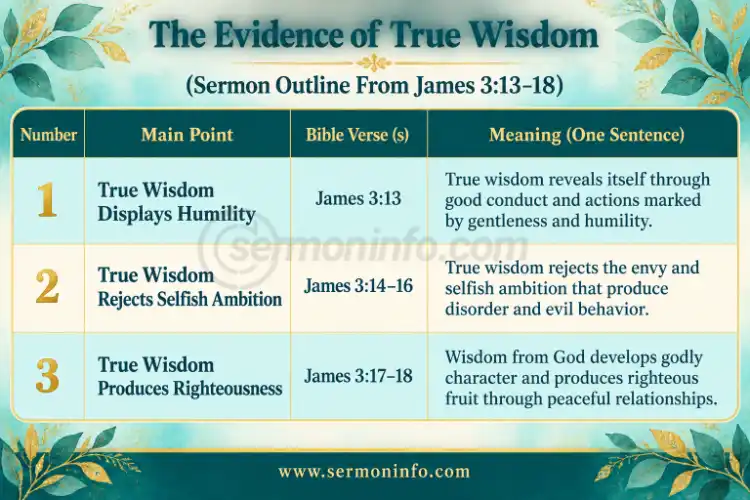
| Sermon Outline From James 3:13-18 – Sermon Outlines From James | |||
|---|---|---|---|
| Number | Main Point | Bible Verse | Meaning |
| 1 | True Wisdom Displays Humility | James 3:13 | True wisdom reveals itself through good conduct and actions marked by gentleness and humility. |
| 2 | True Wisdom Rejects Selfish Ambition | James 3:14–16 | True wisdom rejects the envy and selfish ambition that produce disorder and evil behavior. |
| 3 | True Wisdom Produces Righteousness | James 3:17–18 | Wisdom from God develops godly character and produces righteous fruit through peaceful relationships. |
Source Material
William MacDonald, Believer’s Bible Commentary, rev. ed. (Nashville: Thomas Nelson, 1995), 2233-2235
John MacArthur, The MacArthur Bible Commentary (Nashville: Thomas Nelson, 2005), 1890-1891
John F. Walvoord and Roy B. Zuck, eds., The Bible Knowledge Commentary: New Testament (Colorado Springs, CO: David C. Cook, 1985), 828-829