Godly Wisdom Displayed (Sermon Outlines From James 3:13–18) is the visible expression of God’s truth in a believer’s life, marked by humble conduct and pure motives. It rejects envy and selfish ambition, and it produces peace and righteousness. This wisdom comes from above and reflects God’s holy character in daily living.

Key Takeaways – Godly Wisdom Displayed
- True wisdom shows in daily conduct. Godly wisdom does not rest in words alone. It appears through humble actions, good works, and consistent obedience (James 3:13). If Christ rules your heart, others will see it in your character.
- Worldly wisdom produces envy and disorder. Bitter jealousy and selfish ambition reveal earthly thinking, not spiritual maturity (James 3:14–16). When you guard your heart from pride, you protect your relationships and honor God.
- Heavenly wisdom brings peace and righteousness. Wisdom from above is pure, gentle, and full of mercy (James 3:17–18). When you sow peace in faith, God grows lasting spiritual fruit in your life and community.
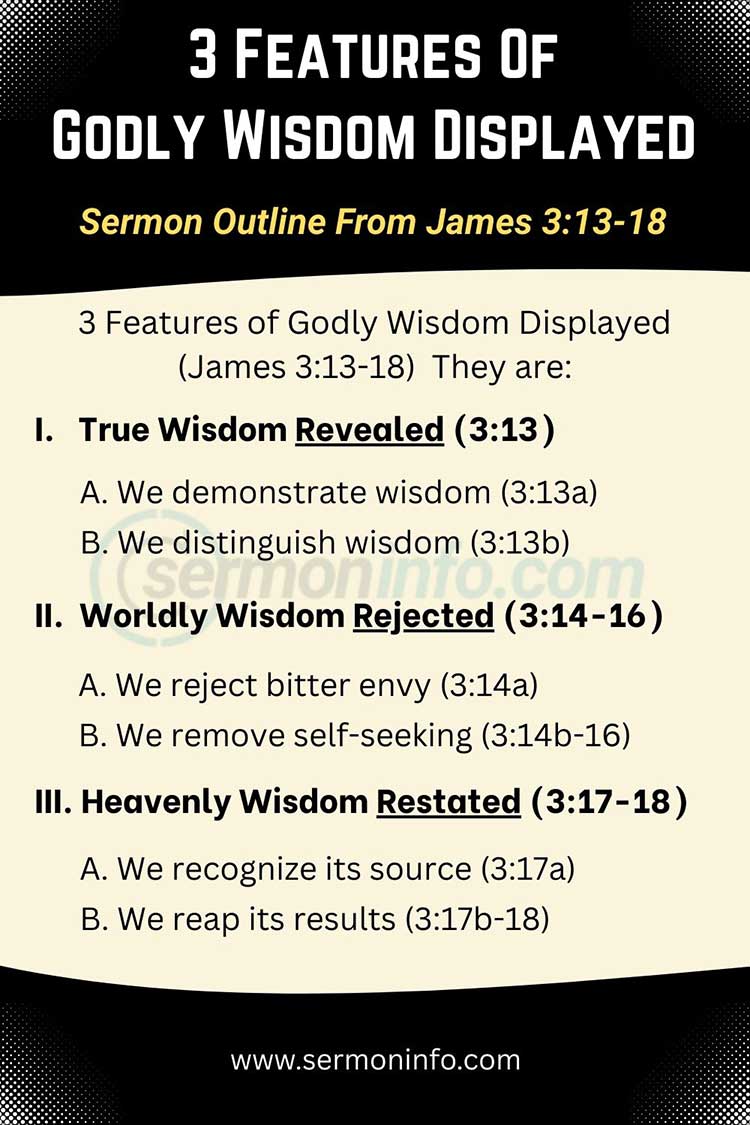
Sermon Outline From James 3:13-18
We live in a world flooded with opinions, advice, and strong voices. Everyone claims insight. Social media rewards confidence, not character. Yet Scripture asks a piercing question: “Who is wise and understanding among you?” James does not measure wisdom by titles or talk. He measures it by life. Real wisdom shows up in how we act, speak, and respond under pressure.
Today we will open James 3:13–18 and examine wisdom that truly comes from above. We will see how godly wisdom reveals itself, rejects envy and selfish ambition, and produces righteous fruit. This passage calls us to examine our hearts. It invites us to seek wisdom that reflects God’s holiness and brings peace.
1. True Wisdom Revealed (3:13)
James teaches that true wisdom proves itself through visible conduct and humble character, not through proud words or intellectual claims.
A. We demonstrate wisdom (3:13a)
James asks, “Who is wise and understanding among you?” Then he answers his own question. He says, “Let him show by good conduct that his works are done in the meekness of wisdom” (James 3:13, NKJV). Genuine wisdom appears in daily obedience. Spiritual maturity shows itself in consistent, faithful living.
In the early church, some claimed to be teachers, yet their lives stirred conflict. James corrects that spirit. He points to conduct, not credentials. Jesus said, “By their fruits you will know them” (Matthew 7:20). When trials press us, wisdom shows in patience, kindness, and steady faithfulness.
B. We distinguish wisdom (3:13b)
Notice next that James connects wisdom with meekness. He speaks of “the meekness of wisdom.” Believers must discern true wisdom by its humility. Wisdom from God never parades itself. It does not boast. It bows before the Lord and serves others quietly.
In a world that prizes loud confidence, Scripture honors gentle strength. Proverbs 11:2 says, “With the humble is wisdom.” Christ described Himself as “gentle and lowly in heart” (Matthew 11:29). When we see humility, teachability, and grace under pressure, we recognize wisdom from above at work.
This material provides some ideas and thoughts for a sermon outline from James 3:13-18 (Godly Wisdom Displayed).
2. Worldly Wisdom Rejected (3:14–16)
James exposes earthly wisdom as rooted in envy and selfish ambition, which always produces confusion and moral disorder.
A. We reject bitter envy (3:14a)
James warns, “If you have bitter envy in your hearts, do not boast and lie against the truth” (James 3:14, NKJV). Bitter jealousy reveals a heart that competes for position. Instead of trusting God’s sovereign will, it resents another person’s blessing and questions God’s wisdom.
In the early church, some desired influence and recognition as teachers. That same struggle appears today. Envy quietly compares and competes. Yet Proverbs 14:30 says envy rots the bones. When we trust God’s plan for our lives, we rest in His goodness and reject jealous striving.
B. We reject self seeking (3:14b–16)
James also exposes self seeking ambition. He says this wisdom is earthly, sensual, and demonic (James 3:15). Selfish ambition corrupts spiritual leadership because it exalts self above righteousness. It does not descend from heaven. It reflects the pride that first rose in Satan’s heart.
Notice the result in verse 16: “confusion and every evil thing.” When leaders chase applause, churches fracture. When believers seek status, unity suffers. Christ showed a better way. He humbled Himself and served (Philippians 2:5–8). True greatness bows before God and builds others up.
3. Heavenly Wisdom Restated (3:17–18)
James describes wisdom from above as pure, peaceable, and fruitful, showing that God’s wisdom reflects His holy character and produces lasting righteousness.
A. We recognize its source (3:17a)
James now lifts our eyes upward and says, “The wisdom that is from above is first pure” (James 3:17, NKJV). True wisdom comes from God. It does not rise from human insight. It descends from the Father of lights, as James 1:17 declares, and it reflects His holy character.
Because it comes from God, it mirrors His purity. Holiness always stands first in the list. God never separates wisdom from righteousness. When we seek His Word, pray for guidance, and submit to His will, we draw from a pure fountain that never runs dry.
B. We reap its results (3:17b–18)
Notice next the fruit of heavenly wisdom. James describes it as peaceable, gentle, merciful, and sincere. These qualities shape relationships inside the church. They calm conflict and soften harsh words. When believers act this way, they reflect Christ, who is our wisdom from God (1 Corinthians 1:30).
Verse 18 gives a beautiful picture. “The fruit of righteousness is sown in peace by those who make peace.” When we sow mercy and patience, God grows righteousness. Like a farmer who trusts the soil, we trust God to bring increase that blesses our homes, our church, and even our community.
Conclusion
James has shown us what true wisdom looks like. Godly wisdom reveals itself through good conduct and humble hearts. It rejects bitter envy and selfish ambition that produce confusion. It comes from above, pure and peaceable. Finally, it sows peace and reaps righteousness. Wisdom from God shapes both our character and our relationships.
Now the question turns to us. Will we seek wisdom from above, or follow the world’s pride? Christ is the wisdom of God (1 Corinthians 1:24). Admit your sin before Him. Believe in His finished work on the cross. Confess Him as Lord. Dedicate your life to Him. When you trust Him fully, He will guide your steps in true wisdom.
Closing Prayer
Heavenly Father, we thank You for the clear truth of Your Word. You have shown us what true wisdom looks like. Forgive us for moments of pride, envy, and selfish ambition. Cleanse our hearts and make us pure. Teach us to walk in humility and peace. Shape our conduct so others see Christ in us.
Lord Jesus, You are the wisdom of God. We trust You as our Savior and Lord. Fill us with wisdom from above. Help us sow peace in our homes and relationships. Produce a harvest of righteousness through our lives. Keep us faithful until the day we see You face to face. In Jesus’ Name, Amen.
Frequently Asked Questions (FAQ)
Q: What is godly wisdom according to James 3?
A: Godly wisdom is wisdom from above that reveals itself through pure motives, humble conduct, and peaceful relationships (James 3:13, 17). It contrasts with earthly wisdom driven by envy and selfish ambition. True wisdom reflects God’s holy character and produces righteous fruit.
Q: How can you tell if someone has godly wisdom?
A: You can recognize godly wisdom by consistent obedience, meekness, and mercy (James 3:13, 17). It avoids jealousy and pride. Instead of causing division, it promotes peace. Jesus taught that we know a tree by its fruit (Matthew 7:20).
Q: What is the difference between earthly and heavenly wisdom?
A: Earthly wisdom springs from envy, self seeking, and pride, and it leads to confusion and disorder (James 3:14–16). Heavenly wisdom comes from God. It is pure, peaceable, gentle, and full of mercy, producing righteousness in those who practice it.
Q: Why does James connect wisdom with humility?
A: James links wisdom with meekness because true wisdom reflects God’s character (James 3:13). Humility submits to God’s authority and serves others. Pride exalts self, but wisdom bows before the Lord and trusts His sovereign plan.
Q: How do believers grow in godly wisdom?
A: Believers grow in godly wisdom by seeking God’s Word, praying for guidance, and obeying truth (James 1:5). As we walk with Christ, the Holy Spirit shapes our character. God then produces peace and righteous fruit in our lives.

Believer’s Bible Commentary by William MacDonald
BONUS: Why does James call earthly wisdom “sensual and demonic”?
James calls earthly wisdom “sensual and demonic” because it does not come from God (James 3:15, NKJV). The word sensual describes a natural, flesh driven mindset that follows human desire instead of the Spirit. It operates without submission to Scripture. Paul contrasts this with spiritual discernment in 1 Corinthians 2:14.
James also says such wisdom is demonic because it reflects Satan’s pride and rebellion. Envy and selfish ambition mirror the devil’s character (Isaiah 14:12–14). When people exalt self above righteousness, they echo that same spirit. Earthly wisdom produces confusion and evil works, not peace and holiness (James 3:16).
BONUS: What are the seven qualities of wisdom from above in James 3:17?
James 3:17 lists seven qualities of wisdom from above. It is first pure, then peaceable, gentle, willing to yield, full of mercy and good fruits, without partiality, and without hypocrisy. Purity comes first because God is holy (1 Peter 1:16). True wisdom reflects His righteous character.
This wisdom seeks peace instead of conflict and shows gentleness in response to pressure. It remains open to reason and correction; It practices mercy and produces visible fruit. It treats people fairly and lives sincerely before God. These qualities reveal Christ’s life working within us (1 Corinthians 1:30).
BONUS: How does James 3:13–18 apply to leadership and teaching in the local assembly?
James writes to believers where many desired to teach (James 3:1). He reminds leaders that wisdom shows through good conduct and meekness (James 3:13). Teaching requires more than knowledge. It demands a humble life that reflects Christ. Paul told Timothy to be an example in word and conduct (1 Timothy 4:12).
James warns that envy and selfish ambition destroy spiritual leadership (James 3:14–16). When leaders seek position, confusion follows. Instead, wisdom from above produces purity, peace, and mercy (James 3:17). Faithful leaders must pursue holiness and unity so God grows righteousness among His people (James 3:18).
| Sermon Outline From James 3:13-18 | |||
|---|---|---|---|
| Number | Main Point | Bible Verse | Meaning |
| 1 | True Wisdom Revealed | James 3:13 | True wisdom shows itself through humble conduct and consistent obedience, not proud words or empty claims. |
| 2 | Worldly Wisdom Rejected | James 3:14-16 | Earthly wisdom flows from envy and selfish ambition and produces confusion, disorder, and spiritual harm. |
| 3 | Heavenly Wisdom Restated | James 3:17-18 | Wisdom from above reflects God’s purity and peace and produces a harvest of righteousness in those who practice it. |