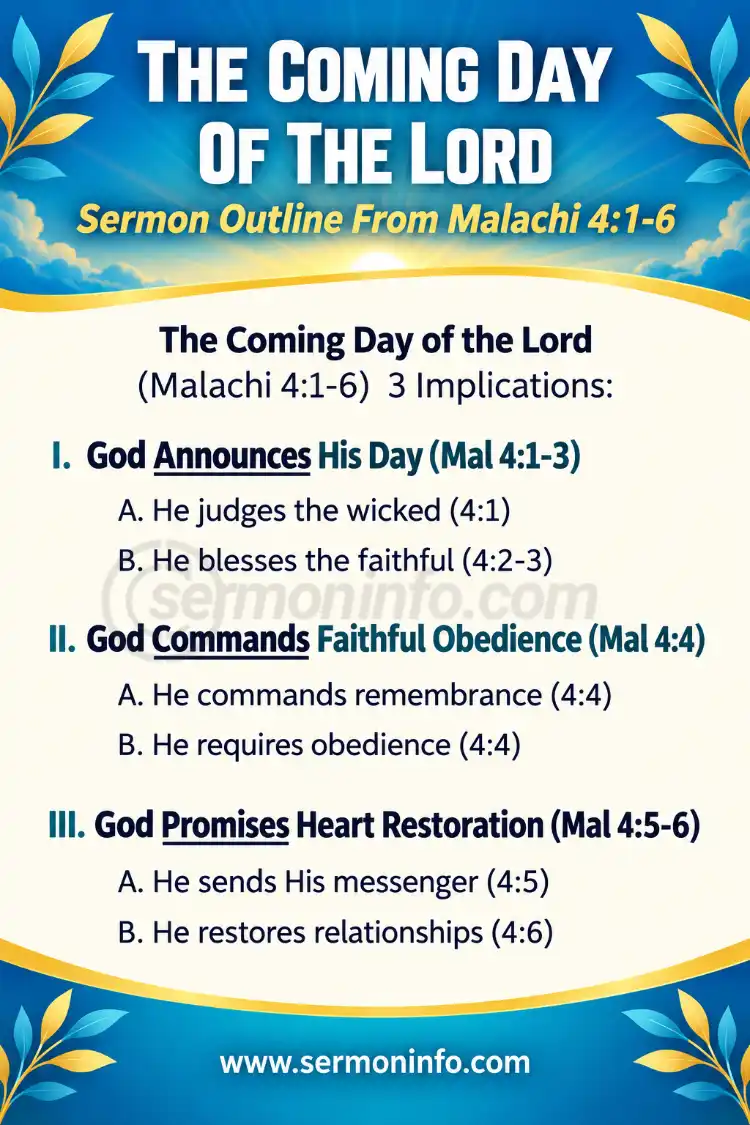
The coming day of the Lord describes God’s future intervention to judge wickedness and bless those who fear His name. The Sermon Outline From Malachi 4:1–6 connects this day with Israel’s responsibility to remember Moses’ law and God’s promise to send Elijah. These truths emphasize God’s justice and His call to repentance.

Key Takeaways – Sermon From Malachi 4:1-6
- God announces His day: The coming day of the Lord brings judgment and blessing (Malachi 4:1–3). Honor God and trust His justice when evil seems to prosper.
- God commands faithful obedience: God called Israel to remember and obey His law (Malachi 4:4). Treasure His Word and put its teaching into practice.
- God promises heart restoration: God promises Elijah’s ministry to turn hearts toward reconciliation (Malachi 4:5–6). Respond to His Word with repentance and pursue peace within your family.
Sermon Outline From Malachi 4:1-6
When evil seems to flourish, do you wonder when God will act? The coming day of the Lord answers that concern. Through Malachi, God warned Israel that He would judge wickedness and bring healing to those who feared His name. His promises give us hope as we await restoration under Christ’s righteous rule.
This passage also calls us to consider how we live today. God announces His day, commands faithful obedience, and promises heart restoration. As we explore these truths, let’s examine our response to His Word. Are we honoring Him, obeying His commands, and allowing His truth to change our hearts? Let’s begin with God’s announcement of His coming day.
1. God Announces His Day (Malachi 4:1–3)
“‘For behold, the day is coming, Burning like an oven, And all the proud, yes, all who do wickedly will be stubble. And the day which is coming shall burn them up,’ Says the Lord of hosts, ‘That will leave them neither root nor branch. But to you who fear My name The Sun of Righteousness shall arise With healing in His wings; And you shall go out And grow fat like stall-fed calves. You shall trample the wicked, For they shall be ashes under the soles of your feet On the day that I do this,’ Says the Lord of hosts.” (Malachi 4:1-3)
A. He judges the wicked (Malachi 4:1)
Some Israelites thought the wicked prospered without consequences (Malachi 3:15). God answered with a powerful picture: dry stubble meeting blazing fire. His coming judgment will consume the proud and those who practice wickedness. Neither root nor branch will remain. This image declares the thoroughness of His judgment. No one can hide behind wealth, influence, or outward religion.
When dishonesty brings someone success, we may wonder whether doing right matters. God’s warning assures us that evil will not escape His justice. However, this truth should also search our hearts. Pride can enter our homes, decisions, and conversations. Let’s confess our sin, trust Christ for forgiveness, and leave final judgment with God.
B. He blesses the faithful (Malachi 4:2–3)
God promises healing and joy to those who fear His name (Malachi 4:2–3). The rising sun pictures righteousness breaking through the darkness of injustice. Christians have traditionally connected this image with Christ. Here the emphasis falls on God’s promised restoration. Like calves enjoying freedom, His people will rejoice as He delivers them from wickedness.
We look forward to this restoration under Christ’s righteous rule. His coming victory gives us courage when obedience feels costly. These promises assure us of future blessing without guaranteeing immediate relief from every hardship. God has not forgotten His people. Keep trusting His Word and honoring Him. His coming day will reveal His justice and faithfulness. (Source Material: William MacDonald, Believer’s Bible Commentary, p.1177)
This material provides some ideas and thoughts for a sermon outline from Malachi 4:1-6 (The Coming Day of the Lord).
2. God Commands Faithful Obedience (Malachi 4:4)
“Remember the Law of Moses, My servant, Which I commanded him in Horeb for all Israel, With the statutes and judgments.” (Malachi 4:4)
A. He commands remembrance (Malachi 4:4)
Before describing the promised messenger, God directs Israel back to His written Word. He commands them to remember the law He gave Moses at Horeb, also called Sinai. That law guided Israel’s covenant relationship with Him. Remembering meant keeping His instruction before their hearts, allowing His truth to shape their thinking and daily choices.
We also need God’s Word when life feels uncertain. Like a lamp on a dark path, Scripture helps us see our next step (Psalm 119:105). When worry fills your mind, pause and recall what God has said. Read carefully, reflect prayerfully, and treasure His truth. His Word gives steady guidance when our feelings change.
B. He requires obedience (Malachi 4:4)
God mentions His statutes and judgments because He expects Israel to practice what He commanded. Remembering His law involved more than repeating familiar words. His instructions governed worship, justice, and everyday relationships. A person could remember a command against dishonesty and still cheat a neighbor. God called His people to bring their conduct under His authority.
Christians live under the new covenant, and obedience flows from salvation by grace through faith (Ephesians 2:8–10). James urges us to practice the Word we hear (James 1:22). That may mean telling the truth at work or forgiving someone who hurt us. When obedience feels costly, trust God and take the next faithful step. (Source Material: John MacArthur, The MacArthur Bible Commentary, pp. 1087-1088)
3. God Promises Heart Restoration (Malachi 4:5–6)
“Behold, I will send you Elijah the prophet Before the coming of the great and dreadful day of the Lord. And he will turn The hearts of the fathers to the children, And the hearts of the children to their fathers, Lest I come and strike the earth with a curse.” (Malachi 4:5-7)
A. He sends His messenger (Malachi 4:5)
God promises to send Elijah before the great and dreadful day of the Lord (Malachi 4:5). Jesus connects this promise with John the Baptist (Matthew 17:10–13). John came in Elijah’s spirit and power, calling Israel back to God (Luke 1:16–17). His ministry prepared people for Christ’s first coming.
We understand John’s ministry as anticipating further preparation before Christ’s return. Some expect Elijah himself; others expect a messenger with a similar ministry. We should hold those details with humility while trusting God’s promise. His warning calls us to repentance. When Scripture exposes sin, turn to Christ and respond to His Word with obedience.
B. He restores relationships (Malachi 4:6)
God’s restoring work begins with hearts turning back to Him, as Luke 1:16–17 explains. Through the promised ministry, He also turns fathers’ and children’s hearts toward one another (Malachi 4:6). Reconciliation with God brings change into family relationships. This promise anticipates widespread repentance as God prepares people for His kingdom. Yet continued rebellion brings judgment.
Perhaps silence has settled between you and someone in your family. Begin by bringing your own heart before God. Confess your sin and seek His help to love that person. Then admit your wrong, ask forgiveness, and listen patiently. You cannot control their response, but you can pursue peace (Romans 12:18). Keep trusting God as you patiently rebuild trust. (Source Material: John F. Walvoord and Roy B. Zuck, The Bible Knowledge Commentary: Old Testament, pp. 1586-1588)
Conclusion
The coming day of the Lord reminds us that God will fulfill His Word. He announces His day, commands faithful obedience, and promises heart restoration. God will judge wickedness and bring healing and joy to those who honor Him. As we await Christ’s righteous rule, His promises strengthen our hope and call us to faithful living.
As we read Scripture, let’s understand its message and respond with faith. When God exposes sin, confess it and trust Christ’s finished work for forgiveness. Let renewed fellowship with God shape your obedience and your relationships. Pursue peace within your family, and trust His justice during difficult times. The Lord holds the future, so we can obey Him confidently today.
Closing Prayer
Heavenly Father, thank You for Your faithful Word and the hope of Christ’s return. Teach us to honor Your name and trust Your justice when evil seems to prosper. Forgive our pride and disobedience. Help us remember Your truth and obey You with willing hearts. Strengthen our faith as we await Your promised restoration.
Lord, turn our hearts toward You through repentance and faith in Jesus Christ. Let Your grace shape our words, choices, and relationships. Give us humility to confess our wrongs, forgive others, and pursue peace within our families. Help us live faithfully today as we look forward to Christ’s righteous reign. We pray in Jesus’ name, amen.
Frequently Asked Questions (FAQ)
Q: What is the great and dreadful day of the Lord?
A: The day of the Lord is God’s appointed time to judge wickedness and establish His righteous rule. Malachi 4:1–3 describes judgment for the proud and healing for those who fear His name. This coming day calls us to repentance, obedience, and confident trust in God.
Q: What is the Sun of Righteousness in Malachi 4:2?
A: The Sun of Righteousness pictures God’s righteousness bringing healing and deliverance to those who honor Him. Christians commonly understand this image as pointing to Jesus Christ and His coming reign. Like sunrise after darkness, His arrival brings hope, joy, and victory for His people.
Q: What does “healing in His wings” mean?
A: “Healing in His wings” pictures restoration spreading like the sun’s rays in Malachi 4:2. God promises healing and joy to those who fear His name when His day comes. This future promise strengthens our hope without guaranteeing immediate physical healing for every believer today.
Q: Why does God promise to send Elijah before the day of the Lord?
A: God promises Elijah’s ministry to call people to repentance and restore relationships before judgment arrives (Malachi 4:5–6). John the Baptist served in Elijah’s spirit and power (Luke 1:17). For many bible students, the prophecy also anticipates future preparation for the Lord’s coming day.
Q: What does turning fathers’ hearts toward their children mean?
A: Malachi 4:6 describes God turning fathers’ and children’s hearts toward one another through Elijah’s ministry. This promise connects restored family relationships with repentance and renewed faithfulness to God. For believers today, it encourages humble confession, patient listening, forgiveness, and sincere efforts to pursue peace at home.
BONUS: What is the main message of Malachi 4:1–6?
Malachi 4:1–6 announces God’s coming judgment and His promised blessing for those who fear His name. God calls Israel to remember Moses’ law and promises Elijah’s ministry to turn hearts toward repentance. The passage reveals His justice, faithfulness, and desire for His people to return to Him.
For believers today, these truths encourage reverence, obedience, and trust in God’s promises. We should understand His instructions within Israel’s covenant setting, then apply their enduring principles. Treasure Scripture, practice its teaching, and pursue reconciliation that begins with turning toward God. His coming justice assures us that wickedness will not triumph forever.
BONUS: What is the Day of the Lord in Malachi 4?
The Day of the Lord describes God’s decisive intervention to judge wickedness and bring healing to those who honor Him. Malachi contrasts consuming fire for the proud with healing sunshine for the faithful (Malachi 4:1–3). This day will reveal God’s justice and demonstrate that He remembers His people.
For many bible students, this prophecy anticipates Christ’s future return and the restoration His righteous reign will bring. Jesus identifies John the Baptist with Elijah’s promised role (Matthew 17:10–13), while we anticipate further preparation before final fulfillment. These promises encourage us to trust God, reject sin, and remain faithful through hardship.
BONUS: What does Malachi 4:1 teach about God’s judgment?
Malachi 4:1 teaches that God will certainly and thoroughly judge the proud and wicked. The prophet compares them to dry stubble that a blazing fire consumes. The picture of neither root nor branch remaining emphasizes judgment’s completeness. God’s patience never means that He approves of evil or overlooks rebellion.
This warning calls us to examine our hearts before condemning others. Pride, dishonesty, and stubborn disobedience offend God, even when people excuse them. Turn from sin and trust Jesus Christ, who bore our sins (1 Peter 2:24). Believers can pursue what honors God and leave vengeance with Him (Romans 12:19).
BONUS: Was John the Baptist the Elijah promised in Malachi 4:5–6?
John the Baptist fulfilled the Elijah role that Jesus identified in Matthew 11:14 and 17:10–13. John came in Elijah’s spirit and power, calling people to repentance and preparing them for Christ (Luke 1:16–17). He carried out a similar prophetic ministry; he was not Elijah personally returning.
For many bible students, John’s ministry anticipates further preparation before the final Day of the Lord. Interpreters differ over whether Elijah himself or another messenger will perform that future ministry. We can affirm John’s role while holding the future messenger’s identity with humility. God’s clear purpose remains repentance and restored hearts.
BONUS: When will the prophecy of Malachi 4:1–6 be fulfilled?
Malachi’s message includes an immediate command and promises reaching into the future. Israel needed to remember Moses’ law when Malachi spoke (Malachi 4:4). John the Baptist later fulfilled the Elijah role before Christ’s first coming (Luke 1:16–17). These connections show that the passage addresses more than one moment.
For many bible students, the prophecy reaches its fullest expression through Christ’s future judgment and righteous reign. God will confront wickedness and bring restoration to those who fear Him (Malachi 4:1–3). Scripture gives no date for these events. We should await Christ with confidence and practice faithful obedience today.
BONUS: How should Christians apply Malachi 4:1–6 today?
Christians should first recognize that Malachi addressed Israel under the Mosaic covenant. We can then apply the passage’s enduring truths: God judges evil, keeps His promises, and calls His people to obedience. Treasure His Word and practice its teaching (James 1:22). Let His coming justice strengthen your faith when wrongdoing seems to prosper.
Respond to God with repentance and trust in Jesus Christ. Let renewed fellowship with Him shape your family relationships through humility, forgiveness, and patient love. Pursue peace wherever possible (Romans 12:18). Remember that grace produces obedience; good works never purchase salvation (Ephesians 2:8–10). God’s promised future gives us courage to honor Him today.
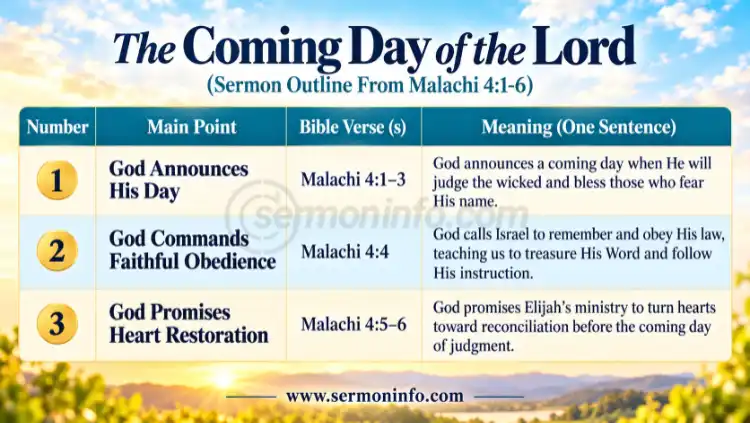
| Sermon Outline From Malachi 4:1-6 – Sermon Outlines From Malachi | |||
|---|---|---|---|
| Number | Main Point | Bible Verse | Meaning |
| 1 | God Announces His Day | Malachi 4:1–3 | God announces a coming day when He will judge the wicked and bless those who fear His name. |
| 2 | God Commands Faithful Obedience | Malachi 4:4 | God calls Israel to remember and obey His law, teaching us to treasure His Word and follow His instruction. |
| 3 | God Promises Heart Restoration | Malachi 4:5–6 | God promises Elijah’s ministry to turn hearts toward reconciliation before the coming day of judgment. |
Source Material
William MacDonald, Believer’s Bible Commentary, rev. ed. (Nashville: Thomas Nelson, 1995), 1177
John MacArthur, The MacArthur Bible Commentary (Nashville: Thomas Nelson, 2005), 1087-1088
John F. Walvoord and Roy B. Zuck, eds., The Bible Knowledge Commentary: Old Testament (Colorado Springs, CO: David C. Cook, 1985), 1586-1588