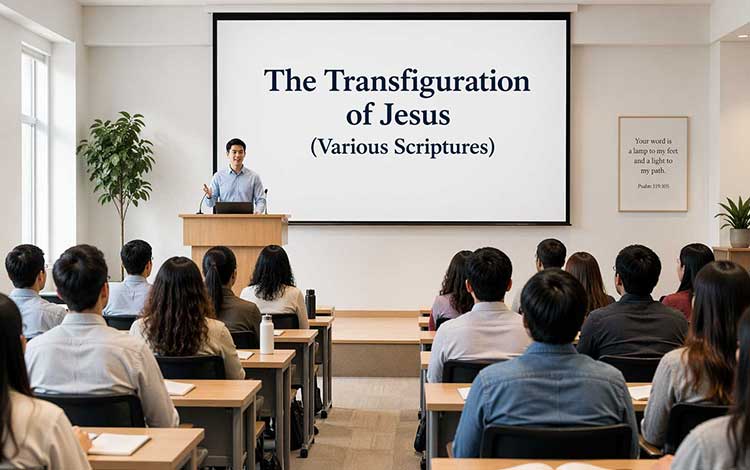
The Transfiguration of Jesus (explained) is a moment when Christ revealed His divine glory before selected disciples and received the Father’s public affirmation as His Son (Matthew 17:2–5). It confirmed His identity and prepared His disciples to trust His mission, especially His coming death and resurrection.
Key Takeaways – The Transfiguration of Jesus Explained
- We see Jesus for who He truly is. The Transfiguration reveals Christ’s divine glory and confirms Him as God’s Son (Matthew 17:2–5), so trust Him fully in every area of life.
- We hold firm to faith in hard seasons. God gave the disciples a glimpse of glory to strengthen them before the cross (Matthew 17:9), so remember His promises when trials come.
- We fix our focus on Christ alone. When the vision ended, only Jesus remained (Matthew 17:8), so listen to Him, follow Him, and build your life on His Word.
The Transfiguration of Jesus Explained
Many believers know Jesus as Savior, yet struggle to grasp His full glory. The Transfiguration gives us a clear glimpse of who He truly is. It shows His majesty before the cross and strengthens our faith in hard times. When life feels uncertain, this moment reminds us that Christ reigns in glory and power.
Today, we will explore “The Transfiguration of Jesus Explained” through key Scriptures. We will see its importance, understand its purpose, and consider its results for our lives. This lesson will guide us to trust Christ more deeply and follow Him with confidence. Let us look closely at this powerful event and hear what God wants to teach us.
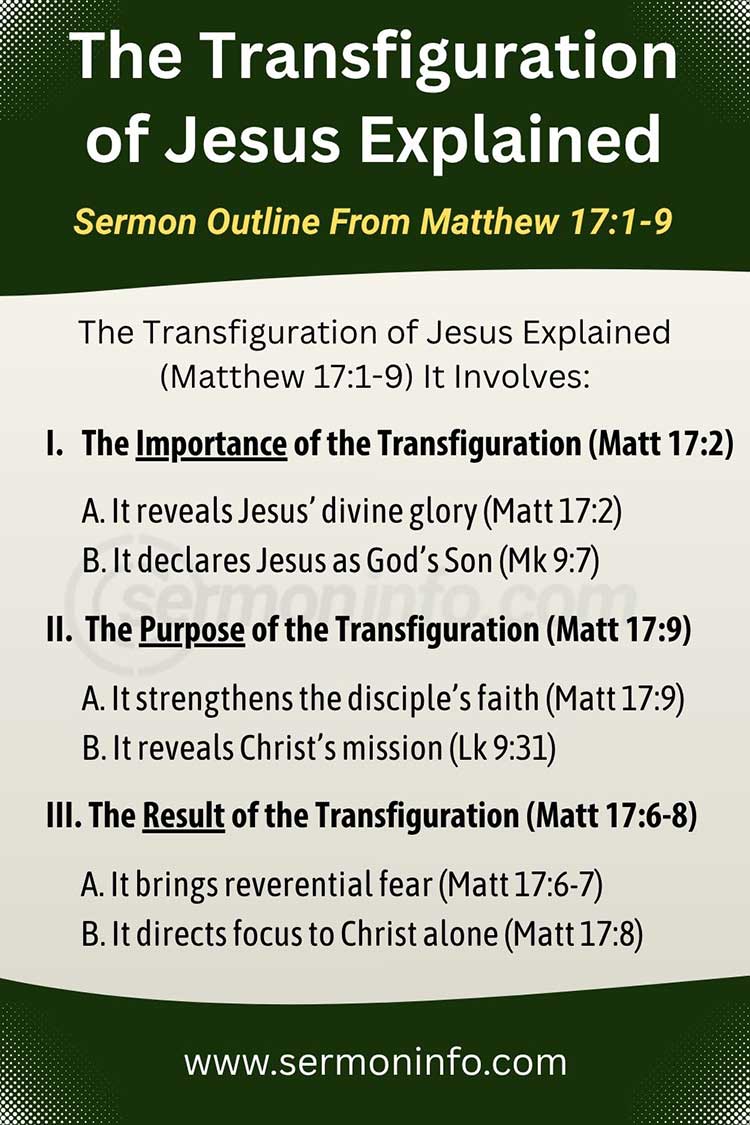
1. The Importance of the Transfiguration (Matthew 17:2)
“He was transfigured before them. His face shone like the sun, and His clothes became as white as the light” (Matthew 17:2)
A. It reveals Jesus’ divine glory (Matthew 17:2)
Jesus shines in radiant light on the mountain, and His face shines like the sun (Matthew 17:2). His clothes become white as light. This moment reveals His divine nature, which remains hidden under His human form. The disciples see a glimpse of heaven on earth, and they witness the glory John later describes (John 1:14).
This truth strengthens us when life feels dark and confusing. Jesus is not only a teacher or prophet. He is God in the flesh, full of glory and power. When trials come, remember His glory does not fade. Trust Him in every season, because the One who shines in glory also walks with you daily (Hebrews 13:8).
B. It declares Jesus as God’s Son (Mark 9:7)
A bright cloud covers them, and God the Father speaks with authority (Mark 9:7). He says, “This is My beloved Son. Hear Him!” This voice confirms that Jesus stands above Moses and Elijah. The Law and the Prophets point to Him. God calls the disciples to listen to Jesus as the final and complete revelation.
This call still speaks to us today. Many voices compete for our attention, but God directs us to His Son. When you face decisions or doubts, listen to Jesus through His Word (John 5:39). His voice brings truth, peace, and direction. Trust Him fully, because the Father has given Him all authority (Matthew 28:18).
This material provides some ideas and thoughts for a message about the transfiguration of Jesus (The Transfiguration of Jesus Explained – Matthew 17:1-9).
2. The Purpose of the Transfiguration (Matthew 17:9)
“Now as they came down from the mountain, Jesus commanded them, saying, ‘Tell the vision to no one until the Son of Man is risen from the dead'” (Matthew 17:9).
A. It strengthens the disciple’s faith (Matthew 17:9)
Jesus gives Peter, James, and John a glimpse of His glory before the cross (Matthew 17:2, 9). He knows they will face fear, confusion, and sorrow. This moment anchors their faith. They see His majesty before they see His suffering. Later, Peter recalls this event to affirm Christ’s power and truth (2 Peter 1:16–18).
We also face seasons that test our faith. God often gives us clear moments of truth to hold onto in hard times. When trials come, remember what God has shown you in His Word. His promises remain sure. Let past glimpses of His faithfulness strengthen you as you walk through present struggles (Psalm 119:50).
B. It reveals Christ’s mission (Luke 9:31)
Moses and Elijah speak with Jesus about His coming “departure” in Jerusalem (Luke 9:31). This points to His death on the cross. The Law and the Prophets agree with His mission. Jesus does not avoid the cross. He moves toward it with purpose. His mission centers on redemption through His sacrifice for sin (Isaiah 53:5).
This truth reminds us that the cross was always God’s plan. Jesus came to save sinners and bring us to God (1 Peter 3:18). When life feels uncertain, remember that God works with purpose. Trust Christ’s finished work on the cross. His mission brings forgiveness, hope, and eternal life to all who believe (John 3:16).
3. The Result of the Transfiguration (Matthew 17:6–8)
“And when the disciples heard it, they fell on their faces and were greatly afraid. But Jesus came and touched them and said, ‘Arise, and do not be afraid.’ When they had lifted up their eyes, they saw no one but Jesus only” (Matthew 17:6-8).
A. It brings reverential fear (Matthew 17:6–7)
The disciples hear the Father’s voice and fall on their faces in fear (Matthew 17:6). They sense the holiness and majesty of God. This is not panic but deep reverence. God’s presence humbles them. Like Isaiah, they feel small before His glory (Isaiah 6:5), and they respond with awe and respect.
Jesus then comes near and touches them, saying, “Arise, and do not be afraid” (Matthew 17:7). He calms their hearts and lifts them up. This shows both God’s holiness and Christ’s compassion. When you feel overwhelmed, remember He draws near. Fear God with reverence, yet trust Christ who comforts and restores (Hebrews 4:16).
B. It directs focus to Christ alone (Matthew 17:8)
When the vision ends, Moses and Elijah disappear, and the disciples see only Jesus (Matthew 17:8). The Law and the Prophets fade from view. Christ remains. This teaches that He is the final authority and the full revelation of God (Hebrews 1:1–2). All Scripture points to Him and finds its meaning in Him.
This truth guides us in daily life. Many voices call for our attention, but Jesus must remain central. Fix your eyes on Him, not on people or circumstances (Hebrews 12:2). When distractions rise, return to Christ. He alone gives truth, direction, and hope for every step you take (John 14:6).
Conclusion
We have seen the importance of the Transfiguration as it reveals Christ’s glory and declares Him as God’s Son; and we have understood its purpose as it strengthens faith and reveals His mission toward the cross. We have considered its results as it brings reverent fear and directs our focus to Jesus alone.
Now respond to what God has shown you today. Fix your eyes on Jesus and trust Him in every season. When fear rises, remember His glory and His care. If you have not trusted Him, come to Christ today. Receive Him as your personal Savior and Lord, and follow Him with a willing heart.
Closing Prayer
Heavenly Father, we thank You for revealing the glory of Your Son on the mountain. You showed us who Jesus truly is, full of power, grace, and truth. Help us to stand in awe of Your holiness and trust Your Word. Strengthen our faith when trials come, and remind us that Your plans are always good.
Lord Jesus, draw us closer to You each day. Fix our hearts on You alone, and guide our steps in truth and obedience. Forgive our sins and renew our minds through Your Word. If anyone has not trusted You, lead them to receive You as Savior and Lord today. Fill us with courage, peace, and lasting hope. We pray all this in Jesus’ Name. Amen.
Frequently Asked Questions (FAQ)
Q: What is the Transfiguration of Jesus?
A: The Transfiguration is the moment when Jesus reveals His divine glory before Peter, James, and John (Matthew 17:2). His appearance changes, and God the Father declares Him as His Son (Matthew 17:5). This event confirms Christ’s identity and strengthens faith in His mission and authority.
Q: Why is the Transfiguration important?
A: The Transfiguration is important because it shows Jesus as fully God and confirms Him as the promised Messiah (Matthew 17:2–5). It strengthens the disciples before the cross and assures believers that Christ’s suffering leads to glory. It calls us to trust Him with confidence.
Q: What happened during the Transfiguration?
A: Jesus is transfigured on a mountain, and His face shines like the sun (Matthew 17:2). Moses and Elijah appear and speak with Him (Luke 9:31). A cloud covers them, and God declares Jesus as His beloved Son, commanding the disciples to hear Him (Mark 9:7).
Q: What is the purpose of the Transfiguration?
A: The Transfiguration prepares the disciples for Jesus’ coming suffering and death (Matthew 17:9). It reveals His mission to redeem through the cross (Luke 9:31). This event strengthens faith and shows that God’s plan unfolds with purpose and power through Christ.
Q: What does the Transfiguration teach believers today?
A: The Transfiguration teaches believers to focus on Jesus as the final authority (Matthew 17:8). It calls us to reverence God, trust Christ’s mission, and hold firm in trials. It reminds us that Jesus is both glorious and present, guiding us through every season.

Men’s Christian Tee Shirts From Amazon
BONUS: Where did the Transfiguration of Jesus take place?
The Transfiguration takes place on a high mountain, set apart from the crowds (Matthew 17:1; Mark 9:2). Jesus leads Peter, James, and John up this mountain for a private moment. Scripture does not name the exact mountain, but many connect it with Mount Hermon or Mount Tabor due to the region described.
This mountain setting shows a place of revelation and communion with God, much like Moses on Sinai (Exodus 24:15–18). Jesus reveals His glory in a quiet place away from distractions. This reminds us to seek God personally. When we draw near to Him, He reveals truth that strengthens our faith (James 4:8).
BONUS: Who appeared with Jesus during the Transfiguration?
Moses and Elijah appear with Jesus during the Transfiguration (Matthew 17:3). Moses represents the Law, and Elijah represents the Prophets. Together, they testify that all Scripture points to Christ. Their presence confirms that Jesus fulfills God’s promises and stands at the center of His redemptive plan (Luke 24:27).
They speak with Jesus about His coming death in Jerusalem (Luke 9:31). This shows that His mission moves toward the cross by divine design. The Law and the Prophets agree with His sacrifice. This truth reminds us that God’s plan unfolds with purpose, and Christ alone brings salvation (Acts 4:12).
BONUS: What did the voice from heaven say at the Transfiguration?
The voice from heaven declares, “This is My beloved Son, in whom I am well pleased. Hear Him!” (Matthew 17:5; Mark 9:7). God the Father affirms Jesus openly before the disciples. This statement confirms His divine identity and authority. It echoes His baptism and shows that Jesus fully satisfies the Father’s will (Matthew 3:17).
The command “Hear Him” calls the disciples to listen and obey Christ above all others. Moses and Elijah fade, but Jesus remains (Matthew 17:8). God directs full attention to His Son as the final authority. Today, we hear Him through Scripture and follow His Word with faith and obedience (John 10:27).
BONUS: How does the Transfiguration connect to the Old Testament Law and Prophets?
Moses and Elijah appear with Jesus, representing the Law and the Prophets (Matthew 17:3). Their presence shows that the Old Testament points to Christ. Jesus fulfills what they wrote and proclaimed. As He explains later, all Scripture testifies of Him (Luke 24:27), confirming His central place in God’s plan.
They speak with Jesus about His coming death in Jerusalem (Luke 9:31). This shows that the Law and the Prophets agree with His mission of redemption. When the vision ends, only Jesus remains (Matthew 17:8). God directs us to Christ as the final authority who completes His Word (Hebrews 1:1–2).
BONUS: Why did Jesus tell the disciples to keep the Transfiguration secret?
Jesus tells the disciples to keep the Transfiguration secret until after His resurrection (Matthew 17:9). He knows they do not yet understand His suffering and death. If they speak too soon, people may expect only glory and reject the cross. God’s plan unfolds in the right time and order (John 7:6).
This command protects the message of the gospel. Jesus must first die and rise again before His glory is fully understood (Luke 24:26). After the resurrection, the disciples boldly testify what they saw (2 Peter 1:16–18). This teaches us to trust God’s timing and proclaim Christ clearly according to His revealed truth.
BONUS: How does the Transfiguration point to Jesus’ resurrection and second coming?
The Transfiguration gives a preview of Christ’s resurrection glory (Matthew 17:2). His radiant appearance points beyond the cross to victory over death. Jesus later commands silence until after He rises (Matthew 17:9), showing the event connects to His resurrection. The disciples see that suffering will lead to glory (Luke 24:26).
This moment also points to Christ’s future return in power and glory (Matthew 24:30). Peter calls it a glimpse of His majesty and coming kingdom (2 Peter 1:16–18). The same Jesus who shone on the mountain will return as King. This truth calls us to live ready, faithful, and full of hope (Titus 2:13).
BONUS: Which books of the Bible reveal the Transfiguration of Jesus Christ?
The Transfiguration appears in three Gospel accounts: Matthew 17:1–9, Mark 9:2–8, and Luke 9:28–36. Each writer records the same event with clear detail. Together, they show Jesus shining in glory and reveal the Father’s voice. These passages confirm Christ’s identity and authority from multiple witnesses (Deuteronomy 19:15).
The event also appears in testimony form in 2 Peter 1:16–18. Peter recalls what he saw on the holy mountain and affirms Christ’s majesty. This confirms the Gospel accounts and strengthens our confidence in Scripture. God provides consistent witness so believers can trust His Word and stand firm in faith (John 20:31).
| The Transfiguration of Jesus – Matthew 17:1-9 | |||
|---|---|---|---|
| Number | Main Point | Bible Verse | Meaning |
| 1 | The Importance of the Transfiguration | Matthew 17:2 | Jesus reveals His divine glory, showing He is more than a teacher and truly God in the flesh. |
| 2 | The Purpose of the Transfiguration | Matthew 17:9 | Jesus strengthens His disciples and prepares them to trust Him through His coming suffering and death. |
| 3 | The Result of the Transfiguration | Matthew 17:6–8 | The disciples respond with reverence and learn to focus on Jesus alone as their final authority. |