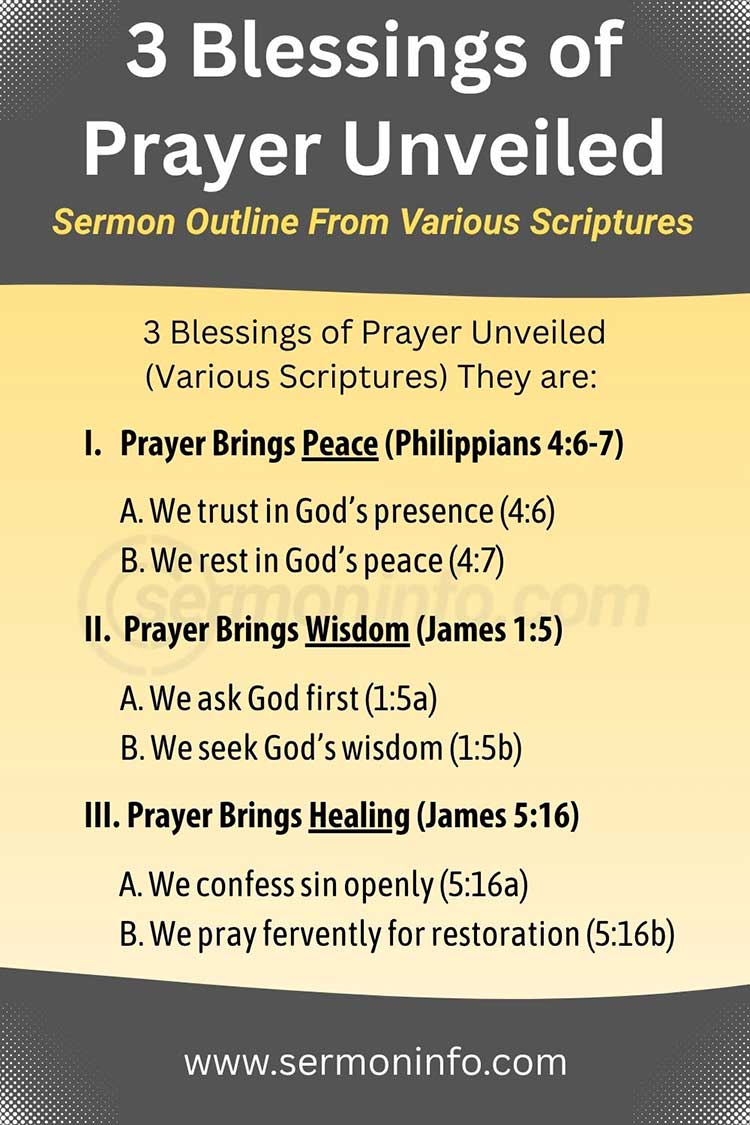
“3 Blessings of Prayer Unveiled” explains how God uses prayer to give peace, wisdom, and healing to believers. It highlights God’s nearness and His generous response to those who seek Him in faith. This truth shows that prayer is both relational and transformative in daily life.

Key Takeaways – 3 Blessings of Prayer Unveiled
- Prayer replaces anxiety with God’s peace – Bring every concern to God in prayer, and He will guard your heart with His peace (Philippians 4:6–7).
- Prayer invites God’s wisdom for daily decisions – Ask God first for guidance, and He will give wisdom generously when you trust Him (James 1:5).
- Prayer restores through confession and faith – Confess sin and pray earnestly, and God will bring healing and spiritual renewal (James 5:16).
3 Blessings of Prayer Unveiled
Many of us face pressure, confusion, and pain, and we quickly reach for advice from others. We send messages, make calls, and search for answers, yet we often delay prayer. We turn to God last instead of first. Still, God invites us to come to Him because He listens, cares, and responds with grace.
Today, we will uncover three blessings God gives through prayer from Scripture. We will see how prayer brings peace in anxious moments, wisdom in difficult decisions, and healing in broken areas. As we walk through these truths, you will discover how prayer draws you closer to God and strengthens your daily life.
1. Prayer Brings Peace (Philippians 4:6–7)
“Be anxious for nothing, but in everything by prayer and supplication, with thanksgiving, let your requests be made known to God; and the peace of God, which surpasses all understanding, will guard your hearts and minds through Christ Jesus” (Philippians 4:6-7).
A. We trust in God’s presence (4:6)
Paul writes from prison, yet he calls believers to reject anxiety and turn to prayer. Philippians 4:6 urges us to bring everything to God with thanksgiving. This command reminds us that God is near, not distant. Psalm 145:18 says the Lord is near to all who call upon Him in truth.
When life feels difficult, we do not face it alone. We speak to a present and attentive Father who listens with care. Like a child running to a loving parent, we bring our needs to Him. As we pray, we grow confident that God sees, hears, and responds in perfect wisdom.
B. We rest in God’s peace (4:7)
After we pray, God gives peace that surpasses all understanding. Philippians 4:7 teaches that His peace guards our hearts and minds in Christ Jesus. This peace does not depend on changing circumstances. It flows from trusting God’s control and resting in His promises.
Think of a soldier standing guard at a city gate. God’s peace stands guard over our inner life. When fear tries to enter, His peace holds the line. Isaiah 26:3 says God keeps in perfect peace those whose minds stay on Him. We rest quietly, knowing Christ holds us secure.
This material provides some ideas and thoughts for a sermon outline about prayer (3 Blessings of Prayer Unveiled).
2. Prayer Brings Wisdom (James 1:5)
“If any of you lacks wisdom, let him ask of God, who gives to all liberally and without reproach, and it will be given to him” (James 1:5).
A. We ask God first (1:5a)
James writes to believers facing trials, calling them to seek God for wisdom. James 1:5 says if anyone lacks wisdom, let him ask of God. This command directs us to God first, not last. Proverbs 2:6 reminds us that the Lord gives wisdom from His mouth.
Too often, we run to others before we pray. Yet God invites us to come directly to Him. Like a traveler asking for directions before a journey, we seek God before decisions. When we ask Him first, we acknowledge His authority and trust His perfect understanding.
B. We seek God’s wisdom (1:5b)
James assures us that God gives generously and without reproach. He does not shame us for asking. Instead, He delights to guide His children. Hebrews 4:16 calls us to come boldly to the throne of grace, where we receive help in time of need.
However, James also calls us to ask in faith. We trust God’s character as we seek His wisdom. Like a child trusting a father’s guidance, we believe He knows what is best. When we ask with faith, God directs our steps and shapes our choices for His glory.
3. Prayer Brings Healing (James 5:16)
“Confess your trespasses to one another, and pray for one another, that you may be healed. The effective, fervent prayer of a righteous man avails much” (James 5:16).
A. We confess sins openly (5:16a)
James writes to believers in need of restoration, urging them to confess their sins to one another. James 5:16 teaches that confession brings healing. Sin disrupts fellowship with God and others. First John 1:9 promises that when we confess, God forgives and cleanses us from all unrighteousness.
When we hide sin, it weighs on the heart like a heavy burden. But when we confess honestly, that burden lifts. Like opening a window in a dark room, light enters and brings clarity. God restores fellowship, and He often brings healing to both the soul and the body.
B. We pray fervently for restoration (5:16b)
James shows that effective prayer flows from a righteous life. He says the effective, fervent prayer of a righteous man avails much. This kind of prayer is not casual or empty. It rises from a heart that seeks God earnestly and trusts His power to act.
Elijah serves as an example in James 5:17–18. He prayed, and God moved in powerful ways. In the same way, we pray with faith, believing God hears us. Like a flame that burns strong, fervent prayer reflects a heart fully engaged with God, trusting Him to restore and heal our soul and body.
Conclusion
We have seen three clear blessings that flow from prayer. Prayer brings peace when anxiety rises and troubles press in; Prayer brings wisdom when we face hard choices and need direction; Prayer also brings healing as we confess sin and seek God with earnest hearts. Each promise reminds us that God meets us when we come to Him.
Now the invitation stands before you. Jesus suffered and died for a purpose, to bring you to God and give you new life. Do not wait or turn elsewhere first. Come to Him today in faith. Trust Him as your Savior and Lord, and begin a life shaped by prayer, peace, wisdom, and restoration.
Closing Prayer
Heavenly Father, we come before You with thankful hearts, praising You for the gift of prayer. Thank You for the peace You give when our hearts feel troubled, for the wisdom You provide when we lack direction, and for the healing You bring when we confess and seek You. Help us come to You first in every need.
Lord Jesus, thank You for suffering with purpose so we could draw near to God. Strengthen our faith to trust You fully as Savior and Lord. Teach us to walk daily in prayer, resting in Your peace, guided by Your wisdom, and renewed by Your grace. In Jesus’ name, we pray. Amen.
Frequently Asked Questions (FAQ)
Q: What are the benefits of prayer according to the Bible?
A: The Bible teaches that prayer brings peace, wisdom, and healing. Philippians 4:6–7 shows prayer replaces anxiety with God’s peace. James 1:5 promises wisdom to those who ask. James 5:16 reveals that prayer restores and heals when offered with faith and confession.
Q: How does prayer bring peace in difficult times?
A: Prayer brings peace by shifting our focus from problems to God’s presence. Philippians 4:7 says God’s peace guards our hearts and minds in Christ. When we pray with thanksgiving, we trust His control, and He calms our inner fears even when circumstances remain unchanged.
Q: How can I receive wisdom from God through prayer?
A: James 1:5 teaches that God gives wisdom to those who ask in faith. You receive wisdom by turning to God first, trusting His Word, and believing He will guide you. God gives generously and does not criticize those who sincerely seek His direction.
Q: Does prayer really lead to healing?
A: Yes, the Bible teaches that prayer can bring healing. James 5:16 says the effective, fervent prayer of a righteous person has great power. Confession restores fellowship, and earnest prayer invites God to work in both spiritual and physical areas according to His will.
Q: Why should I pray instead of relying on myself?
A: Prayer reminds you that God is the source of peace, wisdom, and strength. Proverbs 3:5–6 calls you to trust Him rather than your own understanding. When you pray, you depend on God’s guidance and power, not your limited perspective, and He directs your path.

Prayer: The Ultimate Conversation by Charles F. Stanley
BONUS: What does Philippians 4:6–7 teach about prayer and anxiety?
Philippians 4:6–7 teaches us to replace anxiety with prayer. Paul commands believers to be anxious for nothing, but to bring everything to God with prayer, supplication, and thanksgiving. This instruction shows that worry loses power when we actively trust God. First Peter 5:7 also calls us to cast all our care upon Him.
When we pray, God gives peace that surpasses all understanding. This peace guards our hearts and minds in Christ Jesus. It does not depend on circumstances but on God’s presence. Isaiah 26:3 says God keeps in perfect peace those whose minds stay on Him.
BONUS: Why does God want us to pray instead of worry?
God wants us to pray instead of worry because prayer expresses trust in His care and control. Worry fixes our eyes on problems, but prayer turns us to God. Philippians 4:6 commands us to bring everything to Him. First Peter 5:7 reminds us to cast our cares on Him because He cares for us.
Prayer also draws us into fellowship with God and aligns our hearts with His will. Jesus taught us to pray, “Your will be done” (Matthew 6:10). When we pray, we depend on His wisdom instead of our understanding. As we trust Him, He replaces fear with confidence in His faithful promises.
BONUS: How often should a Christian pray according to the Bible?
The Bible teaches believers to pray continually, not occasionally. First Thessalonians 5:17 says, “pray without ceasing,” which points to a constant attitude of dependence on God. We bring every need, decision, and burden before Him. Luke 18:1 shows that we “always ought to pray and not lose heart.”
This does not mean we speak nonstop words, but we live in steady fellowship with God. We pray throughout the day, in quiet moments and urgent needs. Colossians 4:2 calls us to continue earnestly in prayer with thanksgiving. We keep our hearts turned toward God in every season.
BONUS: What are the conditions for effective prayer in Scripture?
Scripture teaches that effective prayer flows from a right relationship with God. James 5:16 says the prayer of a righteous person has great power. We come through Christ with clean hearts. Psalm 66:18 warns that cherished sin hinders prayer. First John 3:22 shows obedience and a desire to please God matter.
Effective prayer also requires faith and alignment with God’s will. James 1:6 calls us to ask in faith without doubting. First John 5:14 says God hears us when we ask according to His will. As we trust His Word and submit to His purposes, our prayers reflect His heart.
BONUS: Can unanswered prayer still be part of God’s plan?
Yes, unanswered prayer can still fit within God’s perfect plan. God hears every prayer, yet He answers according to His wisdom and purpose. Second Corinthians 12:7–9 shows Paul prayed for relief, but God said, “My grace is sufficient for you.” God sometimes says no or wait to accomplish something greater.
God uses delayed or denied answers to grow our faith and shape our hearts. Romans 8:28 reminds us that all things work together for good to those who love God. When we trust His timing, we rest in His goodness, knowing He always acts for His glory and our eternal benefit.
BONUS: How does confession affect our prayer life?
Confession clears the barrier that sin creates in our fellowship with God. First John 1:9 promises that when we confess, God forgives and cleanses us. Psalm 66:18 warns that hidden sin hinders prayer. When we deal honestly with sin, we come before God with a clean heart and open access.
Confession also strengthens the power and sincerity of our prayers. James 5:16 links confession with effective prayer and healing. As we humble ourselves, we depend on God more fully. Like washing dirt from our hands, confession prepares us to approach God with confidence, clarity, and renewed spiritual strength.
BONUS: Why is my prayer for healing unanswered?
Sometimes God does not answer our prayer for healing in the way we expect because His purpose reaches beyond our present comfort. Second Corinthians 12:8–9 shows Paul asked for healing, yet God gave sustaining grace instead. God always hears, but He answers according to His perfect will and greater plan for our lives.
God may also use sickness to grow faith, refine character, or display His glory. James 1:2–4 teaches that trials produce patience and maturity. At times, God delays or denies healing to draw us closer to Him. We trust His wisdom, knowing He works all things for good (Romans 8:28).
BONUS: Why are my prayers not answered by God?
Sometimes God does not answer our prayers because our hearts are not aligned with His will. James 4:3 says we may ask with wrong motives, seeking our own desires. Psalm 66:18 shows that hidden sin can hinder prayer. God calls us to come with clean hearts and sincere desires.
At other times, God answers in ways we do not expect or at a different time. First John 5:14 teaches that God hears when we ask according to His will. Isaiah 55:8–9 reminds us His ways are higher than ours. We trust His wisdom, knowing He always does what is best.

Alone With God – The Power and Passion of Prayer by John MacArthur
| 3 Blessings of Prayer Unveiled (Various Scriptures) | |||
|---|---|---|---|
| Number | Main Point | Bible Verse | Meaning |
| 1 | Prayer Brings Peace | Philippians 4:6–7 | Prayer replaces anxiety with God’s peace as we trust Him with every concern. |
| 2 | Prayer Brings Wisdom | James 1:5 | Prayer invites God to give clear guidance and understanding when we seek Him first. |
| 3 | Prayer Brings Healing | James 5:16 | Prayer restores and heals as we confess sin and seek God with earnest faith. |