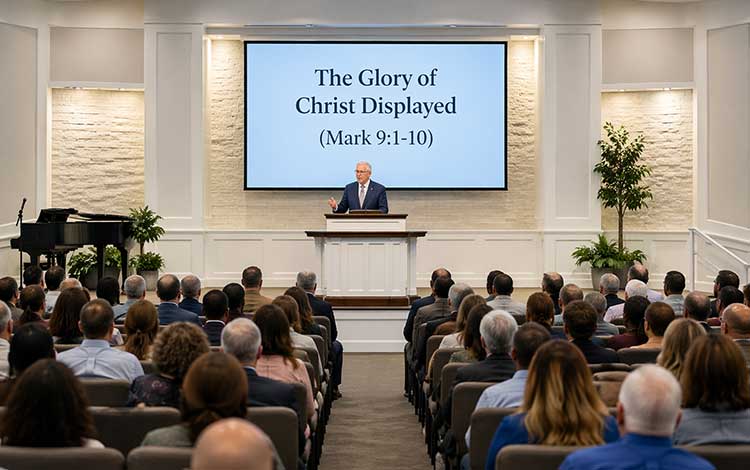
“The Glory of Christ Displayed (Sermon Outline From Mark 9:1–10)” reveals Jesus’ divine nature through His transfiguration and confirms His supreme authority as God’s beloved Son. It calls believers to see His glory clearly and respond with reverent faith and obedient listening to His Word.
Key Takeaways – The Glory of Christ Displayed
- We see Christ’s true glory clearly. Jesus revealed His divine nature in the transfiguration (Mark 9:2–3), reminding us He is God in flesh. Trust Him fully in every season.
- We respond to Christ with humble reverence. The disciples’ fear and confusion (Mark 9:5–6) show we must approach Christ with humility, quiet hearts, and a desire to understand His will.
- We listen to and obey Christ above all. God the Father commands, “Hear Him” (Mark 9:7). Prioritize Christ’s Word daily, and follow His voice with faith and obedience.
Sermon Outline From Mark 9:1-10
Many of us walk through life with questions, burdens, and moments of quiet doubt. We believe in Christ, yet we long to see His glory more clearly. The disciples felt the same need. Before the cross, Jesus took them up a mountain and revealed His glory. They needed that moment to strengthen their faith for what was coming.
This message will show us what they saw and why it matters today. We will explore His radiance, His reverence, and His recommendation in Mark 9:1–10. Each truth points us to Christ’s glory and calls for a response. As we listen, God will guide our hearts to trust His Son more fully.
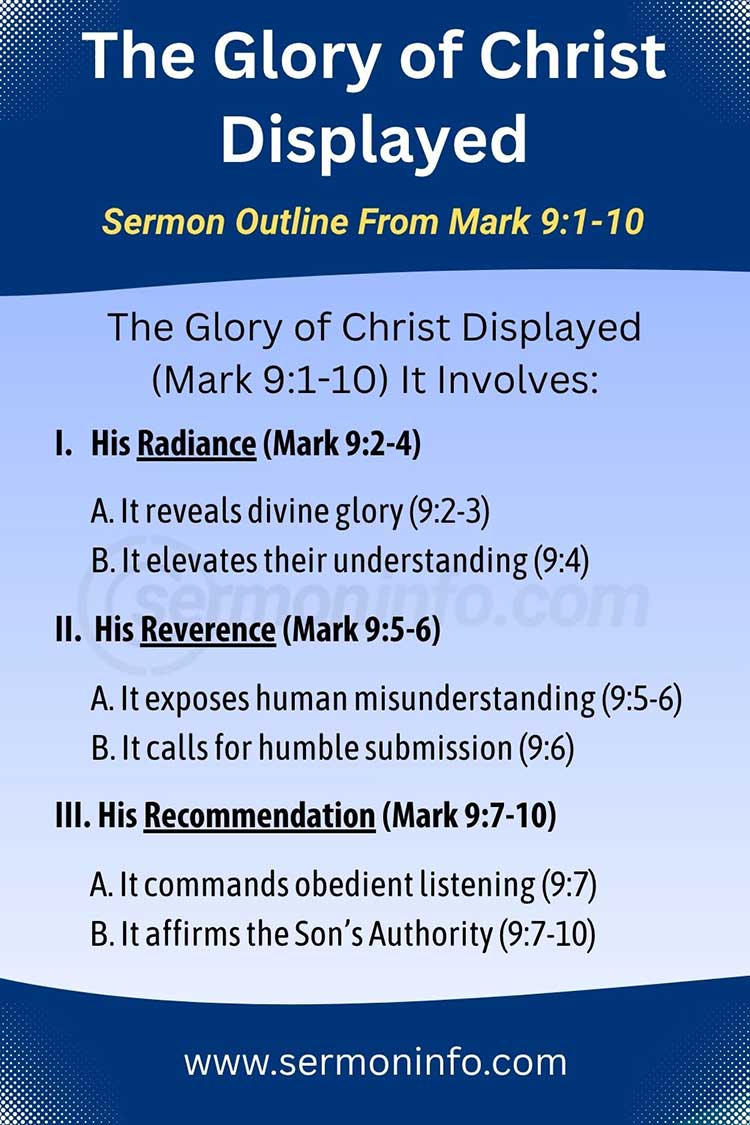
1. His Radiance (Mark 9:2–4)
Christ reveals His divine glory through His transfiguration, confirming He is more than a teacher; He is God in flesh (Summary Statement).
A. It reveals divine glory (9:2–3)
Jesus took Peter, James, and John up a high mountain. There He was transfigured before them. His clothes became shining, exceedingly white, beyond any earthly work (Mark 9:3). This was not reflected light. It was His own glory revealed. He allowed them to see who He truly is, the eternal Son of God.
This moment assures us that Christ is more than a teacher or prophet. He is God in flesh, full of glory and truth (John 1:14). When life feels dark, remember His light does not fade. As we walk with Him, His presence strengthens us. He reveals His glory through His Word and through faithful lives.
B. It elevates their awareness (9:4)
Then Moses and Elijah appeared and spoke with Jesus. This scene lifted the disciples’ understanding. Moses represented the Law, and Elijah represented the Prophets. Both pointed forward to Christ. Now they stood with Him, showing that Jesus fulfills all Scripture. Every promise and prophecy finds its meaning in Him (Luke 24:27).
This truth helps us see the Bible as one united message centered on Christ. When we read Scripture, we should look for Him on every page. In daily life, this keeps our focus clear. In trials, we remember God’s plan stands firm. Christ completes what God began, and we can trust Him fully.
This material provides some ideas and thoughts for a sermon outline from Mark 9:1-10 (The Glory of Christ Displayed).
2. His Reverence (Mark 9:5–6)
Christ’s glory calls for a right response of reverence, correcting fear-driven and misguided human reactions (Summary Statement)>
A. It exposes human misunderstanding (9:5–6)
Peter saw the glory and spoke quickly. He said, “Rabbi, it is good for us to be here” (Mark 9:5). He suggested building three tabernacles. His words revealed confusion. He placed Jesus alongside Moses and Elijah. Fear filled his heart, and he did not understand what to say (Mark 9:6).
We often respond the same way when God moves in power. We speak before we listen, and we try to manage holy moments with human plans. Proverbs 3:5 reminds us to trust the Lord with all our heart. When we misunderstand God’s work, we must slow down and seek His truth.
B. It calls for humble submission (9:6)
This moment teaches us that true reverence requires humility. The disciples stood in awe, yet fear clouded their response. God’s glory does not need our control. It calls for surrender. Psalm 46:10 says, “Be still, and know that I am God.” Stillness allows us to honor His majesty.
In daily life, we show reverence when we submit to Christ’s authority. We quiet our hearts and listen to His Word. James 4:10 says, “Humble yourselves in the sight of the Lord.” When we bow before Him, He lifts us. True reverence brings peace, even in uncertain seasons.

Biblical Preaching by Haddon W Robinson
3. His Recommendation (Mark 9:7–10)
The Father’s voice exalts Christ and directs all people to listen to Him as the final authority (Summary statement).
A. It commands obedient listening (9:7)
A cloud overshadowed them, and the Father spoke, “This is My beloved Son. Hear Him” (Mark 9:7). God directed their focus to Jesus alone. Moses and Elijah faded from view. The Father made it clear that Christ stands above all voices. He alone deserves our full attention and obedience.
This command still speaks today. Many voices compete for our hearts, yet God calls us to hear His Son. Romans 10:17 says faith comes by hearing the Word of God. When we listen to Christ through Scripture, we find direction and peace. Obedience to His voice leads us safely through life.
B. It affirms the Son’s Authority (9:7–10)
The Father’s declaration confirmed Jesus’ divine authority. After the voice spoke, they saw only Jesus (Mark 9:8). He then taught them about His coming resurrection (Mark 9:9). This showed His power over life and death. Christ did not guess the future; He declared it with certainty and authority.
This truth gives strong hope in uncertain times. Jesus holds authority over every part of life, even death itself. He said, “I am the resurrection and the life” (John 11:25). When we trust Him, we rest in His control. His authority secures our future and steadies our present walk.
Conclusion
We have seen Christ’s glory displayed on the mountain. Jesus’ radiance revealed His divine nature. His reverence corrected human misunderstanding and called for humility. His recommendation directed all to hear the Son. Each moment showed who Jesus is and why He alone deserves our trust, worship, and obedience.
Now the truth calls for a response. Will you hear Him and follow Him today? Turn from sin and trust Christ as your Savior. Believe He died and rose again for you (Romans 10:9). Confess Him as Lord and give Him your life. When you trust Him, His glory will guide your steps.
Closing Prayer
Heavenly Father, we thank You for revealing the glory of Your Son. You opened our eyes through Your Word and showed us who Jesus truly is. Help us remember His radiance, respond with reverence, and listen with obedient hearts. Strengthen our faith in difficult moments. Let Your truth settle deep within us and guide our daily walk.
Lord Jesus, we trust You as our Savior and Lord. Forgive our sins and lead us in Your ways. Teach us to hear Your voice above all others. Give us courage to follow You with joy and faith. Fill our hearts with peace and purpose. May Your glory shine through our lives for Your honor. We pray in Jesus’ Name. Amen.
Frequently Asked Questions (FAQ)
Q: What is the Transfiguration of Jesus in Mark 9?
A: The Transfiguration is when Jesus revealed His divine glory before Peter, James, and John (Mark 9:2–3). His appearance changed, and His clothes shone brightly. This moment confirmed He is God’s Son and gave the disciples a glimpse of His heavenly glory.
Q: Why did Moses and Elijah appear with Jesus?
A: The Bible emphasizes humility as a vital virtue, describing it as meekness, lowliness, and a heart attitude of dependence on God. Proverbs 22:4 states, “By humility and the fear of the Lord are riches and honor and life,” highlighting the rewards of a humble spirit. Additionally, James 4:10 encourages believers to “Humble yourselves before the Lord, and he will exalt you.”
Q: What did God mean by “Hear Him” in Mark 9:7?
A: When God said, “Hear Him,” He commanded the disciples to listen to and obey Jesus above all others. This affirmed Christ’s authority as God’s Son and directed believers to trust His Word as the final and complete revelation of God’s truth.
Q: Why were the disciples afraid during the Transfiguration?
A: The disciples felt afraid because they witnessed the overwhelming glory of Christ (Mark 9:6). Their fear revealed their human weakness and limited understanding. God’s holiness often produces awe, reminding us to respond with humility and reverence before His presence.
Q: What does the Transfiguration teach believers today?
A: The Transfiguration teaches believers that Jesus is fully divine and worthy of trust and obedience. It calls us to see His glory, respond with reverence, and follow His Word daily. This truth strengthens faith, especially during trials and uncertain seasons of life.

Insights on Mark by Dr Charles R Swindoll
BONUS: What happened on the Mount of Transfiguration in simple terms?
Jesus took Peter, James, and John up a high mountain. There He was transfigured before them (Mark 9:2). His appearance changed, and His clothes shone with brilliant light (Mark 9:3). This revealed His divine glory. The disciples saw a glimpse of who Jesus truly is, God’s Son in flesh.
Then Moses and Elijah appeared and spoke with Him (Mark 9:4). A cloud overshadowed them, and the Father said, “This is My beloved Son. Hear Him” (Mark 9:7). Afterward, only Jesus remained (Mark 9:8). This moment confirmed His authority and pointed to His coming death and resurrection (Mark 9:9).
BONUS: Why did Jesus choose Peter, James, and John for the Transfiguration?
Jesus chose Peter, James, and John because they formed His closest circle of disciples. He often took them aside for key moments, such as raising Jairus’ daughter (Mark 5:37). On the mountain, He revealed His glory to prepare them for His coming suffering. They needed strengthened faith for what lay ahead (Mark 9:2).
He also chose them as witnesses to confirm His identity and mission. Their testimony would later strengthen others (2 Peter 1:16–18). God uses faithful witnesses to spread truth. In the same way, Christ calls us to know Him deeply and share what we have seen and heard through His Word.
BONUS: How does the Transfiguration reveal Jesus as the Son of God?
Jesus’ transfiguration revealed His divine nature through visible glory. His face and clothes shone with heavenly brightness (Mark 9:2–3). This was not reflected light but His own glory. The disciples saw a glimpse of His true identity. John later affirmed, “We beheld His glory” (John 1:14).
The Father’s voice confirmed it clearly, saying, “This is My beloved Son. Hear Him” (Mark 9:7). This declaration identified Jesus as God’s Son with full authority. Moses and Elijah stood with Him, yet then disappeared (Mark 9:8). This showed that Christ stands above all and fulfills God’s plan.
BONUS: What is the significance of the bright cloud in Mark 9:7?
The bright cloud in Mark 9:7 revealed God’s holy presence. In Scripture, a cloud often signified God’s glory, such as at Mount Sinai (Exodus 24:16) and in the tabernacle (Exodus 40:34). Here, the cloud overshadowed them, showing that God Himself had drawn near to confirm the identity of His Son.
From the cloud, the Father spoke, “This is My beloved Son. Hear Him” (Mark 9:7). This moment directed all attention to Jesus as the final authority. The cloud reminds us that God reveals truth clearly. We must respond by listening to Christ and obeying His Word with reverent faith.
BONUS: How does Mark 9:1–10 connect to Jesus’ coming kingdom?
Jesus promised that some would see the kingdom come with power (Mark 9:1). The Transfiguration fulfilled that promise. Peter, James, and John saw a preview of Christ’s glory as King. His radiant appearance revealed the power and majesty of His coming reign. This moment gave them a glimpse of the future kingdom.
Moses and Elijah appeared with Him, pointing to a complete and fulfilled kingdom plan (Mark 9:4). The Father’s voice confirmed His Son’s authority (Mark 9:7). Later, Jesus spoke of His resurrection (Mark 9:9). These truths connect His suffering, resurrection, and future reign, assuring us that His kingdom will come in full power.
BONUS: What does the Transfiguration teach about Jesus’ resurrection?
The Transfiguration revealed a glimpse of Jesus’ future glory after His resurrection. His radiant appearance showed the victory that would follow the cross (Mark 9:2–3). This moment assured the disciples that suffering would not be the end. Glory would come. Paul later wrote that Christ rose in power and glory (1 Corinthians 15:43).
After the vision, Jesus commanded them to tell no one until He rose from the dead (Mark 9:9). This showed that the resurrection would confirm everything they saw. The disciples questioned what rising meant (Mark 9:10). The Transfiguration prepared them to understand that death would lead to life and victory.
BONUS: Why is God’s word more sure than experience according to 2 Peter 1:16-21?
Peter recalled the Transfiguration and affirmed it was no myth but eyewitness truth (2 Peter 1:16–18). Yet he declared, “We have the prophetic word confirmed” (2 Peter 1:19). God’s Word stands more sure than any experience because it comes from His unchanging truth, not human feeling or perception.
Scripture did not come by human will but by holy men moved by the Holy Spirit (2 Peter 1:20–21). Experiences can fade or mislead, but God’s Word remains clear and trustworthy. It shines as a lamp in a dark place (2 Peter 1:19). We must rely on Scripture as our final authority.
| Sermon Outline From Mark 9:1-10 | The Glory of Christ Displayed | |||
|---|---|---|---|
| Number | Main Point | Bible Verse | Meaning |
| 1 | His Radiance | Mark 9:2–4 | Jesus reveals His divine glory, showing He is God in flesh before chosen witnesses. |
| 2 | His Reverence | Mark 9:5–6 | Christ’s glory exposes human misunderstanding and calls for a humble and reverent response. |
| 3 | His Recommendation | Mark 9:7–10 | The Father exalts the Son and commands all to listen to Him as the supreme authority. |

Swindoll’s New Testament Commentaries by Dr Charles R Swindoll