“7 Reasons Our Prayers Are Not Answered” are biblical conditions that hinder fellowship with God and block effective prayer. These include selfish motives, unconfessed sin, pride, doubt, broken relationships, wrong timing, and neglecting to ask. True prayer requires a right heart and trust in God’s will and timing.
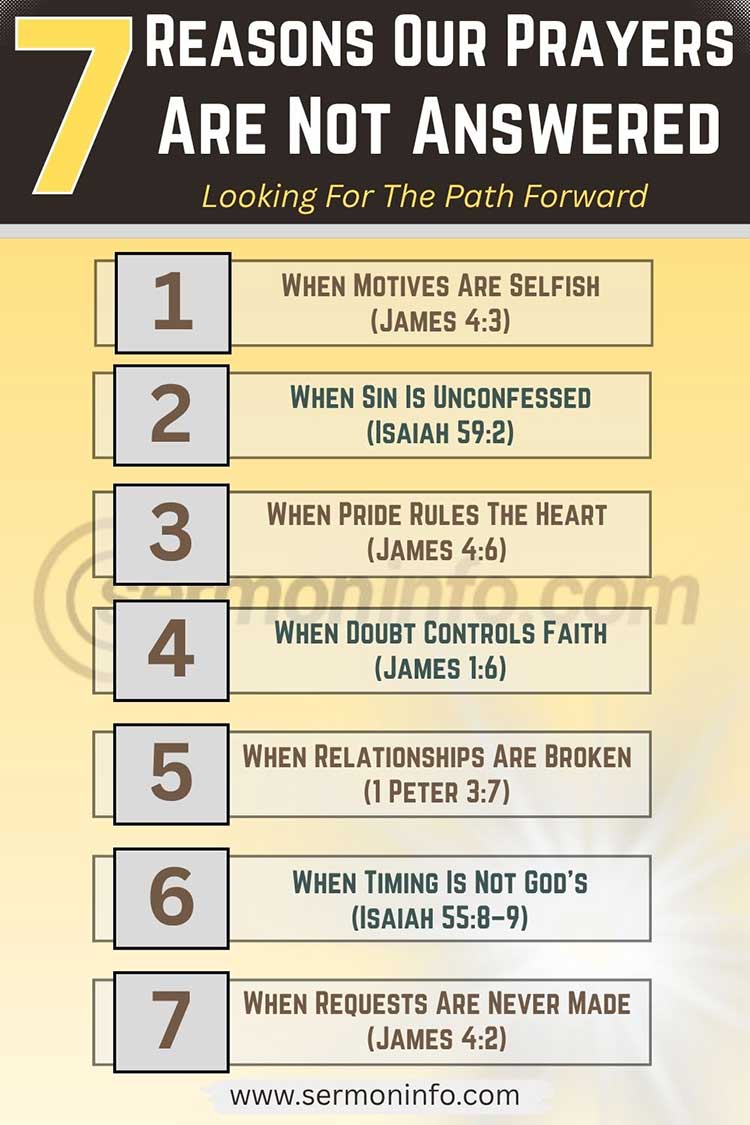
Key Takeaways – 7 Reasons Our Prayers Are Not Answered
- Check your motives – Pray for God’s glory, not selfish desires (James 4:3).
- Confess sin quickly – Unconfessed sin blocks close fellowship with God (Isaiah 59:2).
- Choose humility daily – God gives grace to the humble, not the proud (James 4:6).
- Pray with steady faith – Trust God fully and refuse doubt (James 1:6).
- Pursue healthy relationships – Unity and love keep your prayers unhindered (1 Peter 3:7).
- Trust God’s timing – His ways and timing are always higher and better (Isaiah 55:8–9).
- Ask God boldly – Bring your needs to Him instead of relying on yourself (James 4:2).
7 Reasons Our Prayers Are Not Answered
Prayer is one of the greatest gifts God gives, yet many feel unheard and discouraged. We ask, we wait, and sometimes nothing seems to change. That can trouble our hearts. We must stay sensitive to what hinders prayer, because sin, pride, or doubt can quietly block our fellowship with God.
Today we will uncover seven biblical reasons prayers go unanswered. Scripture reveals not only the problem but also the path forward. As we walk through each point, God will search our hearts and guide us toward deeper trust. This message will help us pray with clarity, confidence, and a renewed desire to seek Him.
1. When Motives Are Selfish (James 4:3)
Summary Statement: Selfish motives hinder prayer because we ask for personal gain instead of God’s glory.
A. We ask with selfish desires (4:3a)
James writes to believers who were praying, yet missing God’s heart. He says, “You ask and do not receive, because you ask amiss” (James 4:3, NKJV). Their prayers focused on self, not God. Like them, we can pray often, yet aim at the wrong target. Our desires can turn inward and forget God’s glory.
We sometimes treat prayer like a wish list for comfort, success, or ease. Yet Jesus teaches us to pray, “Your will be done” (Matthew 6:10). God answers prayers shaped by His will. When our focus shifts from self to God, our prayers begin to align with His purpose.
B. We pursue sinful pleasures (4:3b)
James continues and says people ask so they may “spend it on your pleasures” (James 4:3, NKJV). The word pleasures points to desires that feed the flesh. In context, these believers allowed worldly cravings to shape their requests. They wanted God’s provision without surrendering their hearts.
Today, we can do the same when we seek blessings to support sinful habits or selfish lifestyles. God will not fund what opposes His holiness. Galatians 5:16 calls us to walk in the Spirit, not fulfill the lust of the flesh. God blesses what leads us toward righteousness, not away from it.
2. When Sin Is Unconfessed (Isaiah 59:2)
Summary Statement: Unconfessed sin separates us from God and blocks the effectiveness of our prayers.
A. We harbor hidden sin (59:2)
Isaiah speaks to a people who wondered why God seemed distant. He tells them, “Your iniquities have separated you from your God” (Isaiah 59:2, NKJV). They carried sin in their lives and refused to deal with it. Hidden sin built a wall that blocked their fellowship with God.
We can do the same today when we cover sin instead of confessing it. Psalm 32:3 says silence brings heaviness to the soul. Sin grows in the dark, but confession brings light. When we bring sin before God, He restores fellowship and renews our hearts.
B. We hinder God’s hearing (59:2)
Isaiah continues, “Your sins have hidden His face from you, so that He will not hear” (Isaiah 59:2, NKJV). God is not deaf, but sin disrupts close fellowship. The people had allowed sin to dull their relationship with Him, and their prayers lost their power.
In our lives, unconfessed sin can silence our spiritual sensitivity. It is like static on a radio that blocks a clear signal. First John 1:9 promises that if we confess our sins, He forgives and cleanses us. When we walk in the light, our prayers rise with clarity and confidence.
3. When Pride Rules The Heart (James 4:6)
Summary Statement: Pride resists God and prevents us from receiving His grace in prayer.
A. We resist God’s will (4:6a)
James says, “God resists the proud” (James 4:6, NKJV). Pride places us in opposition to God. It lifts our desires above His authority. Like the readers James addressed, we can choose our way instead of God’s way. When we resist His will, we step outside His blessing.
In daily life, this shows when we ignore Scripture and follow our own plans. Proverbs 3:5 reminds us to trust the Lord, not our understanding. Pride says, “I know better.” Faith says, “God knows best.” When we submit to His will, we open the door for His guidance and peace.
B. We reject godly humility (4:6b)
James continues, “But gives grace to the humble” (James 4:6, NKJV). God offers grace freely, yet pride keeps us from receiving it. The early believers struggled with self focus and worldly thinking. They missed the blessing that comes from a humble heart before God.
Today, humility means we come before God with open hands and a teachable spirit. First Peter 5:6 says, “Humble yourselves under the mighty hand of God.” When we lower ourselves, God lifts us up. Grace flows where humility lives, and our prayers rise with greater power and trust.

Prayer: The Ultimate Conversation by Charles F. Stanley
4. When Doubt Controls Faith (James 1:6)
Summary Statement: Doubt weakens prayer because it lacks steady trust in God’s promises.
A. We lack confident trust (1:6a)
James urges believers to ask “in faith, with no doubting” (James 1:6, NKJV). He writes to those facing trials who needed wisdom from God. Yet some approached God with unstable hearts. They believed one moment and hesitated the next. This wavering weakened their prayers.
We can approach God the same way when fear replaces trust. It is like standing in shallow water, unsure whether to step forward. Hebrews 11:6 says faith pleases God. When we trust Him fully, even in trials, our prayers gain strength and direction.
B. We doubt God’s faithfulness (1:6b)
James compares the doubting person to a wave driven by the wind (James 1:6, NKJV). This picture shows instability and uncertainty. The believer begins to question if God will act. Doubt shakes confidence and leaves the heart unsettled before God.
In daily life, we may wonder if God hears or cares. Yet Lamentations 3:23 reminds us His mercies are new every morning. God remains faithful even when we struggle. When we rest in His character, our prayers become steady, hopeful, and full of quiet confidence.
5. When Relationships Are Broken (1 Peter 3:7)
Summary Statement: Broken relationships hinder prayer because they disrupt spiritual unity before God.
A. We neglect loving understanding (3:7a)
Peter speaks to husbands and calls them to dwell with their wives “with understanding” (1 Peter 3:7, NKJV). He urges care, honor, and thoughtful love. When believers ignore this command, they fail to reflect God’s heart. A lack of understanding creates distance and weakens spiritual connection.
In our lives, this applies to all relationships, not just marriage. We may rush, speak harshly, or overlook others’ needs. Ephesians 4:32 calls us to be kind and tenderhearted. When we choose understanding, we reflect Christ’s love and strengthen our walk with God.
B. We damage spiritual harmony (3:7b)
Peter warns that broken relationships can hinder prayers (1 Peter 3:7, NKJV). God values unity among His people. When conflict grows, it disrupts peace and affects our fellowship with Him. Unresolved tension creates a barrier that weakens the power of prayer.
In daily life, unresolved conflict can feel like a heavy weight in the heart. Jesus teaches in Matthew 5:23 to seek reconciliation before offering a gift. When we pursue peace, we restore harmony. As unity grows, our prayers rise freely and our hearts draw closer to God.
6. When Timing Is Not God’s (Isaiah 55:8–9)
Summary Statement: God answers according to His perfect timing, which often differs from our expectations.
A. We misunderstand God’s timing (55:8)
Isaiah reminds Israel that God’s thoughts are higher than ours (Isaiah 55:8, NKJV). The people expected quick deliverance, yet God worked through a greater plan. They struggled to wait and trust Him. Like them, we often expect immediate answers instead of resting in His perfect timing.
In our lives, delays can feel like silence, but God is always at work. Ecclesiastes 3:11 says He makes everything beautiful in its time. Waiting stretches our faith and shapes our character. When we trust His timing, we find peace even when answers seem slow.
B. We ignore God’s wisdom (55:9)
Isaiah declares that God’s ways are higher than our ways (Isaiah 55:9, NKJV). His plans reach beyond what we can see. The people questioned His direction because they could not understand it. When we do the same, we overlook His greater purpose and perfect wisdom.
In daily life, we may question why God allows certain paths or delays. Yet Romans 11:33 reminds us of the depth of His wisdom. Like a child who trusts a loving parent, we rest in His care. When we trust His wisdom, our hearts settle and our prayers align with His will.
7. When Requests Are Never Made (James 4:2)
Summary Statement: Prayer remains unanswered when we fail to bring our needs before God.
A. We neglect to ask (4:2)
James tells believers, “You do not have because you do not ask” (James 4:2, NKJV). The people had real needs, yet they failed to bring them to God. They struggled, fought, and searched elsewhere. In doing so, they missed the simple act of asking God in prayer.
We can do the same today when we carry burdens alone. It is like standing beside a well and dying of thirst. Jesus invites us to ask, seek, and knock (Matthew 7:7). When we bring our needs to God, we open the door for His provision and care.
B. We rely on our own efforts (4:2)
James describes people striving and fighting to obtain what they want (James 4:2, NKJV). They trusted their own strength instead of turning to God. Their efforts produced frustration because they left God out of the process. Self reliance replaced simple dependence on Him.
In daily life, we often try to fix everything ourselves before we pray. Yet Proverbs 3:6 calls us to acknowledge God in all our ways. Prayer shifts our focus from self to God. When we depend on Him, we find strength, guidance, and peace beyond our ability.
Conclusion
We have seen why prayers go unanswered. Selfish motives distort our requests. Unconfessed sin separates us from God. Pride resists His grace. Doubt weakens our faith. Broken relationships hinder our prayers. Wrong timing tests our trust. Neglecting to ask leaves needs unmet. Each point calls us to examine our hearts before the Lord.
Now God invites us to respond with humble faith. Confess sin, forgive others, and trust His timing. Ask boldly, yet submit to His will. If you have never trusted Christ, turn to Him today for salvation. He hears every sincere cry. Place your faith in Him as Savior and Lord, and begin a renewed life of prayer.
Closing Prayer
Heavenly Father, we come before You with humble hearts, thanking You for Your Word that searches and corrects us. You have shown us where our prayers fall short. Cleanse us from hidden sin, remove pride, and strengthen our faith. Align our desires with Your will. Teach us to forgive, to trust Your timing, and to seek You sincerely in prayer.
Lord, we place our trust in You today. Draw us closer to Yourself and deepen our walk with You. Help us to pray with pure hearts and steady faith. For those who have not trusted Christ, lead them to salvation. May our lives reflect Your grace, and may our prayers rise with confidence through Jesus Christ our Lord we pray. Amen.
Frequently Asked Questions (FAQ)
Q: Why does God not answer some prayers?
A: God does not answer some prayers when they come from wrong motives, unconfessed sin, pride, or doubt. Scripture shows that broken relationships and failure to ask also hinder prayer. God answers according to His will, wisdom, and timing, not human desire (James 4:3; Isaiah 59:2).
Q: Can sin stop God from hearing my prayers?
A: Yes, unconfessed sin can disrupt fellowship with God and hinder prayer. Isaiah 59:2 teaches that sin separates us from God. When believers confess their sins, God restores fellowship and hears their prayers again (1 John 1:9).
Q: Does doubt affect answered prayer?
A: Doubt weakens prayer because it shows a lack of trust in God. James 1:6 says we must ask in faith without wavering. When we trust God’s character and promises, our prayers become steady, confident, and aligned with His will.
Q: Why is God’s timing different from mine?
A: God’s timing differs because His wisdom and plans are higher than ours (Isaiah 55:8–9). He sees the full picture and works for our good. Delays are not denials, but opportunities to grow in faith and trust His perfect plan.
Q: What should I do when my prayers seem unanswered?
A: Examine your heart, confess sin, and align your motives with God’s will. Pray in faith, seek peace in relationships, and trust God’s timing. Continue asking and trusting Him, knowing He hears and answers according to His perfect wisdom (Matthew 7:7).
Alone With God – The Power and Passion of Prayer by John MacArthur
BONUS: What are the biblical conditions for answered prayer?
God answers prayer when we come with right hearts and right motives. First John 5:14 says we must ask according to His will. James 4:3 warns against selfish desires. Psalm 66:18 shows that sin hinders prayer. When we confess sin and seek God’s glory, our prayers align with Him.
Faith also shapes answered prayer. James 1:6 calls us to ask without doubting. Mark 11:25 teaches us to forgive others as we pray. John 15:7 shows that abiding in Christ strengthens our requests. When we trust God, obey His Word, and walk in love, our prayers become effective and powerful.
BONUS: Does God always answer prayer according to His will?
God always answers prayer according to His will. First John 5:14 teaches that He hears us when we ask according to His will. God’s will reflects His perfect wisdom and purpose. Isaiah 55:8–9 reminds us His thoughts are higher than ours. What He gives always aligns with His truth and plan.
At times, God answers with yes, no, or wait. Second Corinthians 12:8–9 shows Paul’s request was denied, yet God gave greater grace. Delays or refusals do not mean God ignores us. They show His care and wisdom. When we trust His will, we find peace and confidence in His answers.
BONUS: How can I know if my prayer is aligned with God’s will?
You can know your prayer aligns with God’s will when it agrees with His Word. First John 5:14 says He hears us when we ask according to His will. Scripture shapes our desires and guides our requests. As we read and obey God’s Word, our prayers begin to reflect His truth.
A surrendered heart also shows alignment with God’s will. Jesus prayed, “Not My will, but Yours” (Luke 22:42). John 15:7 teaches that abiding in Christ shapes what we ask. When we seek God’s glory, trust His timing, and desire His purpose, our prayers align with His will.
BONUS: What does the Bible say about hindrances to prayer?
The Bible teaches that sin and wrong motives hinder prayer. Isaiah 59:2 says sin separates us from God and hides His face. Psalm 66:18 warns that cherished sin blocks our prayers. James 4:3 shows selfish desires lead to unanswered requests. God calls us to confess sin and seek His glory.
The Bible also warns that pride, doubt, and broken relationships hinder prayer. James 4:6 says God resists the proud. James 1:6 calls us to pray with faith, not doubt. First Peter 3:7 shows strained relationships hinder prayer. God blesses humble hearts that trust Him and walk in love.
BONUS: Can broken relationships affect my prayers to God?
Yes, broken relationships can affect your prayers to God. First Peter 3:7 warns that strained relationships can hinder prayers. God values how we treat others. When we ignore love and respect, we disrupt our fellowship with Him. Our relationship with God connects closely to our relationships with people.
Jesus teaches us to seek reconciliation before offering worship (Matthew 5:23–24). Unresolved conflict weighs on the heart and affects prayer. Ephesians 4:32 calls us to forgive as God forgives us. When we restore relationships, our hearts open, and our prayers rise with greater freedom and peace.
BONUS: How do I pray effectively according to Scripture?
Pray effectively by aligning your requests with God’s will and Word. First John 5:14 says He hears us when we ask according to His will. James 4:3 warns against selfish motives. As you read Scripture, let it shape your prayers. Ask for what honors God and advances His purpose.
Pray with faith, humility, and a forgiving heart. James 1:6 calls you to ask without doubting. Mark 11:25 teaches you to forgive as you pray. John 15:7 shows that abiding in Christ strengthens your requests. When you trust God and walk in obedience, your prayers become powerful and effective.
Prayer: The Ultimate Conversation by Charles F. Stanley
| 7 Reasons Our Prayers Are Not Answered | |||
|---|---|---|---|
| Number | Main Point | Bible Verse | Meaning |
| 1 | When Motives Are Selfish | James 4:3 | God does not answer prayers driven by selfish desires instead of His will. |
| 2 | When Sin Is Unconfessed | Isaiah 59:2 | Unconfessed sin separates us from God and disrupts our prayer life. |
| 3 | When Pride Rules The Heart | James 4:6 | Pride resists God and prevents us from receiving His grace in prayer. |
| 4 | When Doubt Controls Faith | James 1:6 | Doubt weakens prayer because it lacks firm trust in God’s promises. |
| 5 | When Relationships Are Broken | 1 Peter 3:7 | Broken relationships hinder prayer by disrupting spiritual unity. |
| 6 | When Timing Is Not God’s | Isaiah 55:8–9 | God answers according to His perfect timing, not our expectations. |
| 7 | When Requests Are Never Made | James 4:2 | We miss God’s provision when we fail to bring our needs to Him. |