The sufferings of Jesus Christ in Mark 15:10–38 reveal how He endured mocking, crucifixion, and rejection to accomplish God’s plan of salvation. This passage shows His sacrificial love and fulfillment of prophecy, as He willingly bore sin and opened the way for sinners to come to God.
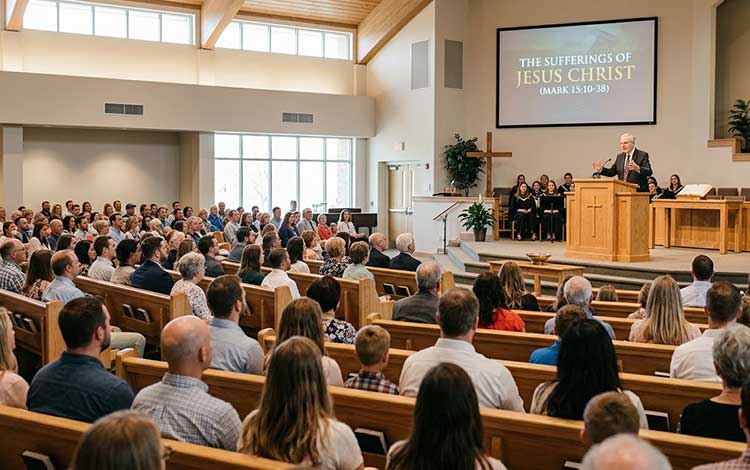
Key Takeaways – The Sufferings of Jesus Christ
- Jesus suffered for our salvation. He endured mocking, crucifixion, and rejection to pay for our sins (Isaiah 53:5). Trust His finished work and rest in His grace.
- The cross reveals both sin and God’s love. Human sin rejected Christ, yet God used it to accomplish redemption. Let this truth humble your heart and deepen your gratitude.
- The cross calls for a personal response. Jesus opened the way to God (Mark 15:38). Turn from sin, believe in Him, and walk daily in faith and obedience.
The Sufferings of Jesus Christ
Many people see Easter as bright and cheerful, filled with bunnies, eggs, and sweet chocolate treats. The world celebrates happiness, yet often overlooks the suffering behind the cross. Scripture shows a different picture. Jesus endured mocking, pain, and rejection for our sins. He did not suffer by accident. He suffered out of love, so we could be forgiven and brought to God.
Today, we turn to Mark 15:10–38 and walk carefully through the sufferings of Jesus Christ. We will see how people mocked Him, crucified Him, and rejected Him. Yet through it all, God worked His saving plan. This message will help us understand His sacrifice and call us to respond with faith, gratitude, and trust in Him.
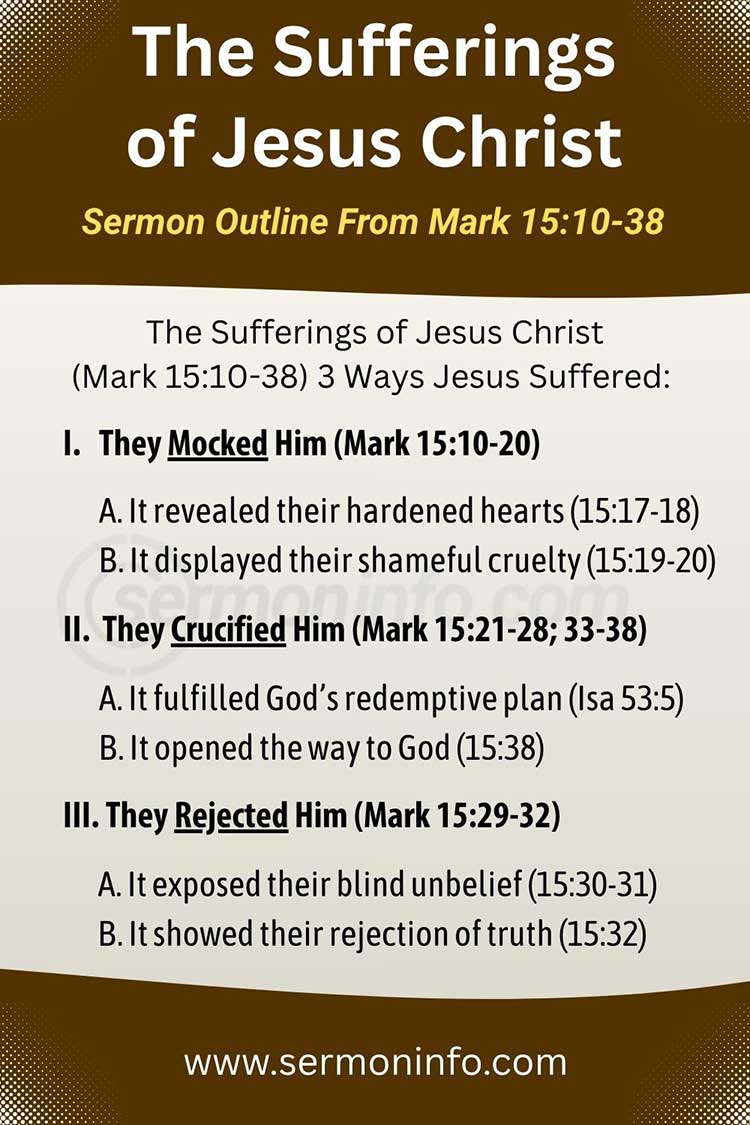
1. They Mocked Him (Mark 15:10–20)
The soldiers mocked Jesus to dishonor His true identity as King and reveal the sinfulness of the human heart.
A. It revealed their hardened hearts (Mark 15:17–18)
The soldiers dressed Jesus in purple and placed a crown of thorns on His head. They bowed in mock worship and said, “Hail, King of the Jews!” (Mark 15:18, NKJV). Their actions rejected clear truth. Jesus stood before them as King, yet they refused Him. Sin blinds the heart and hardens the conscience.
Today, people still reject Christ though evidence surrounds them. Creation declares His glory (Psalm 19:1), and Scripture reveals His truth. Yet many treat Jesus lightly or dismiss Him. A hardened heart resists truth even when it stands plainly before it. Guard your heart and respond to Christ with humility and faith.
B. It displayed their shameful cruelty (Mark 15:19–20)
They struck His head with a reed and spat on Him. They knelt in mock honor, then led Him away to crucify Him. Their actions showed deep cruelty and total disregard for His dignity. The One who created them endured their abuse without retaliation (Isaiah 53:7).
Cruelty still marks a fallen world today. People wound others with words and actions, often without thought. Yet Jesus calls us to a different path. He teaches us to show compassion and kindness (Ephesians 4:32). When we remember His suffering, we learn to treat others with grace and reflect His love.
This material provides some ideas and thoughts for a sermon outline from Mark 15:10-38 (The Sufferings of Jesus Christ).
2. They Crucified Him (Mark 15:21–28; 33–38)
The crucifixion of Jesus fulfilled God’s plan of salvation through His suffering and death on the cross.
A. It fulfilled God’s redemptive plan (Isaiah 53:5)
Jesus hung on the cross, bearing wounds that were not His own. Isaiah wrote, “He was wounded for our transgressions” (Isaiah 53:5, NKJV). Every strike and every nail carried our sin. God planned this before time. At the cross, Jesus paid the full price, securing salvation for all who believe.
This truth gives hope in every season. Your sin is not too great for His sacrifice. When guilt rises, remember the cross. Jesus already carried that burden. Trust His finished work and rest in His grace. As 1 Peter 2:24 says, He bore our sins so we might live for righteousness.
B. It opened the way to God (Mark 15:38)
When Jesus died, the veil of the temple tore from top to bottom (Mark 15:38). God removed the barrier that separated sinners from His presence. No priest stood between anymore. Christ’s death opened a new and living way. Through Him, we now come directly to God with confidence.
This changes how we live each day. You can approach God in prayer at any moment. Hebrews 10:19 invites us to enter boldly by the blood of Jesus. In sorrow or joy, you are never shut out. Because of the cross, God welcomes you into His presence as His own.
3. They Rejected Him (Mark 15:29–32)
The crowd rejected Jesus, showing the natural resistance of sinful people to God’s truth and salvation.
A. It exposed their blind unbelief (Mark 15:30–31)
The crowd passed by and mocked Jesus, saying, “Save Yourself, and come down from the cross!” (Mark 15:30, NKJV). They demanded a sign but ignored the truth before them. His miracles, His words, and His life already proved who He was. Their blindness came from hearts unwilling to believe.
Many still ask for more proof while rejecting clear truth. God has spoken through His Word and through His Son (Hebrews 1:1–2). Yet unbelief resists what is plain. Faith does not wait for another sign. It trusts what God has already revealed. Ask the Lord to open your eyes to see Christ clearly.
B. It showed their rejection of truth (Mark 15:32)
Even as Jesus suffered, they said, “Let the Christ, the King of Israel, descend now from the cross” (Mark 15:32, NKJV). They mocked Him in pain, refusing to accept Him as Messiah. Their words revealed hearts that rejected truth, even while salvation unfolded before their eyes.
People still reject Christ when His truth confronts their lives. Truth calls for repentance, and many turn away. Jesus said, “I am the way, the truth, and the life” (John 14:6). When you face His truth, do not resist it. Receive Him by faith and trust Him as your Savior and Lord.
Conclusion
We have seen the sufferings of Jesus Christ in Mark 15:10–38. They mocked Him and revealed hardened hearts; They crucified Him and fulfilled God’s saving plan; They rejected Him and showed blind unbelief. Yet through every moment, God worked with purpose. Jesus suffered for our sins so we could be forgiven and brought near.
Now the cross calls for a response. Do not treat it lightly like the world often does. Jesus suffered for you, and He invites you to trust Him today. Turn from sin and believe in His finished work. Receive Him as your Savior and Lord. When you trust Him, He forgives you, gives you new life, and brings you into His presence.
Closing Prayer
Heavenly Father, we come before You with grateful hearts as we remember the sufferings of Your Son. Thank You for sending Jesus to bear our sins and take our place on the cross. We praise You for Your love, Your justice, and Your mercy. Help us never treat the cross lightly, but to cherish it deeply and walk in humble gratitude each day.
Lord, draw us closer to You through this truth. Strengthen our faith when trials come, and remind us that Jesus suffered with purpose and victory. For those who have not yet trusted Him, open their hearts to believe today. Lead us to live for Christ with boldness, joy, and obedience, until we see Him face to face. We pray in Jesus’ name. Amen.
Frequently Asked Questions (FAQ)
Q: Why did Jesus have to suffer on the cross?
A: Jesus suffered to pay the penalty for our sins and satisfy God’s justice (Isaiah 53:5). His death was not accidental. God planned it to provide forgiveness and salvation. Through His suffering, sinners can be reconciled to God by grace through faith.
Q: What does Mark 15 teach about Jesus’ suffering?
A: Mark 15 shows Jesus being mocked, crucified, and rejected by people. It reveals both human sin and God’s saving purpose. Despite rejection, Jesus fulfilled prophecy and completed the work of redemption, showing His obedience and love for sinners.
Q: How does Jesus’ suffering show God’s love?
A: Jesus willingly endured pain and shame for sinners (Romans 5:8). God did not spare His Son but gave Him for us. The cross shows that God loves deeply and sacrificially, offering forgiveness and new life to all who believe in Christ.
Q: What is the significance of the veil tearing in Mark 15:38?
A: The torn veil shows that Jesus’ death removed the barrier between God and sinners. No longer separated, believers now have direct access to God through Christ (Hebrews 10:19–20). It marks a new way to approach God through faith in Jesus.
Q: How should we respond to the sufferings of Christ?
A: We should respond with repentance, faith, and gratitude. Turn from sin and trust Jesus as Savior and Lord. Live in obedience and remember His sacrifice daily. His suffering calls us to follow Him and share His truth with others.

How To Preach Without Notes by Charles W. Koller
BONUS: What happened to Jesus in Mark 15 step by step?
Mark 15 records Jesus’ suffering step by step. The leaders deliver Him to Pilate out of envy (Mark 15:10). Pilate sentences Him to be crucified. Soldiers mock Him, clothe Him in purple, and crown Him with thorns (Mark 15:17–20). They lead Him out and crucify Him, dividing His garments (Mark 15:24).
Darkness covers the land from the sixth to the ninth hour (Mark 15:33). Jesus cries out and then gives up His life (Mark 15:34–37). The temple veil tears in two, showing access to God (Mark 15:38). A centurion declares, “Truly this Man was the Son of God!” (Mark 15:39).
BONUS: Who mocked Jesus during His crucifixion?
Several groups mocked Jesus during His crucifixion. The Roman soldiers mocked Him first, dressing Him in purple and placing a crown of thorns on His head (Mark 15:17–20). They struck Him and bowed in false worship. Their actions showed contempt for His true identity as King.
The crowd, religious leaders, and even criminals joined in the mockery. Passersby insulted Him and shook their heads (Mark 15:29). Chief priests and scribes mocked His power to save (Mark 15:31). One criminal also reviled Him (Luke 23:39). Together, they revealed widespread rejection of Christ.
BONUS: What does the crown of thorns symbolize in the Bible?
The crown of thorns placed on Jesus symbolized mockery of His kingship and the curse of sin. Soldiers pressed it on His head and saluted Him as “King of the Jews” in scorn (Mark 15:17–18). Thorns first appeared after the fall (Genesis 3:18), so this crown pictured the weight of the curse He bore.
Yet the crown also reveals a deeper truth. Jesus wore the curse so we could receive blessing. He took our place and carried our sin (Galatians 3:13). What men meant for shame, God used for salvation. The suffering King secured victory and calls us to trust Him.
BONUS: Why did the crowd reject Jesus as the Messiah?
The crowd rejected Jesus because He did not match their expectations of a political deliverer. They wanted power and freedom from Rome, not a suffering Savior. Even though Jesus fulfilled prophecy, they ignored the truth (Isaiah 53:3). Their hearts resisted His message, and they chose Barabbas instead (Mark 15:11).
Unbelief also blinded them to clear evidence. Jesus performed miracles and taught with authority, yet they demanded more signs (Mark 15:31). Sin hardened their hearts and kept them from seeing Him as Messiah. As John 1:11 says, “He came to His own, and His own did not receive Him.”
BONUS: What Old Testament prophecies were fulfilled in Jesus’ suffering?
Jesus’ suffering fulfilled many Old Testament prophecies. Isaiah foretold His rejection and sacrifice, saying, “He was wounded for our transgressions” (Isaiah 53:5). He was despised and rejected by men (Isaiah 53:3). These verses clearly describe His suffering and show that God planned redemption long before the cross.
Psalm 22 also points to the crucifixion. It describes mockery, pierced hands and feet, and divided garments (Psalm 22:7,16,18). Mark 15 shows these details fulfilled in Jesus’ suffering. These fulfilled prophecies confirm that Jesus is the promised Messiah and that His death accomplished God’s saving purpose.
BONUS: What can we learn from Jesus’ response to suffering?
Jesus responded to suffering with obedience and trust in the Father. He did not retaliate or defend Himself when mocked and accused (Mark 15:4–5). Isaiah 53:7 says He remained silent like a lamb led to slaughter. His response teaches us to trust God’s will even when suffering feels unjust.
Jesus also showed forgiveness and surrender in suffering. He prayed for those who wronged Him (Luke 23:34) and committed Himself to the Father (Luke 23:46). 1 Peter 2:23 says He entrusted Himself to God who judges righteously. We learn to respond with grace, faith, and confident trust in God.

How To Prepare Bible Messages by James Braga
| The Sufferings of Jesus Christ (Mark 15:10-38) – Free Topical Sermon Outlines | |||
|---|---|---|---|
| Number | Main Point | Bible Verse | Meaning |
| 1 | They Mocked Him | Mark 15:10–20 | People rejected Jesus as King and revealed the sinful hardness of the human heart. |
| 2 | They Crucified Him | Mark 15:21–28; 33–38 | Jesus died on the cross to fulfill God’s plan and provide salvation for sinners. |
| 3 | They Rejected Him | Mark 15:29–32 | The crowd refused to believe in Jesus, showing unbelief even in the presence of truth. |