The power of a praying mother is her faith-filled dependence on God through honest prayer and full surrender. She brings her burdens to the Lord and trusts Him with both the request and the result, knowing He hears, answers, and works for His glory (1 Samuel 1:10–11; 17–28).
Key Takeaways – The Power of a Praying Woman
- She brings every burden to God in honest prayer. A praying mother pours out her heart to God and trusts Him with real struggles (1 Samuel 1:10), knowing He listens and cares.
- She rests in God’s promises before the answer comes. Faith trusts God’s Word and receives His peace, even before circumstances change (1 Samuel 1:17–18).
- She surrenders every blessing back to God. A godly mother gives her children and life to the Lord, trusting His purpose and plan (1 Samuel 1:28).
The Power of a Praying Mother
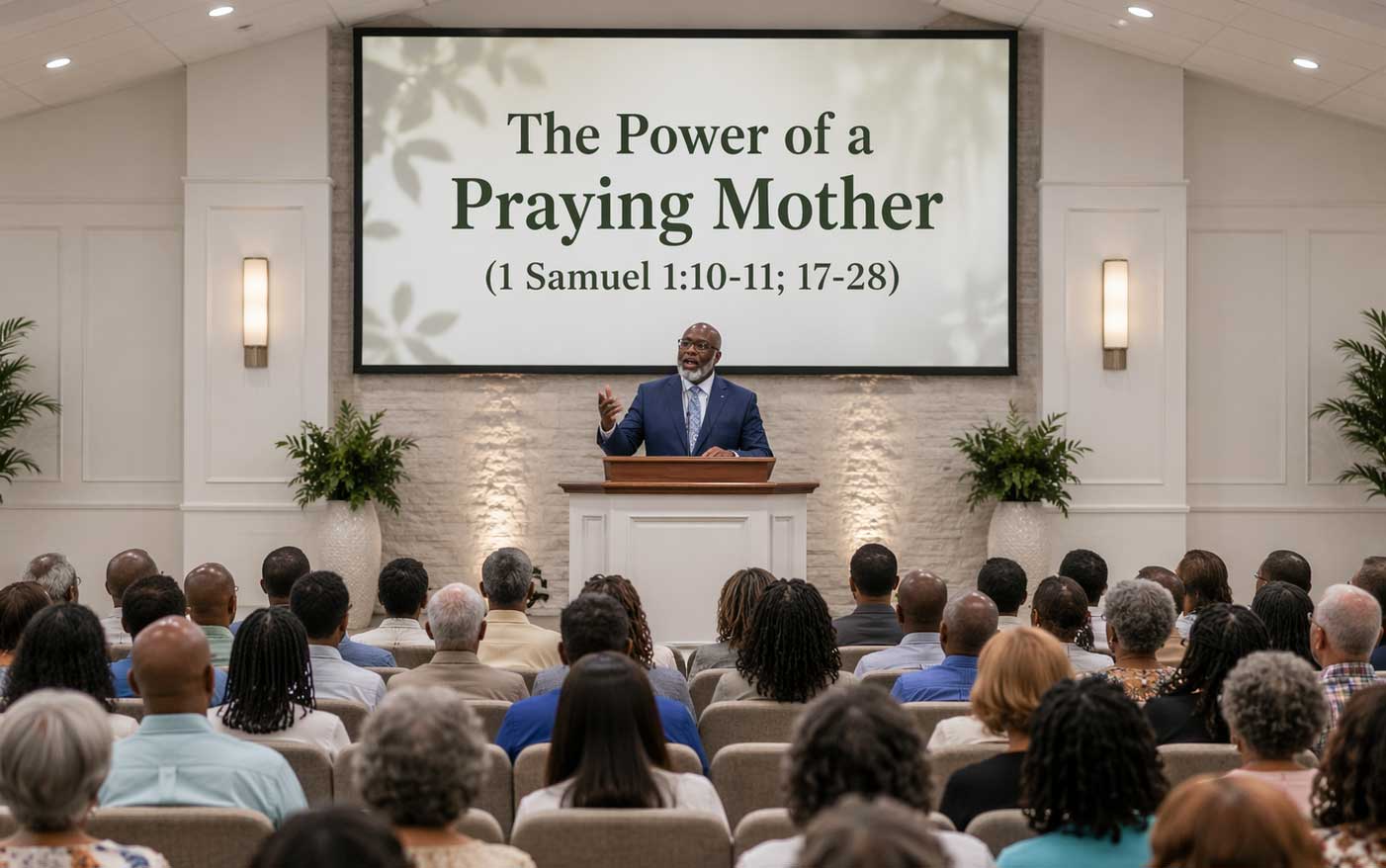
On Mother’s Day, we often remember the quiet strength of a praying mother. Many can recall a mother who whispered prayers through tears and trusted God in hard moments. Her prayers carried burdens no one else could see. In 1 Samuel 1, Hannah shows us that God hears a mother’s cry and responds with grace and power.
Today, we will walk through Hannah’s story in 1 Samuel 1:10–11 and 17–28. We will see her burdened prayer, her resting faith, and her full surrender to God. This message will show how God works through a praying mother. It will also call us to trust Him with every burden and every blessing.
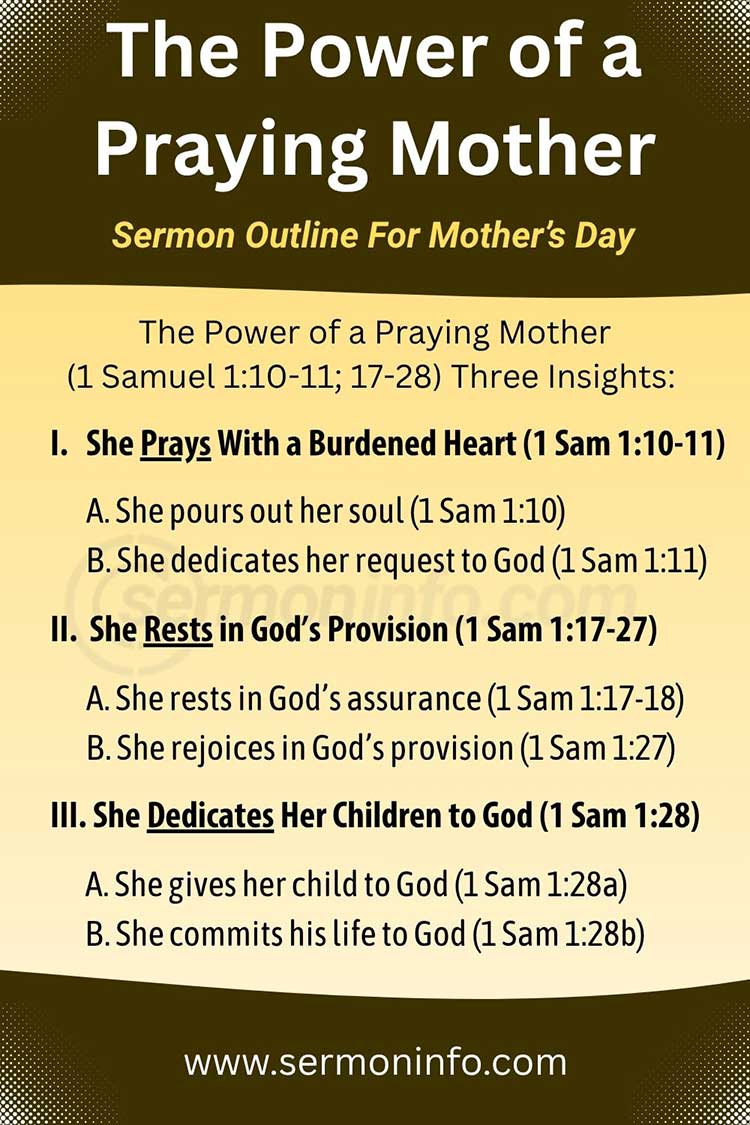
1. She prays with a burdened heart (1 Samuel 1:10–11)
Hannah brings her deep sorrow to the Lord and seeks His help with sincere and earnest prayer (Summary Statement).
A. She pours out her soul (1 Samuel 1:10)
Hannah stands before the Lord in deep distress and weeps with bitter anguish. She does not hide her pain or pretend strength. She speaks honestly from her heart. Scripture says she “prayed to the Lord and wept in anguish” (1 Samuel 1:10, NKJV). Like David in Psalm 62:8, she pours out her heart fully before God.
This teaches us to bring our burdens to God without fear or shame. Many carry silent pain, but God invites open prayer. When we speak freely to Him, we find comfort and strength. Philippians 4:6–7 reminds us that prayer brings peace that guards our hearts and minds through Christ Jesus.
B. She dedicates her request to God (1 Samuel 1:11)
Hannah does more than ask; she surrenders. She vows that if God gives her a son, she will return him to the Lord. She places her deepest desire in God’s hands. In 1 Samuel 1:11, she promises that her child will belong to the Lord all his days, set apart for His purpose.
This shows true faith that seeks God’s glory above personal gain. Hannah trusts God with both the request and the result. In the same way, we must pray with open hands. Romans 12:1 calls us to present our lives as living sacrifices. God honors hearts that surrender fully to His will.

Spoil Your Mother With A Gift From Amazon
2. She rests in God’s provision (1 Samuel 1:17–27)
Hannah trusts God’s word and finds peace, believing He will answer in His perfect time (Summary Statement)>
A. She rests in God’s assurance (1 Samuel 1:17–18)
After Hannah prays, Eli speaks peace over her and says, “Go in peace, and the God of Israel grant your petition” (1 Samuel 1:17, NKJV). She receives those words by faith. Her face changes, and her sorrow lifts. She leaves with a calm heart, trusting God has heard her cry.
This shows a mother who believes before she sees. She accepts God’s promise and walks away with peace. Like Philippians 4:7, God’s peace guards her heart. Many mothers carry heavy burdens, yet God invites them to trust His Word and rest in His care today.
B. She rejoices in God’s provision (1 Samuel 1:27)
In time, God answers Hannah’s prayer and gives her a son. She returns to testify, saying, “For this child I prayed, and the Lord has granted me my petition” (1 Samuel 1:27, NKJV). Her joy flows from God’s faithfulness, not from chance or human effort.
This reminds every mother to give God the glory for His blessings. When God answers prayer, we must not forget to praise Him. James 1:17 says every good gift comes from above. A thankful heart honors God and strengthens faith for future needs.
This material provides some ideas and thoughts for a sermon outline for Mother’s Day (The Power of a Praying Mother).
3. She dedicates her children to God (1 Samuel 1:28)
Hannah returns her son to the Lord, showing that children are a gift entrusted by God (Summary Statement).
A. She gives her child to God (1 Samuel 1:28a)
Hannah brings Samuel to the house of the Lord and gives him back to God. She remembers her vow and keeps it with joy. Scripture says, “I have lent him to the Lord” (1 Samuel 1:28, NKJV). Her act shows obedience and worship flowing from a grateful heart.
This moment speaks to every mother today. Children are gifts from God, not possessions to keep. Psalm 127:3 reminds us they belong to the Lord. A godly mother releases her child to God’s care, trusting Him more than her own plans. That surrender becomes a beautiful act of worship.
B. She commits his life to God (1 Samuel 1:28b)
Hannah does not only give Samuel; she entrusts his entire life to God’s purpose. The verse says, “there he worshiped the Lord” (1 Samuel 1:28, NKJV). She leaves him in God’s house, trusting God to guide his future and shape his calling.
This kind of faith challenges every parent. We cannot control our children’s path, but we can commit them to God daily. Proverbs 22:6 calls us to train them in the right way. When we place their future in God’s hands, we trust His plan is good, wise, and perfect.
Conclusion
Hannah shows us the power of a praying mother. She prayed with a burdened heart and poured out her soul to God. She rested in God’s promise and found peace before the answer came. Hannah then dedicated her son to the Lord, giving back what God had given her. Her life displays faith, trust, and full surrender.
Now God calls each of us to respond. Mothers can trust Him with every burden and every child. Believers can rest in His faithfulness and give Him all. If you have never trusted Christ, come today. Acknowledge your sin, believe in His finished work, confess Him as Lord, and dedicate your life to Him.
Closing Prayer
Heavenly Father, we thank You for the truth of Your Word and the example of Hannah. You see every burdened heart and hear every sincere prayer. Strengthen every mother today with Your peace and grace. Help them trust You in hard seasons and rejoice in Your goodness. Teach us all to bring every care to You in faith.
Lord Jesus, draw us closer to You. Help us surrender every desire and place every life in Your hands. Bless our families and guide our steps according to Your will. For those who need salvation, lead them to trust You as Savior and Lord today. We give You all glory, honor, and praise. We pray in Jesus’ Name. Amen.
Frequently Asked Questions (FAQ)
Q: What does the Bible teach about a praying mother?
A: The Bible shows that a praying mother depends on God with honesty and faith. Hannah poured out her heart and trusted God’s answer (1 Samuel 1:10–11). Her example teaches that God hears sincere prayer and responds according to His will and purpose.
Q: Why is a mother’s prayer so powerful?
A: A mother’s prayer is powerful because it rests on God’s character, not human strength. Hannah trusted God before she saw the answer (1 Samuel 1:17–18). God honors faith-filled prayer and works through it to accomplish His will in ways we cannot see.
Q: How can mothers pray effectively according to Scripture?
A: Mothers pray effectively by speaking honestly to God, trusting His promises, and surrendering the outcome. Hannah prayed with deep emotion and faith (1 Samuel 1:10–11). Scripture teaches us to pray with thanksgiving and confidence that God hears and answers (Philippians 4:6).
Q: What can we learn from Hannah’s prayer in 1 Samuel 1?
A: Hannah’s prayer teaches us to bring our deepest pain to God and trust Him fully. She moved from sorrow to peace by faith (1 Samuel 1:18). Her life shows that God’s answers often lead to greater purpose and bring Him glory.
Q: How should parents dedicate their children to God?
A: Parents dedicate their children by committing them to God’s will and raising them for His glory. Hannah gave Samuel back to the Lord (1 Samuel 1:28). This means trusting God with their future and guiding them to know, love, and serve Him faithfully.
Spoil Your Mother With A Gift From Amazon
BONUS: How did Hannah’s prayer change her situation in the Bible?
Hannah’s prayer changed her situation by turning her sorrow into peace before the answer came. In 1 Samuel 1:10–18, she pours out her heart to the Lord and believes His promise. After Eli speaks, her countenance changes, and she no longer feels distressed. God replaces her burden with quiet confidence.
God then answers her prayer and gives her a son, Samuel (1 Samuel 1:19–20). Her situation moves from barrenness to blessing by God’s hand. Hannah later testifies, “For this child I prayed” (1 Samuel 1:27). Her prayer not only brings a child but also fulfills God’s greater purpose.
BONUS: What does 1 Samuel 1 teach about trusting God in difficult times?
1 Samuel 1 teaches us to trust God by bringing our pain to Him in honest prayer. Hannah weeps and prays with a burdened heart (1 Samuel 1:10). She does not turn away from God in hardship. Instead, she runs to Him, believing He hears and cares for her deepest need.
The chapter also shows that trust rests in God before the answer comes. After Eli speaks, Hannah leaves in peace (1 Samuel 1:17–18). She believes God will act in His time. This reminds us to trust His promise, knowing He works all things according to His will and purpose.
BONUS: How can prayer bring peace during emotional distress?
Prayer brings peace during emotional distress by turning our focus from pain to God’s presence. Hannah wept deeply, yet she prayed and found relief (1 Samuel 1:10, 18). When we speak honestly to God, we release our burdens. Psalm 62:8 urges us to pour out our hearts, trusting Him as our refuge.
Prayer also brings peace because God replaces anxiety with His calm assurance. Philippians 4:6–7 teaches that when we pray with thanksgiving, God gives peace that guards our hearts and minds. This peace does not depend on circumstances. It flows from trusting God’s control, wisdom, and faithful care.
BONUS: What does it mean to surrender your desires to God in prayer?
Surrendering your desires to God in prayer means you place your requests under His authority and trust His will above your own. Hannah asked for a son, yet she offered him back to the Lord (1 Samuel 1:11). She showed that true prayer seeks God’s purpose, not just personal gain.
This surrender invites God to shape both the request and the outcome. Romans 12:1 calls us to present our lives as a living sacrifice. Jesus prayed, “not My will, but Yours, be done” (Luke 22:42). When we surrender, we trust God’s wisdom and rest in His perfect plan.
BONUS: How does God respond to persistent and heartfelt prayer?
God responds to persistent and heartfelt prayer by hearing and honoring sincere faith. Hannah prayed with deep anguish, and God remembered her (1 Samuel 1:10, 19). Her continued prayer showed trust in God’s mercy. Scripture assures us that “the effective, fervent prayer of a righteous man avails much” (James 5:16).
God answers according to His will and timing, often giving peace before provision. Hannah received peace first, then her answer (1 Samuel 1:17–20). Jesus taught us to keep asking and seeking (Matthew 7:7). Persistent prayer deepens faith and aligns our hearts with God’s perfect purpose.
BONUS: What role does faith play when waiting for God’s answer?
Faith sustains the heart while waiting for God’s answer by trusting His promise before the result appears. Hannah believed God’s word and left with peace (1 Samuel 1:17–18). Faith accepts God’s timing and rests in His care. Hebrews 11:1 teaches that faith gives assurance in what we hope for.
Faith also shapes how we wait by producing patience and confidence in God’s plan. Hannah waited and later received God’s answer (1 Samuel 1:19–20). Isaiah 40:31 promises renewed strength to those who wait on the Lord. Faith keeps the heart steady and focused on God’s faithfulness.
BONUS: What does the Bible say about a mother’s prayer?
The Bible shows that a mother’s prayer flows from faith and deep dependence on God. Hannah prayed with a burdened heart, and God heard her (1 Samuel 1:10–11). Her example teaches that God listens to sincere cries. Psalm 34:17 says the Lord hears the righteous and delivers them from trouble.
The Bible also shows that a mother’s prayer trusts God’s will and seeks His glory. Hannah surrendered her request and later gave her son back to the Lord (1 Samuel 1:27–28). Proverbs 15:29 says God hears the prayer of the righteous. A praying mother rests in His wisdom and faithful care.
| The Power of a Praying Mother (1 Samuel 1:10-11; 17-28) – Free Topical Sermon Outlines | |||
|---|---|---|---|
| Number | Main Point | Bible Verse | Meaning |
| 1 | She prays with a burdened heart | 1 Samuel 1:10–11 | Hannah brings her deep sorrow to God and honestly seeks His help through earnest prayer. |
| 2 | She rests in God’s provision | 1 Samuel 1:17–27 | Hannah trusts God’s promise and finds peace, believing He will provide in His perfect time. |
| 3 | She dedicates her children to God | 1 Samuel 1:28 | Hannah gives her child back to the Lord, showing that children belong to God and serve His purpose. |