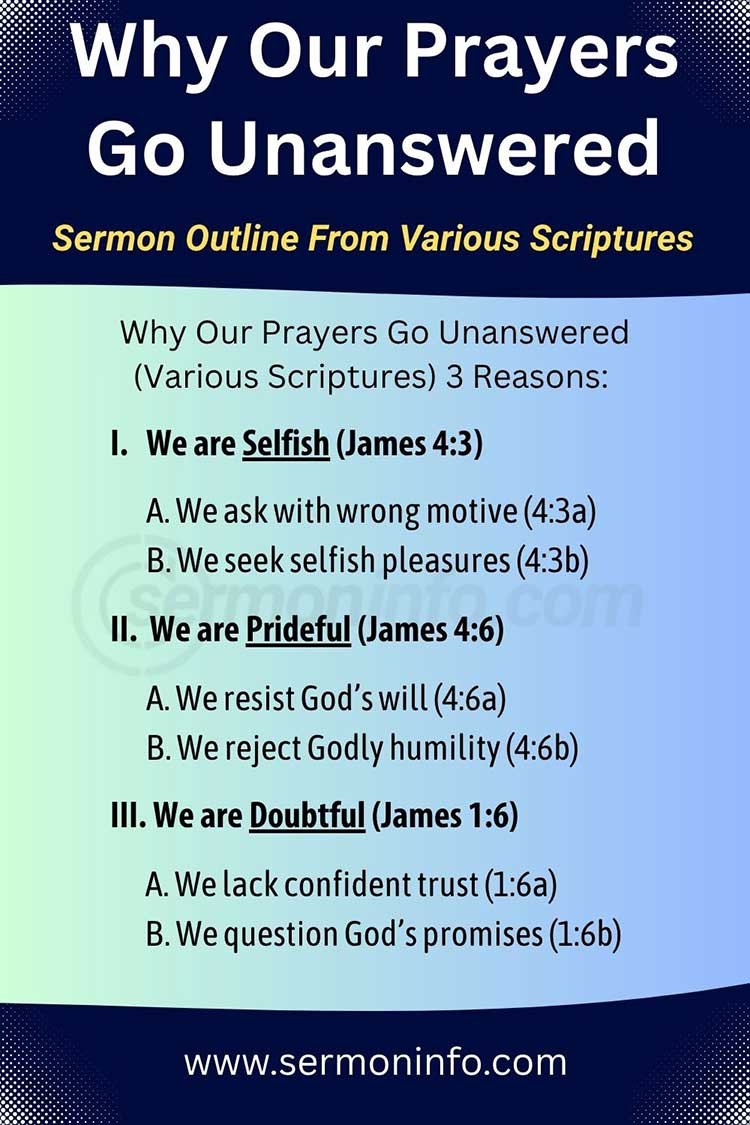
Scripture shows that “Why Our Prayers Go Unanswered” often stems from selfish desires, prideful resistance, or doubting faith (James 4:3; 4:6; 1:6). These conditions disrupt our relationship with God and hinder effective prayer, which requires humility, right motives, and steadfast trust.

Key Takeaways – Why Our Prayers Go Unanswered
- Examine your heart before you pray. Selfish motives can block your prayers (James 4:3). Ask God to align your desires with His will so your prayers seek His glory, not personal gain.
- Choose humility over pride. God gives grace to the humble but resists the proud (James 4:6). Surrender your plans to Him and trust His authority in every area of your life.
- Pray with faith, not doubt. Doubt weakens your prayers (James 1:6). Trust God’s promises fully, even when answers delay, and believe that He is faithful to respond in His perfect time.
Why Our Prayers Go Unanswered
Prayer connects us to God, yet many of us feel unheard at times. We ask, we wait, and still the answer seems delayed. That can confuse and discourage even the most faithful believer. We need to understand what may hinder our prayers so we can grow closer to God and pray with confidence (Psalm 66:18).
Today we will open Scripture together and examine why prayers go unanswered. Scripture will reveal heart issues that block our fellowship with God. As we walk through each one, we will see how to correct them and draw near to Him. My prayer is that this message will help each of us pray with faith, humility, and a heart that truly pleases the Lord.
1. We are Selfish (James 4:3)
“You ask and do not receive, because you ask amiss, that you may spend it on your pleasures” (James 4:3).
A. We ask with wrong motives (4:3a)
James speaks to believers who prayed but received nothing because their motives were wrong. They asked God for things that would serve themselves, not His glory. Their hearts chased personal gain instead of righteousness. Jesus taught us clearly in Matthew 6:33 to seek first the kingdom of God.
This truth speaks directly to us today. We can pray for success, comfort, or recognition while quietly ignoring God’s will. Like children asking only for sweets, we miss what truly nourishes the soul. God answers prayers that honor Him. When we begin to seek His glory above our own, our requests start to align with His purpose.
B. We seek selfish pleasures (4:3b)
James reveals that some prayers aim to spend blessings on personal pleasures. The word used points to indulgent desires that pull the heart away from God. Instead of seeking holiness, they pursued satisfaction in worldly things. First John 2:16 reminds us that such desires do not come from the Father.
This struggle still lives in us, and we need to be honest about it. We may ask God to bless choices that feed sinful cravings. It is like filling a cup with what harms the very soul God loves. He calls us to desire what honors Him. When we delight in the Lord, as Psalm 37:4 so beautifully teaches, He shapes our desires to match His own heart.
This material provides some ideas and thoughts for a sermon outline about unanswered prayer (Why Our Prayers Go Unanswered).
2. We are Prideful (James 4:6)
“But He gives more grace. Therefore He says: ‘God resists the proud, But gives grace to the humble’ (James 4:6).
A. We resist God’s will (4:6a)
James declares that God resists the proud, which means He stands against them. Pride pushes back when God’s plans oppose our desires. We want control, yet God calls us to surrender. Proverbs 3:5 urges us to trust the Lord with all our heart and submit to Him completely.
This battle shows up in daily life, often in ways we do not expect. We may pray sincerely, yet reject God’s answer the moment it differs from our plan. It is like steering against a strong current and wondering why we are exhausted. God’s will always leads to life and peace. When we yield to Him, we find direction that we could never create on our own.
B. We reject godly humility (4:6b)
James also teaches that God gives grace to the humble. Humility places us under God’s authority and opens our heart to His help. When we refuse to humble ourselves, we close the very door through which His grace flows. First Peter 5:6 calls us to humble ourselves under God’s mighty hand, and I believe He honors that every single time.
We often hold onto pride without even noticing it. We depend on our own strength and quietly ignore our need for God. It is like standing thirsty beside a flowing river. He offers grace freely to the lowly. When we bow before Him in honesty and trust, He lifts us and strengthens our walk in ways that amaze us.
3. We are Doubtful (James 1:6)
“But let him ask in faith, with no doubting, for he who doubts is like a wave of the sea driven and tossed by the wind” (James 1:6).
A. We lack confident trust (1:6a)
James teaches that we must ask in faith without doubting. He describes a doubter as a wave driven by the wind. That picture shows instability and uncertainty. Instead of trusting God’s character and power, we waver. Hebrews 11:6 reminds us that faith pleases God and believes He rewards those who seek Him.
This struggle feels familiar to most of us. We pray, yet quietly question whether God hears or cares. It is like stepping onto a bridge while fearing it will collapse beneath us. But God remains faithful and strong. When we fix our eyes on Him rather than our circumstances, our faith grows steady and our prayers gain real confidence.
B. We question God’s promises (1:6b)
James continues by warning that a double-minded person should not expect to receive from the Lord. Doubt divides the heart and weakens our trust in God’s Word. When we question His promises, we treat them as uncertain. Yet Numbers 23:19 declares clearly that God does not lie and always fulfills His Word.
We often struggle to believe when answers delay or trials increase. We may honestly wonder if God will act. It is like planting a seed and digging it up to check its growth. God works in His time, and His timing is always right. When we trust His promises, we wait with genuine hope and steady faith.
Conclusion
We have seen today why prayers go unanswered. Selfishness turns our focus inward and distorts our desires. Pride resists God and shuts out His grace. Doubt weakens our faith and unsettles our trust. Each issue reveals a heart that needs His gentle correction. God lovingly calls us to pray with pure motives, humble hearts, and confident faith.
Now let this truth search your heart. Come to God with honesty and surrender. Turn from sin and trust His Word. If you have never trusted Christ, believe in His finished work today (Romans 10:9). Confess Him as Lord and give Him your life. He hears, He saves, and He answers according to His perfect will.
Closing Prayer
Heavenly Father, we come before You with humble hearts and thankful spirits. You have shown us where we fall short in prayer, and we are grateful for Your patience with us. Forgive us for selfish desires, prideful ways, and doubting hearts. Cleanse us and renew our minds through Your Word. Teach us to seek Your glory above all things and to trust You fully in every request we bring.
Lord Jesus, draw us closer to You and strengthen our faith each day. Help us walk in humility and confidence before You. For those who have not yet trusted You, open their hearts to believe and receive Your saving grace. Lead us to pray with pure hearts and steadfast faith. We ask all this in Your holy and precious name. Amen.
Frequently Asked Questions (FAQ)
Q: Why does God not answer my prayers?
A: God may not answer prayers due to selfish motives (James 4:3), unconfessed sin (Psalm 66:18), pride (James 4:6), or doubt (James 1:6). He always responds — yes, no, or wait — but sin and wrong motives hinder our fellowship with Him and block His answers.
Q: What does the Bible say about unanswered prayer?
A: Scripture identifies key hindrances: wrong motives (James 4:3), pride (James 4:6), doubt (James 1:6), and unconfessed sin (Isaiah 59:2). God is not silent — He answers every prayer. But He will not honor requests that conflict with His will or holiness (1 John 5:14).
Q: How do selfish prayers hinder our relationship with God?
A: Selfish prayers focus on personal pleasure rather than God’s glory, which James 4:3 says results in receiving nothing. Jesus taught us to seek God’s kingdom first (Matthew 6:33). When our motives align with His will, our prayers gain power and find His favor.
Q: Does doubt really affect whether God answers prayer?
A: Yes. James 1:6 warns that a doubting person is like a wave, unstable and uncertain. God responds to confident, faith-filled prayer. Hebrews 11:6 confirms that faith pleases God. A divided heart weakens prayer; trusting God’s promises keeps our requests steady and effective.
Q: How can I pray so that God answers?
A: To pray effectively, align your requests with God’s will, maintain a humble heart, and trust Him fully (1 John 5:14; James 4:6). Confess sin, seek His glory, and believe His promises. God responds to prayers that come from sincere and faithful hearts.
How To Preach Without Notes by Charles W. Koller
BONUS: How does pride interfere with a believer’s prayer life?
Pride interferes with prayer because it resists God’s authority and exalts self. James 4:6 says God resists the proud but gives grace to the humble. When pride rules the heart, we trust our own wisdom instead of God. Proverbs 3:5 calls us to trust the Lord fully, not ourselves.
Pride also blocks confession and dependence on God. A proud heart refuses correction and avoids repentance. Psalm 10:4 shows that pride keeps God out of our thoughts. When we humble ourselves, God restores fellowship and strengthens our prayers (1 Peter 5:6).
BONUS: What are the main reasons prayers go unanswered according to the Bible?
The Bible shows that prayers often go unanswered because of wrong heart conditions. James 4:3 teaches that selfish motives hinder prayer. Psalm 66:18 reveals that unconfessed sin blocks fellowship with God. Isaiah 59:2 explains that sin separates us from Him, preventing clear communication and effective prayer.
Scripture also points to pride and doubt as key barriers. James 4:6 says God resists the proud but gives grace to the humble. James 1:6 warns that doubt weakens faith. When we pray with humility, obedience, and trust, our prayers align with God’s will and receive His response (1 John 5:14).
BONUS: Does God always answer prayers, even if the answer is no or wait?
God always responds to prayer, but His answers vary according to His will and wisdom. First John 5:14 teaches that He hears us when we ask according to His will. Sometimes He says yes, no, or wait. His response always reflects His love, purpose, and perfect knowledge.
Scripture shows that delays and denials serve a greater good. Paul prayed for relief, yet God said, “My grace is sufficient” (2 Corinthians 12:9). God may withhold what we want to give what we need. When we trust Him, we rest in His timing and goodness.
BONUS: Can wrong motives affect how God responds to prayer?
Wrong motives directly affect how God responds to prayer. James 4:3 says we ask and do not receive because we ask with wrong motives, to spend it on our pleasures. When our desires focus on self instead of God’s glory, our prayers fall out of alignment with His will.
God desires sincere hearts that seek Him first. Matthew 6:33 calls us to pursue His kingdom and righteousness. When we pray with pure motives, God shapes our desires and answers according to His purpose. Right motives bring our prayers into harmony with His perfect plan.
BONUS: What does it mean to pray according to God’s will?
Praying according to God’s will means aligning our requests with His Word, character, and purposes. First John 5:14 says He hears us when we ask according to His will. We submit our desires to Him and seek what honors Christ, not just what satisfies us.
This kind of prayer grows from knowing Scripture and trusting God’s plan. Jesus modeled this in Luke 22:42 when He said, “Not My will, but Yours, be done.” As we yield to God, He shapes our desires, and we pray with confidence in His perfect wisdom.
BONUS: How can I know if my prayers align with Scripture?
You can know your prayers align with Scripture when they agree with God’s Word and reflect His character. First John 5:14 says God hears us when we ask according to His will. As you read Scripture, God shapes your desires so your prayers reflect truth, not personal preference.
You also test your prayers by examining your motives and faith. James 4:3 warns against selfish desires, and James 1:6 calls for faith without doubt. When your prayers seek God’s glory, trust His promises, and follow His Word, they align with Scripture and please Him.
How To Prepare Bible Messages by James Braga
| Why Our Prayers Go Unanswered (James 1:6; 4:3, 6) | |||
|---|---|---|---|
| Number | Main Point | Bible Verse | Meaning |
| 1 | We are Selfish | James 4:3 | Selfish desires cause us to pray for personal gain instead of God’s glory, which hinders our prayers. |
| 2 | We are Prideful | James 4:6 | Pride resists God’s authority and blocks His grace, preventing effective and humble prayer. |
| 3 | We are Doubtful | James 1:6 | Doubt weakens our faith and causes instability, making it difficult to trust God for answers to prayer. |