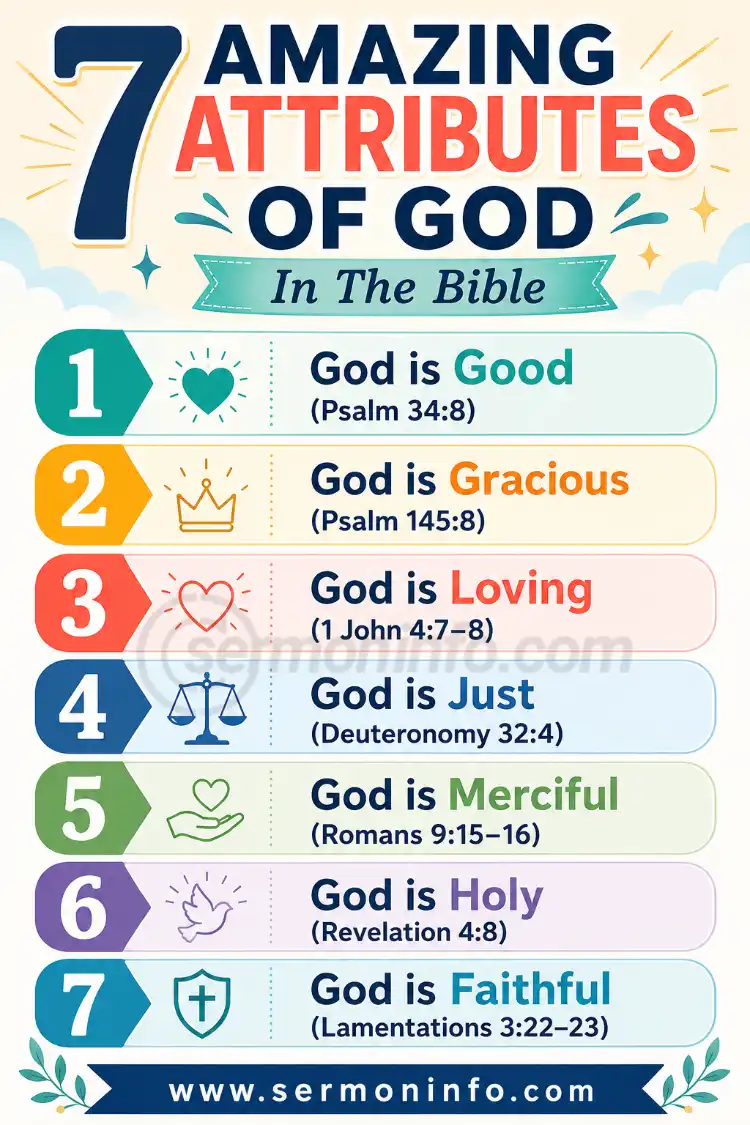
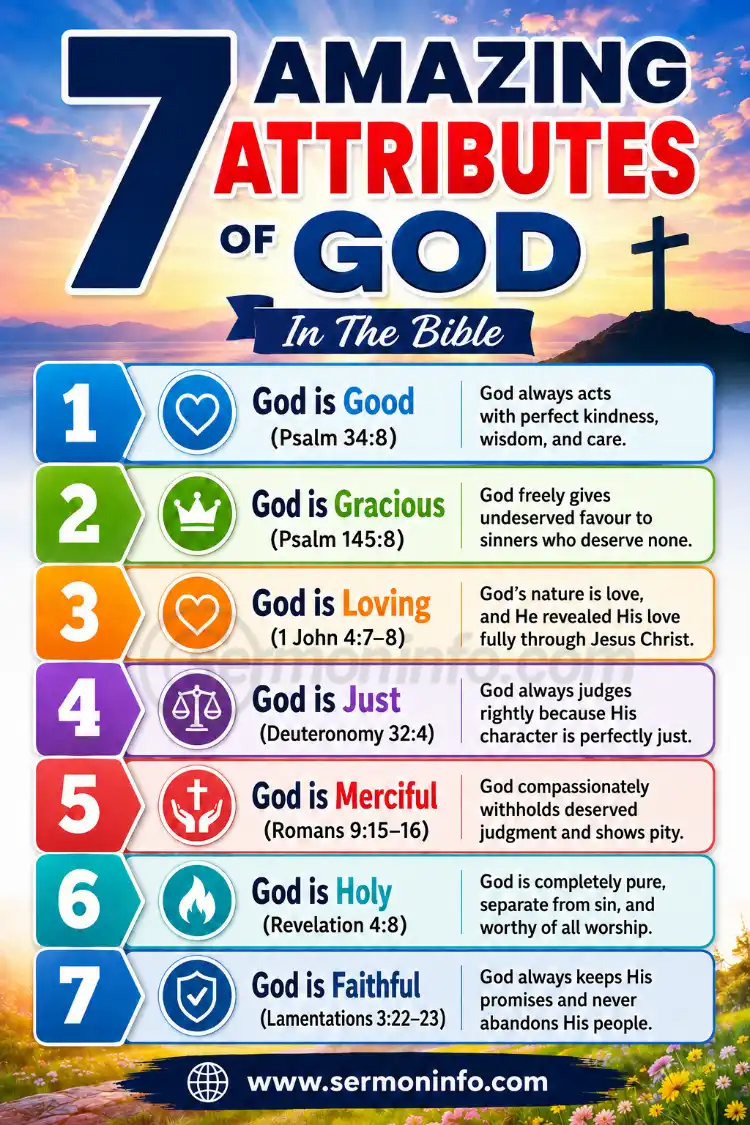
The 7 amazing attributes of God in the bible reveal that He is good, gracious, loving, just, merciful, holy, and faithful. These unchanging qualities show His perfect character, deepen our trust, guide our daily choices, and call us to worship and obey Him.

Key Takeaways – 7 Amazing Attributes of God
- God’s character never changes. He remains good, gracious, loving, just, merciful, holy, and faithful in every circumstance.
- God’s attributes strengthen our trust. His goodness gives hope, His mercy offers help, and His faithfulness carries us through difficult seasons.
- God’s character should shape our lives. We should pursue holiness, show grace, love others, choose justice, and obey His Word.
7 Amazing Attributes of God in the Bible
God’s attributes reveal what is eternally true about His character. They answer important questions: Who is God, and what is He like? Our limited minds cannot fully comprehend our infinite Creator. Yet God graciously reveals Himself through Scripture and creation (Psalm 19:1; Romans 1:20). Therefore, we can know Him truly, though never completely.
In this message, we will explore seven amazing attributes. God is good, gracious, loving, just, merciful, holy, and faithful. These truths provide more than knowledge for our minds. They call us to worship, strengthen our faith, and guide our daily lives. As we see God clearly, may we trust Him deeply and reflect His character faithfully.
1. God Is Good (Psalm 34:8)
“Oh, taste and see that the Lord is good; Blessed is the man who trusts in Him!” (Psalm 34:8)
A. Explanation
God’s goodness flows from His perfect character. He always does what is right, wise, and loving. Psalm 34:8 invites us, “Oh, taste and see that the LORD is good.” Every blessing, every answered prayer, and every act of His care reveals His goodness. James 1:17 reminds us that every good gift comes from Him.
God’s goodness does not depend on our circumstances. Joseph suffered betrayal, slavery, and prison, yet God worked every event for good (Genesis 50:20). Like a skilled shepherd guiding his sheep, God wisely leads His people, even when they cannot see the path ahead. His goodness never changes because His character never changes.
B. Key Lessons for Life
Life often brings trials that confuse and discourage us. During those seasons, we may wonder why God allows hardship. Proverbs 3:5 and 6 calls us to trust the Lord with all our heart instead of depending on our own understanding. Faith believes God’s goodness even before His purpose becomes clear.
Think of a child holding a loving father’s hand while walking through a dark place. The child may not understand the path, but the father’s presence gives confidence. In the same way, believers can rest in God’s goodness because He promises, “I will never leave you nor forsake you” (Hebrews 13:5). His care remains constant every day.
This material provides some ideas and thoughts for a lesson outline about God’s attributes (7 Amazing Attributes of God in the Bible).
2. God Is Gracious (Psalm 145:8)
“The Lord is gracious and full of compassion, Slow to anger and great in mercy.” (Psalm 145:8)
A. Explanation
Psalm 145:8 declares, “The LORD is gracious and full of compassion.” God gives undeserved favour to sinners who cannot earn His acceptance. We bring no merit that can purchase salvation. Yet God offers forgiveness through Jesus Christ. Ephesians 2:8 says, “For by grace you have been saved through faith.”
Grace is like a cancelled debt that we could never repay. God does not save us because we deserve mercy. He saves us because Christ paid the full price for our sin. Romans 3:24 says believers are “justified freely by His grace.” His grace reaches the guilty, restores the broken, and welcomes the repentant sinner.
B. Key Lessons for Life
We receive God’s grace with humility because we cannot boast about salvation. 1 Corinthians 15:10 says, “By the grace of God I am what I am.” Grace teaches us to thank God, depend on Christ, and reject spiritual pride. Every blessing should move our hearts toward worship rather than self praise.
God also calls us to show grace freely to others. Colossians 3:13 tells us to forgive as Christ forgave us. Grace listens patiently, speaks kindly, and offers another opportunity when possible. Since God has treated us better than we deserve, we should extend that same kindness to those who disappoint us.
3. God Is Loving (1 John 4:7–8)
“Beloved, let us love one another, for love is of God; and everyone who loves is born of God and knows God. He who does not love does not know God, for God is love.” (1 John 4:7-8)
A. Explanation
First John 4:8 declares, “God is love.” Love does not simply describe what God does. Love reveals who He is. His love remains holy, wise, and true. He never acts with selfishness or cruelty. Every loving act flows from His perfect character.
God revealed His love most clearly through Jesus Christ. 1 John 4:9 says God sent His Son so we might live through Him. At the cross, Christ carried our sin and faced judgment for us. Romans 5:8 shows that God loved us while we were still sinners.
B. Key Lessons for Life
God calls us to love Him sincerely with every part of our lives. Matthew 22:37 commands us to love God with all our heart, soul, and mind. Genuine love produces worship, trust, and obedience. Jesus said, “If you love Me, keep My commandments” (John 14:15).
God also calls us to love others with patient, sacrificial care. 1 Corinthians 13:4 says love suffers long and acts kindly. Love listens when someone hurts, forgives when someone fails, and serves without demanding praise. We reflect Christ when we place another person’s true needs before our comfort.
4. God Is Just (Deuteronomy 32:4)
“He is the Rock, His work is perfect; For all His ways are justice, A God of truth and without injustice; Righteous and upright is He.” (Deuteronomy 32:4)
A. Explanation
Deuteronomy 32:4 declares that all God’s ways are justice. He never makes a careless, unfair, or corrupt decision. His character remains perfectly righteous, so every judgment reflects truth. Unlike human judges, God sees every motive, action, and hidden thought clearly.
God’s justice also assures us that evil will not triumph forever. Abraham asked, “Shall not the Judge of all the earth do right?” (Genesis 18:25). God may delay judgment, but He never ignores sin. At the cross, His justice and mercy met perfectly through Christ.
B. Key Lessons for Life
Because God is just, we should choose what is right, even when wrongdoing seems easier. Micah 6:8 calls us to “do justly” and walk humbly with God. We honour Him when we speak truth, treat people fairly, and defend those facing injustice.
We must also leave final judgment in God’s hands. Romans 12:19 teaches that vengeance belongs to the Lord. When others hurt us, anger may demand revenge. Faith chooses forgiveness and trusts God to judge rightly. His courtroom never misses evidence, and His verdict never needs correction.
5. God Is Merciful (Romans 9:15–16)
“For He says to Moses, ‘I will have mercy on whomever I will have mercy, and I will have compassion on whomever I will have compassion.’ So then it is not of him who wills, nor of him who runs, but of God who shows mercy.” (Romans 9:15-16)
A. Explanation
Romans 9:15 says, “I will have mercy on whomever I will have mercy.” God does not owe mercy to anyone. Yet He compassionately withholds deserved judgment and reaches toward helpless sinners. His mercy flows from His sovereign character, not from human effort, merit, or desire.
Romans 9:16 teaches that mercy does not depend on human will or strength. We cannot rescue ourselves from sin. Like a drowning person needing rescue, we need God to act for us. Titus 3:5 declares that He saved us “according to His mercy,” through Christ alone.
B. Key Lessons for Life
We should seek God’s mercy with humble and repentant hearts. The tax collector prayed, “God, be merciful to me a sinner” (Luke 18:13). God welcomes those who stop defending themselves and confess their need. Hebrews 4:16 invites us to approach His throne and find mercy in times of need.
God also calls us to show compassion toward those who fail. Ephesians 4:32 tells us to remain kind, tenderhearted, and forgiving. Mercy does not excuse sin, but it responds with patience and truth. Since God has treated us with compassion, we should help restore the fallen gently.
6. God Is Holy (Revelation 4:8)
“The four living creatures, each having six wings, were full of eyes around and within. And they do not rest day or night, saying: ‘Holy, holy, holy, Lord God Almighty, Who was and is and is to come!'” (Revelation 4:8)
A. Explanation
Revelation 4:8 declares, “Holy, holy, holy, Lord God Almighty.” God remains completely pure and separate from every form of sin. Darkness has no place in Him. His holiness shines like perfect light, exposing evil and revealing the beauty of His flawless character.
Heaven never grows tired of worshipping God’s holiness. The living creatures praise Him day and night because He alone deserves endless honour. Isaiah also saw angels crying, “Holy, holy, holy” (Isaiah 6:3). God’s holiness fills heaven with wonder, reverence, and joyful praise.
B. Key Lessons for Life
First Peter 1:15 commands us, “Be holy in all your conduct.” We pursue holiness because we belong to a holy God. He saved us from sin, so we should not return to its control. Holiness means choosing what pleases Christ in our thoughts, words, relationships, and private decisions.
Holy living does not earn salvation, but it shows that God is changing us. Like a clean garment, our conduct should reflect the One we represent. Romans 12:1 calls us to present our bodies as living sacrifices. Each day, we can reject sin and offer ourselves fully to God.
7. God Is Faithful (Lamentations 3:22–23)
“Through the Lord’s mercies we are not consumed, Because His compassions fail not. They are new every morning; Great is Your faithfulness.” (Lamentations 3:22-23)
A. Explanation
Jeremiah wrote during deep sorrow, yet he remembered God’s steady faithfulness. Lamentations 3:22–23 declares that God’s mercies never end. They arrive fresh every morning. God keeps every promise, and He never abandons those who trust Him.
Our circumstances may change, but God’s character never changes. Numbers 23:19 says that God does not lie or break His word. Like the sunrise after a dark night, His faithfulness brings hope. He remains present, dependable, and true through every season.
B. Key Lessons for Life
We can rely on God each day because His faithfulness never fails. 1 Corinthians 1:9 says, “God is faithful.” He called us into fellowship with His Son, and He will complete His purpose. We can trust Him with today’s needs and tomorrow’s uncertainties.
Daily dependence means praying, obeying Scripture, and placing every burden before God. When fear rises, remember His past care. When answers delay, hold firmly to His promises. The same God who sustained you yesterday will provide the strength you need today.
Conclusion
God is good, gracious, loving, just, merciful, holy, and faithful. These attributes reveal His perfect character and steady care. He gives what is good, offers grace, shows love, judges rightly, extends mercy, remains holy, and keeps every promise. Because God never changes, we can trust Him in every season.
As we understand God’s character, we should also respond to His Word with faith and obedience. His goodness encourages trust, while His holiness calls us to purity. His mercy teaches compassion, and His faithfulness gives daily hope. Let these truths shape your choices, strengthen your worship, and draw you closer to Christ.
Frequently Asked Questions (FAQ)
Q: What are God’s attributes in the Bible?
A: God’s attributes are the qualities Scripture reveals about His character and nature. They help us understand who God is, what He is like, and how He acts. Although finite minds cannot know Him completely, believers can know Him truly through creation, Scripture, and Jesus Christ.
Q: What are seven amazing attributes of God?
A: This message highlights seven attributes: God is good, gracious, loving, just, merciful, holy, and faithful. Together, these truths reveal His perfect moral character. God never uses one attribute against another. His love remains holy, His justice remains good, and His mercy remains righteous.
Q: Why should Christians study God’s attributes?
A: Studying God’s attributes guards us from false ideas about Him and strengthens our faith. His goodness gives hope, His holiness inspires worship, and His faithfulness builds confidence. The better we know God through Scripture, the more deeply we can trust, obey, love, and honour Him.
Q: Does God’s character ever change?
A: No. God’s character remains eternally consistent and perfect. Malachi 3:6 declares, “I am the LORD, I do not change.” His actions may differ according to His purposes, but His goodness, holiness, justice, love, mercy, grace, and faithfulness never weaken, grow, or change.
Q: How should God’s attributes affect our lives?
A: Believers should respond with worship, trust, obedience, and godly living. God’s grace teaches humility, His mercy encourages compassion, and His holiness calls us to purity. As we study His Word, we should reflect His character while depending on the Holy Spirit to transform our daily conduct.
BONUS: Are there only 7 attributes of God?
No, the Bible reveals many more than seven attributes of God. Scripture describes Him as eternal, sovereign, all powerful, all knowing, and present everywhere. It also reveals His wisdom, truth, patience, righteousness, and jealousy. God declared, “I AM WHO I AM” (Exodus 3:14), showing His unique and self existent nature.
The seven attributes provide a helpful summary, not a complete list. God’s character remains infinite, perfect, and beyond full human understanding. Romans 11:33 celebrates the depth of His wisdom and knowledge. As believers study Scripture, they discover more reasons to trust, worship, obey, and praise Him.
BONUS: Are God’s attributes in conflict with each other?
No, God’s attributes never conflict because His character remains perfectly united. His love stays holy, His mercy remains just, and His justice expresses goodness. Deuteronomy 32:4 declares that all His ways are justice. God never ignores one attribute while expressing another.
The cross reveals this perfect harmony. God judged sin through Christ and offered mercy to believing sinners. Romans 3:26 says God remains “just and the justifier” of those who trust Jesus. Therefore, believers can trust every part of God’s character without fear or confusion.
BONUS: How do we harmonize God’s love and justice?
God’s love and justice work together perfectly because both flow from His holy character. Love does not ignore sin, and justice does not cancel compassion. Psalm 89:14 declares, “Righteousness and justice are the foundation of Your throne; mercy and truth go before Your face.”
The cross displays their perfect harmony. God judged our sin through Christ, yet He lovingly offers forgiveness to everyone who believes. Romans 5:8 reveals His love, while Romans 3:26 shows that He remains “just and the justifier.” Therefore, we can trust both His heart and His judgments.
BONUS: Why do many focus on God’s love and neglect His other attributes?
Many people focus on God’s love because love feels comforting and welcoming. They may avoid His holiness, justice, and wrath because these truths confront sin. Yet Scripture declares, “God is love” (1 John 4:8) and “our God is a consuming fire” (Hebrews 12:29).
We understand God rightly when we accept everything Scripture reveals about Him. His love remains holy, His mercy remains just, and His patience does not excuse rebellion. Paul taught “the whole counsel of God” (Acts 20:27). A balanced view deepens worship, encourages repentance, and strengthens trust.
BONUS: Why should we study God’s attributes?
We study God’s attributes because they reveal who He is and correct false ideas about Him. Scripture shows His goodness, holiness, wisdom, justice, mercy, and faithfulness. Jeremiah 9:23–24 calls us to glory in knowing the Lord, who exercises lovingkindness, judgment, and righteousness.
Knowing God’s character strengthens faith, deepens worship, and guides daily obedience. His goodness encourages trust, His holiness confronts sin, and His faithfulness gives hope during trials. As we behold the Lord in Scripture, the Spirit transforms us into Christ’s likeness (2 Corinthians 3:18).
BONUS: Which is the most important attribute of God?
No single attribute of God stands above the others. God possesses every attribute perfectly and expresses them in complete harmony. He is love (1 John 4:8), yet heaven also praises Him as “holy, holy, holy” (Revelation 4:8). His goodness, justice, mercy, wisdom, and faithfulness reveal one perfect character.
We should never separate one attribute from the rest. God’s love remains holy, His justice remains good, and His mercy remains righteous. The cross displays this unity through Christ (Romans 3:25–26). Therefore, study every attribute, worship the whole character of God, and trust everything He reveals about Himself.
BONUS: How do we harmonize God’s love and wrath?
God’s love and wrath never conflict because both flow from His holy character. His love seeks our good, while His wrath opposes sin and evil. John 3:36 shows both truths: believers receive eternal life, but those who reject Christ remain under God’s wrath.
The cross reveals their perfect harmony. God loved sinners and sent His Son to save them (Romans 5:8). Christ also bore God’s righteous judgment against sin (Isaiah 53:5–6). Therefore, God lovingly offers forgiveness, yet He justly judges everyone who refuses His salvation.
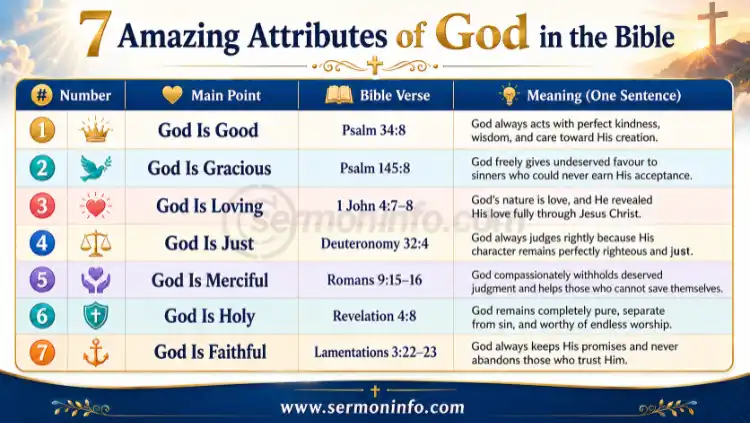
| 7 Amazing Attributes of God in the Bible | |||
|---|---|---|---|
| Number | Main Point | Bible Verse | Meaning |
| 1 | God Is Good | Psalm 34:8 | God always acts with perfect kindness, wisdom, and care toward His creation. |
| 2 | God Is Gracious | Psalm 145:8 | God freely gives undeserved favour to sinners who could never earn His acceptance. |
| 3 | God Is Loving | 1 John 4:7–8 | God’s nature is love, and He revealed His love fully through Jesus Christ. |
| 4 | God Is Just | Deuteronomy 32:4 | God always judges rightly because His character remains perfectly righteous and just. |
| 5 | God Is Merciful | Romans 9:15–16 | God compassionately withholds deserved judgment and helps those who cannot save themselves. |
| 6 | God Is Holy | Revelation 4:8 | God remains completely pure, separate from sin, and worthy of endless worship. |
| 7 | God Is Faithful | Lamentations 3:22–23 | God always keeps His promises and never abandons those who trust Him. |