Sometimes, God uses difficult circumstances to awaken our hearts and remind us of our need for Him. Sermon Outline From Joel 1:1-12 encourages us to listen to God’s Word, recognize our struggles, and bring our sorrows before Him. Even when life brings disappointment and loss, we can trust God’s faithfulness and find lasting hope in His presence.

Key Takeaways – Sermon From Joel 1:1-12
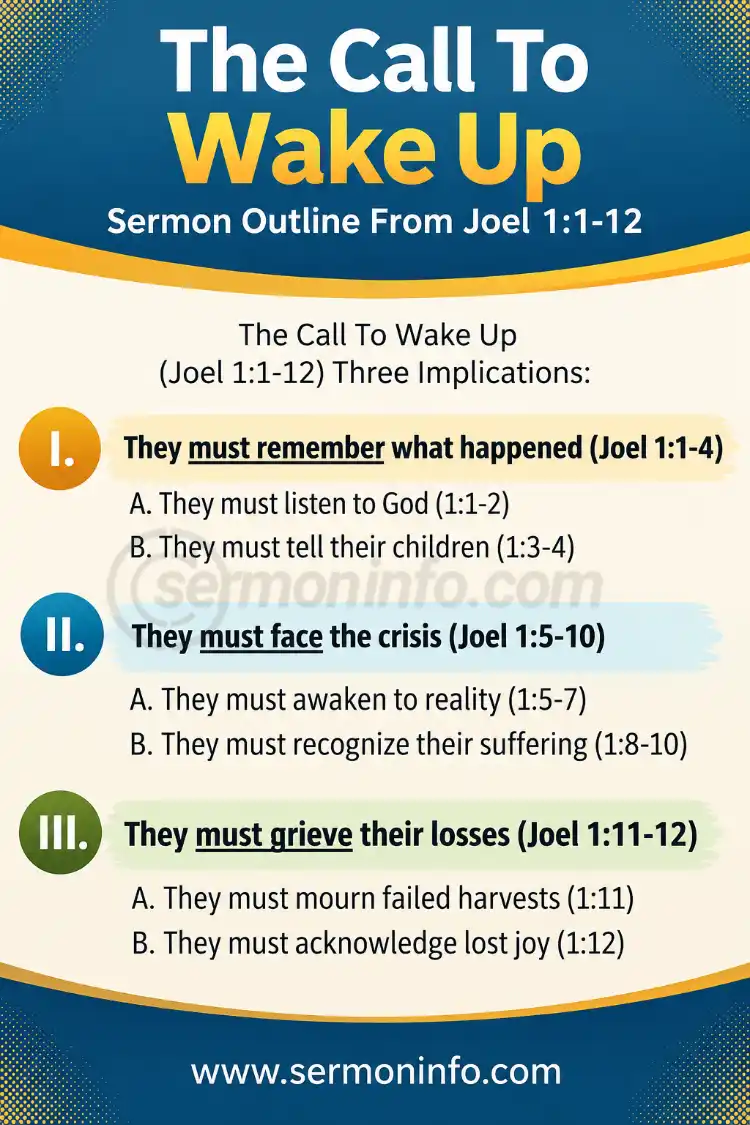
- Remember What Happened (Joel 1:1-4): God calls us to listen to His Word, learn from past experiences, and teach future generations about His truth and faithfulness.
- Face the Crisis (Joel 1:5-10): God wants us to recognize life’s difficulties, face our challenges with faith, and show compassion to those who suffer.
- Grieve Our Losses (Joel 1:11-12): God encourages us to acknowledge our sorrow, recognize our dependence upon Him, and seek His strength and comfort during difficult times.
Sermon Outline From Joel 1:1-12
Have you ever slept through an alarm because you were too comfortable to get out of bed? Sometimes, we need more than a gentle reminder to wake up and face reality. God sent Joel to awaken the people of Judah through a devastating locust plague. Their land lay ruined, their harvests disappeared, and their joy turned to sorrow. God wanted them to recognize the seriousness of their situation.
Joel’s message reminds us that difficult circumstances can awaken our hearts to our need for God. In Joel 1:1-12, we discover three important lessons about responding to life’s challenges. First, we must remember what happened. Second, we must face the crisis. Third, we must grieve our losses. These lessons encourage us to examine our hearts and trust God’s wisdom during difficult times.
1. They Must Remember What Happened (Joel 1:1-4)
“The word of the Lord that came to Joel the son of Pethuel. Hear this, you elders, And give ear, all you inhabitants of the land! Has anything like this happened in your days, Or even in the days of your fathers? Tell your children about it, Let your children tell their children, And their children another generation. What the chewing locust left, the swarming locust has eaten; What the swarming locust left, the crawling locust has eaten; And what the crawling locust left, the consuming locust has eaten.” (Joel 1:1-4)
A. They Must Listen to God (Joel 1:1-2)
God spoke through Joel and called the people of Judah to listen carefully to His message. A devastating locust plague had swept across their land, leaving terrible destruction behind. Joel asked the elders whether they had ever witnessed such a disaster. His question challenged everyone to stop, pay attention, and consider the seriousness of what had happened.
God still calls us to listen carefully to His Word, especially when life becomes difficult. Sometimes, our troubles consume our attention, and we forget to seek God’s wisdom. James 1:22 reminds us to become doers of the Word, not hearers only. When difficulties arise, we must open our Bibles, listen to God’s truth, and trust His guidance.
B. They Must Tell Their Children (Joel 1:3-4)
Joel urged the people to tell their children about the terrible locust plague that devastated their nation. Each generation needed to understand what had happened and remember its lessons. The destruction was so severe that successive waves of locusts consumed everything in their path. God wanted future generations to remember this extraordinary disaster and learn from it.
We also have a responsibility to teach our children about God’s Word and His faithfulness. Psalm 78:4 encourages us to tell the coming generation about the Lord’s wonderful works. Our children need more than stories about our successes. They also need to hear how God sustained us through difficult times and taught us to trust Him. (Source Material: John MacArthur, The MacArthur Bible Commentary, pp. 986-987)
This material provides some ideas and thoughts for a sermon outline from Joel 1:1-12 (The Call To Wake Up).
2. They Must Face the Crisis (Joel 1:5-10)
“Awake, you drunkards, and weep; And wail, all you drinkers of wine, Because of the new wine, For it has been cut off from your mouth. For a nation has come up against My land, Strong, and without number; His teeth are the teeth of a lion, And he has the fangs of a fierce lion. He has laid waste My vine, And ruined My fig tree; He has stripped it bare and thrown it away; Its branches are made white. Lament like a virgin girded with sackcloth For the husband of her youth. The grain offering and the drink offering Have been cut off from the house of the Lord; The priests mourn, who minister to the Lord. The field is wasted, The land mourns; For the grain is ruined, The new wine is dried up, The oil fails.” (Joel 1:5-10)
A. They Must Awaken to Reality (Joel 1:5-7)
Joel called the people to wake up and face the terrible destruction caused by the locust plague. The locusts had stripped their vineyards and left their fig trees bare and broken. Even those who enjoyed drinking wine had reason to mourn because the grapes had disappeared. Joel wanted everyone to recognize the seriousness of their situation.
Sometimes, we become so comfortable with life that we overlook the warning signs around us. Difficult circumstances can remind us how quickly our earthly security can disappear. Proverbs 27:12 teaches that wise people recognize danger and take appropriate action. Rather than ignore our problems, we must face reality, seek God’s wisdom, and trust His guidance.
B. They Must Recognize Widespread Suffering (Joel 1:8-10)
Joel urged the nation to mourn because the locust plague had brought suffering to every part of their lives. The fields lay ruined, the grain had disappeared, and the vineyards produced no wine. Even the priests could no longer present the regular grain and drink offerings (Joel 1:9). The disaster affected their food, livelihood, and worship.
When suffering strikes, its effects often reach beyond those who first experience the crisis. A lost job, serious illness, or natural disaster can affect entire families and communities. Romans 12:15 reminds us to weep with those who weep. God calls us to notice the suffering around us, show genuine compassion, and encourage others to trust Him. (Source Material: John F. Walvoord and Roy B. Zuck, The Bible Knowledge Commentary: Old Testament, pp. 1413-1414)
3. They Must Grieve Their Losses (Joel 1:11-12)
“Be ashamed, you farmers, Wail, you vinedressers, For the wheat and the barley; Because the harvest of the field has perished. The vine has dried up, And the fig tree has withered; The pomegranate tree, The palm tree also, And the apple tree— All the trees of the field are withered; Surely joy has withered away from the sons of men.” (Joel 1:11-12)
A. They Must Mourn Failed Harvests (Joel 1:11)
Joel called the farmers and vineyard workers to mourn because the locust plague had destroyed their harvests. Their fields lay empty, their crops had perished, and months of hard work had produced nothing. The disaster brought great sorrow and exposed the nation’s dependence upon God’s provision. Their losses also called them to consider their spiritual condition before God.
Sometimes, God allows difficult circumstances to remind us that everything we possess comes from Him. We may work hard, make careful plans, and still experience painful disappointments. James 4:15 reminds us to submit our plans to God’s will. When our efforts fail, we must examine our hearts, trust His wisdom, and seek His guidance.
B. They Must Acknowledge Lost Joy (Joel 1:12)
Joel described the withered vines, fig trees, and other fruit trees to reveal the terrible consequences of the locust plague. The destruction had robbed the people of their harvests and their joy. Joel 1:12 declares that joy had withered away from the sons of men. Their sorrow revealed the depth of their suffering and called for serious reflection before God.
When we drift away from God, we often allow earthly comforts to become the source of our happiness. Yet these things can disappear overnight, leaving our hearts empty and discouraged. Psalm 16:11 reminds us that fullness of joy comes from God’s presence. Even during painful losses, we can find lasting hope and strength through our relationship with Him. (Source Material: John MacArthur, The MacArthur Bible Commentary, pp. 986-987)
Conclusion
Joel’s message reminds us that God wants His people to wake up and recognize their need for Him. First, we must remember what happened and learn from the past. Second, we must face the crisis rather than ignore the problems around us. Third, we must grieve our losses and acknowledge our dependence upon God’s provision.
These lessons remind us to listen carefully to God’s Word and respond with faith and obedience. When difficulties arise, we should examine our hearts and seek God’s wisdom rather than depend upon our own strength. Psalm 46:1 reminds us that God is our refuge and strength. Whatever challenges we face, we can trust His faithfulness and find hope in His promises.
Closing Prayer
Heavenly Father, thank You for speaking to us through Your Word and reminding us of our need for You. Help us to listen carefully to Your voice and remember the lessons You teach us. When difficulties arise, give us wisdom to face our challenges with faith and courage. Teach us to recognize our dependence upon You and trust Your guidance in every situation.
Lord, forgive us when we become distracted by the things of this world and forget Your goodness. Awaken our hearts to Your truth and help us respond with humility and obedience. When we experience loss or disappointment, remind us that our hope rests in You, not our circumstances. Strengthen our faith, restore our joy, and help us walk faithfully with You each day. We pray in Jesus’ name, Amen.
Frequently Asked Questions (FAQ)
Q: What is the main message of Joel 1:1-12?
A: Joel 1:1-12 calls God’s people to wake up and recognize the seriousness of a devastating locust plague. Joel urges Judah to remember the disaster, face its consequences, and mourn their losses. The passage reminds us to examine our hearts and recognize our dependence upon God’s provision.
Q: Why did God send locusts in Joel 1?
A: The locust plague served as a warning of God’s judgment upon Judah. The insects destroyed crops, vineyards, and trees, causing widespread suffering (Joel 1:4-12). Through this disaster, God called His people to recognize their spiritual condition and prepare for the greater judgment associated with the Day of the Lord.
Q: Why did Joel tell the people to teach their children?
A: Joel instructed the people to tell future generations about the devastating locust plague (Joel 1:3-4). He wanted them to remember the disaster and learn from its lessons. This instruction reminds Christian parents to teach their children God’s Word and encourage them to trust His faithfulness.
Q: Why did Joel call the people to wake up?
A: Joel called the people to awaken because the locust plague had devastated their land and disrupted their daily lives (Joel 1:5-7). His warning challenged them to recognize the seriousness of the disaster. Today, believers must remain spiritually alert, listen to God’s Word, and seek His wisdom.
Q: How does Joel 1:1-12 apply to Christians today?
A: Joel 1:1-12 reminds Christians to listen to God’s Word, face life’s challenges, and acknowledge their dependence upon Him. Difficult circumstances can reveal the weakness of earthly security. Rather than ignore our struggles, we should seek God’s wisdom, show compassion to others, and trust His faithfulness through every season.

BONUS: What Is the Key Lesson to Learn in Joel 1:1-12?
Joel 1:1-12 teaches us to recognize our dependence upon God and respond seriously to life’s difficulties. Joel called Judah to remember the devastating locust plague, face the destruction, and mourn their losses. The disaster reminded the people that earthly blessings can disappear quickly and that they needed God’s provision.
The key lesson encourages us to listen to God’s Word, examine our hearts, and trust Him during difficult circumstances. Sometimes, life’s challenges reveal how much we depend upon earthly comforts rather than God. Proverbs 3:5-6 reminds us to trust the Lord wholeheartedly and acknowledge Him in all our ways.
BONUS: Why Does God Allow Hardships in a Believer’s Life?
God allows hardships to strengthen our faith, develop godly character, and deepen our dependence upon Him. Difficulties remind us that we cannot control everything in life. James 1:2-4 teaches that trials test our faith and produce patience. Through these experiences, God helps us grow spiritually and trust His wisdom.
However, not every hardship results from personal sin. Sometimes, God uses suffering to accomplish purposes we cannot fully understand (John 9:1-3). Romans 8:28 assures believers that God works all things together for good for those who love Him. Even during painful circumstances, we can trust His sovereign care and faithful promises.
BONUS: Why Can We Depend Upon God’s Provision for Life?
We can depend upon God’s provision because He knows our needs and faithfully cares for His children. Jesus reminds us that our heavenly Father feeds the birds and knows what we need (Matthew 6:26-32). Matthew 6:33 encourages us to seek God’s kingdom and righteousness first, trusting Him to provide according to His wisdom.
God’s provision does not mean believers will never experience financial difficulties, sickness, or loss. Instead, His faithfulness assures us that He remains with us through every circumstance. Philippians 4:19 reminds us that God supplies our needs according to His riches in glory by Christ Jesus. We can trust His care even during life’s uncertainties.
BONUS: Is There a Connection Between One’s Spiritual Condition and Hardship in Joel 1:1-12?
Joel 1:1-12 reveals a connection between Judah’s national crisis and God’s call for spiritual awakening. The devastating locust plague destroyed their harvests, disrupted their worship, and brought widespread suffering. Although Joel does not directly identify specific sins in these verses, the disaster calls the people to examine their spiritual condition and recognize their dependence upon God.
Sometimes, God uses hardships to correct our waywardness and draw us back to Himself. Hebrews 12:6 reminds us that the Lord disciplines those He loves. However, not every hardship results from personal sin (John 9:1-3). When difficulties arise, we should examine our hearts, seek God’s wisdom, and trust His faithful care.
BONUS: Are There Any Prophetic Implications in Joel 1:1-12?
Joel 1:1-12 carries prophetic implications through the devastating locust plague that struck Judah. The destruction served as a warning of God’s judgment and foreshadowed the coming Day of the Lord (Joel 1:15). Joel used this national disaster to prepare the people for a greater judgment when God would confront human rebellion (Joel 2:1-11).
From a dispensational perspective, the Day of the Lord includes future judgments associated with the Tribulation period (1 Thessalonians 5:2-3). Joel’s message reminds us that God controls history and will fulfill His prophetic promises. While believers await Christ’s return, we must remain spiritually alert, trust God’s faithfulness, and live in obedience to His Word (Titus 2:13).
| Sermon Outline From Joel 1:1-12 – Sermons From Joel | |||
|---|---|---|---|
| Number | Main Point | Bible Verse | Meaning |
| 1 | They Must Remember What Happened | Joel 1:1-4 | God calls His people to remember the lessons of the past and teach future generations about His truth. |
| 2 | They Must Face the Crisis | Joel 1:5-10 | God calls His people to recognize the seriousness of their circumstances and respond with humility and compassion. |
| 3 | They Must Grieve Their Losses | Joel 1:11-12 | God calls His people to acknowledge their sorrow and recognize their dependence upon His provision. |
Source Material
John MacArthur, The MacArthur Bible Commentary (Nashville: Thomas Nelson, 2005), 983-985
John F. Walvoord and Roy B. Zuck, eds., The Bible Knowledge Commentary: Old Testament (Colorado Springs, CO: David C. Cook, 1985), 1409-1413