Choices Carry Consequences (Sermon Outline From Hosea 8:1–14) teaches that our decisions produce spiritual results before God. Israel rejected God’s Word, trusted idols, and relied on human strength, so they faced divine discipline. The passage calls us to trust God, obey Scripture, and choose sincere worship over rebellion and empty religion.
Key Takeaways – Sermon From Hosea 8:1-14
- God warns before judgment comes. Hosea 8:1–3 shows that rejecting God’s covenant and Word always brings serious consequences.
- Idolatry replaces trust in God. Hosea 8:4–6 warns us not to depend on human power, possessions, or anything made by people.
- We reap what we sow. Hosea 8:7–14 calls believers to reject empty religion, obey God sincerely, and choose faithfulness today.
Sermon Outline From Hosea 8:1-14
The choices we make today will shape what happens tomorrow. Every seed produces a harvest after its kind. Israel chose rebellion, idolatry, and human alliances instead of faithful obedience. They sowed the wind and later reaped the whirlwind of judgment (Hosea 8:7). Small compromises may appear harmless, but they often produce painful consequences.
Hosea 8 shows how God sounded the alarm, exposed Israel’s idolatry, and announced coming judgment. Their words claimed faith, but their choices revealed unbelief. This message calls us to examine what directs our decisions and receives our trust. As we study this passage, let us remember one clear truth: choices carry consequences.
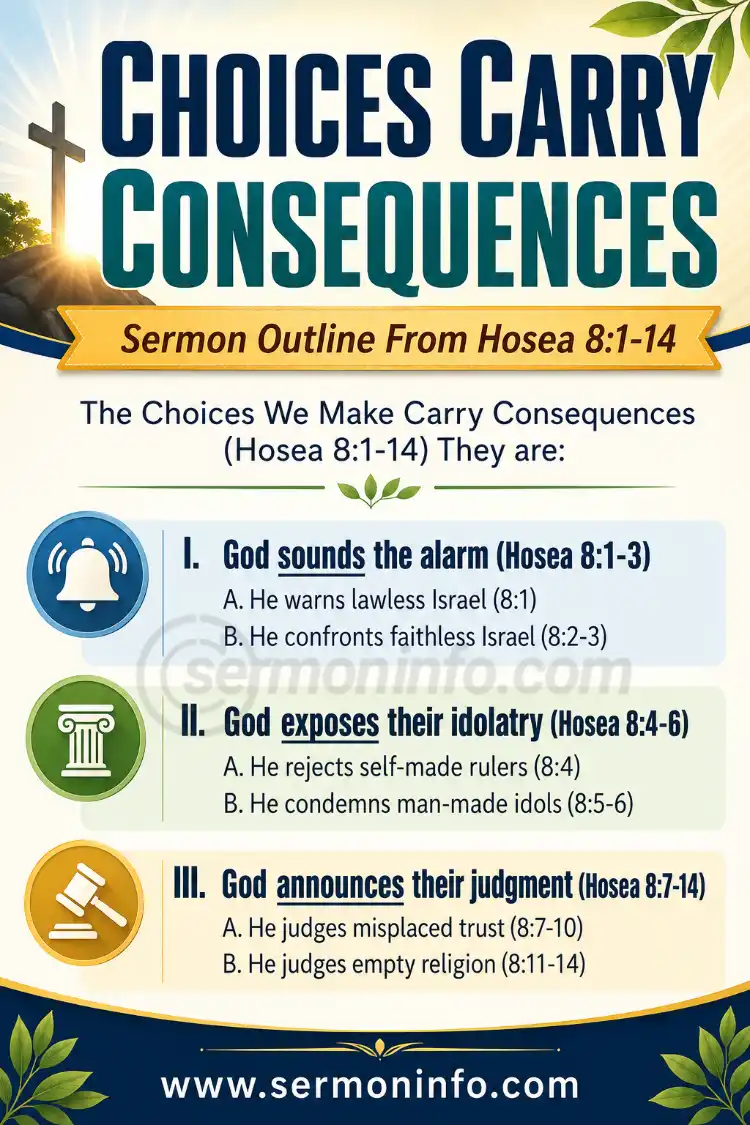
1. God Sounds the Alarm (Hosea 8:1–3)
God warns His people that rebellion will bring certain and painful consequences. (Summary Statement)
A. He Warns Lawless Israel (Hosea 8:1)
God commanded Hosea to sound the trumpet because judgment was approaching like an eagle over Israel. The nation had broken God’s covenant and rebelled against His law. Although God had graciously revealed His truth, they deliberately rejected His authority and chose their own sinful path.
God still warns people before judgment comes because He desires repentance, not destruction (Ezekiel 33:11). His Word exposes sin and calls us back to Himself. When we ignore Scripture and choose our own way, we invite painful consequences. Wise believers listen quickly and obey God’s voice before discipline becomes necessary.
B. He Confronts Faithless Israel (Hosea 8:2–3)
Israel cried, “My God, we know You,” yet their lives told a different story. Their profession sounded sincere, but their actions denied the Lord they claimed to follow. Jesus later warned that not everyone who calls Him “Lord” truly belongs to Him (Matthew 7:21).
Many people today speak about faith, yet their daily choices reveal divided hearts. Genuine faith produces loving obedience because love for Christ expresses itself through keeping His commandments (John 14:15). God desires faithful hearts, not empty words. Our lives should confirm the confession our lips proclaim.
This material provides some ideas and thoughts for a sermon outline from Hosea 8:1-14 (Choices Carry Consequences).
2. God Exposes Their Idolatry (Hosea 8:4–6)
God reveals how His people replaced His authority with human leadership and false worship. (Summary Statement)
A. He Rejects Self Made Rulers (Hosea 8:4)
Israel appointed kings and princes without seeking God’s will. They chose leaders who served human ambition instead of divine truth. Their decisions revealed hearts that resisted God’s authority. Political strength could not protect them because they had ignored the King who ruled over them.
We also face danger when we make important choices without prayer or Scripture. Proverbs 3:6 calls us to acknowledge God in all our ways. We must seek His wisdom before choosing leaders, forming plans, or following popular voices. God blesses humble obedience, but self rule brings confusion and sorrow.
B. He Condemns Man Made Idols (Hosea 8:5–6)
Israel trusted a golden calf that craftsmen had made from silver and gold. The idol had no life, power, or wisdom. God rejected their false worship and declared that the calf would break into pieces. Their chosen object of security could not save them.
Modern idols may include money, success, comfort, or human approval. These things promise safety, but they cannot carry our souls through trouble. First John 5:21 says, “Keep yourselves from idols.” We must place our trust in the living God, who alone gives lasting hope and peace.
3. God Announces Their Judgment (Hosea 8:7–14)
God declares that His people will reap loss, oppression, and exile because of persistent rebellion. (Summary Statement)
A. He Judges Misplaced Trust (Hosea 8:7–10)
Israel trusted foreign nations instead of trusting God. They sought help from Assyria, but their alliances brought weakness and shame. Hosea warned that they had sown the wind and would reap the whirlwind. Their sinful choices produced consequences far greater than they expected.
We often seek security in money, influence, plans, or powerful people. Yet these supports can fail when trouble comes. Psalm 20:7 calls us to remember the Lord rather than human strength. God invites us to trust His wisdom, power, and faithful care in every uncertain season.
B. He Judges Empty Religion (Hosea 8:11–14)
Israel multiplied altars and sacrifices, but their worship did not please God. They treated His written law as something strange. Religious activity covered their rebellion, but it could not hide their hearts. They forgot their Maker while continuing outward acts of devotion.
God still desires obedience more than empty ceremony (1 Samuel 15:22). We can attend services, sing hymns, and give offerings while resisting His Word. True worship begins with a surrendered heart. Christ calls us to remember Him, receive His truth, and obey Him with sincere devotion.
Conclusion
God sounded the alarm because Israel broke His covenant and rejected His law. He exposed their idolatry through self chosen rulers and man made gods. Then He announced judgment upon their misplaced trust and empty religion. Israel’s choices carried serious consequences because persistent rebellion always produces a painful harvest.
Therefore, we must hear God’s Word, trust His wisdom, and obey His commands. Scripture does more than inform us; it guides our choices and protects our lives. Let us reject every rival trust and worship God with sincere hearts. By His grace, we can choose faithfulness today and enjoy its spiritual fruit tomorrow.
Closing Prayer
Heavenly Father, thank You for speaking to us through Your Word. Forgive us for the times we have trusted ourselves instead of You. Search our hearts and remove every idol that competes for our devotion. Help us obey Your truth with willing hearts and choose the path that honors You each day.
Lord, give us wisdom to make choices that please You and bring glory to Your name. Strengthen our faith when we face temptation or uncertainty. May our lives reflect genuine love, faithful obedience, and complete trust in You. We ask this in the precious name of our Lord and Saviour Jesus Christ. Amen.
Frequently Asked Questions (FAQ)
Q: What is the main message of Hosea 8?
A: Hosea 8 teaches that choices made in rebellion against God bring serious consequences. Israel rejected God’s covenant, trusted idols, and sought security through foreign nations. God sounded the alarm, exposed their false worship, and announced judgment. The passage calls us to trust and obey Him.
Q: What does “sow the wind and reap the whirlwind” mean?
A: In Hosea 8:7, “sowing the wind” describes Israel’s worthless and rebellious choices. “Reaping the whirlwind” pictures consequences greater and more destructive than expected. Like seed producing a harvest, sinful decisions eventually produce painful results. God therefore calls us to sow obedience, faith, and truth.
Q: Why did God reject Israel’s idols?
A: God rejected Israel’s golden calf because craftsmen made it from silver and gold, and it had no divine power. Their idol replaced trust in the living God and corrupted true worship. Hosea 8:5–6 warns that anything we place above God will eventually fail and disappoint us.
Q: Why did Israel seek help from Assyria?
A: Israel sought Assyria’s help because its leaders trusted political power more than God’s protection. They paid tribute and formed alliances, hoping foreign strength would secure them. Instead, Assyria became an instrument of judgment. Hosea 8:9–10 warns us against replacing faith in God with human security.
Q: What does empty religion mean in Hosea 8?
A: Empty religion means performing religious acts while resisting God’s Word and forgetting Him. Israel multiplied altars and sacrifices, yet treated God’s law as strange. Hosea 8:11–14 teaches that sincere worship requires faith, obedience, and devotion. Outward activity cannot replace a heart surrendered to God.
BONUS: What are the key lessons for life from Hosea 8?
Hosea 8 teaches that rebellion always carries consequences. Israel rejected God’s covenant, trusted idols, and sought help from foreign nations. God warned them before judgment came because He desired repentance. “They sow the wind, and reap the whirlwind” (Hosea 8:7) reminds us that sinful choices often produce a larger harvest.
The chapter also calls us to trust God, obey His Word, and worship Him sincerely. Religious activity cannot replace faithful obedience, and human strength cannot secure lasting peace. We should examine our loyalties, remove hidden idols, and seek God’s wisdom in every decision. Faithful choices today can protect our testimony and strengthen tomorrow’s walk.
BONUS: Why does religious activity fall short of fellowship in Hosea 8?
In Hosea 8, Israel multiplied altars and offered sacrifices, yet rejected God’s law and forgot their Maker (Hosea 8:11–14). Their rituals could not cover rebellion or restore fellowship with God. Religious activity falls short when people honour God outwardly while their hearts trust idols, rulers, or human strength.
Salvation requires God’s grace and genuine faith, not ceremonies alone. Israel claimed, “My God, we know You,” but their conduct denied that claim (Hosea 8:2–3). God saves sinners through faith in Christ, not works (Ephesians 2:8–9). Genuine faith then produces obedience, sincere worship, and lasting devotion.
BONUS: Why did God command Hosea to sound the alarm in Hosea 8:1?
God commanded Hosea to sound the trumpet because Israel had broken His covenant and rebelled against His law (Hosea 8:1). Judgment approached like an eagle over its prey. The alarm warned the nation that its sin had placed it under God’s righteous discipline.
The trumpet also showed God’s mercy because He warned Israel before judgment fell. God still uses Scripture to expose sin and call people to repentance. We should hear His warnings, reject rebellion, and return to faithful obedience. “Today, if you will hear His voice, do not harden your hearts” (Hebrews 3:15).
BONUS: How could Israel claim to know God while rejecting what was good?
Israel cried, “My God, we know You,” but their conduct contradicted their confession (Hosea 8:2–3). They used covenant language while rejecting God’s law, abandoning what was good, and pursuing idols. Their lips claimed relationship, but their choices revealed rebellion.
People can still speak about God without truly submitting to Him. Jesus said, “If you love Me, keep My commandments” (John 14:15). Genuine faith trusts Christ, receives His grace, and produces obedient fruit. We should examine whether our daily lives support the confession our mouths make.
BONUS: What does Hosea 8:4 teach about choosing leaders without God’s approval?
Hosea 8:4 teaches that Israel appointed kings and princes without seeking God’s will. “They set up kings, but not by Me,” God declared. Their leaders reflected human ambition rather than faithful submission. By rejecting God’s authority, the nation chose a path that encouraged idolatry and invited judgment.
Believers should seek God’s wisdom when choosing or supporting leaders. We must test character, values, and decisions by Scripture rather than popularity or power. Proverbs 29:2 shows that righteous leadership blesses people. God calls us to pray for leaders, honour lawful authority, and place our highest trust in Him.
BONUS: What does it mean that Israel became swallowed up among the nations?
Israel became “swallowed up” when foreign nations consumed its strength, freedom, and identity (Hosea 8:8). Assyria would conquer the northern kingdom and scatter its people. Israel became like a useless vessel because rebellion had robbed the nation of its honour, influence, and covenant blessing.
This warning shows that persistent sin can destroy what people value most. Israel trusted political alliances instead of God, so those nations eventually controlled them. Believers should guard their testimony, reject worldly compromise, and trust the Lord. God calls His people to remain faithful and distinct in a godless world (Romans 12:2).
BONUS: Why did Israel treat God’s written law as something strange?
Israel treated God’s written law as strange because repeated rebellion had made His truth feel foreign (Hosea 8:12). They followed idols, human rulers, and pagan customs instead of God’s commands. Their hearts resisted His authority, so they no longer welcomed the Word that should have guided their nation.
People can also neglect Scripture until biblical truth sounds unusual or restrictive. Sin reshapes desires and weakens spiritual understanding. God calls us to read, believe, and obey His Word daily (Revelation 1:3). “Your word is a lamp to my feet and a light to my path” (Psalm 119:105).
BONUS: How can believers avoid repeating Israel’s mistakes in Hosea 8?
Believers avoid Israel’s mistakes by submitting every choice to God’s Word. Israel rejected His law and trusted leaders, idols, and foreign power (Hosea 8:4, 9, 12). We should test our plans by Scripture, seek God’s wisdom, and reject anything that competes with Christ for our trust.
We must also practise sincere worship rather than empty religion. Israel multiplied altars but forgot its Maker (Hosea 8:11–14). God desires obedient hearts that trust Him daily. “Be doers of the word” (James 1:22). Faithful believers remember God, resist compromise, and follow His truth before consequences grow.
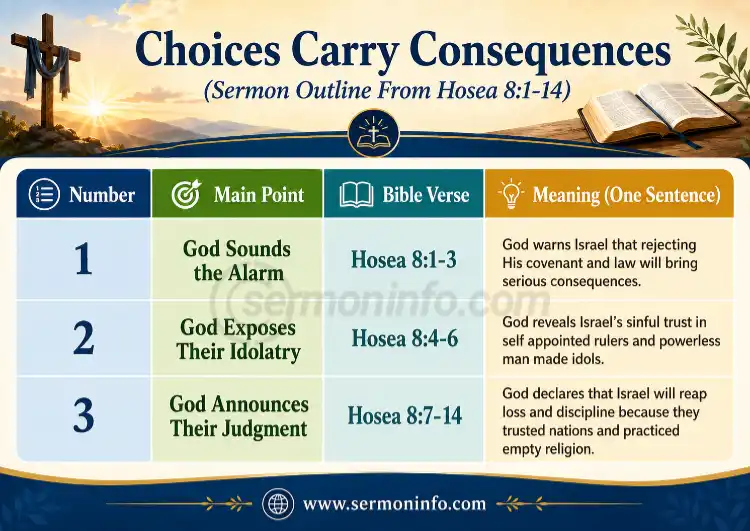
| Sermon Outline From Hosea 8:1-4 – Sermon Outlines From Hosea | |||
|---|---|---|---|
| Number | Main Point | Bible Verse | Meaning |
| 1 | God Sounds the Alarm | Hosea 8:1–3 | God warns Israel that rejecting His covenant and law will bring serious consequences. |
| 2 | God Exposes Their Idolatry | Hosea 8:4–6 | God reveals Israel’s sinful trust in self-appointed rulers and powerless man-made idols. |
| 3 | God Announces Their Judgment | Hosea 8:7–14 | God declares that Israel will reap loss and discipline because they trusted nations and practised empty religion. |