7 Bible verses about biblical repentance reveal God’s call to turn from sin and return to Him through faith in Jesus Christ. Genuine repentance includes godly sorrow, honest confession, and a changed direction. It brings forgiveness, renewed devotion, spiritual restoration, and joy in heaven.

Key Takeaways – Bible Verses About Repentance
- Biblical repentance turns us toward God. We turn from sin, trust Jesus Christ, and receive God’s forgiveness and saving grace.
- Godly sorrow produces genuine change. It confesses sin honestly, accepts responsibility, and replaces excuses with faithful obedience.
- Repentance renews devotion and brings joy. God restores believers who return to Christ, and heaven rejoices when sinners receive salvation.
7 Bible Verses About Biblical Repentance
God graciously calls sinners to repent and believe the gospel of Jesus Christ. Through His patience and kindness, He gives them time to turn from sin before judgment comes. Keeping in mind that worldly sorrow fears exposure and painful consequences, but godly sorrow faces sin honestly before God. As sinners respond with repentance and faith, God grants forgiveness, restores devotion, and fills heaven with joy.
In this message, seven Scriptures will guide us from God’s patient call to the joyful results of repentance. We will see how God’s goodness awakens conviction, how sinners respond through faith, and how believers renew their first love. Together, these truths call us to reject excuses, return wholeheartedly to Christ, and celebrate every life His grace transforms.
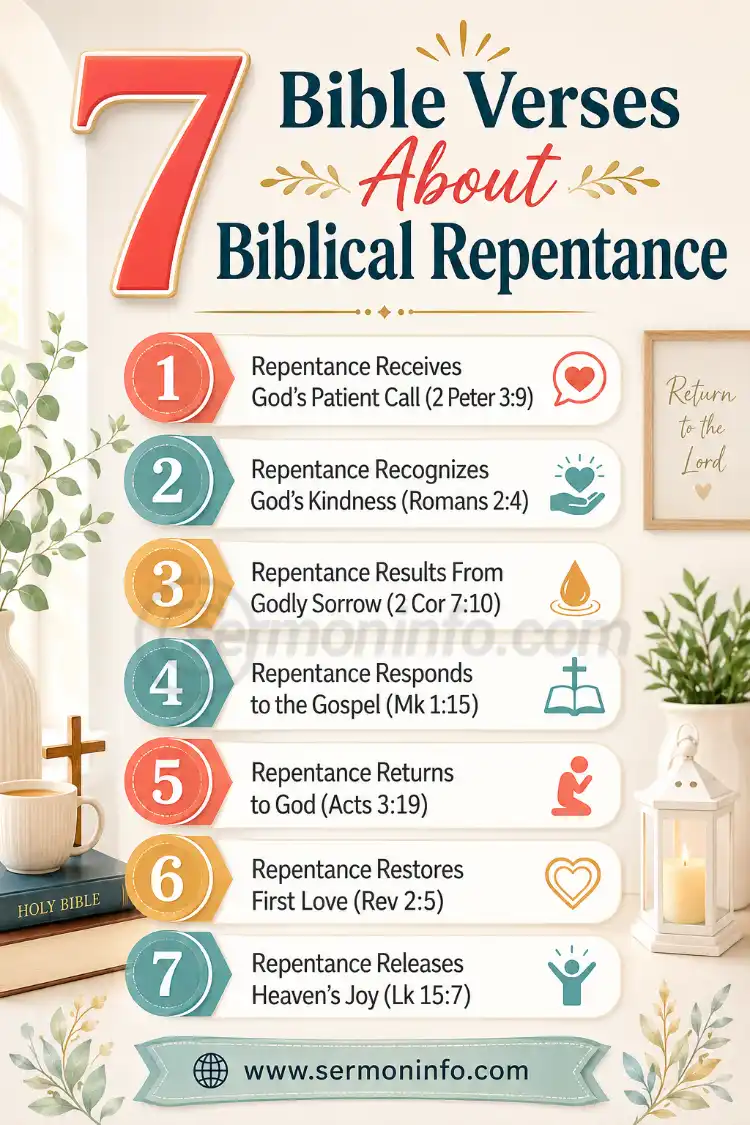
1. Repentance Receives God’s Patient Call (2 Pet 3:9)
“The Lord is not slack concerning His promise, as some count slackness, but is longsuffering toward us, not willing that any should perish but that all should come to repentance” (2 Peter 3:9).
A. Explanation
Peter reminds us that the Lord does not delay His promise through weakness or forgetfulness. God waits patiently because He is merciful and “not willing that any should perish” (2 Peter 3:9). His patience opens the door for sinners to repent before righteous judgment comes.
Picture a lighthouse shining through a stormy night. Its light warns ships away from danger and guides them toward safety. In the same way, God’s patience warns sinners and invites them to Christ. Romans 2:4 says His goodness leads us to repentance.
B. Application
We must never treat God’s patience as permission to continue in sin. A delayed consequence does not mean God approves our choices. Ecclesiastes 8:11 warns that delayed judgment can harden sinful hearts. Today remains the right time to repent, believe, and obey.
Believers also need this warning. We can postpone confession, excuse bitterness, or tolerate habits that weaken our fellowship with Christ. God calls us to respond quickly and honestly. When He convicts us, we should confess our sin and return to faithful obedience (1 John 1:9). (Source Material: Wayne A. Grudem, Systematic Theology: An Introduction to Biblical Doctrine, 2nd ed. (Grand Rapids, MI: Zondervan Academic, 2020), 713–717)
This material provides some ideas and thoughts for a teaching outline about biblical repentance (7 Bible Verses About Biblical Repentance).
2. Repentance Recognizes God’s Kindness (Rom 2:4)
“Or do you despise the riches of His goodness, forbearance, and longsuffering, not knowing that the goodness of God leads you to repentance?” (Romans 2:4).
A. Explanation
Paul confronts people who judge others while excusing their own sin. God shows goodness, patience, and mercy, yet His kindness has a purpose. It leads sinners toward repentance, not comfort in rebellion (Romans 2:4).
God’s kindness works like a warning light beside a dangerous road. His mercy gives us time to stop, turn, and seek forgiveness through Christ. He does not soften sin, but He graciously calls sinners away from destruction.
B. Application
We must never confuse delayed judgment with divine approval. God may withhold immediate consequences, but He still sees every choice. Romans 2:5 warns that stubborn hearts store up wrath for the coming day of judgment.
When God corrects us, we should answer with humility and faith. Confess the sin, leave the wrong path, and return to obedient fellowship. His kindness offers another opportunity to change before sin hardens the heart and damages others. (Source Material: John MacArthur and Richard Mayhue, eds., Biblical Doctrine: A Systematic Summary of Bible Truth (Wheaton, IL: Crossway, 2017), 591–596)
3. Repentance Results From Godly Sorrow (2 Cor 7:10)
“For godly sorrow produces repentance leading to salvation, not to be regretted; but the sorrow of the world produces death” (2 Corinthians 7:10).
A. Explanation
Paul rejoiced because the Corinthians did not merely feel embarrassed. Their sorrow came from God and produced repentance (2 Corinthians 7:9–10). Godly sorrow faces sin honestly, agrees with God’s verdict, and seeks restoration.
Worldly sorrow focuses on exposure, loss, or punishment. It asks, “How can I escape the consequences?” Godly sorrow asks, “How have I sinned against God?” Peter wept and returned to Christ. Judas remained trapped in despair (Matthew 26:75; 27:3–5).
B. Application
We must stop defending our actions and confess them plainly before God. First John 1:9 promises cleansing when believers confess their sins. True repentance accepts responsibility, rejects excuses, and turns toward obedient living.
Think of repentance as opening a closed room to sunlight. God’s light exposes the dust, but His grace begins the cleaning. Let sorrow move you toward confession, restitution, and changed choices. Then your life will show the earnestness that Paul praised (2 Corinthians 7:11). (Source Material: Walter A. Elwell, ed., Evangelical Dictionary of Biblical Theology (Grand Rapids, MI: Baker Books, 1996), 936–937)
4. Repentance Responds to the Gospel (Mk 1:15)
“And saying, ‘The time is fulfilled, and the kingdom of God is at hand. Repent, and believe in the gospel'” (Mark 1:15).
A. Explanation
Jesus began His public ministry by declaring, “Repent, and believe in the gospel” (Mark 1:15). Repentance turns the heart from unbelief, while faith rests completely in Christ. These responses belong together.
Repentance does not earn salvation, and faith does not excuse continued rebellion. The sinner changes direction and trusts Christ’s finished work. Acts 20:21 joins repentance toward God with faith in Jesus Christ.
B. Application
We must reject the belief that good deeds can make us right with God. Isaiah 64:6 exposes human righteousness as inadequate. Salvation comes through grace when we receive Christ by faith (Ephesians 2:8–9).
Imagine releasing a broken rope and grasping a strong rescue line. We must release self righteousness, turn from sin, and trust Christ alone. Jesus promises eternal life to everyone who believes in Him (John 3:16). (Source Material: Millard J. Erickson, Christian Theology, 3rd ed. (Grand Rapids, MI: Baker Academic, 2013), 935–938)
5. Repentance Returns to God (Acts 3:19)
“Repent therefore and be converted, that your sins may be blotted out, so that times of refreshing may come from the presence of the Lord” (Acts 3:19).
A. Explanation
Peter addressed Israel and pointed them to the risen Christ. He called them to repent and turn to God. When sinners trust Jesus, God blots out their sins through His saving grace. Acts 3:19 connects genuine repentance with forgiveness and spiritual refreshing.
The picture resembles ink removed from a written record. God does not merely cover the repentant sinner’s guilt. Through Christ, He clears the charge and grants a new standing. Colossians 2:14 says Christ wiped out the handwriting that stood against us.
B. Application
We must leave the road of sin and return wholeheartedly to God through Christ. Repentance changes our direction, while faith fixes our confidence upon Jesus. We cannot walk toward God while protecting the rebellion that draws us away.
Perhaps disappointment, grief, or failure has revealed how far you have wandered. Do not hide from the Lord or delay your return. Confess your sin, trust Christ, and take the next obedient step. God welcomes those who come to Him with humble hearts. (Source Material: Wayne A. Grudem, Systematic Theology: An Introduction to Biblical Doctrine, 2nd ed. (Grand Rapids, MI: Zondervan Academic, 2020), 713–717)
6. Repentance Restores First Love (Rev 2:5)
“Remember therefore from where you have fallen; repent and do the first works, or else I will come to you quickly and remove your lampstand from its place—unless you repent” (Revelation 2:5).
A. Explanation
Jesus praised the Ephesians for hard work, sound doctrine, and perseverance. Yet they had left their first love (Revelation 2:4). He called them to remember their former devotion, repent, and return to faithful service.
Their hands stayed busy, but their hearts had grown cold. Christ wanted more than correct activity. He desired wholehearted love that shaped every act of obedience. Therefore, repentance meant returning to the affection and devotion they once gave Him.
B. Application
We should pause and examine our love for Christ. Has service replaced fellowship, or has routine weakened our devotion? We must confess spiritual decline honestly and ask the Lord to renew our hearts.
Think of a fire that needs fresh fuel. Prayer, Scripture, worship, and obedience help rekindle loving devotion. We do not earn Christ’s favour through these actions. We return because He first loved us (1 John 4:19). (Source Material: John MacArthur and Richard Mayhue, eds., Biblical Doctrine: A Systematic Summary of Bible Truth (Wheaton, IL: Crossway, 2017), 591–596)
7. Repentance Releases Heaven’s Joy (Lk 15:7)
“I say to you that likewise there will be more joy in heaven over one sinner who repents than over ninety-nine just persons who need no repentance” (Luke 15:7).
A. Explanation
Jesus described a shepherd who searched until he found one lost sheep. That picture reveals God’s concern for every sinner. When one person repents, heaven rejoices because someone lost has turned to God (Luke 15:4–7).
No repentant sinner seems unimportant to the Lord. Each person carries eternal value and receives His personal attention. Luke 15:10 says joy fills the presence of God’s angels when one sinner repents.
B. Application
We should share the gospel faithfully because every lost person matters to God. Our family members, neighbours, and friends need to hear about Christ. Romans 10:14 reminds us that people need someone to proclaim the saving message.
We should also rejoice whenever sinners trust Christ for salvation. We must not respond with suspicion, jealousy, or indifference. Instead, we should welcome them warmly and praise God because His grace has rescued another precious soul. (Source Material: Wayne A. Grudem, Systematic Theology: An Introduction to Biblical Doctrine, 2nd ed. (Grand Rapids, MI: Zondervan Academic, 2020), 713–717)
Conclusion
God patiently calls sinners, and His kindness leads them toward repentance. Godly sorrow faces sin honestly and produces a changed direction. Repentance responds to the gospel, returns to God, restores first love, and brings joy in heaven.
Therefore, we must receive God’s Word with humble and obedient hearts. We should confess sin quickly, reject excuses, and trust Christ completely. As Scripture exposes our need, grace shows us the way home. Let us respond today, walk faithfully, and rejoice whenever God transforms another life.
Frequently Asked Questions (FAQ)
Q: What does repentance mean in the Bible?
A: Biblical repentance means changing your mind about sin, turning toward God, and trusting Jesus Christ. It does not earn salvation. Instead, it accompanies saving faith and produces a changed direction, as seen in Mark 1:15, Acts 3:19, and Acts 20:21.
Q: Is repentance necessary for salvation?
A: Yes. Jesus and the apostles called sinners to repent and believe the gospel. Repentance does not purchase salvation or add human merit. It describes the heart’s turn from unbelief toward God, while faith rests entirely in Christ’s finished work for forgiveness and eternal life.
Q: What is the difference between repentance and remorse?
A: Worldly sorrow regrets exposure, embarrassment, or painful consequences. Godly sorrow agrees with God about sin and produces repentance. It leads a person to confess honestly, accept responsibility, seek forgiveness, and change direction rather than merely wishing the consequences would disappear.
Q: What are the signs of genuine repentance?
A: True repentance produces visible fruit, though not sinless perfection. A repentant person confesses wrongdoing, rejects excuses, turns toward obedience, and seeks to repair harm when possible. Changed attitudes and choices demonstrate repentance, while repeated words without change may reveal only regret.
Q: Do believers need to repent after salvation?
A: Yes. Believers receive eternal salvation through faith in Christ, yet they still need ongoing confession and repentance when they sin. Repentance restores obedient fellowship, renews devotion, and keeps the heart responsive to Scripture. First John 1:9 gives believers confidence in God’s forgiveness and cleansing.
BONUS: What does it mean to repent and believe the gospel?
To repent and believe the gospel means turning from sin and trusting Jesus Christ for salvation. Jesus joined these responses in Mark 1:15. Repentance changes our attitude and direction, while faith rests in Christ’s death and resurrection. Together, they describe a sincere response to God’s saving message.
Repentance does not earn salvation, and faith does not excuse continued rebellion. We reject self righteousness, confess our need, and receive Christ by grace through faith (Ephesians 2:8–9). Acts 20:21 describes this response as repentance toward God and faith toward our Lord Jesus Christ.
BONUS: What does it mean to produce fruit worthy of repentance?
To produce fruit worthy of repentance means showing genuine change through our attitudes, words, and actions. John urged people to “bear fruits worthy of repentance” (Matthew 3:8). Good works do not earn salvation, but they reveal that repentance has changed the heart.
True repentance replaces excuses with confession and rebellion with obedience. Zacchaeus showed repentance by restoring what he had taken and helping the poor (Luke 19:8). We should turn from known sin, make wrongs right when possible, and pursue a life that honours God.
BONUS: How Does God’s Kindness Lead People to Repentance?
God shows kindness through patience, daily provision, and repeated opportunities to hear His truth. His goodness reveals His mercy without excusing sin. Romans 2:4 teaches that God’s goodness leads sinners toward repentance.
God’s kindness softens proud hearts and invites honest confession. We should not mistake delayed judgment for approval. Instead, we should receive His mercy, turn from sin, and trust Jesus Christ while He graciously calls.
BONUS: Does God Grant Repentance to Sinners?
Yes, God graciously grants sinners the opportunity and ability to repent through His Word and Spirit. Acts 11:18 says God granted repentance that leads to life. Second Timothy 2:25 also teaches that God grants repentance so people may know the truth.
God grants repentance, yet He commands sinners to respond personally. Acts 17:30 calls all people everywhere to repent. We must not remain passive. We should turn from unbelief, receive Christ by faith, and follow Him obediently.
BONUS: Why does heaven rejoice when one sinner repents?
Heaven rejoices because one lost sinner has turned to God and received His saving grace. Jesus said heaven celebrates when one sinner repents (Luke 15:7). God values every soul, and repentance shows that His mercy has rescued someone from sin and eternal separation.
This joy reflects God’s loving heart for the lost. Like a shepherd finding one wandering sheep, Christ seeks and saves sinners (Luke 15:4–6). Therefore, we should share the gospel faithfully and rejoice whenever someone trusts Jesus Christ for salvation.
BONUS: What happens when a person refuses to repent?
A person who refuses to repent hardens the heart and continues toward judgment. God commands all people to repent because He has appointed a day of judgment (Acts 17:30–31). Persistent rebellion increases guilt and separates the sinner from God.
Refusing repentance also allows sin to deepen its control and damage relationships, character, and spiritual understanding. Romans 2:5 warns that stubborn hearts store up wrath. Yet God still calls sinners to turn, trust Christ, and receive forgiveness while opportunity remains.
BONUS: What is the best bible verse on repentance?
Mark 1:15 offers one of the clearest Bible verses on repentance. Jesus said, “Repent, and believe in the gospel.” This verse joins repentance with faith. Sinners turn from unbelief and trust Jesus Christ for salvation.
Acts 3:19 also gives a strong summary: “Repent therefore and be converted.” God calls sinners to change direction and return to Him. He promises forgiveness and spiritual refreshing through faith in Christ.
BONUS: How do Baptist view repentance?
Most Baptists view repentance as a necessary response to the gospel, joined closely with faith in Jesus Christ. Repentance means turning from sin and unbelief toward God. Jesus said, “Repent, and believe in the gospel” (Mark 1:15).
Baptists also teach that repentance does not earn salvation. God saves sinners by grace through faith in Christ alone (Ephesians 2:8–9). Genuine repentance produces confession, obedience, and a changed direction, while good works reveal faith rather than create it (Acts 20:21; Matthew 3:8).
BONUS: Where do Baptist see repentance in process of salvation?
Most Baptists place repentance within conversion, alongside personal faith in Jesus Christ. The sinner turns from sin and unbelief toward God while trusting Christ alone. Acts 20:21 joins “repentance toward God” with “faith toward our Lord Jesus Christ.”
Repentance does not earn salvation or add human merit. God saves by grace through faith (Ephesians 2:8–9). Genuine repentance changes the sinner’s direction, while faith receives Christ and His finished work. Jesus united both responses in Mark 1:15.
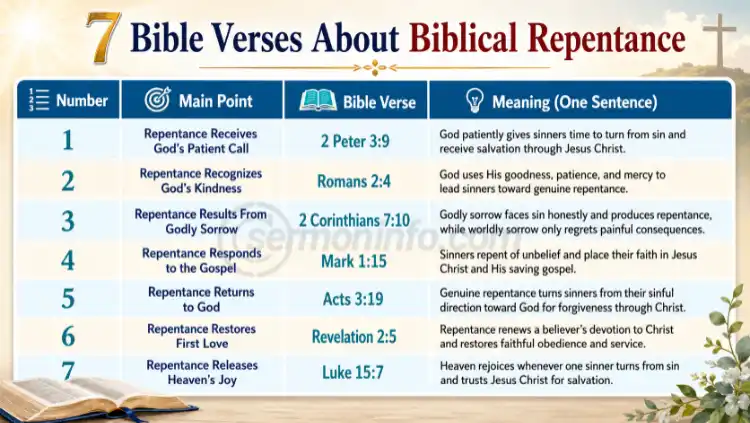
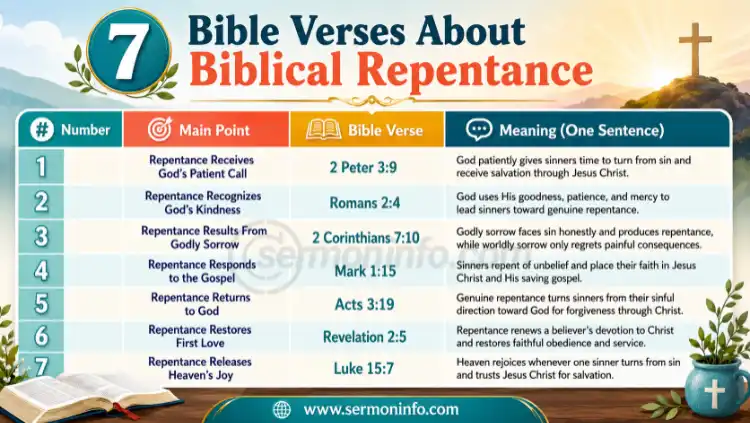
| 7 Bible Verses About Biblical Repentance | |||
|---|---|---|---|
| Number | Main Point | Bible Verse | Meaning |
| 1 | Repentance Receives God’s Patient Call | 2 Peter 3:9 | God patiently gives sinners time to turn from sin and receive salvation through Jesus Christ. |
| 2 | Repentance Recognizes God’s Kindness | Romans 2:4 | God uses His goodness, patience, and mercy to lead sinners toward genuine repentance. |
| 3 | Repentance Results From Godly Sorrow | 2 Corinthians 7:10 | Godly sorrow faces sin honestly and produces repentance, while worldly sorrow only regrets painful consequences. |
| 4 | Repentance Responds to the Gospel | Mark 1:15 | Sinners repent of unbelief and place their faith in Jesus Christ and His saving gospel. |
| 5 | Repentance Returns to God | Acts 3:19 | Genuine repentance turns sinners from their sinful direction toward God for forgiveness through Christ. |
| 6 | Repentance Restores First Love | Revelation 2:5 | Repentance renews a believer’s devotion to Christ and restores faithful obedience and service. |
| 7 | Repentance Releases Heaven’s Joy | Luke 15:7 | Genuine repentance turns sinners from their sinful direction toward God for forgiveness through Christ. |
Source Material
MacArthur, John, and Richard Mayhue, eds. Biblical Doctrine: A Systematic Summary of Bible Truth. Wheaton, IL: Crossway, 2017, pp. 591–596.
Erickson, Millard J. Christian Theology. 3rd ed. Grand Rapids, MI: Baker Academic, 2013, pp. 935–938
Grudem, Wayne A. Systematic Theology: An Introduction to Biblical Doctrine. 2nd ed. Grand Rapids, MI: Zondervan Academic, 2020, pp. 713–717
Elwell, Walter A., ed. Evangelical Dictionary of Biblical Theology. Grand Rapids, MI: Baker Books, 1996, pp. 936–937