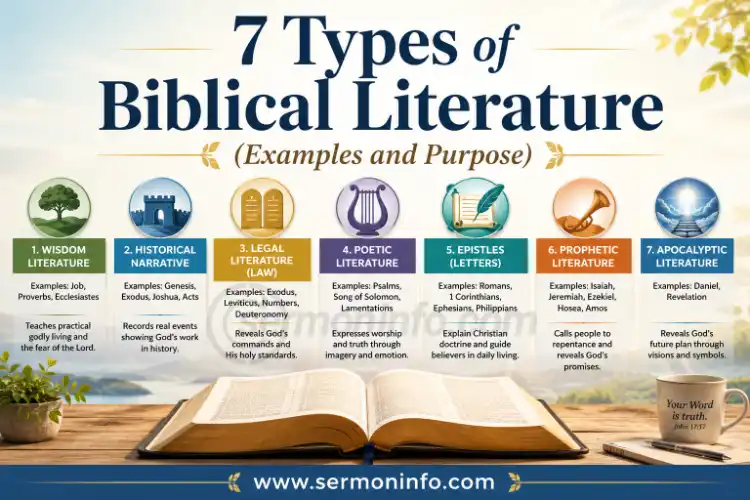
7 Types of Biblical Literature Explained describes the main forms God used to communicate truth in Scripture. These include wisdom, historical narrative, law, poetry, epistles, prophecy, and apocalyptic writing. Each form reveals God’s message in a unique way and helps believers interpret the Bible correctly while understanding His plan of redemption.
Key Takeaways – 7 Types of Biblical Literature
- The Bible uses different literary forms to communicate God’s truth. Scripture includes wisdom, history, law, poetry, epistles, prophecy, and apocalyptic writing. Recognizing these forms helps readers understand God’s message clearly.
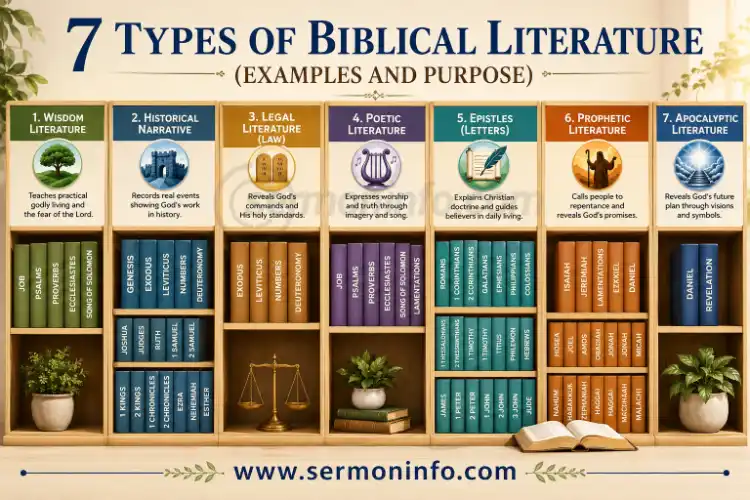
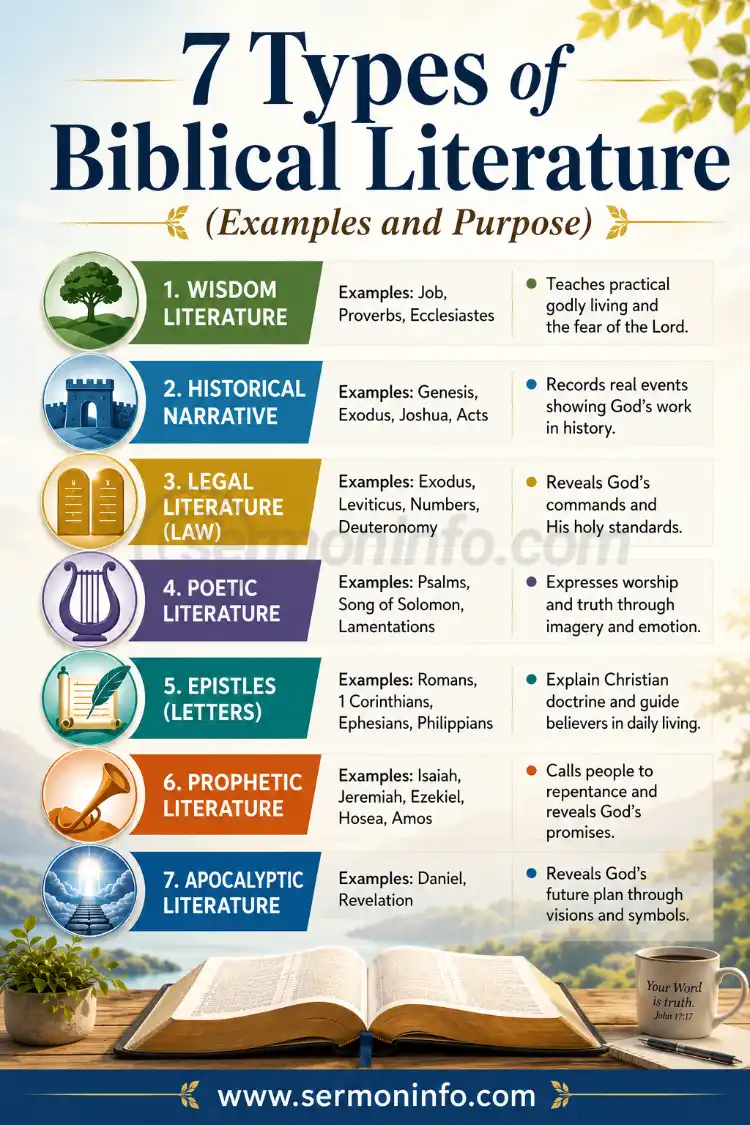
- Each type of biblical literature serves a unique purpose. Wisdom guides daily life, historical narratives show God’s actions, law reveals holiness, poetry inspires worship, epistles teach doctrine, prophecy warns and promises hope, and apocalyptic writing reveals God’s final victory.
- Understanding biblical genres improves Bible study and interpretation. When believers recognize literary forms, they interpret Scripture more accurately and apply God’s truth with confidence and clarity.
- All biblical literature points to God’s redemptive plan in Christ. From Genesis to Revelation, every type of biblical writing reveals God’s character and invites believers to trust Jesus as Savior and Lord.
7 Types of Biblical Literature Explained
Many believers open the Bible and feel confused by its different styles. Some passages tell stories, others share wisdom, and some reveal future events. Yet every part carries God’s truth and leads us closer to Him. Psalm 119:105 says, “Your word is a lamp to my feet and a light to my path.” When we understand how Scripture speaks, the message becomes clearer and more powerful.
Today we will explore 7 Types of Biblical Literature Explained. Each type helps us understand how God communicates truth through His Word. We will look at wisdom, history, law, poetry, letters, prophecy, and apocalyptic vision. As we study these forms, Scripture will open with fresh clarity and deeper meaning. This understanding prepares our hearts to hear God’s voice more clearly.
1. Wisdom Literature
Wisdom literature teaches practical guidance for living a godly life by showing how reverence for the Lord leads to wise choices (Proverbs 1:7).
A. Definition of Wisdom Literature
Wisdom literature teaches practical truth about living wisely before God. These writings show how reverence for the Lord guides daily decisions. Proverbs 1:7 declares, “The fear of the LORD is the beginning of knowledge.” Wisdom literature often contrasts wise and foolish choices so readers can recognize God’s path for life.
These books speak to real struggles such as suffering, work, relationships, and integrity. Job explores suffering. Proverbs teaches wise conduct. Ecclesiastes reflects on life’s meaning. Through simple sayings and reflections, wisdom literature invites believers to trust God’s truth and walk carefully in a broken world.
B. Examples of Wisdom Literature
Proverbs is a clear example of wisdom literature. Proverbs 3:5–6 teaches believers to trust the Lord rather than human understanding. Each proverb gives short, memorable truths that guide everyday choices. Families, workers, and leaders all find practical counsel that shapes godly living.
The book of Job provides another example. Job faced deep suffering yet remained faithful. Job 1:21 declares, “The LORD gave, and the LORD has taken away; blessed be the name of the LORD.” His story reminds believers that wisdom includes trusting God even when life seems confusing.
C. Purpose of Wisdom Literature
The purpose of wisdom literature is to train believers to think and live according to God’s truth. These writings shape the heart and mind so people choose righteousness. Proverbs 2:6 explains, “For the LORD gives wisdom; from His mouth come knowledge and understanding.”
Wisdom literature also prepares believers for life’s hardships. Ecclesiastes shows that earthly pursuits cannot satisfy the soul. True meaning comes from fearing God and obeying Him (Ecclesiastes 12:13). These lessons guide believers to trust God’s wisdom when circumstances feel uncertain.
2. Historical Narrative Literature
Historical narrative literature records true events in God’s redemptive story, showing how He works through people and nations to accomplish His purposes (Exodus 14:13).
A. Definition of Historical Narrative
Historical narrative records real events in God’s redemptive plan. These stories describe how God worked through people and nations across history. Scripture presents these accounts as true history that reveals God’s character and faithfulness to His promises.
These narratives move the biblical story forward. From Genesis through Acts, readers see God calling Abraham, delivering Israel, and establishing the church. Through these events, believers witness how the Lord directs history to accomplish His saving purposes.
B. Examples of Historical Narrative
The book of Exodus provides a powerful example. God delivered Israel from Egyptian bondage through Moses. Exodus 14:13 records Moses saying, “Stand still, and see the salvation of the LORD.” This historical account reveals God’s power and covenant faithfulness.
Another example appears in the book of Acts. Acts 2 describes the coming of the Holy Spirit at Pentecost. The gospel spread through preaching and missionary journeys. Acts 1:8 shows the church’s mission to witness from Jerusalem to the ends of the earth.
C. Purpose of Historical Narrative
Historical narrative reveals God’s work in real human history. These accounts remind believers that faith rests on actual events, not myths. The stories strengthen confidence in God’s promises and power.
These narratives also teach spiritual lessons. Paul wrote that Old Testament events were written for our instruction (1 Corinthians 10:11). When believers read these stories, they see God guiding His people and learn to trust Him in their own journey.
3. Legal Literature (Law)
Legal literature contains God’s commands given through Moses that reveal His holiness and instruct His people how to live in covenant obedience (Leviticus 19:2).
A. Definition of Legal Literature
Legal literature contains God’s laws given to Israel through Moses. These commands shaped Israel’s worship, moral conduct, and national life. The Law reveals God’s holiness and His standard for righteousness.
The books of Exodus, Leviticus, Numbers, and Deuteronomy include these laws. They cover sacrifices, moral commands, and social justice. Through the Law, God taught Israel how to live as His covenant people.
B. Examples of Legal Literature
The Ten Commandments in Exodus 20 provide a foundational example. These commands teach reverence for God and respect for others. For instance, Exodus 20:12 instructs children to honor their parents. These laws form the moral structure of society.
Leviticus also contains legal instructions. Leviticus 19:2 says, “You shall be holy, for I the LORD your God am holy.” These commands guided Israel’s worship and daily conduct, teaching the people that holiness reflects God’s character.
C. Purpose of Legal Literature
The Law revealed God’s righteousness and exposed human sin. Romans 3:20 explains that through the law comes knowledge of sin. The commands showed people their need for God’s mercy and grace.
Legal literature also prepared the way for Christ. Galatians 3:24 describes the law as a tutor that leads us to Christ. By revealing God’s standards, the Law pointed forward to the Savior who fulfills righteousness.
4. Poetic Literature (Poetry)
Poetic literature communicates spiritual truth through imagery and parallel expressions that stir worship, reflection, and heartfelt devotion to God (Psalm 23:1).
A. Definition of Poetic Literature
Poetic literature expresses truth through imagery, rhythm, and emotional language. Hebrew poetry often uses parallel lines that repeat or expand ideas. This style helps readers reflect deeply on God’s character and works.
These writings stir the heart as well as the mind. Poetry invites worship, repentance, and reflection. Through vivid language, the reader feels the beauty of God’s presence and the depth of human emotion before Him.
B. Examples of Poetic Literature
The Psalms provide the most familiar example. Psalm 23 pictures the Lord as a shepherd who cares for His people. The imagery helps believers picture God’s guidance and protection in everyday life.
Another example appears in Song of Solomon. This poetic book celebrates love within marriage. Its imagery expresses devotion and joy, reminding readers that love reflects God’s good design for relationships.
C. Purpose of Poetic Literature
Poetic literature leads believers into worship and reflection. Psalms teach God’s people how to pray, praise, and cry out during hardship. Psalm 42:1 compares longing for God to a deer thirsting for water.
Poetry also helps believers express faith during emotional seasons. When life brings joy or sorrow, these passages give language for the heart. They guide believers to worship God with honesty and devotion.

Words of Delight by Leland Ryken
5. Epistles (Logical Discourse)
Epistles are apostolic letters that explain Christian doctrine clearly and instruct believers how to live faithfully in Christ (Romans 5:1).
A. Definition of Epistles
Epistles are letters written to churches or individuals to explain Christian doctrine and practice. Apostles such as Paul, Peter, James, and John wrote these letters to teach truth and correct error.
These letters follow clear reasoning. They present doctrine first and then show how believers should live. This logical structure helps Christians understand faith and daily obedience.
B. Examples of Epistles
Romans provides a clear example. Paul explains salvation by grace through faith. Romans 5:1 declares that believers are justified by faith and have peace with God through Jesus Christ.
Ephesians offers another example. Paul teaches about the church and spiritual blessings in Christ. Ephesians 2:8–9 explains salvation by grace, not works. The letter then calls believers to walk in unity and holiness.
C. Purpose of Epistles
The epistles strengthen churches with sound doctrine. They explain salvation, spiritual growth, and church unity. These teachings guard believers from false ideas and guide them toward maturity.
They also provide practical instruction for daily life. Letters like Philippians and Colossians encourage believers to live with joy, humility, and faithfulness. Through these teachings, Christians learn how truth shapes everyday actions.
6. Prophetic Literature (Prophecy)
Prophetic literature delivers God’s messages through His prophets, calling people to repentance while revealing His future plans and promises (Isaiah 53:5).
A. Definition of Prophetic Literature
Prophetic literature records messages delivered by God’s prophets. These messages called people to repentance and faithfulness. Prophets spoke God’s truth to kings, nations, and ordinary people.
Prophecy often addressed current sin while pointing toward future events. Through these messages, God revealed His justice, mercy, and ultimate plans for redemption.
B. Examples of Prophetic Literature
The book of Isaiah contains powerful prophetic messages. Isaiah warned Judah about judgment but also promised hope. Isaiah 53 foretells the suffering Messiah who would bear the sins of many.
Jeremiah offers another example. Jeremiah called Israel to repentance during a time of spiritual decline. Moreover, Jeremiah 29:11 reminds the people that God still had plans for their future and hope.
C. Purpose of Prophetic Literature
Prophetic literature warns people about the consequences of sin. The prophets called nations to turn back to God before judgment arrived. These messages remind believers that God takes holiness seriously.
Prophecy also offers hope through God’s promises. Many prophetic passages point to the coming Messiah and God’s future kingdom. These promises encourage believers to trust God’s plan even during difficult seasons.
7. Apocalyptic Literature
Apocalyptic literature reveals God’s final victory over evil through visions and symbols that encourage believers to trust His sovereign control of history (Revelation 21:1).
A. Definition of Apocalyptic Literature
Apocalyptic literature reveals God’s future plans through visions and symbolic language. These writings often describe heavenly scenes, spiritual battles, and the final victory of God’s kingdom.
The language may include symbols such as beasts, horns, or heavenly thrones. These images communicate spiritual truths about God’s sovereignty over history.
B. Examples of Apocalyptic Literature
The book of Daniel contains important apocalyptic visions. Daniel 7 describes powerful kingdoms symbolized by beasts. These visions show that earthly empires rise and fall under God’s authority.
The book of Revelation provides another example. Revelation 21 describes the new heaven and new earth where God dwells with His people. This vision offers hope that God will ultimately restore creation.
C. Purpose of Apocalyptic Literature
Apocalyptic literature encourages believers during times of persecution or uncertainty. These visions remind God’s people that the Lord controls history and will defeat evil.
They also strengthen hope in Christ’s return. Revelation ends with the promise that Jesus will come again. For believers facing trials, these passages assure them that God’s victory is certain.
Conclusion
Today we explored seven types of biblical literature that shape our understanding of Scripture. Wisdom teaches godly living. Historical narrative records God’s work in real events. Law reveals God’s holy standards. Poetry stirs worship and prayer. Epistles explain Christian truth. Prophecy calls people to repentance. Apocalyptic visions reveal God’s final victory.
Now God invites us to respond to His Word. Scripture points us to Jesus Christ, the Savior promised throughout the Bible. Romans 10:9 says that those who confess Jesus as Lord and believe in His resurrection will be saved. Place your faith in Him today. Trust His grace, follow His truth, and walk daily with the Lord.
Closing Prayer
Heavenly Father, we thank You for the gift of Your Word. You have spoken through wisdom, history, law, poetry, letters, prophecy, and visions. Through every page, You reveal Your truth and Your faithfulness. Open our hearts to understand what we have learned today. Help us treasure Scripture and follow its guidance each day. Your Word gives light, direction, and hope.
Lord Jesus, we trust You as our Savior and Lord. Thank You for the salvation You offer through Your death and resurrection. Strengthen our faith and guide our steps in truth. Help us live according to Your Word with courage and obedience. Fill our hearts with joy as we walk with You. We ask this in Jesus’ name. Amen.
Frequently Asked Questions (FAQ)
Q: What are the 7 types of biblical literature?
A: The 7 types of biblical literature commonly recognized in Scripture are wisdom literature, historical narrative, legal literature (law), poetic literature, epistles (letters), prophetic literature, and apocalyptic literature. Each form communicates God’s truth in a distinct style and helps readers understand the Bible’s message more clearly.
Q: Why is it important to understand biblical literary genres?
A: Understanding biblical literary genres helps readers interpret Scripture correctly. Different passages use different styles such as poetry, history, or prophecy. Recognizing these forms prevents confusion and allows believers to grasp the original meaning and spiritual lessons intended by God in His Word.
Q: Which books of the Bible are considered wisdom literature?
A: Wisdom literature in the Bible includes books like Job, Proverbs, and Ecclesiastes. These writings provide practical guidance for life, teaching believers how to live wisely before God. They emphasize the fear of the Lord, moral choices, and trusting God during life’s uncertainties.
Q: What is the difference between prophecy and apocalyptic literature in the Bible?
A: Prophetic literature delivers God’s messages calling people to repentance and faithfulness, often through prophets like Isaiah and Jeremiah. Apocalyptic literature uses symbolic visions to reveal God’s future victory and final judgment, most clearly seen in the books of Daniel and Revelation.
Q: How does knowing biblical literature types help Bible study?
A: Knowing the types of biblical literature helps believers read the Bible with greater clarity and confidence. It guides readers to interpret passages according to their style and purpose. This understanding strengthens faith, deepens biblical insight, and helps believers apply God’s truth in daily life.

Dictionary of Biblical Imagery by Leland Ryken
BONUS: How many literary genres are found in the Bible?
The Bible contains several literary genres that communicate God’s truth in different ways. Many teachers group them into seven major types: wisdom, historical narrative, law, poetry, epistles, prophecy, and apocalyptic writing. Each form serves a unique role in revealing God’s message. As 2 Timothy 3:16 teaches, all Scripture is inspired by God.
These literary forms help readers understand how Scripture speaks. For example, Proverbs gives wisdom for daily life, while Psalms express worship and prayer. Historical books such as Exodus record God’s acts in history. Prophetic and apocalyptic passages reveal future hope. Recognizing these genres helps believers interpret God’s Word with clarity and confidence.
BONUS: What is the difference between biblical narrative and biblical poetry?
Biblical narrative tells the story of God’s work in real history. These passages describe people, events, and actions that reveal God’s power and purpose. For example, Exodus records Israel’s deliverance from Egypt (Exodus 14:13). Narrative writing moves step by step through events so readers see how God guides His people.
Biblical poetry expresses truth through imagery, rhythm, and emotional language. Instead of telling events, poetry invites reflection and worship. The Psalms often use vivid pictures to describe God’s care. Psalm 23:1 says, “The LORD is my shepherd.” This poetic language helps believers feel the depth of God’s presence and love.
BONUS: Which books of the Bible contain apocalyptic literature?
The Bible contains apocalyptic literature mainly in the books of Daniel and Revelation. These writings reveal God’s future plans through visions and symbolic language. Daniel saw visions of kingdoms rising and falling under God’s authority (Daniel 7:13–14). These passages remind believers that the Lord rules over history.
The book of Revelation continues this message with visions given to the apostle John. Revelation 1:1 calls it “the Revelation of Jesus Christ.” John saw scenes of judgment, victory, and a new creation. Revelation 21:1 promises a new heaven and new earth, giving believers hope in God’s final triumph.
BONUS: How do epistles differ from the Gospels in the New Testament?
The Gospels record the life, ministry, death, and resurrection of Jesus Christ. Matthew, Mark, Luke, and John present historical accounts of what Jesus said and did. John 20:31 explains their purpose: “that you may believe that Jesus is the Christ.” The Gospels show the foundation of the Christian faith.
The epistles are letters written to teach believers how to live after receiving the gospel. Apostles such as Paul and Peter explained doctrine and practical Christian living. Romans 5:1 teaches justification by faith, while Ephesians 4:1 urges believers to walk worthy of their calling. Epistles apply Christ’s work to daily life.
BONUS: Why did God use different writing styles in the Bible?
God used different writing styles so His truth could reach people in many situations. Stories teach through real events, wisdom guides daily decisions, and poetry moves the heart toward worship. Psalm 19:7 says, “The law of the LORD is perfect, converting the soul.” Each style helps readers understand God’s character and purposes.
Different forms also reveal the fullness of God’s message. History shows His works, prophecy warns and promises hope, and letters explain Christian doctrine. Hebrews 1:1 reminds us that God spoke in many ways through His servants. Through these varied writings, Scripture teaches, corrects, and guides believers in faithful living.
BONUS: How can understanding biblical genres improve Bible study and interpretation?
Understanding biblical genres helps readers recognize how Scripture communicates truth. Narrative tells real events, poetry expresses worship, and epistles teach doctrine. When believers identify the genre, they interpret the message more accurately. As 2 Timothy 2:15 teaches, we must handle the word of truth carefully and correctly.
Recognizing literary forms also protects readers from misunderstanding Scripture. Proverbs offers wisdom sayings, while prophecy reveals God’s warnings and promises. Each genre has a purpose in God’s message. Psalm 119:130 says God’s Word gives understanding to the simple. Careful study of these forms helps believers grow in wisdom and faith.

Living By The Book by Howard G. Hendricks
| 7 Types of Biblical Literature Explained | |||
|---|---|---|---|
| Number | Main Point | Bible Verse | Meaning |
| 1 | Wisdom Literature | Proverbs 1:7 | Wisdom literature teaches practical godly living and shows that reverence for the Lord begins true knowledge. |
| 2 | Historical Narrative Literature | Exodus 14:13 | Historical narrative records real events that reveal God’s power, faithfulness, and guidance in human history. |
| 3 | Legal Literature (Law) | Leviticus 19:2 | Legal literature reveals God’s holy standards and instructs His people how to live in covenant obedience. |
| 4 | Poetic Literature (Poetry) | Psalm 23:1 | Poetic literature uses imagery and emotion to inspire worship, reflection, and trust in God’s care. |
| 5 | Epistles (Logical Discourse) | Romans 5:1 | Epistles explain Christian doctrine and guide believers in faithful living through clear teaching. |
| 6 | Prophetic Literature (Prophecy) | Isaiah 53:5 | Prophetic literature delivers God’s warnings and promises, often pointing to the coming Messiah and redemption. |
| 7 | Apocalyptic Literature | Revelation 21:1 | Apocalyptic literature reveals God’s final victory and future kingdom through symbolic visions and prophetic imagery. |
