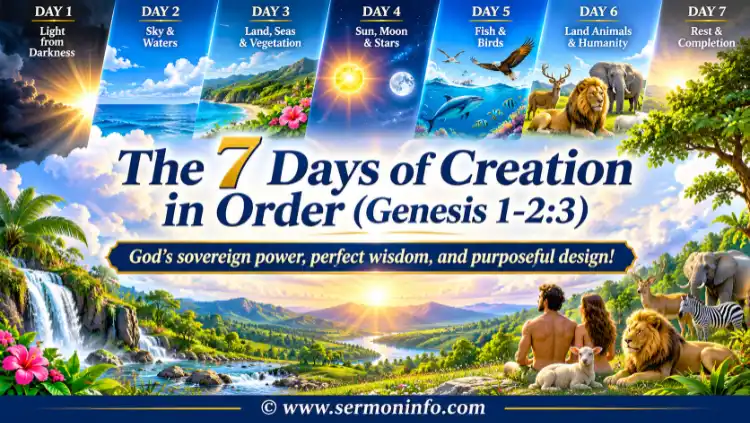
The 7 Days of Creation in Order describe how God created the heavens, earth, and all living things in six literal days and rested on the seventh. Genesis 1:1–2:3 reveals God’s unlimited power, perfect wisdom, and purposeful design. Each day demonstrates His sovereign authority, reminding us to honor Him as our Creator and trust His Word.
Key Takeaways – 7 Days of Creation in Order
- God Created Everything With Power and Purpose. The seven days of creation reveal God’s sovereign authority as He creates everything in six literal days and rests on the seventh (Genesis 1:1–2:3).
- God Created Humanity in His Image. On the sixth day, God creates man and woman in His image, giving every person dignity, value, and responsibility to honor Him (Genesis 1:26–31).
- God’s Creation Encourages Faith and Obedience. The order and beauty of creation reveal God’s wisdom and faithfulness, reminding us to trust His Word, follow His guidance, and worship Him as Creator (Psalm 19:1).
The 7 Days of Creation in Order
The 7 Days of Creation reveal God’s sovereign power, perfect wisdom, and purposeful design. God creates everything by His word in six literal days and rests on the seventh. Each day demonstrates His authority over creation, while the creation of humanity in His image reveals our unique value and responsibility before Him (Genesis 1:26–27; Exodus 20:11).
1. God Creates Light (Genesis 1:3–5)
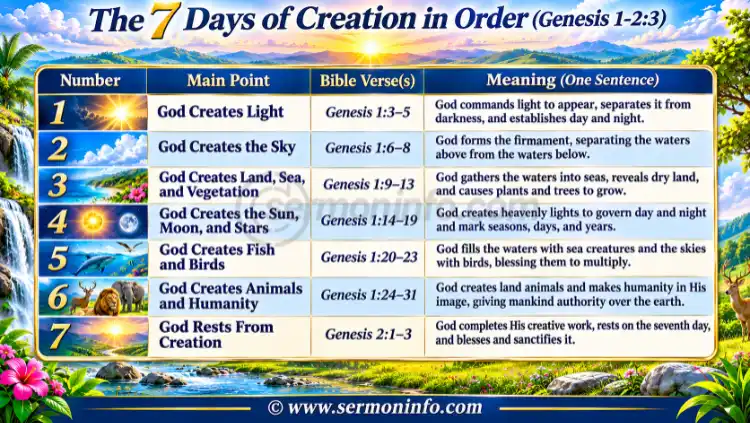
On the first day of creation, God commands light to appear, separates it from darkness, and establishes day and night. (Summary Statement)
A. God Calls Light Into Existence (Genesis 1:3)
Genesis 1:3 records God’s first command: “Let there be light”; and there was light. God spoke, and light immediately appeared in the darkness. He needed no tools, materials, or assistance to accomplish His purpose. His powerful word brought light into existence, revealing His absolute authority over creation.
The same God who commanded light to shine can bring hope into our darkest moments. When problems surround us, we may struggle to see a way forward. Yet God’s power has never weakened. Second Corinthians 4:6 reminds us that God shines His light into our hearts through Jesus Christ. We can trust Him even when life seems dark.
B. God Separates Light From Darkness (Genesis 1:4–5)
After creating light, God saw that it was good and separated it from darkness. He called the light Day and the darkness Night. Genesis 1:5 concludes with the evening and morning of the first day. This division reveals God’s wisdom and order as He begins preparing the earth for life.
God’s separation of light from darkness also reminds us of the spiritual difference between truth and sin. Ephesians 5:8 encourages believers to “walk as children of light.” When confusion and temptation threaten our faith, God’s Word provides clear direction. Psalm 119:105 reminds us that His Word guides our steps, helping us live faithfully in a dark world.
This material provides some ideas and thoughts for a message about the 7 days of Creation in order (This is an outline of Genesis 1:1-2:3).
2. God Creates the Sky (Genesis 1:6–8)
On the second day of creation, God creates the firmament to separate the waters and establish the sky above the earth. (Summary Statement)
A. God Divides the Waters (Genesis 1:6–7)
On the second day, God commands a firmament to divide the waters above from the waters below. Genesis 1:7 tells us that God made the firmament, and His command became reality. Once again, God demonstrates His unlimited power and perfect wisdom. He brings order to His creation, preparing the earth for the life He will soon create.
This reminds us that God brings order where confusion seems to rule. Sometimes, life’s problems surround us like deep waters, leaving us uncertain about tomorrow. Yet the God who divided the waters still rules over every circumstance. Psalm 46:1 reminds us that God is our refuge and strength. Therefore, we can trust His wisdom when life feels overwhelming.
B. God Names the Firmament Heaven (Genesis 1:8)
After dividing the waters, God names the firmament Heaven, referring to the sky above the earth. Genesis 1:8 concludes with the evening and morning of the second day. By naming the firmament, God demonstrates His authority over what He creates. Nothing happens by accident because God follows His perfect plan and purpose.
Every time we look toward the sky, we see a reminder of God’s greatness and faithfulness. Psalm 19:1 declares, “The heavens declare the glory of God.” The vast sky reminds us that our Creator possesses unlimited power and wisdom. When uncertainty troubles our hearts, we can look beyond our circumstances and trust the God who rules over everything.
3. God Creates Land, Sea, and Vegetation (Genesis 1:9–13)
On the third day, God gathers the waters, reveals dry land, and produces vegetation across the earth. (Summary Statement)
A. God Reveals Land and Seas (Genesis 1:9–10)
On the third day, God commands the waters to gather into one place, allowing dry land to appear. He names the dry land Earth and the gathered waters Seas. Genesis 1:10 tells us that God saw His work was good. By setting boundaries for the seas, God reveals His authority and prepares the earth for living creatures.
The same God who established boundaries for the oceans also rules over the storms of our lives. Psalm 104:9 reminds us that God set limits for the waters. Although life’s troubles may seem overwhelming, they never escape His control. When uncertainty threatens our peace, we can trust the Creator who holds everything in His hands.
B. God Produces Seed-Bearing Vegetation (Genesis 1:11–13)
After revealing dry land, God commands the earth to produce grass, plants that yield seeds, and fruit trees. Each plant reproduces according to its kind, following God’s perfect design. Genesis 1:12 tells us that God saw His creation was good. Through His powerful word, God fills the earth with vegetation and provides for the life He will soon create.
God’s provision of vegetation reminds us that He knows our needs before we even recognize them. Just as He prepared food before creating animals and humanity, God continues to care for His people. Matthew 6:26 reminds us that our heavenly Father feeds the birds. If God provides for them, we can trust Him to meet our needs.
4. God Creates the Sun, Moon, and Stars (Genesis 1:14–19)
On the fourth day, God creates the heavenly lights to govern day and night and mark the passing of time.
A. God Creates the Heavenly Lights (Genesis 1:14–16)
On the fourth day, God creates the sun, moon, and stars to provide light upon the earth. He appoints the greater light to rule the day and the lesser light to rule the night. Genesis 1:16 also tells us that God made the stars. Every heavenly light reveals His unlimited power, wisdom, and authority over creation.
When we look at the sun, moon, and stars, we see reminders of God’s greatness. Psalm 147:4 tells us that God counts the stars and calls them by name. If our Creator knows every star, He certainly knows our struggles and needs. Therefore, we can trust His loving care, even when life’s problems seem greater than our strength.
B. God Establishes Days and Seasons (Genesis 1:17–19)
God places the heavenly lights in the sky to illuminate the earth and divide day from night. Genesis 1:14 explains that these lights mark signs, seasons, days, and years. Their regular movements reveal God’s perfect wisdom and orderly design. Nothing in creation escapes His authority because He establishes the rhythm of time according to His purpose.
Just as God established seasons in creation, He remains sovereign over every season of our lives. Ecclesiastes 3:1 reminds us that everything has its appointed time. Some seasons bring joy, while others bring sorrow and uncertainty. Yet God’s faithfulness never changes. We can trust His timing because He knows what each day holds.
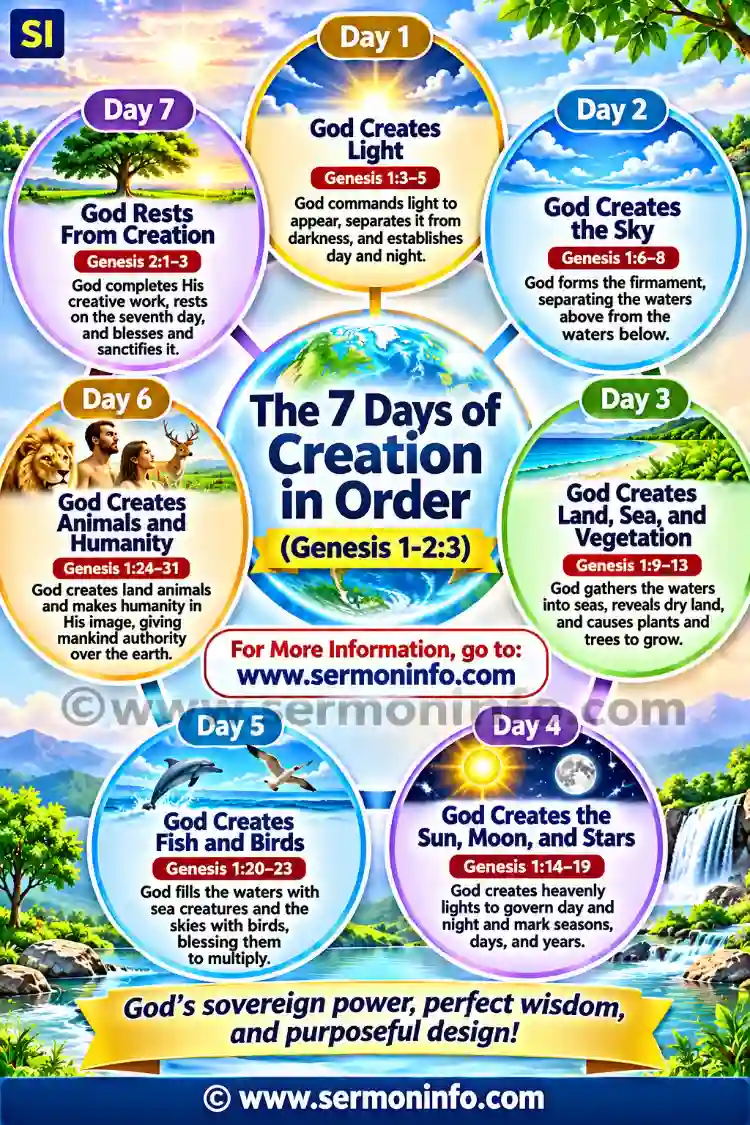
5. God Creates Fish and Birds (Genesis 1:20–23)
On the fifth day, God fills the waters with living creatures and the skies with birds, revealing His power and wisdom. (Summary Statment)
A. God Creates Fish and Birds (Genesis 1:20–21)
On the fifth day, God commands the waters to abound with living creatures and birds to fly across the sky. He creates great sea creatures, every living thing in the waters, and every winged bird according to their kinds. Genesis 1:21 tells us that God saw His creation was good. Every creature reflects His wisdom and creative power.
The wonderful variety of fish and birds reminds us that nothing in God’s creation escapes His attention. Matthew 10:29 tells us that not even a sparrow falls to the ground apart from our Father’s will. If God cares about the smallest bird, how much more does He care about us? We can trust His loving attention during life’s difficulties.
B. God Blesses Them to Multiply (Genesis 1:22–23)
After creating fish and birds, God blesses them and commands them to be fruitful and multiply. He tells the sea creatures to fill the waters and the birds to multiply on the earth. Genesis 1:23 marks the evening and morning of the fifth day. God’s blessing reveals His desire for life to flourish throughout His creation.
God’s blessing upon these creatures reminds us that He provides what His creation needs to flourish. Psalm 104:24 declares that the earth is full of God’s possessions, revealing His wisdom and abundant provision. When we face uncertain times, we can remember that our Creator knows our needs. His faithful care gives us confidence to trust Him each day.
6. God Creates Animals and Humanity (Genesis 1:24–31)
On the sixth day, God creates land animals and humanity, giving mankind a unique place and responsibility within His creation. (Summary Statement)
A. God Creates Animals by Kind (Genesis 1:24–25)
On the sixth day, God commands the earth to produce livestock, creeping things, and wild animals according to their kinds. Every creature comes into existence through His powerful word, revealing His wisdom and creative design. Genesis 1:25 tells us that God saw His creation was good. From the smallest insect to the largest animal, every creature fulfills His purpose.
God’s care for animals reminds us that He values everything He creates. Psalm 104:24 declares, “O LORD, how manifold are Your works!” Every creature displays His wisdom and power. If God carefully designed the animals, we can trust His wisdom in shaping our lives. Even when we cannot understand His plans, He remains faithful and good.
B. God Makes Humans His Image-Bearers (Genesis 1:26–31)
After creating the animals, God creates man and woman in His own image, known as the Imago Dei. Genesis 1:27 confirms that God creates both male and female in His image. He blesses them and gives them authority to rule over the earth. Unlike the animals, humanity receives a unique responsibility to reflect God’s character and manage His creation.
Being created in God’s image reminds us that every human life possesses dignity, value, and purpose. We are not accidents because God created us to know Him and honor Him. Psalm 139:14 reminds us that God made us wonderfully. When life becomes difficult, we can trust our Creator, knowing He values us and cares about our future.
7. God Rests From Creation (Genesis 2:1–3)
On the seventh day, God completes His creative work, rests from creating, and sets the day apart as holy. (Summary Statement)
A. God Rests From His Work (Genesis 2:1–2)
After six days of creation, God finishes everything He planned and rests on the seventh day. Genesis 2:2 tells us that God ended His work and rested. However, God did not rest because He was tired or needed strength. Isaiah 40:28 reminds us that God never grows weary. His rest declares that His creative work was complete.
God’s rest reminds us that we need time to stop, reflect, and trust His care. Life often fills our days with responsibilities, worries, and endless demands. Yet Psalm 46:10 calls us to “Be still, and know that I am God.” When life’s pressures overwhelm us, we can find peace by remembering that God remains in control.
B. God Blesses the Seventh Day (Genesis 2:3)
After completing creation, God blesses the seventh day and sets it apart as holy. Genesis 2:3 explains that God sanctified this day because He rested from His creative work. This special blessing reveals the importance God places upon His completed creation. The seventh day stands apart from the other six as a reminder of God’s perfect work.
God’s blessing of the seventh day also reminds us to honor Him with our time and worship. Although Israel later received the Sabbath command (Exodus 20:8–11), believers today find their spiritual rest in Jesus Christ. Matthew 11:28 records His invitation, “Come to Me, all you who labor and are heavy laden.” Through Him, we find lasting peace and rest.
Conclusion
The 7 Days of Creation in Order reveal God’s unlimited power, perfect wisdom, and purposeful design. God created light, formed the sky, and established land, seas, and vegetation. He placed the sun, moon, and stars in the heavens and filled the waters and skies with living creatures. Then He created animals and humanity before resting on the seventh day. Every day declares His greatness and sovereign authority.
As we reflect on creation, we discover that the God who made everything still rules over everything. His Word deserves our trust, His wisdom guides our decisions, and His promises strengthen our faith. When life brings uncertainty, remember that nothing escapes God’s control. Therefore, let us honor our Creator, obey His Word, and trust His faithful care each day.
Frequently Asked Questions (FAQ)
Q: What are the 7 days of creation in order?
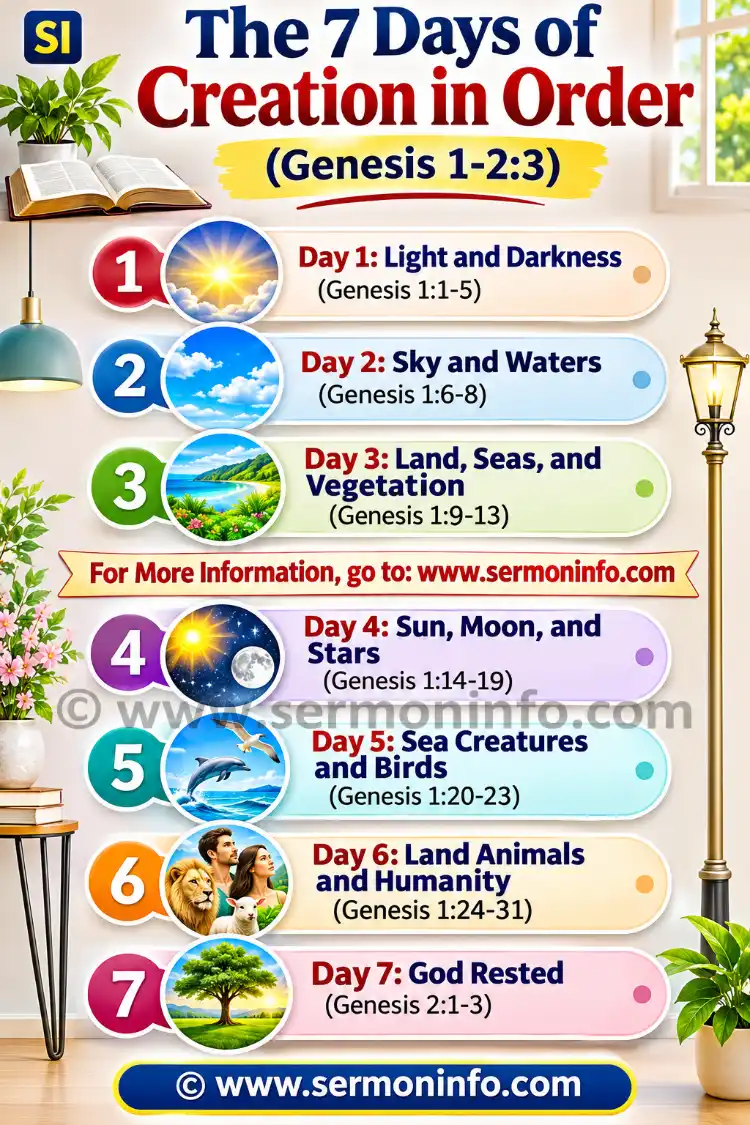
A: The seven days of creation include light (Day 1), sky (Day 2), land and vegetation (Day 3), heavenly lights (Day 4), fish and birds (Day 5), and animals and humanity (Day 6). God rests on Day 7, blessing and sanctifying it (Genesis 1:1–2:3).
Q: What did God create on the third day?
A: On the third day, God gathered the waters into seas and caused dry land to appear. He then commanded the earth to produce grass, seed bearing plants, and fruit trees according to their kinds. Genesis 1:9–13 reveals God’s wisdom in preparing the earth for life.
Q: What did God create on the sixth day?
A: On the sixth day, God created livestock, wild animals, and creeping things according to their kinds. He also created man and woman in His image, giving them authority over the earth. Genesis 1:24–31 reveals humanity’s unique dignity, purpose, and responsibility before God.
Q: Why did God rest on the seventh day of creation?
A: God rested on the seventh day because He completed His creative work, not because He grew tired. Genesis 2:1–3 explains that God blessed and sanctified this day. His rest reveals the perfection of His completed creation and establishes a pattern of work and rest.
Q: What does it mean that God created humans in His image?
A: Being created in God’s image means every person possesses unique dignity, value, and responsibility before Him. Genesis 1:26–27 reveals that God created both man and woman to reflect His character and represent His authority on earth. We should therefore respect others and honor our Creator.
BONUS: Why Do Believers Find Spiritual Rest in Jesus Christ?
Believers find spiritual rest in Jesus Christ because He offers forgiveness, salvation, and peace with God. Matthew 11:28 records His invitation, “Come to Me, all you who labor and are heavy laden, and I will give you rest.” Through faith in Christ, we receive God’s grace rather than depending on our own efforts (Ephesians 2:8–9).
Furthermore, spiritual rest allows believers to trust God’s promises during life’s difficulties. Hebrews 4:3 connects entering God’s rest with faith. Although troubles may continue, Jesus provides strength and peace for each day. When worries overwhelm us, we can bring our burdens to Him through prayer and trust His faithful care (Philippians 4:6–7).
BONUS: What Does It Mean to Be Created in the Image of God (Imago Dei)?
Being created in God’s image means that humanity uniquely reflects God’s character and represents His authority on earth. Genesis 1:26–27 explains that God created both man and woman in His image. The Latin phrase Imago Dei means “image of God.” This special creation gives every person dignity, value, and responsibility before the Creator.
Although sin affects how humanity reflects God’s character, it does not remove our God given dignity (James 3:9). Therefore, we should respect every person, value human life, and demonstrate God’s love through our actions. As believers grow spiritually, God transforms us to reflect Christ’s character more faithfully (Colossians 3:10).
BONUS: Why Did Israel Have the Sabbath and Believers the Lord’s Day?
God gave Israel the Sabbath as a special covenant sign between Himself and His people (Exodus 31:13–17). The seventh day reminded Israel of God’s completed creation and His deliverance from Egypt (Deuteronomy 5:12–15). God commanded Israel to rest from ordinary work and honor Him. The Sabbath also distinguished Israel from surrounding nations.
Believers traditionally worship on Sunday, the Lord’s Day, because Jesus rose from the dead on the first day of the week (Mark 16:2–6). Early Christians gathered on that day for worship and fellowship (Acts 20:7). However, the New Testament does not command Sunday as a replacement Sabbath. Believers worship Christ through grace, not Sabbath regulations (Colossians 2:16–17).
BONUS: Does Being Created in God’s Image Mean We Share His Characteristics and Abilities?
Yes, being created in God’s image means we reflect certain characteristics and abilities of our Creator. Genesis 1:26–27 reveals that God made humanity in His image. Like God, we can see, hear, think, reason, communicate, love, and make moral choices. However, God possesses these abilities perfectly, while we exercise them within human limitations.
Although Scripture describes God’s eyes, ears, hands, and feet, these expressions often help us understand His actions and attributes. John 4:24 reminds us that “God is Spirit.” For example, Psalm 34:15 describes God’s eyes and ears to reveal His watchful care. Therefore, reflecting God’s image means we share certain characteristics and abilities, but we do not possess His divine nature.
BONUS: Why Does the Bible Describe God With Eyes, Ears, Hands, and Feet if God Is Spirit?
The Bible uses human characteristics to help us understand God’s nature, actions, and relationship with humanity. Theologians call this anthropomorphism, which means describing God in human terms. Although John 4:24 declares that “God is Spirit,” Scripture describes His eyes, ears, hands, and feet to communicate spiritual truths about His character and power.
For example, Psalm 34:15 describes God’s eyes and ears to reveal His watchful care and attention to prayer. Isaiah 59:1 describes God’s hand and ear to emphasize His power to save and willingness to hear. These expressions help us understand that God sees our struggles, hears our prayers, and acts on behalf of His people.
Source Material
Henry M. Morris, The Genesis Record: A Scientific and Devotional Commentary on the Book of Beginnings (Grand Rapids, Michigan: Baker Book House, 2009) 37-81
William MacDonald, Believer’s Bible Commentary, rev. ed. (Nashville: Thomas Nelson, 1995), 32-34
John MacArthur, The MacArthur Bible Commentary (Nashville: Thomas Nelson, 2005), 8-12