How To Write A Sermon Outline 101: I have been preaching weekly sermons for nearly thirty years now and students often ask what is most needed in sermon preparation?
I tell students that they need to understand the basic structures of a sermon. They need to understand the three parts of the sermon, the three parts of the sermon outline and the three basic structures of the sermon.
How To Write A Sermon Outline 101
My first pastoral ministry required three weekly sermons, one on Wednesday night and two on Sunday.
I arrived at my first pastoral ministry with about four sermons that I had preached while training at seminary. I had a steep learning curve a head of me.
After writing about one hundred and thirty sermons in my first year in ministry, I learned very quickly that I needed to understand the basic structures of the sermon if I was going to survive.
What did I learn after my first year in ministry? I learned three things. I learned that sermons have three parts, sermon outlines have three parts and sermons have three basic structures.
1. Sermons Have Three Parts
Most sermons are made up of three parts. Sermons usually have an introduction, a body and a conclusion.
The introduction of the sermon introduces the audience to the topic or main preaching point of the sermon.
The body of the sermon expands and explains the topic or main preaching point of the sermon.
The conclusion of the sermon concludes the sermon by reiterating and reinforcing what the sermon is about with a call for the audience to act upon what the sermon is about.
I often tell students that a sermon is like an airplane flight. The take-off is the introduction, the flight itself is the body of the sermon and the landing is the conclusion.
The key to how to write a sermon outline 101 is to realize that the body of the sermon is the sermon outline. Remember the body of the sermon is the sermon outline.
When I write a sermon, I sketch the sermon outline first, I write content to the sermon outline with illustrations and application and finally I write the introduction and conclusion.
2. Sermon Outlines Have Three Parts
Most sermon outlines have three parts. Sermon outlines usually have a main preaching point, sub-points and incidental points and a key word or hinge word.
A. The Main Preaching Point
The main preaching point of the sermon outline is developed from the topic of the sermon.
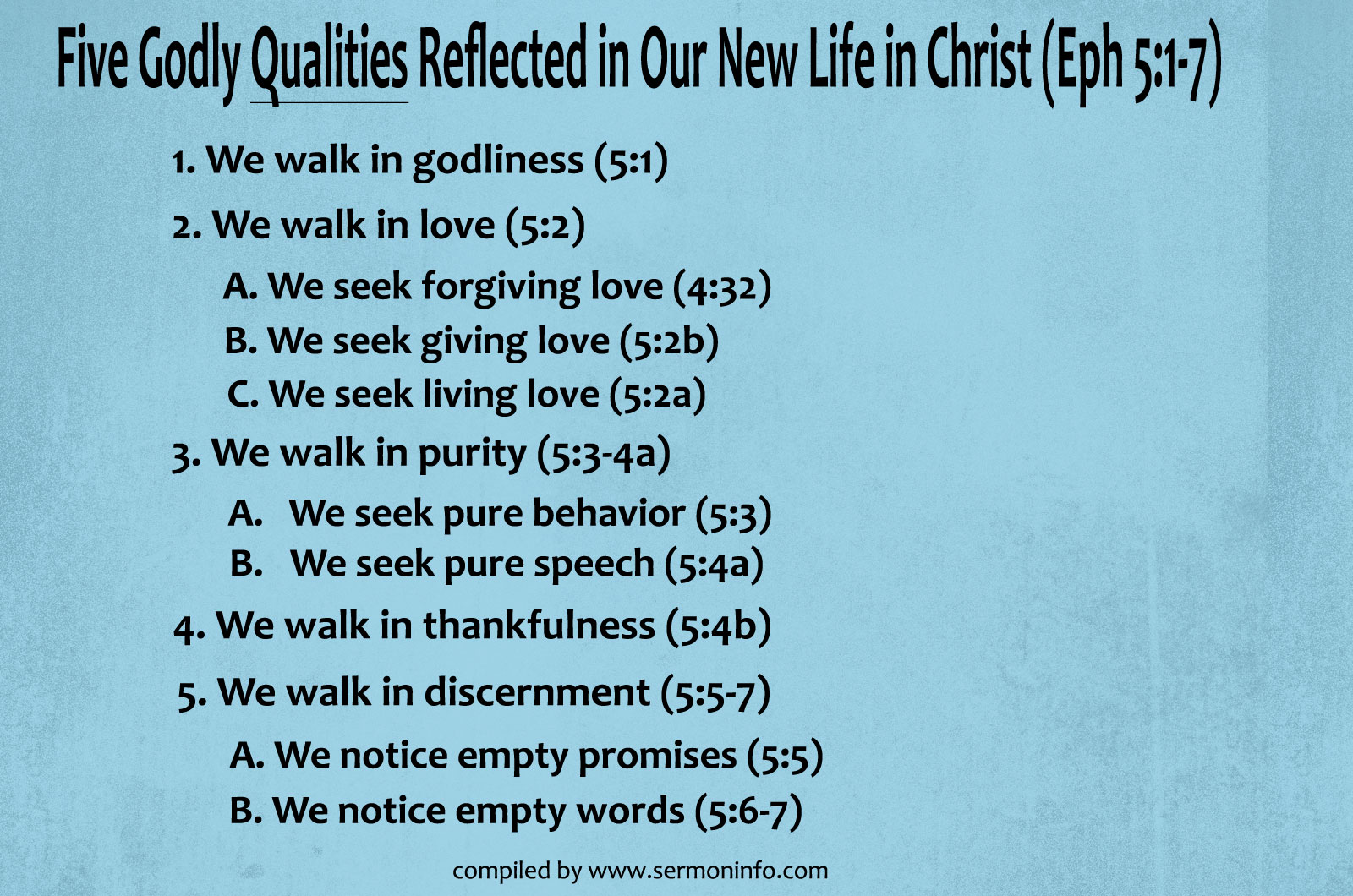
I wrote two sermons about “our new life in Christ” from Ephesians 4:25-32 and 5:1-7. I developed the main preaching point by looking at “our new life in Christ” from the perspective of “what are the godly qualities reflected in our new life in Christ?” (You can see the full sermon outline of Ephesians 5:1-7 below!)
B. The Sub-Points and Incidental Points
Now that the main preaching point is set, I began to develop the sub-points and incidental points.
In Ephesians 5:1-7, I developed five sub-points which expanded and explained the main preaching point.
There are five godly qualities reflected in our new life in Christ. They are: we walk in godliness (5:1), we walk in love (5:2), we walk in purity (5:3-4a), we walk in thankfulness (5:4b) and we walk in discernment (5:5-7).
It is important that each sub-point is in parallel form, has progression and natural flow and is easy to remember. I keep the sub-points as short as possible so that the audience can easily remember them.
Incidental points flow from the sub-points, that is, they expand and explain the sub-points. For example sub-point three “We walk in purity” can form two incidental points: “We seek pure behaviour and we seek pure speech” (see full sermon outline below).
The incidental points need to be parallel in form, progressive with natural flow and easy to remember.
C. The Key Word or Hinge Word
The key word or hinge word is a word (must be a plural noun) that allows you to swing all the sub-points from the main preaching point.
I used qualities to swing the sub-points from the main preaching point.
There are five godly qualities reflected in our new life in Christ. The first godly quality is that we walk in godliness. The second godly quality is that we walk in love. The third godly quality is that we walk in purity. The fourth godly quality is that we walk in thankfulness and the fifth godly quality is that we walk in discernment.
The key word or hinge word allows for the sermon to develop sub-points in parallel form, with progression and natural flow so that the audience can easily remember the content of the sermon.
The key here is that I can summarize the sermon in one sentence. The five godly qualities reflected in our new life in Christ include godliness, love, purity, thankfulness and discernment.
D. The Sermon Outline Completed
Introduction:
There are five godly qualities reflected in our new life in Christ. They are:
1. We walk in godliness (5:1)
2. We walk in love (5:2)
- We seek forgiving love (4:32)
- We seek giving love (5:2b)
- We seek living love (5:2a)
3. We walk in purity (5:3-4a)
- We seek pure behaviour (5:3)
- We seek pure speech (5:4a)
4. We walk in thankfulness (5:4b)
5. We walk in discernment (5:5-7)
- We notice empty promises (5:5)
- We notice empty words (5:6-7)
Conclusion:
Once I have sketched the sermon outline, I write content to the sermon outline with illustrations and application. I finish the sermon outline with an introduction and a conclusion.
3. Sermons Have Three Structures
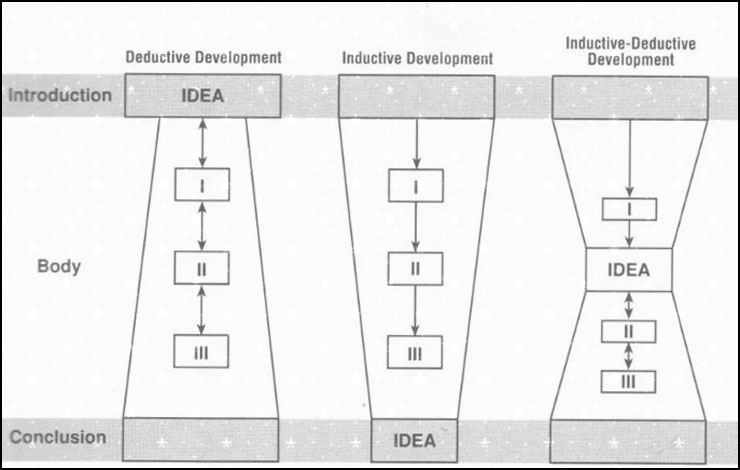
Most sermons or most sermon outlines have three basic structures for forming the skeleton of the sermon. There is the deductive structure, the inductive structure and a bit of both.
A. The Deductive Structure
The sermon outline above follows the deductive structure or method. The deductive method begins with the main preaching point followed by the sub-points and the incidental points.
B. The Inductive Structure
The inductive structure or method begins with the sub-points and incidental points and move towards the main preaching point.
The inductive method is often used to preach through the narratives of Scripture.
C. The Inductive and Deductive Structure
The inductive structure usually provides an opportunity to use deduction to outline parts of the sub-points. This will help you to expand and explain material within your inductive sermon.
Final Comments
I learned very quickly that I needed to understand the basic structures of the sermon and sermon outline if I was going to write three weekly sermons and survive the ministry long term.
I have written thousands of sermons and preached through many of the books of the Bible over the last thirty years or so. The key to my longevity in the preaching ministry comes down to understanding the basic structures of the sermon and the sermon outline. How to write a sermon outline 101 is a brief summary of the basic structures of the sermon.