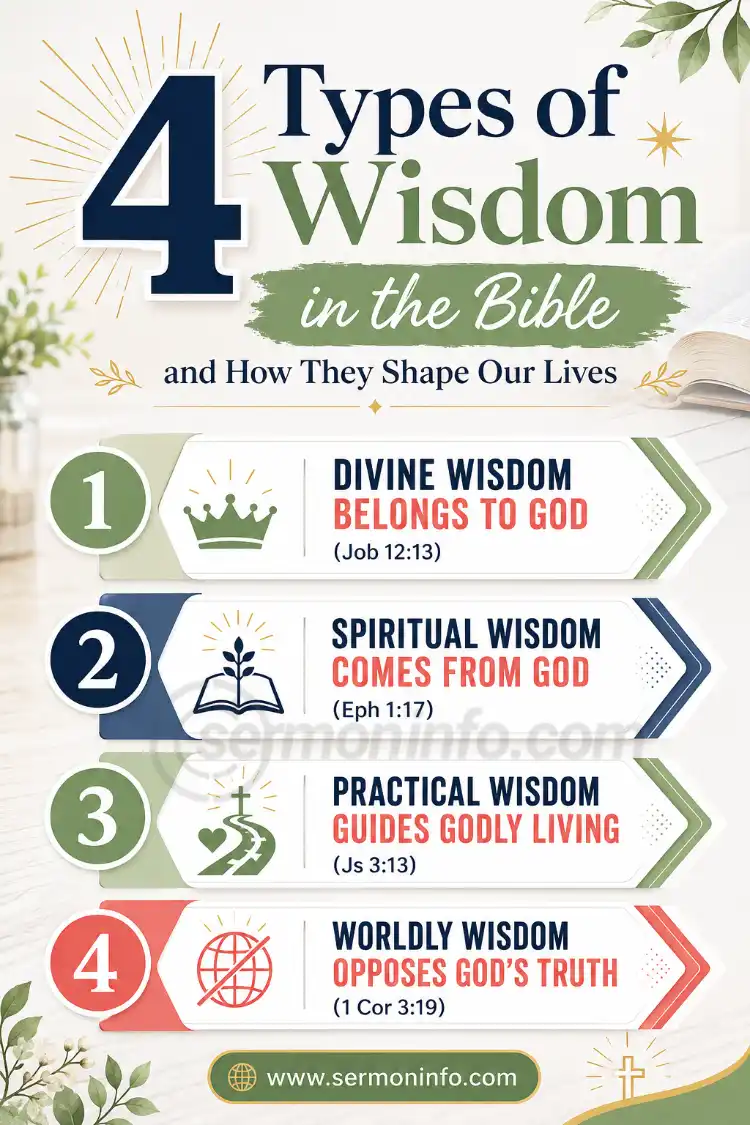
The 4 types of wisdom in the Bible and how they shape our lives are divine, spiritual, practical, and worldly wisdom. Divine wisdom belongs to God, spiritual wisdom comes from Him, and practical wisdom guides godly living. Worldly wisdom rejects God’s truth and produces pride, confusion, and sinful choices.

Key Takeaways – 4 Types of Wisdom in the Bible
- Divine wisdom belongs to God. Trust His perfect knowledge, sovereign plans, and faithful direction in every season.
- Spiritual wisdom comes from God. Ask Him to use His Word and Spirit to deepen your understanding of truth.
- Practical wisdom guides godly living. Apply Scripture to your decisions, relationships, words, and actions each day.
- Worldly wisdom opposes God’s truth. Reject pride, selfish ambition, and human ideas that conflict with Scripture.
4 Types of Wisdom in the Bible
Every day, voices compete to shape our choices, values, relationships, and hopes. We need biblical wisdom to recognise which voice comes from God. Divine wisdom reveals God’s perfect mind, while worldly wisdom promotes pride and confusion. Spiritual and practical wisdom help us understand truth and live faithfully. Right wisdom produces peace, righteousness, and lasting spiritual fruit.
Today, we will examine 4 expressions of wisdom found across Scripture. Divine wisdom belongs to God, and spiritual wisdom comes from Him. Practical wisdom guides godly living, while worldly wisdom opposes His truth. As we study each one, ask God to shape your mind, guard your choices, and strengthen your walk with Christ.
1. Divine Wisdom Belongs to God
God possesses complete wisdom and directs every event according to His perfect knowledge, power, and purpose (Summary Statement).
A. God Possesses Perfect Wisdom (Job 12:13; Romans 11:33)
God’s wisdom has no boundary because He sees every fact, motive, outcome, and possibility at once. Job declared, “With Him are wisdom and strength” (Job 12:13). Nothing surprises God, confuses Him, or forces Him to revise His plans. His understanding remains complete, pure, and perfect.
Romans 11:33 praises the depth of God’s wisdom and knowledge. When life feels uncertain, remember that God already sees the whole road. We see one bend, but He sees the destination. Therefore, trust His Word, obey His commands, and rest in His perfect judgment during every trial.
B. God Directs All Things Wisely (Daniel 2:20–21)
Daniel praised God because He “changes the times and the seasons” and removes or raises kings (Daniel 2:21). Nations may shift, leaders may change, and events may trouble us. Yet God never loses control. He directs history toward Christ’s return and His promised kingdom.
We may not understand every delay, election, conflict, or closed door. Still, God works through each event without surrendering His sovereignty. Like a skilled conductor, He brings many movements toward one final purpose. Trust Him in difficult seasons, because His wise rule always serves His glory and our good.
2. Spiritual Wisdom Comes From God
God gives spiritual wisdom so believers can understand His truth and live according to His will (Summary Statement).
A. God Reveals Spiritual Truth (Eph 1:17; 1 Cor 2:12–13)
Paul prayed that believers would receive “the spirit of wisdom and revelation” in knowing Christ (Ephesians 1:17). God opens spiritual truth through His Spirit and His written Word. Human reasoning alone cannot uncover the riches God has freely revealed.
The Holy Spirit teaches believers to understand Scripture, not through new revelation, but by illuminating God’s completed truth. First Corinthians 2:12–13 reminds us that spiritual truth requires spiritual teaching. When confusion surrounds you, open the Bible prayerfully and ask God for clear guidance.
B. God Grants Spiritual Understanding (Col 1:9)
Paul prayed that believers would know God’s will through spiritual wisdom and understanding (Colossians 1:9). God grants understanding so His people can recognise what pleases Him. He does not merely inform the mind; He directs the life.
Spiritual understanding helps us choose truth when pressure, fear, or uncertainty clouds the way. Like a lamp on a dark path, Scripture shows the next faithful step. Trust God, obey what He has revealed, and let His wisdom shape every decision.
3. Practical Wisdom Guides Godly Living
Practical wisdom applies God’s truth to daily decisions, relationships, words, attitudes, and actions (Summary Statement).
A. Wisdom Directs Righteous Choices (Prov 2:6–9; Prov 4:7)
Proverbs teaches that wisdom begins with God, because “the Lord gives wisdom” (Proverbs 2:6). He shows the paths of justice and guards those who walk uprightly. Biblical wisdom helps us recognise the right road before we take the next step.
Daily choices often place two roads before us. One promises quick comfort, while the other honours God. Proverbs 4:7 urges us to “get wisdom” because wise choices protect our testimony. Ask what Scripture teaches, then choose the path that pleases Christ.
B. Wisdom Produces Godly Conduct (Js 3:13, 17–18)
James challenges believers to show wisdom through “good conduct” and meek works (James 3:13). Wisdom from above produces purity, peace, gentleness, mercy, sincerity, and good fruit. Godly wisdom never remains hidden because it shapes our words, attitudes, and relationships.
When pressure rises, heavenly wisdom helps us answer calmly, forgive freely, and serve humbly. It plants peace like good seed and produces “the fruit of righteousness” (James 3:18). Let Christ shape your conduct so others can see His wisdom through your life.
4. Worldly Wisdom Opposes God’s Truth
Worldly wisdom follows human pride and sinful desires instead of submitting to God’s revealed truth (Summary Statement).
A. Worldly Wisdom Promotes Selfish Ambition (Js 3:14–16)
James warns against bitter envy and selfish ambition within the heart. These attitudes boast, distort truth, and seek personal advantage. Such wisdom does not come from God. It is “earthly, sensual, demonic” and produces confusion, conflict, and every evil practice.
Selfish ambition can enter our homes, ministries, workplaces, and friendships. It turns cooperation into competition and service into self promotion. Therefore, examine your motives before God. Ask Him to remove envy and help you pursue peace, humility, and the good of others.
B. Worldly Wisdom Rejects God’s Truth (1 Cor 1:20–21; 3:19)
The Corinthians admired human philosophy, clever speech, and worldly status. Yet Paul declared that the world could not know God through its wisdom. Human reasoning becomes foolish when it rejects God’s revelation and dismisses the message of Christ crucified.
Our culture often places human opinion above Scripture. However, God’s Word remains true when popular ideas change. First Corinthians 3:19 says, “the wisdom of this world is foolishness with God.” Therefore, test every belief by Scripture and trust God’s truth above human pride.
Conclusion
Divine wisdom belongs to God, spiritual wisdom comes from Him, and practical wisdom guides faithful living. Worldly wisdom rejects God’s truth and produces pride, confusion, and conflict. Together, these four types show us where wisdom begins, how it works, and what fruit it produces.
Therefore, receive God’s Word with humility, ask for spiritual understanding, and obey what He reveals. Test every idea by Scripture, reject human pride, and choose the path that honours Christ. As God’s truth shapes your mind, His wisdom will guide your words, decisions, relationships, and daily walk.
Frequently Asked Questions (FAQ)
Q: What are the four types of wisdom in the Bible?
A: The four broad types of wisdom are divine, spiritual, practical, and worldly. Divine wisdom belongs to God. Spiritual wisdom comes from Him. Practical wisdom applies His truth to daily life. Worldly wisdom follows human pride and opposes God’s revelation, producing confusion and sinful conduct.
Q: What is biblical wisdom?
A: Biblical wisdom is the God-given ability to understand His truth and apply it faithfully. It begins with reverence for the Lord, submits to Scripture, and produces righteous conduct. A wise believer does more than gather knowledge; he chooses words, attitudes, and actions that please God.
Q: What is the difference between godly and worldly wisdom?
A: Godly wisdom comes from above and remains pure, peaceable, gentle, merciful, impartial, and sincere. Worldly wisdom grows from envy and selfish ambition. It follows earthly desires and produces disorder. Believers can identify each wisdom by its source, character, and the fruit it produces.
Q: How can believers receive wisdom from God?
A: Believers receive wisdom by asking God in faith, studying His Word, obeying revealed truth, and depending on the Holy Spirit for understanding. James 1:5 promises that God gives generously. Wisdom grows as Christians prayerfully seek Scripture and practise what God has already made clear.
Q: How does biblical wisdom shape daily life?
A: Biblical wisdom shapes daily life by guiding decisions, speech, relationships, work, and responses to hardship. It helps believers recognise the right path and choose conduct that honours Christ. Wisdom from above produces humility, peace, mercy, good works, sincerity, and a harvest of righteousness.
BONUS: Why Is the Fear of the Lord the Beginning of Wisdom?
The fear of the Lord means reverent awe, humble submission, and wholehearted trust in God. Proverbs 9:10 says, “The fear of the Lord is the beginning of wisdom.” This reverence places God first, corrects human pride, and teaches us to judge every choice by His holy character and revealed Word.
True wisdom starts when we stop treating our opinions as final and submit them to Scripture. Proverbs 1:7 links the fear of the Lord with knowledge. As we honour God, obey His commands, and seek His will, He guides our decisions, protects us from foolish paths, and shapes Christlike character.
BONUS: What Is the Difference Between Wisdom, Knowledge, and Understanding in the Bible?
Knowledge gathers facts and truths from God’s Word. Understanding grasps their meaning and sees how they connect. Wisdom applies that truth to life in ways that honour God. Proverbs 2:6 says the Lord gives wisdom, knowledge, and understanding, showing that all three come from Him.
A believer may know what Scripture says yet still need understanding to interpret it correctly. Wisdom then chooses the right response. Proverbs 4:7 urges us to gain wisdom and understanding. Therefore, study God’s Word carefully, ask Him for insight, and obey what He reveals in daily decisions.
BONUS: What Does “Wisdom From Above” Mean in James 3:17?
Wisdom from above comes from God and reflects His holy character. James 3:17 calls it pure, peaceable, gentle, willing to yield, merciful, fruitful, impartial, and sincere. This wisdom rejects selfish ambition and guides believers to respond with humility, truth, and grace.
Heavenly wisdom changes daily conduct, not merely private thoughts. It helps us speak calmly, forgive freely, seek peace, and choose what pleases Christ. James 3:18 says peacemakers sow righteousness in peace. Therefore, ask God for wisdom, obey Scripture, and let godly fruit confirm its presence.
BONUS: How Can You Recognise a Wise Person by Their Conduct?
A wise person shows wisdom through humble conduct and good works. James 3:13 says wisdom appears through “good conduct” and “the meekness of wisdom.” Wise believers speak truthfully, listen carefully, control anger, and treat others with mercy, patience, and respect.
Godly wisdom produces purity, peace, gentleness, sincerity, and righteous fruit (James 3:17–18). Jesus said, “You will know them by their fruits” (Matthew 7:20). Therefore, watch how someone responds to pressure, correction, conflict, and opportunity. Consistent godly conduct reveals a heart shaped by God’s wisdom.
BONUS: Why Does God Call Worldly Wisdom Foolishness?
God calls worldly wisdom foolishness because it rejects His truth and trusts human pride. First Corinthians 3:19 says, “the wisdom of this world is foolishness with God.” Human ideas may sound impressive, but they cannot reveal salvation, explain God’s purposes, or produce lasting righteousness.
Worldly wisdom measures success by power, status, pleasure, and self interest. However, God reveals His wisdom through Christ crucified (1 Corinthians 1:18–25). Therefore, test every belief by Scripture, reject proud reasoning, and choose the truth that honours Christ and leads to godly living.
BONUS: What Does It Mean That Christ Is the Wisdom of God?
God reveals His wisdom perfectly through Christ. First Corinthians 1:24 calls Christ “the power of God and the wisdom of God.” Through His life, death, and resurrection, Jesus displays God’s righteous plan to save sinners, defeat evil, and fulfil every divine purpose.
Human wisdom could never design salvation through a crucified Saviour, but God chose the cross to humble human pride (1 Corinthians 1:18–25). When believers trust Christ, they receive righteousness, sanctification, and redemption (1 Corinthians 1:30). Therefore, follow Christ and let His Word guide every decision.
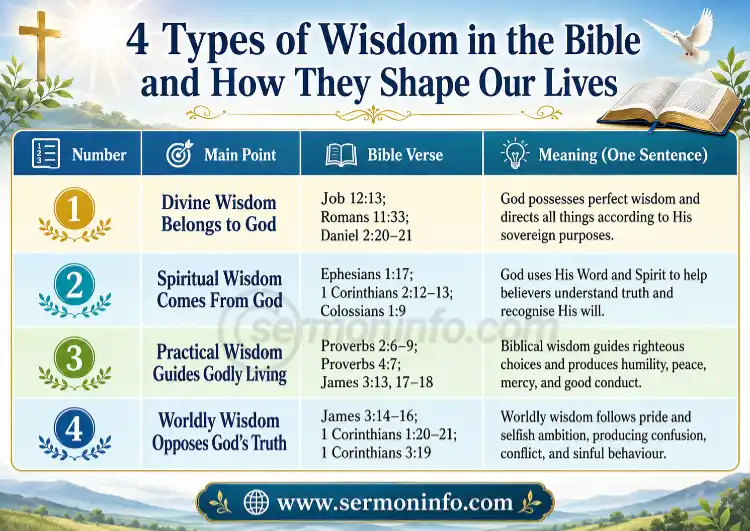
| 4 Types of Wisdom in the Bible | |||
|---|---|---|---|
| Number | Main Point | Bible Verses | Meaning |
| 1 | Divine Wisdom Belongs to God | Job 12:13; Romans 11:33; Daniel 2:20–21 | God possesses perfect wisdom and directs all things according to His sovereign purposes. |
| 2 | Spiritual Wisdom Comes From God | Ephesians 1:17; 1 Corinthians 2:12–13; Colossians 1:9 | God uses His Word and Spirit to help believers understand truth and recognise His will. |
| 3 | Practical Wisdom Guides Godly Living | Proverbs 2:6–9; Proverbs 4:7; James 3:13, 17–18 | Biblical wisdom guides righteous choices and produces humility, peace, mercy, and good conduct. |
| 4 | Worldly Wisdom Opposes God’s Truth | James 3:14–16; 1 Corinthians 1:20–21; 3:19 | Worldly wisdom follows pride and selfish ambition, producing confusion, conflict, and sinful behaviour. |