Finding Help in Troubling Times explains how believers respond to trials through God’s wisdom, unwavering faith, and eternal priorities. Sermon Outline From James 1:5–12 teaches Christians to ask God for guidance, reject divided loyalties, and endure hardship with confidence in His promises and eternal reward.

Key Takeaways – Sermon From James 1:5-12
- Ask God for wisdom during trials. He gives clear guidance generously to believers who sincerely seek Him (James 1:5).
- Trust God with an undivided heart. Reject doubt and competing loyalties, because unwavering faith brings spiritual stability (James 1:6–8).
- Live with eternal priorities. Value your position in Christ, endure hardship faithfully, and look forward to God’s promised reward (James 1:9–12).
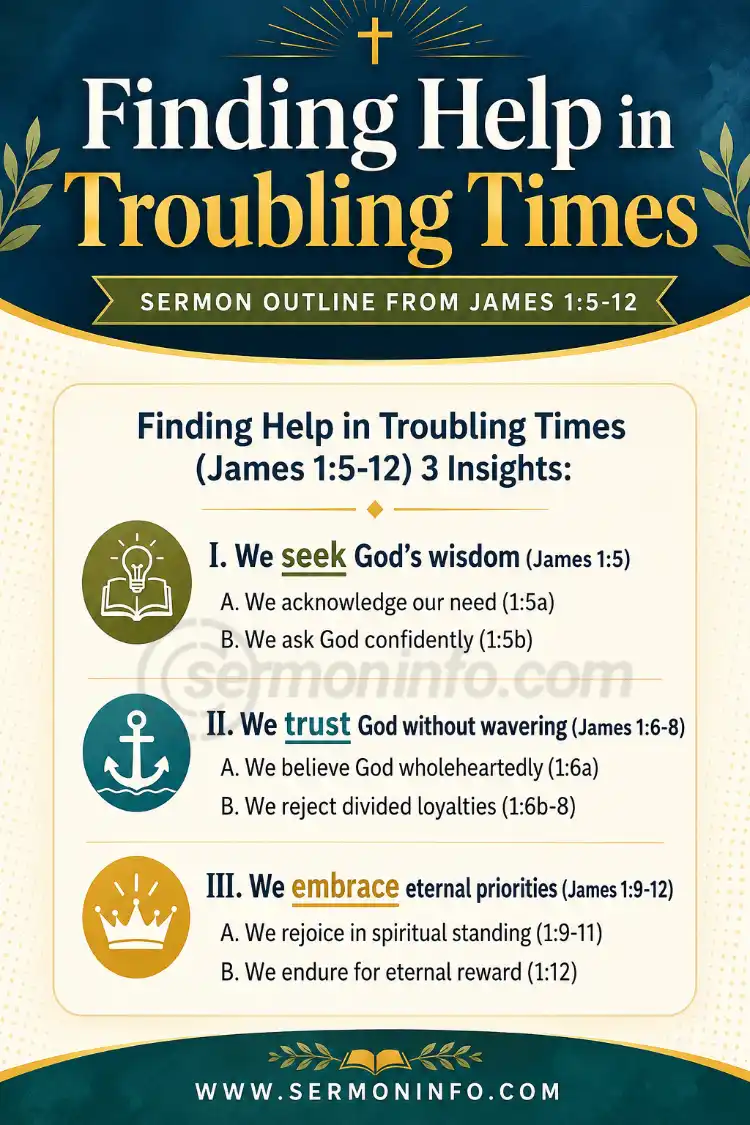
Sermon Outline From James 1:5-12
Troubling times eventually touch every life. Trials can shake our plans, drain our strength, and expose our need for direction. Yet God never abandons His people in hardship. He provides wisdom, strengthens faith, and reminds us that earthly circumstances cannot cancel His eternal promises.
James 1:5–12 shows believers how to find help when life becomes difficult. We must seek God’s wisdom, trust Him without wavering, and embrace eternal priorities. These truths guide our choices, steady our hearts, and help us endure with hope. Let us now discover how God faithfully meets us in troubling times.
1. We Seek God’s Wisdom (James 1:5)
God invites believers to seek His wisdom when trials reveal their weakness and uncertainty (Summary Statement).
A. We Acknowledge Our Need (James 1:5a)
Trials often reveal how little wisdom we possess. James does not tell believers to depend on human insight. Instead, he calls them to admit their need before God. Hard seasons expose our limitations and remind us that God’s wisdom exceeds our understanding (Isaiah 55:8-9).
This humble confession marks the beginning of spiritual growth. Pride insists that we already know the answer, but faith admits its need. Like a traveler asking for directions, wise believers seek God’s guidance before choosing their path. Proverbs 3:5-6 reminds us to trust the Lord and acknowledge Him in every decision.
B. We Ask God Confidently (James 1:5b)
After admitting our need, James encourages us to ask God for wisdom. Our heavenly Father gives generously to every believer who sincerely seeks His help. He never mocks our weakness or reminds us of past failures. Instead, He gladly supplies the wisdom needed to honour Him through every trial.
God invites His children to come boldly because of Christ. Hebrews 4:16 encourages believers to approach the throne of grace with confidence to receive mercy and find grace in time of need. When we pray according to His will, He hears us and answers faithfully (1 John 5:14-15). (Source Material: William MacDonald, Believer’s Bible Commentary, pp. 2219-2220)
This material provides some ideas and thoughts for a sermon outline from James 1:5-12 (Finding Help in Troubling Times).
2. We Trust God Without Wavering (James 1:6-8)
God calls believers to trust His character and promises with settled, undivided faith (Summary Statement).
A. We Believe God Wholeheartedly (James 1:6a)
James tells believers to ask God in faith, without doubting His goodness. Faith rests in God’s unchanging character, faithful promises, and wise provision. We may not know how He will answer, but we know He remains trustworthy. “He who promised is faithful” (Hebrews 10:23).
Trials can shake our emotions, but they cannot change God’s nature. We ask with settled confidence because our Father knows what we need. Like a child trusting a loving parent, we place our concerns in His hands. Faith does not demand easy answers. Faith trusts God to give what serves His purpose.
B. We Reject Divided Loyalties (James 1:6b–8)
James compares the doubter to a sea wave driven by the wind. A divided heart moves between trusting God and trusting human wisdom, money, influence, or fear. Such double mindedness creates instability in prayer, choices, and daily conduct. No one can serve two masters faithfully (Matthew 6:24).
Believers must bring every competing trust under God’s authority. We cannot ask for His wisdom while secretly reserving the right to ignore it. Joshua challenged Israel, “Choose for yourselves this day whom you will serve” (Joshua 24:15). Wholehearted trust brings spiritual steadiness, even when troubling circumstances remain. (Source Material: John MacArthur, The MacArthur Bible Commentary, pp. 1882-1883)
3. We Embrace Eternal Priorities (James 1:9-12)
God calls believers to value their spiritual standing and eternal reward above temporary circumstances (Summary Statement).
A. We Rejoice in Spiritual Standing (James 1:9–11)
James tells the lowly believer to rejoice in his exalted position before God. Poverty does not lessen his value in Christ. The rich believer must also remember that wealth quickly fades. Like grass under the burning sun, earthly possessions cannot provide lasting identity or security.
Both poor and rich believers must measure life by eternal truth. In Christ, every believer receives forgiveness, acceptance, and spiritual riches (Ephesians 1:3). Therefore, we should not envy another person’s possessions or boast in our own. Our greatest treasure rests in our relationship with God.
B. We Endure for Eternal Reward (James 1:12)
James calls the person blessed who patiently endures trials. God uses testing to reveal genuine faith and strengthen faithful devotion. The believer may suffer now, but hardship does not have the final word. God sees every burden carried with love, obedience, and trust.
Those who love God will receive the crown of life He has promised. This crown does not purchase salvation, because Christ gives eternal life by grace. It expresses God’s approval of faithful endurance. Therefore, we keep serving when life feels difficult, knowing our labour in the Lord remains worthwhile (1 Corinthians 15:58). (Source Material: John F. Walvoord and Roy B. Zuck, The Bible Knowledge Commentary: New Testament, p. 821)
Conclusion
Troubling times reveal our need for God’s help. James teaches us to seek His wisdom, trust Him without wavering, and embrace eternal priorities. God gives direction to sincere believers, steadies divided hearts, and reminds us that earthly status quickly fades. He also promises the crown of life to those who endure while loving Him.
Therefore, we must receive God’s Word with humble faith and obedient hearts. When trials come, we should pray before reacting and trust Scripture above our feelings. God’s truth gives wisdom for today and hope for eternity. As we follow His Word, He will strengthen our faith and guide us through every troubling season.
Closing Prayer
Heavenly Father, thank You for Your faithful care through every troubling time. Thank You for giving wisdom to those who ask, strength to those who trust You, and hope that reaches beyond present trials. Help us to depend on Your Word, reject doubt, and keep our eyes on Your eternal promises.
Lord, give us courage to follow You with wholehearted faith each day. Shape our hearts so that we value eternal treasures above temporary things. Help us to endure with joy until we receive Your promised reward. May our lives honour the Lord Jesus Christ and point others to His saving grace. We pray in Jesus’ name. Amen.
Frequently Asked Questions (FAQ)
Q: What should you do if you lack wisdom?
A: James 1:5 teaches believers to ask God for wisdom when trials expose their uncertainty. God gives generously and never shames sincere seekers. Biblical wisdom helps us view hardship from God’s perspective and choose responses that honour Him rather than react through fear, anger, or human pride.
Q: What does it mean to ask in faith without doubting?
A: To ask in faith means approaching God with settled confidence in His goodness and wisdom. James does not forbid honest questions or emotional struggle. He warns against divided allegiance that asks for God’s direction while reserving the right to reject it when another path seems easier.
Q: What does double-minded mean in James 1?
A: A double-minded person divides loyalty between God and competing trusts. Such a heart moves between faith and unbelief, producing instability in prayer, decisions, and conduct. James compares this person to a wind-driven wave because changing desires repeatedly pull life away from steady obedience.
Q: What does James 1:9–11 teach about rich and poor believers?
A: James teaches poor believers to rejoice in their high standing before God, while rich believers should remember that wealth quickly fades. Both must measure life by spiritual identity, not possessions. Trials reveal that earthly status remains temporary, but every believer’s position in Christ carries eternal value.
Q: What is the crown of life in James 1:12?
A: The crown of life is God’s promised reward for believers who love Him and faithfully endure trials. It does not purchase salvation, which comes by grace through faith in Christ. The crown expresses divine approval and encourages Christians to remain steadfast when present suffering feels long or costly.
BONUS: What is the connection between wisdom and trials in James 1?
Trials expose our need for wisdom. James 1:2–4 shows that trials test faith and produce patience, but believers often need guidance to respond well. Therefore, James says, “If any of you lacks wisdom, let him ask of God” (James 1:5). Wisdom helps us see hardship from God’s perspective.
Godly wisdom teaches believers how to trust, obey, and endure during pressure. It does not always remove the trial, but it directs our choices within it. When we ask in faith, God gives generously (James 1:5–6). He uses wisdom to steady our hearts and help us grow toward spiritual maturity.
BONUS: What is the meaning of “asking in faith” in James 1:5?
Asking in faith means approaching God with settled confidence in His character, wisdom, and generosity. James connects this command with prayer for wisdom in trials (James 1:5–6). Faith trusts that God hears, cares, and gives what serves His purpose. It does not demand a preferred answer.
Believers must ask with undivided loyalty. A double minded heart seeks God’s guidance while clinging to competing trusts (James 1:6–8). Instead, faith rests in God’s promises and obeys His Word. Hebrews 11:6 reminds us that those who come to God must believe that He rewards those who diligently seek Him.
BONUS: Why does God allow believers to experience trials and troubling times?
God allows trials to test and strengthen genuine faith, not to destroy His children. James 1:2–4 says trials produce patience and maturity. Romans 5:3–5 adds that suffering develops perseverance, character, and hope. Through hardship, God exposes weakness, deepens dependence, and shapes believers into Christlike people.
God also uses troubling times to display His wisdom, grace, and faithfulness. He gives wisdom to those who ask in faith (James 1:5–6). He may not remove every trial immediately, but He supplies strength and purpose. Believers can trust that God works all things together for their good (Romans 8:28).
BONUS: What does it mean to remain steadfast under trial?
To remain steadfast under trial means to continue trusting and obeying God when hardship tests your faith. James 1:12 calls the enduring believer blessed because he remains faithful under pressure. Steadfastness does not ignore pain. It holds firmly to God’s character, promises, and Word while the trial continues.
Believers remain steadfast by praying for wisdom, rejecting divided loyalties, and expecting God’s promised reward (James 1:5–8, 12). Trials may bend us like trees in strong winds, but faith keeps our roots in Christ. God uses patient endurance to strengthen maturity and deepen our love for Him.
BONUS: Why does James compare earthly wealth to a fading flower?
James compares earthly wealth to a fading flower because riches offer only temporary beauty and security. The sun scorches the grass, and its flower falls (James 1:10–11). In the same way, wealth can disappear quickly. Therefore, believers must not build their identity or hope on possessions.
This picture reminds rich and poor believers to value what lasts forever. Isaiah 40:8 says, “The grass withers, the flower fades, but the word of our God stands forever.” Jesus also tells us to store treasures in heaven (Matthew 6:19–21). Eternal riches in Christ outlast every earthly gain.
BONUS: What is the difference between a trial and a temptation in James 1?
A trial tests faith through hardship, pressure, or loss. God can use trials to produce patience and spiritual maturity (James 1:2–4). Trials do not force believers to sin. They reveal character and create opportunities to trust God, seek wisdom, and grow stronger in obedience.
A temptation entices a person to disobey God. James says God never tempts anyone with evil (James 1:13). Temptation grows when sinful desire draws and entices the heart, then produces sin and death (James 1:14–15). The trial comes from circumstances, but temptation appeals to sinful desires within.
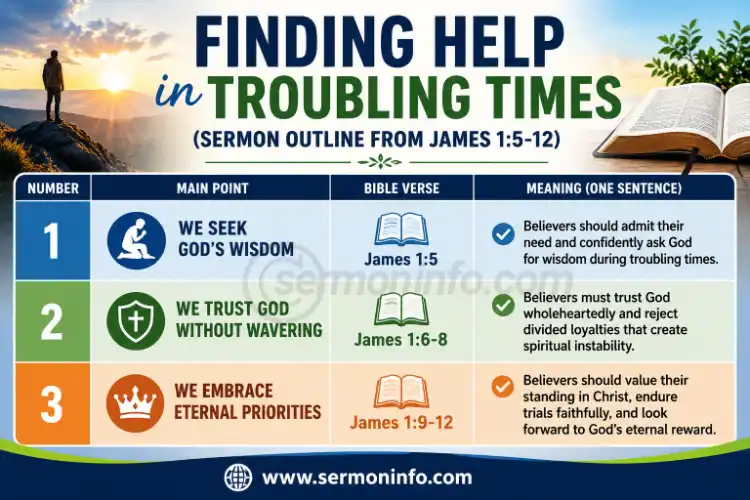
| Sermon Outline From James 1:5-12 – Free Expository Sermon Outlines | |||
|---|---|---|---|
| Number | Main Point | Bible Verse | Meaning |
| 1 | We Seek God’s Wisdom | James 1:5 | Believers should admit their need and confidently ask God for wisdom during troubling times. |
| 2 | We Trust God Without Wavering | James 1:6–8 | Believers must trust God wholeheartedly and reject divided loyalties that create spiritual instability. |
| 3 | We Embrace Eternal Priorities | James 1:9–12 | Believers should value their standing in Christ, endure trials faithfully, and look forward to God’s eternal reward. |
Source Material
William MacDonald, Believer’s Bible Commentary, rev. ed. (Nashville: Thomas Nelson, 1995), 2224-2228
John MacArthur, The MacArthur Bible Commentary (Nashville: Thomas Nelson, 2005), 1882-1883
John F. Walvoord and Roy B. Zuck, eds., The Bible Knowledge Commentary: New Testament (Colorado Springs, CO: David C. Cook, 1985), 821