Sermon Outline From Hosea 7:11–16 defines false repentance as outward sorrow without inward change. Israel sought help from foreign nations, resisted God’s correction, and cried for relief rather than forgiveness. True repentance turns from sin, trusts God’s redemption, and produces faithful obedience.

Key Takeaways – Sermon From Hosea 7:11-16
- False repentance seeks relief without surrender. God calls us to grieve over sin, confess it honestly, and return to Him wholeheartedly.
- Human solutions cannot replace trust in God. Like Ephraim, we drift when we depend on worldly security instead of God’s faithful care.
- True repentance produces loyal obedience. Genuine change receives God’s correction, trusts His redemption, and follows His Word with a sincere heart.
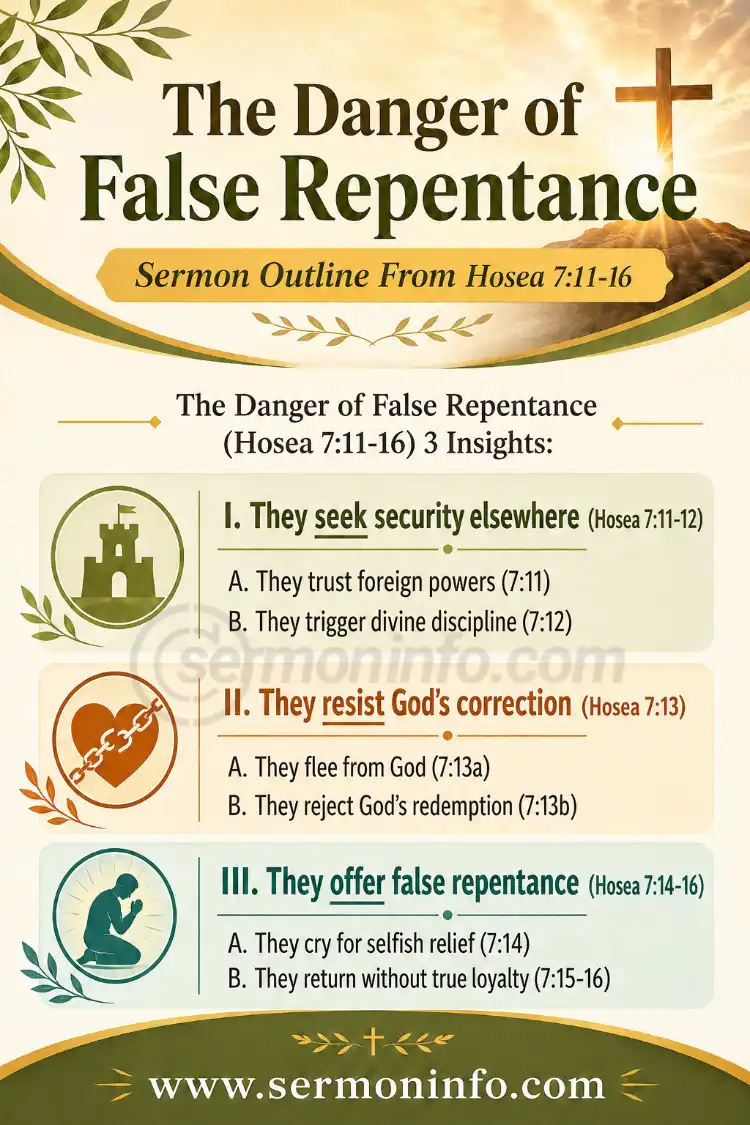
Sermon Outline From Hosea 7:11-16
Half hearted repentance regrets the pain of sin without grieving over sin itself. It asks God for relief but resists surrender. A person may speak sorrowful words while protecting old desires and habits. Such repentance brings no lasting change. God calls us to return with honesty, faith, and wholehearted obedience.
Hosea 7:11–16 exposes Israel’s shallow response to divine correction. They sought security elsewhere, resisted God’s redemption, and returned without true loyalty. Their example warns us against empty sorrow and divided hearts. As we study this passage, we will see why genuine repentance must turn fully to God.
1. They Seek Security Elsewhere (Hosea 7:11–12)
Israel abandoned confidence in God and searched for safety through human alliances instead (Summary Statement).
A. They Trust Foreign Powers (Hosea 7:11)
Ephraim acted like a senseless dove, flying between Egypt and Assyria for protection. They trusted powerful nations instead of trusting the Lord who had delivered Israel many times before. Their actions revealed fearful hearts rather than faithful hearts. God alone remained their true refuge (Psalm 46:1).
This temptation still confronts believers today. We often seek security in money, relationships, careers, or governments before we seek God in prayer. Proverbs 3:5 reminds us, “Trust in the LORD with all your heart.” Lasting peace comes when we place our confidence in Him rather than human strength.
B. They Trigger Divine Discipline (Hosea 7:12)
As Ephraim chased foreign alliances, God declared that He would spread His net over them and bring them down. His discipline did not come from anger alone. It came from His holy love and His desire to turn His people back to Himself. God always acts righteously.
God still corrects His children when they choose worldly solutions instead of faithful obedience. Hebrews 12:6 says, “For whom the LORD loves He chastens.” Loving discipline protects us from greater harm and restores our fellowship with Him. Wise believers respond quickly with humble repentance and renewed trust. (Source Material: William MacDonald, Believer’s Bible Commentary, pp. 1100-1101)
This material provides some ideas and thoughts for a sermon outline from Hosea 7:11-16 (The Danger of False Repentance).
2. They Resist God’s Correction (Hosea 7:13)
Israel refused God’s loving discipline and continued to rebel against His truth (Summary Statement).
A. They Flee From God (Hosea 7:13a)
God pronounced, “Woe to them,” because His people wandered far from Him instead of returning in repentance. Every step away from God increased their danger and deepened their sorrow. Sin always promises freedom, yet it leads to bondage and loss. Isaiah 55:6 urges us, “Seek the LORD while He may be found.”
This warning speaks clearly today. Some people run to distractions, pleasures, or personal plans when conviction comes. God calls us to run toward Him, not away from Him. Like the prodigal son in Luke 15, those who return to the Father always find mercy, forgiveness, and restoration.
B. They Reject God’s Redemption (Hosea 7:13b)
God declared, “I would have redeemed them,” revealing His gracious desire to rescue His people. Instead of receiving His mercy, they spoke lies against Him and refused His truth. Their unbelief rejected the very God who longed to save them. His compassion remained greater than their rebellion.
The same choice confronts people today. Jesus Christ came to seek and to save the lost (Luke 19:10), yet many reject His gracious invitation. Faith receives God’s redemption, while unbelief turns it away. Believers should treasure God’s grace, trust His promises, and respond with thankful obedience each day. (Source Material: John MacArthur, The MacArthur Bible Commentary, p. 977)
3. They Offer False Repentance (Hosea 7:14–16)
Israel showed outward sorrow, but their hearts remained unchanged before God (Summary Statement).
A. They Cry for Selfish Relief (Hosea 7:14)
Israel cried from their beds because hunger and hardship caused pain. However, they did not cry to God from the heart. They wanted full barns and restored comfort, not forgiveness and renewed fellowship. Their sorrow focused on suffering rather than sin.
We can make the same mistake when we only ask God to remove painful consequences. Genuine repentance grieves because sin dishonours Him. Second Corinthians 7:10 teaches that godly sorrow produces repentance. Let hardship drive us toward confession, faith, and restored obedience.
B. They Return Without True Loyalty (Hosea 7:15–16)
God trained and strengthened His people, yet they still planned evil against Him. They appeared to turn, but not toward the Most High. Like a faulty bow, they could not remain faithful. Their words sounded religious, but their lives revealed rebellion.
False repentance changes direction briefly without changing the heart. True repentance returns to God with faith, loyalty, and obedience. Joel 2:13 says, “Rend your heart, and not your garments.” The Lord desires more than outward sorrow. He seeks hearts that trust Him and follow His Word. (Source Material: John F. Walvoord and Roy B. Zuck, The Bible Knowledge Commentary: Old Testament, pp. 1394-1395)
Conclusion
Israel sought security elsewhere, resisted God’s correction, and offered false repentance. Their cries revealed pain, but their hearts remained divided. They wanted relief without surrender and blessing without obedience. Hosea warns us that outward sorrow cannot replace genuine faith, confession, and loyalty to God.
Therefore, we must receive God’s Word with humble hearts and honest obedience. His warnings protect us, and His correction calls us home. Let Scripture expose false refuges, hidden rebellion, and shallow sorrow. Then let us return fully to the Lord, trust His grace, and walk faithfully in His truth.
Closing Prayer
Heavenly Father, thank You for Your faithful love and patient correction. Search our hearts and reveal every area where our repentance lacks sincerity. Forgive us for trusting anything more than You. Give us humble hearts that confess sin honestly and follow Your truth with joyful obedience each day.
Lord Jesus, help us trust You completely instead of seeking false security. Strengthen our faith through Your Word and guide us by Your Spirit. May our lives reflect genuine repentance, steadfast devotion, and thankful worship. Use us to bring glory to Your name and point others to Your saving grace. In Jesus’ name, Amen.
Frequently Asked Questions (FAQ)
Q: What is false repentance in the Bible?
A: False repentance feels sorry about consequences while resisting a wholehearted return to God. In Hosea 7:14–16, Israel cried during hardship but remained rebellious. Biblical repentance changes the mind toward God, confesses sin honestly, and produces obedient fruit rather than temporary emotion.
Q: How can you tell if repentance is genuine?
A: Genuine repentance turns a person toward God and produces visible spiritual fruit. It does not demand instant perfection, but it brings honest confession, renewed faith, and a growing desire to obey Scripture. Jesus taught that changed conduct should reflect a changed heart over time.
Q: What is the difference between godly sorrow and worldly sorrow?
A: Godly sorrow grieves over sin because it dishonours God and leads toward repentance. Worldly sorrow mainly regrets embarrassment, loss, or painful consequences. Second Corinthians 7:10 says godly sorrow produces repentance leading to salvation, while worldly sorrow produces death without inward change.
Q: What does Hosea 7:11–16 teach about repentance?
A: Hosea 7:11–16 warns that people can seek human security, resist divine correction, and still appear religious. Ephraim called upon Egypt and Assyria, yet refused heartfelt return to God. The passage teaches that sorrow without faith, loyalty, and obedience remains false repentance.
Q: Does God forgive someone who truly repents?
A: Yes. God welcomes those who come through faith with honest confession and genuine repentance. Acts 3:19 connects repentance with turning to God, while 1 John 1:9 promises cleansing to believers who confess their sins. Forgiveness rests on Christ’s finished work, not human merit.
BONUS: Why is false repentance spiritually dangerous?
False repentance is spiritually dangerous because it regrets consequences without turning from sin. It may produce tears, promises, or religious words, yet the heart remains divided. Hosea 7:14–16 shows Israel crying in distress while still resisting God. Such sorrow allows rebellion to continue and fellowship with God to suffer.
Genuine repentance turns the heart toward God and produces obedient fruit. Jesus said, “Unless you repent you will all likewise perish” (Luke 13:3). Second Corinthians 7:10 teaches that godly sorrow produces repentance, but worldly sorrow produces death. Therefore, believers must confess sin honestly, trust Christ, and follow His Word.
BONUS: What does “fruit worthy of repentance” mean?
“Fruit worthy of repentance” means visible changes that match a sincere turning to God. John the Baptist commanded, “Bear fruits worthy of repentance” (Luke 3:8). Genuine repentance changes our attitudes, choices, relationships, and habits. It does not merely produce sorrowful words; it produces obedient actions that honour God.
This fruit does not earn salvation, because God saves by grace through faith in Christ. Instead, changed conduct confirms a changed heart (Ephesians 2:8–10). A repentant person confesses sin, makes wrongs right when possible, rejects old patterns, and follows Scripture. True repentance keeps growing through faithful obedience.
BONUS: Can someone feel remorse without truly repenting?
Yes. A person can feel deep remorse over guilt, shame, or painful consequences without turning back to God. Judas regretted betraying Jesus and returned the silver, yet he did not seek Christ’s mercy (Matthew 27:3–5). Remorse feels sorrow, but repentance changes direction and returns to God in faith.
Peter also wept after denying Jesus, but his sorrow led him back to the Lord and renewed obedience (Luke 22:61–62; John 21:15–19). Second Corinthians 7:10 distinguishes godly sorrow from worldly sorrow. True repentance confesses sin, trusts God’s grace, and produces a changed life.
BONUS: Why do people seek God only during hardship?
People often seek God during hardship because pain exposes their weakness and removes false confidence. When comfort returns, they may forget the Lord and resume old habits. Israel cried in distress but did not seek God from the heart (Hosea 7:14). Trouble revealed their need, but not genuine repentance.
Hardship can open the door to sincere faith when people seek God Himself, not merely relief. Psalm 50:15 says, “Call upon Me in the day of trouble.” God invites us to trust Him in every season. Genuine devotion continues after the crisis and produces prayer, gratitude, and faithful obedience.
BONUS: Does repentance remove every consequence of sin?
Repentance brings forgiveness and restores fellowship with God, but it may not remove every earthly consequence. David confessed his sin, and God forgave him, yet painful results remained (2 Samuel 12:13–14). Sin can damage trust, health, relationships, and testimony even after sincere repentance.
God uses consequences to teach wisdom, deepen humility, and guard us from repeating sin. Galatians 6:7 warns that people reap what they sow. However, God still gives grace, strength, and restoration. Believers should accept responsibility, make wrongs right when possible, and walk forward in obedient faith.
BONUS: How should believers respond to God’s discipline?
Believers should receive God’s discipline with humility, not resentment. Hebrews 12:5–6 teaches that the Lord corrects those He loves. His discipline exposes sin, protects us from deeper harm, and restores faithful fellowship. We should listen carefully, confess quickly, and trust His loving purpose.
Believers should also respond with obedience and renewed devotion. Hebrews 12:11 says discipline produces “the peaceable fruit of righteousness.” God’s correction may hurt, but He never wastes our pain. Let us accept His instruction, forsake sin, and move forward with gratitude, wisdom, and stronger faith.
BONUS: Is repentance necessary for salvation?
Yes. Repentance is necessary for salvation because Jesus commands sinners to turn from sin and believe the gospel (Mark 1:15). Repentance does not earn salvation. It changes the heart’s direction toward God, while faith receives Christ and His finished work.
Scripture joins repentance and faith as one response to the gospel. Acts 20:21 speaks of “repentance toward God and faith toward our Lord Jesus Christ.” God saves by grace alone through faith alone, yet saving faith never protects rebellion. It turns to Christ with humble trust.
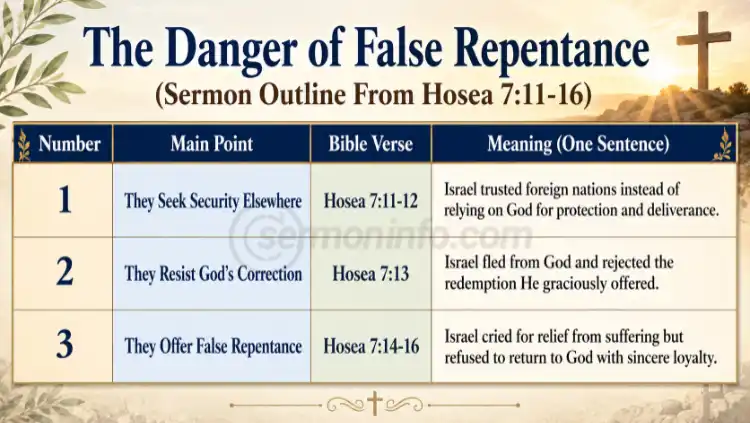
| Sermon Outline From Hosea 7:11-16 – Free Expository Sermon Outlines | |||
|---|---|---|---|
| Number | Main Point | Bible Verse | Meaning |
| 1 | They Seek Security Elsewhere | Hosea 7:11–12 | Israel trusted foreign nations instead of relying on God for protection and deliverance. |
| 2 | They Resist God’s Correction | Hosea 7:13 | Israel fled from God and rejected the redemption He graciously offered. |
| 3 | They Offer False Repentance | Hosea 7:14–16 | Israel cried for relief from suffering but refused to return to God with sincere loyalty. |
Source Material
William MacDonald, Believer’s Bible Commentary, rev. ed. (Nashville: Thomas Nelson, 1995), 1100-1101
John MacArthur, The MacArthur Bible Commentary (Nashville: Thomas Nelson, 2005), 977
John F. Walvoord and Roy B. Zuck, eds., The Bible Knowledge Commentary: Old Testament (Colorado Springs, CO: David C. Cook, 1985), 1394-1395