How to Preach the Psalms requires a deep understanding of their genre, structure, and poetic beauty.
By following these five essential steps—identifying genre and situation, grasping the core message, analyzing structure, exploring poetic texture, and appreciating artistry—preachers can effectively communicate the Psalms’ rich truths.
This guide will help you deliver sermons that honor the depth and beauty of these timeless songs of worship and reflection.

Five Steps to Understanding and Preaching the Psalms
In this article, I want to explain Leland Ryken’s five important steps for understanding and preaching the Psalms. I found his ideas very helpful and informative.
Although I had read many good books about biblical poetry and how to preach the Psalms, Ryken’s steps gave some constructive ideas to think about. (Word of Delight by Leland Ryken p. 207ff)
1. Genre and Implied Situation
The first step is to figure out the genre and the implied situation. If you don’t know the genre or the situation, your understanding of the text will be unclear.
The Psalms have seven (7) types of genres: wisdom psalms, lament psalms, royal psalms, enthronement psalms, pilgrimage psalms, thanksgiving psalms, and imprecatory psalms. Commentators may use different names for these categories, but they cover the same ideas.
Knowing the implied situation helps you understand what is happening in the Psalms. For example, in Psalm 10, the speaker is in a crisis because his enemies have slandered him. Psalms 42-43 make more sense when you realize the speaker is in exile and cannot worship God in the temple. Psalm 121 suggests the speaker is on a pilgrimage to Jerusalem.
2. The Intellectual Core
After understanding the genre and situation, the next step is to summarize what the psalm is about.
This step focuses on the topic and theme. The topic is what the psalm discusses, and the theme is what the psalm says about that topic. By identifying both, you can better grasp the psalm’s message.
3. Structure and Unity
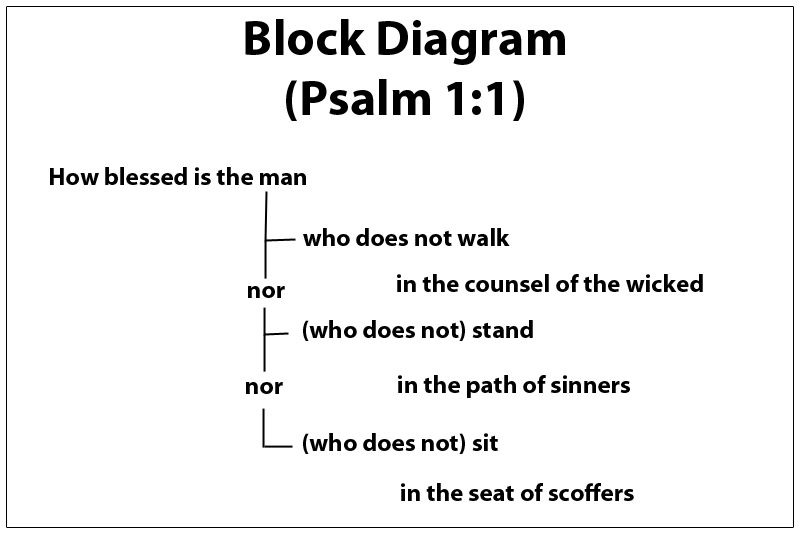
Once you know the genre and theme, you should study the psalm’s structure and unity. A good way to do this is by creating a block diagram of the psalm. I usually do this in English because I studied Greek in seminary. Diagramming helps give a clear overview of the whole psalm and shows how its parts connect.
4. Poetic Texture
The structure of a psalm is like the wooden frame of a wall, and the poetic texture is like the panels that cover it. Poetic texture includes the words, images, metaphors, similes, apostrophes, personifications, hyperboles, and other figures of speech. These details are very important because they carry the psalm’s meaning. Spending time studying these figures of speech is essential because they are full of meaning in Hebrew poetry.
5. Artistry
To fully understand the Psalms, you must apply all four previous steps. However, you also need to learn about the poetic form called parallelism. This verse form is a key part of Hebrew poetry, and knowing how it works will help you appreciate the artistry of the Psalms.
Conclusion
By applying these five essential steps, preachers can uncover the depth and meaning of the Psalms. Understanding the genre, core message, structure, poetic texture, and artistry allows for powerful and meaningful sermons.
This approach not only enriches personal study but also helps convey the Psalms’ timeless truths to inspire and uplift congregations.
Sermon Outlines From the Psalms
I love studying the text of Scripture in preparation to deliver a powerful and meaningful message to the congregation.
This is where the real passion and inspiration for preaching originates.
Yes, you can copy someone’s outline; however, when you develop the sermon outline by studying the text, you will unleash tremendous biblical authority in your preaching.
Here are two sermon outlines that I prepared when preaching Psalm 1 and Psalm 23.
True Happiness is Found in the Lord (Psalm 1:1-6)
- The Person God Blesses (1:1-3)
- We see his passion (1:1a)
- We see his path (1:1b)
- We see his pleasure (1:2)
- We see his prosperity (1:3)
- The Person God Judges (1:4-5)
- We see his path (1:4)
- We see his punishment (1:5)
- The Person God Approves (1:6)
- We see the righteous prosper (1:6a)
- We see the wicked perish (1:6b)
Two Pictures of God’s Goodness and Care (Psalm 23:1-6)
- The Picture of the Shepherd (23:1-4)
- He meets our needs (23:1b)
- He gives us rest (23:2)
- He gives us life (23:3a)
- He guides us in life (23:3b)
- He keeps us safe (23:4)
- The Picture of the Generous Host (23:5-6)
- He provides for the present (23:5)
- He provides for the future (23:6)
The sermon outlines from Psalm 1 and Psalm 23 were provided by Rev. D. Blackburn BA GDM
Resource Material
Some Resources for the Exposition of Biblical Poetry
Words of Delight: A Literary Introduction to the Bible by Leland Ryken
Holman Old Testament Commentary of the Psalms (Volume 1 & Volume 2) by Steven J. Lawson
An Expositional Commentary of the Psalms (Volume 1, Volume 2 and Volume 3) by James Montgomery Boice
A Commentary of the Psalms (Volume 1, Volume 2 and Volume 3) by Allen P. Ross
The NIV Application Commentary of the Psalms (Volume 1) by Gerald H. Wilson
The Dictionary of Biblical Imagery by Leland Ryken