“What Figures of Speech are Used in the Psalms?” refers to the poetic tools God uses, such as metaphors and similes, to reveal His character and truth. These expressions create vivid images and deepen understanding, helping believers connect with God personally and respond in faith, worship, and trust.
Key Takeaways – Figures of Speech in the Psalms
- Figures of speech in the Psalms reveal God clearly. They use images like shepherd, rock, and refuge to show His care, strength, and faithfulness in everyday life.
- These expressions help you understand Scripture deeply. Metaphors, similes, and other figures turn truth into clear pictures that stay in your mind and guide your thinking.
- The Psalms invite a personal response to God. They stir your heart to trust Him, seek Him, and worship Him with honesty in every season of life.
- Apply what you read by trusting God daily. Let these vivid truths shape your faith, strengthen your prayer life, and lead you to follow Christ as Savior and Lord.
What Figures of Speech are Used in the Bible?
We read the Psalms in joy, sorrow, and quiet reflection. These songs speak to our hearts because they use vivid language. David does not speak in dry words. He paints pictures that help us feel truth. When fear rises or hope fades, these words draw us back to God. They help us see Him clearly and trust Him deeply.
Today we will explore how the Psalms use figures of speech to reveal God’s truth. We will look at metaphors, similes, and other expressions that bring Scripture to life. Each one shows us something about God’s character and our walk with Him. As we study, we will learn to read with greater understanding and worship with deeper faith.
1. Metaphor
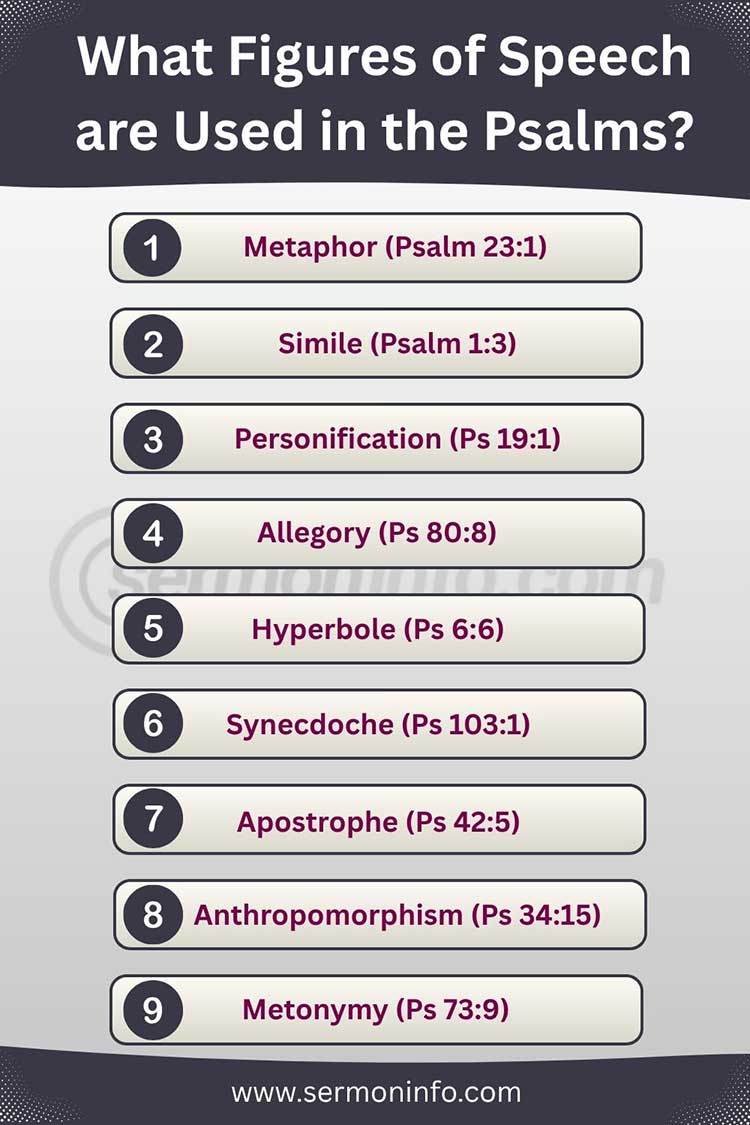
States one thing is another to show God’s character clearly (Psalm 23:1).
A. Definition
A metaphor states one thing is another to show deeper truth. The Psalms use it to reveal God’s character. David calls the Lord “my shepherd” in Psalm 23:1. God is not a literal shepherd, yet He leads, feeds, and protects His people with perfect care and authority.
Metaphors create vivid pictures that shape faith. Psalm 18:2 calls God “my rock and my fortress.” These images stress strength and safety. They help believers trust God in danger. When life shakes, the Lord remains unmovable. He becomes our secure refuge in every trial.
B. Examples
Psalm 23:1 says, “The Lord is my shepherd.” This shows personal care and guidance. A shepherd knows each sheep. In the same way, God knows you. He leads you through fear and provides what you need. This comforts believers in uncertain seasons.
Psalm 18:2 calls God “my rock.” A rock stands firm and does not move. David faced enemies, yet trusted God’s strength. Today, believers face pressure and fear. This metaphor reminds us to stand on God’s unchanging nature, not shifting circumstances.
2. Simile
Compares using “like” or “as” to create clear spiritual pictures (Psalm 1:3).
A. Definition
A simile compares two things using words like “like” or “as.” The Psalms use similes to make truth clear and memorable. Psalm 1:3 says a righteous person is “like a tree planted by rivers of water.” This shows stability, growth, and fruitfulness.
Similes help listeners picture spiritual realities. They bring truth into daily life. Psalm 42:1 says, “As the deer pants for the water brooks.” This expresses deep longing. The psalmist desires God as a thirsty deer desires water. Such language invites believers to examine their own hunger for God.
B. Examples
Psalm 1:3 compares the righteous to a tree by water. The tree stays nourished and strong. In the same way, believers who delight in God’s Word grow steadily. They bear fruit in every season. This encourages daily meditation on Scripture.
Psalm 42:1 says, “As the deer pants for the water.” This shows intense spiritual thirst. The psalmist feels dry without God. Believers today often feel empty. This simile calls us back to seek God deeply, not casually, in prayer and worship.
3. Personification
Gives human actions to creation to show God’s glory (Psalm 19:1).
A. Definition
Personification gives human qualities to nonhuman things. The Psalms often describe creation as speaking or acting. Psalm 19:1 says, “The heavens declare the glory of God.” The heavens do not speak, yet they reveal God’s greatness clearly to all people.
This figure helps us see God’s world as alive with testimony. Psalm 98:8 says, “Let the rivers clap their hands.” This image expresses joyful praise. It shows that all creation reflects God’s glory. Believers join this chorus when they worship Him sincerely.
B. Examples
Psalm 19:1 says the heavens “declare” God’s glory. The sky does not use words, yet it reveals God’s power. When we see the stars, we witness His work. This calls us to worship and acknowledge Him as Creator.
Psalm 98:8 speaks of rivers clapping hands. This joyful image shows creation celebrating God’s reign. When believers see such beauty, they should respond with praise. It reminds us that worship is not forced but flows from seeing God’s greatness.

Words of Delight by Leland Ryken
4. Allegory
Uses extended imagery to teach deeper spiritual truth (Psalm 80:8).
A. Definition
An allegory uses extended imagery to teach deeper truth. It often presents a story with symbolic meaning. Psalm 80:8 describes Israel as a vine brought out of Egypt. This image represents God’s care, growth, and expectation of fruit from His people.
Allegory unfolds meaning over several lines. It invites reflection. The vine in Psalm 80 shows blessing and later judgment. When the vine fails, God disciplines it. This teaches believers that privilege brings responsibility. God expects spiritual fruit from those He has redeemed.
B. Examples
Psalm 80:8–9 presents Israel as a vine planted by God. He cleared the ground and caused it to grow. This shows His grace in choosing and blessing His people. Yet it also reminds believers to remain faithful under His care.
Psalm 23 can also reflect allegorical depth. The shepherd guides, feeds, and restores. These actions picture God’s full provision for the soul. Believers today find comfort knowing God leads them through every stage of life with purpose and care.
5. Hyperbole
Uses strong exaggeration to express deep emotion (Psalm 6:6).
A. Definition
Hyperbole uses deliberate exaggeration to express strong emotion. The Psalms often use it in times of distress. Psalm 6:6 says, “I flood my bed with tears.” This does not mean literal flooding but deep sorrow and grief before God.
Hyperbole communicates intensity of feeling. It helps believers relate to the psalmist. Psalm 22:14 says, “All My bones are out of joint.” This expresses extreme suffering. It points forward to Christ’s suffering. Such language invites honest prayer in pain.
B. Examples
Psalm 6:6 describes tears flooding the bed. David feels overwhelmed by sorrow. This teaches believers that God welcomes honest emotion. We can bring deep pain to Him without fear. He understands our brokenness.
Psalm 22:14 speaks of bones out of joint. This shows intense suffering. It prophetically points to Christ’s crucifixion. Believers see both human pain and divine purpose. Even in suffering, God works out redemption.
6. Synecdoche
Uses a part to represent the whole person or experience (Psalm 103:1).
A. Definition
Synecdoche uses a part to represent the whole or the whole for a part. The Psalms use this to express total devotion. Psalm 103:1 says, “Bless the Lord, O my soul.” The soul represents the whole person in worship.
This figure deepens meaning with simplicity. It calls for full commitment. When the psalmist speaks of the soul, he includes mind, will, and emotions. It reminds believers to worship God with their entire being.
B. Examples
Psalm 103:1 calls the soul to bless the Lord. This means every part of life should honor Him. Worship is not limited to words. It includes thoughts, choices, and actions.
Psalm 63:1 says, “My flesh longs for You.” The flesh represents the whole person. David expresses deep desire for God. Believers today should seek God with complete devotion, not partial interest.
7. Apostrophe
Speaks directly to the soul or creation to express truth (Psalm 42:5).
A. Definition
Apostrophe addresses someone absent, dead, or inanimate as if present. The Psalms often speak directly to God or even to the soul. Psalm 42:5 says, “Why are you cast down, O my soul?” The psalmist speaks to himself.
This figure shows personal reflection and faith. It allows believers to preach truth to their own hearts. In difficult times, we must remind ourselves of God’s promises. Apostrophe helps express that inner conversation.
B. Examples
Psalm 42:5 addresses the soul directly. The psalmist feels discouraged but calls himself to hope in God. This teaches believers to speak truth to their hearts during trials.
Psalm 114:5 says, “What ails you, O sea?” The psalmist addresses the sea. This highlights God’s power over creation. It reminds believers that even nature responds to God’s authority.
8. Anthropomorphism
Describes God with human traits to show His care and action (Psalm 34:15).
A. Definition
Anthropomorphism gives human traits to God to help us understand Him. The Psalms use this often. Psalm 34:15 says, “The eyes of the Lord are on the righteous.” God is Spirit, yet this shows His watchful care.
This figure makes God’s actions relatable. It does not limit Him but reveals His involvement. Psalm 18:6 says God hears prayer. These images assure believers that God sees, hears, and responds personally.
B. Examples
Psalm 34:15 speaks of God’s eyes and ears. This shows His attention to His people. Believers can trust that God notices their struggles and hears their prayers.
Psalm 18:6 says God hears and responds. David cried out, and God answered. This reminds believers that prayer reaches a living God who cares and acts on behalf of His people.
9. Metonymy
Uses a related word to represent another idea and express truth clearly (Psalm 73:9).
A. Definition
Metonymy replaces one word with another closely related idea. It does not compare but substitutes. The Psalms use this to simplify and strengthen meaning. Psalm 73:9 says, “They set their mouth against the heavens.” Here, “heavens” represents God, showing bold rebellion against Him.
This figure helps listeners grasp truth quickly. It connects visible terms with deeper realities. Psalm 24:7 says, “Lift up your heads, O you gates.” The gates represent the city welcoming the King. This imagery points to God’s glory entering His people’s place of worship.
B. Examples
Psalm 73:9 uses “heavens” to represent God Himself. The wicked speak proudly against Him. This shows their arrogance and rejection of divine authority. Believers learn to guard their words and honor God in speech.
Psalm 24:7 speaks to gates as if they respond. The gates represent the city of Jerusalem. This metonymy shows preparation for the King of glory. It reminds believers to open their hearts to God’s rule and presence.
Conclusion
We have seen how the Psalms use rich figures of speech to reveal God’s truth. Metaphors, similes, and personification paint clear pictures of His care and power. Allegory and hyperbole express deep meaning and strong emotion. Synecdoche, apostrophe, and anthropomorphism help us remember and understand His Word. Each figure draws us closer to the heart of God.
Now respond to what you have heard. Do not admire these words only, but trust the God they reveal. The Lord invites you to know Him personally through Jesus Christ. Turn from sin and place your faith in Him today. Let His Word shape your life, and walk with Him daily as your Savior and Lord.
Closing Prayer
Father in heaven, we thank You for Your Word that speaks with beauty and power. You open our eyes through the Psalms and show us Your heart. You are our Shepherd, our Rock, and our refuge. Help us to trust You in every season. Teach us to hear Your voice and respond with faith, worship, and obedience each day.
Lord Jesus, draw us closer to You. Strengthen our hearts when we feel weak, and remind us that You care for us. Lead us in truth and guard our steps. Help us live what we have learned today. We place our faith in You as our Savior and Lord. In Jesus’ name we pray, Amen.
Frequently Asked Questions (FAQ)
Q: What are figures of speech in the Psalms?
A: Figures of speech in the Psalms are poetic tools like metaphors, similes, and personification. They help express deep spiritual truths through vivid imagery. These expressions reveal God’s character clearly and help readers understand His Word with greater clarity, emotion, and personal connection.
Q: Why do the Psalms use figurative language?
A: The Psalms use figurative language to make truth memorable and meaningful. These images engage both the mind and heart. They help believers feel what they read, not just understand it. This strengthens faith, deepens worship, and encourages trust in God during every season.
Q: What is an example of a metaphor in the Psalms?
A: Psalm 23:1 says, “The Lord is my shepherd.” This metaphor shows God’s care, guidance, and protection. A shepherd watches over sheep, and God watches over His people. This image comforts believers and reminds them that God provides and leads them faithfully.
Q: How do figures of speech help us understand God?
A: Figures of speech reveal God in ways we can grasp. They turn abstract truths into clear pictures, such as God as a rock or refuge. These images help believers trust Him more, especially in trials, by showing His strength, care, and presence.
Q: How should believers apply figures of speech in the Psalms?
A: Believers should read these images carefully and respond in faith. Let the pictures shape how you see God and your situation. Trust Him as your Shepherd, Refuge, and King. Apply these truths in prayer, worship, and daily decisions as you walk with Christ.
An Expositional Commentary – Psalms by James Montgomery Boice
BONUS: What are the most common literary devices found in the Psalms?
The Psalms use several common literary devices to reveal God’s truth clearly. Metaphors, similes, and personification appear often. Psalm 23:1 calls the Lord a shepherd, showing care and guidance. Psalm 1:3 compares the righteous to a tree, showing stability. These devices create vivid pictures that help believers understand and remember God’s character.
Parallelism also shapes many Psalms. It repeats or contrasts ideas for emphasis. Psalm 19:1 says, “The heavens declare the glory of God; and the firmament shows His handiwork.” This pattern strengthens meaning. Hyperbole and symbolism also express deep emotion. These devices invite believers to trust God and respond in worship.
BONUS: How do metaphors and similes differ in the Psalms?
Metaphors and similes both create images, but they work differently. A metaphor states one thing is another. Psalm 23:1 says, “The Lord is my shepherd.” This shows God’s care directly. A simile compares using “like” or “as.” Psalm 1:3 says the righteous are “like a tree,” showing steady growth and strength.
These differences shape how we understand truth. A metaphor gives a bold, direct picture of God’s character. A simile draws a comparison that helps us reflect. Both guide believers to trust God more. They turn truth into living images that strengthen faith and deepen worship.
BONUS: What is the purpose of poetic imagery in the Psalms?
Poetic imagery in the Psalms reveals God’s truth in ways we can see and feel. It turns spiritual ideas into clear pictures. Psalm 23:2 says, “He makes me to lie down in green pastures.” This image shows rest and care. Such language helps believers grasp God’s goodness personally.
Imagery also stirs the heart toward worship and trust. Psalm 18:2 calls God “my rock and my fortress.” These pictures build confidence in His strength. When believers face trials, these images remind them that God protects, provides, and remains faithful in every situation.
BONUS: Why do the Psalms use symbolic language to describe God?
The Psalms use symbolic language to help us understand God’s greatness. God is Spirit, so writers use images we can grasp. Psalm 18:2 calls Him “my rock and my fortress.” These symbols show strength and protection. They make truth clear and personal for believers in every season.
Symbolic language also stirs faith and trust. Psalm 84:11 says, “The Lord God is a sun and shield.” This shows guidance and defense. These images remind believers that God provides, protects, and leads. They invite us to rest in His care and walk closely with Him.
BONUS: How does Hebrew poetry use parallelism in the Psalms?
Hebrew poetry uses parallelism to repeat or contrast ideas for clarity and emphasis. Psalm 19:1 says, “The heavens declare the glory of God; and the firmament shows His handiwork.” The second line restates the first. This pattern strengthens the message and helps listeners understand God’s truth more clearly.
Parallelism also contrasts ideas to teach wisdom. Psalm 1:6 says, “The Lord knows the way of the righteous, but the way of the ungodly shall perish.” This contrast highlights two paths. It calls believers to choose righteousness and trust God’s guidance in daily life.
BONUS: How can I identify figures of speech when reading the Psalms?
You can identify figures of speech by noticing vivid, non literal language. Ask if the statement paints a picture rather than states a fact. Psalm 23:1 says, “The Lord is my shepherd.” God is not literally a shepherd, so this is a metaphor that reveals His care and guidance.
Look for comparison words like “like” or “as,” and repeated patterns. Psalm 1:3 says the righteous are “like a tree,” which shows a simile. Watch for strong imagery and emotion. These clues help you understand meaning clearly and apply God’s truth with confidence.
BONUS: Is alliteration a figure of speech in the psalms?
Alliteration appears in the Psalms, but it functions best as a literary device rather than a figure of speech. It repeats sounds to create rhythm and emphasis. Hebrew poetry often uses sound patterns to support memory and worship. Psalm 29 repeats “the voice of the Lord,” strengthening focus on God’s power and authority.
Figures of speech, like metaphors and similes, carry meaning through imagery. Alliteration supports how the message sounds, not what it means. Psalm 34:1 shows rhythmic praise that encourages continual worship. Together, these features enrich the Psalms and help believers remember and respond to God’s Word with reverence.
How To Preach The Psalms by Steven J. Lawson
| What Figures of Speech are Used in the Psalms? | |||
|---|---|---|---|
| Number | Main Point | Bible Verse | Meaning |
| 1 | Metaphor | Psalm 23:1 | God is called a shepherd to show His personal care, guidance, and provision for His people. |
| 2 | Simile | Psalm 1:3 | The righteous are like a tree by water, showing stability, growth, and fruitfulness through God’s Word. |
| 3 | Personification | Psalm 19:1 | Creation is described as speaking to show how the heavens clearly reveal God’s glory to all people. |
| 4 | Allegory | Psalm 80:8 | Israel is pictured as a vine to show God’s care, blessing, and expectation of spiritual fruit. |
| 5 | Hyperbole | Psalm 6:6 | Exaggerated language expresses deep sorrow, showing that God welcomes honest and intense emotion. |
| 6 | Synecdoche | Psalm 103:1 | The soul represents the whole person, calling believers to worship God with their entire being. |
| 7 | Apostrophe | Psalm 42:5 | The psalmist speaks to his own soul, teaching believers to remind themselves to trust in God. |
| 8 | Anthropomorphism | Psalm 34:15 | God is described with human features to show His personal attention, care, and response to His people. |
| 9 | Metonymy | Psalm 73:9 | Uses a related word to represent another idea and express truth clearly (Psalm 73:9). |