The 7 Feasts of Israel in the Bible are God appointed celebrations that helped Israel remember the Lord’s redemption, provision, holiness, and promises. Found mainly in Leviticus 23, these feasts reveal God’s faithfulness to Israel and provide important prophetic pictures that point to Christ and future events in God’s program.
Key Takeaways – 7 Feasts of the Lord in the Bible
- God gave the seven Feasts of Israel to reveal His faithfulness and purposes. They reminded Israel of redemption, provision, holiness, worship, and future hope.
- The feasts help us see important truths fulfilled in Christ. Passover points to His sacrifice, First Fruits to His resurrection, and Atonement to His sufficient work for sin.
- Believers should respond with faith, holiness, gratitude, and readiness. As we study the feasts, we learn to trust God’s Word and live confidently in His promises.
7 Feasts of Israel in the Bible
God gave Israel seven appointed feasts that shaped their worship, remembrance, and hope throughout the year. Leviticus 23 calls them “the feasts of the LORD,” showing that God established their purpose. Each feast recalled His faithfulness and taught Israel important spiritual truths. Together, they also provide prophetic pictures that find significant meaning in Christ and God’s future purposes.
In this message, we will explore Passover, Unleavened Bread, First Fruits, Weeks, Trumpets, Atonement, and Tabernacles. We will discover what each feast meant to Israel and what lessons believers can learn today. As we follow God’s calendar, we see His plan unfolding with remarkable order. Above all, these feasts encourage us to trust God’s promises and faithfulness.
1. The Feast of Passover (Leviticus 23:5)
Passover remembered Israel’s deliverance from Egypt through the blood of the sacrificed lamb. (Summary Statement)
A. Meaning (Leviticus 23:5)
Passover reminded Israel that God rescued them from Egypt through the blood of a spotless lamb. Judgment passed over homes marked by blood. An innocent substitute died so others could live. This powerful picture pointed forward to Jesus Christ. Paul declares, “Christ, our Passover, was sacrificed for us” (1 Corinthians 5:7).
Every Passover lamb anticipated the greater Lamb who would take away sin. Jesus willingly gave His life as our substitute. He bore the judgment that sinners deserved. His sacrifice satisfied God’s righteous demands. Passover therefore teaches us that redemption comes through shed blood, not human effort, religious ceremony, or personal goodness.
B. Key Lessons For Life (Leviticus 23:5)
Israel had to trust God’s promise and apply the lamb’s blood to the doorway. Hearing the command was not enough. Each household had to respond by faith. In the same way, salvation becomes ours when we personally trust Jesus Christ and His finished work on the cross.
Peter reminds us that silver and gold cannot redeem us. Christ redeemed us “with the precious blood of Christ” (1 Peter 1:18–19). Good works cannot purchase forgiveness. Religious activity cannot erase guilt. We receive eternal life by grace through faith. Therefore, trust Christ completely and rest in His sufficient sacrifice.
This material provides some ideas and thoughts for a lesson outline about the 7 feasts of the Lord (7 Feasts of Israel in the Bible).
2. The Feast of Unleavened Bread (Leviticus 23:6)
Unleavened Bread reminded Israel to separate from the corruption associated with its former life in Egypt. (Summary Statement)
A. Meaning (Leviticus 23:6)
The Feast of Unleavened Bread began immediately after Passover and lasted seven days. Israel removed leaven from their homes and ate unleavened bread. Leaven often pictured corruption because it quietly spreads through dough. The feast reminded Israel to leave Egypt’s sinful influences behind and live as a people set apart for God.
This picture still speaks clearly today. Sin can spread through thoughts, habits, relationships, and attitudes when we tolerate it. God calls His people to pursue holiness because He is holy. We do not remove sin to earn salvation. We pursue holiness because God has redeemed us and called us to live differently.
B. Key Lessons For Life (Leviticus 23:6)
Paul applies this picture directly to believers in 1 Corinthians 5:7–8. He tells us to remove the “old leaven” and celebrate with sincerity and truth. Christ has already become our Passover sacrifice. Therefore, we should reject sinful practices that weaken our testimony and hinder our fellowship with God.
A little leaven can affect an entire loaf, and tolerated sin can influence an entire life. We should confess sin quickly and choose what honors Christ. God gives grace when temptation feels strong. As we walk in truth, His Word strengthens us, His Spirit helps us, and our lives display genuine devotion.
3. The Feast of First Fruits (Leviticus 23:10)
First Fruits expressed gratitude to God for the beginning of the harvest and confidence in His future provision. (Summary Statement)
A. Meaning (Leviticus 23:10)
The Feast of First Fruits came at the beginning of Israel’s harvest. The people brought the first sheaf to the Lord. That first portion expressed gratitude and confidence. It showed that God had provided the beginning and would faithfully provide the rest of the harvest.
This feast also pointed forward to Christ’s resurrection. Jesus rose from the dead as the firstfruits of those who will rise later. His empty tomb announced that death had been defeated. Just as the first sheaf promised more harvest, Christ’s resurrection promises a greater resurrection still to come.
B. Key Lessons For Life (Leviticus 23:10)
Paul explains that “Christ is risen from the dead, and has become the firstfruits” (1 Corinthians 15:20). His resurrection was not an isolated miracle. It guarantees the future resurrection of everyone who belongs to Him. Because Christ lives, believers can face death with confident hope rather than despair.
This truth gives strength when life becomes painful or uncertain. Graves do not have the final word for those who trust Christ. Our risen Saviour will raise His people in His appointed time (1 Corinthians 15:22–23). Therefore, we can serve faithfully today because resurrection hope gives courage for tomorrow.
4. The Feast of Weeks (Leviticus 23:16)
The Feast of Weeks celebrated God’s provision at the completion of the grain harvest fifty days after First Fruits. (Summary Statement)
A. Meaning (Leviticus 23:16)
The Feast of Weeks came fifty days after First Fruits and celebrated the completed grain harvest. Israel brought offerings with thanksgiving to God. The feast reminded them that every harvest came from His gracious provision. Their fields produced food, but God remained the true source of every blessing.
This feast also finds important fulfillment at Pentecost. Acts 2:1–4 records the Holy Spirit coming upon the gathered disciples with power. God began a new stage in His redemptive program. The Spirit formed believers into one body and equipped them to witness for Christ.
B. Key Lessons For Life (Leviticus 23:16)
Believers cannot serve Christ effectively through human strength alone. Jesus promised power through the Holy Spirit for gospel witness (Acts 1:8). The Spirit gives courage, wisdom, guidance, and strength for ministry. Therefore, we should depend upon Him as we teach, serve, pray, and share Christ.
This dependence becomes especially important when ministry feels difficult. We may feel weak, uncertain, or inadequate, but God supplies what we lack. The Holy Spirit works through surrendered believers who trust His power. As we serve faithfully, He enables us to speak truth clearly and point others to Jesus.
5. The Feast of Trumpets (Leviticus 23:24)
The Feast of Trumpets called Israel together with trumpet blasts for sacred rest, worship, and preparation before God. (Summary Statement)
A. Meaning (Leviticus 23:24)
The Feast of Trumpets began with a sacred trumpet blast that called Israel to gather before the Lord. The sound interrupted ordinary life and demanded attention. It marked a solemn season of worship and preparation. The people knew that the Day of Atonement would soon follow.
The trumpet therefore served as a spiritual wake up call. God wanted His people ready to meet with Him seriously. They could not treat His appointed times casually. The feast reminded Israel to stop, listen, and prepare their hearts before the Lord.
B. Key Lessons For Life (Leviticus 23:24)
God still calls His people to stay spiritually alert and responsive to His Word. We can become distracted by work, pressure, entertainment, or personal concerns. Scripture urges us to “watch, stand fast in the faith” (1 Corinthians 16:13). Spiritual readiness begins with an attentive heart.
We should live each day prepared to obey whatever God asks of us. His purposes often require faith, courage, and immediate response. When difficult seasons come, alert believers keep trusting, praying, and serving. We honor God when we hear His Word clearly and respond without delay.
6. The Day of Atonement (Leviticus 23:26–27)
The Day of Atonement provided Israel with an annual occasion for national cleansing, repentance, and reconciliation with God. (Summary Statement)
A. Meaning (Leviticus 23:26–27)
The Day of Atonement was Israel’s most solemn day of the year. The high priest offered sacrifices for sin and entered the Most Holy Place. These sacrifices showed that sin brings guilt and requires atonement. God is holy, and sinful people cannot approach Him casually.
Those sacrifices pointed forward to Jesus Christ and His greater sacrifice. Hebrews 9:11–14 explains that Christ entered with His own blood. His sacrifice does not need repetition. He fully satisfied God’s righteous demands and secured eternal redemption for those who trust Him.
B. Key Lessons For Life (Leviticus 23:26–27)
The Day of Atonement reminds us never to treat sin lightly. Sin separates, destroys, and brings guilt before a holy God. We should confess it honestly and turn from it. Yet we must never believe that sorrow, effort, or religious activity can remove our guilt.
Our forgiveness rests completely in Christ’s finished work on the cross. Jesus declared, “It is finished” (John 19:30). We do not add anything to His sacrifice. When guilt troubles our hearts, we can trust His sufficient blood and thank God for complete forgiveness through faith in Christ.
7. The Feast of Tabernacles (Leviticus 23:34)
Tabernacles celebrated God’s provision during Israel’s wilderness journey and His continuing faithfulness to His covenant people. (Summary Statement)
A. Meaning (Leviticus 23:34)
The Feast of Tabernacles reminded Israel of their wilderness journey after leaving Egypt. Families lived in temporary shelters during the feast. These simple booths recalled how God protected, guided, and provided for His people. He remained faithful even when their surroundings felt uncertain.
The temporary shelters also taught Israel that security came from God, not from permanent homes or possessions. He supplied food, water, direction, and protection in the wilderness. The feast invited them to remember His presence with gratitude. Their past hardships became a testimony of His faithful care.
B. Key Lessons For Life (Leviticus 23:34)
We also face seasons when life feels uncertain and temporary. Plans change, resources become limited, and difficulties test our faith. Yet God remains faithful. Philippians 4:19 reminds us that He supplies our needs according to His riches in glory by Christ Jesus.
The Feast of Tabernacles also points our thoughts toward future blessing. God has not finished His purposes for Israel or His promises to believers. We can trust Him today while waiting for what lies ahead. His past faithfulness gives us courage to face tomorrow with hope.
Conclusion
The seven feasts reveal God’s faithfulness, holiness, provision, redemption, and future purposes for Israel. Passover points to sacrifice, while First Fruits points to resurrection hope. Weeks highlights God’s provision and the Spirit’s ministry. Trumpets calls for readiness, Atonement stresses forgiveness, and Tabernacles celebrates God’s faithful care.
These feasts remind us to read God’s Word carefully and trust His promises completely. God keeps His purposes for Israel, and He also teaches believers through these truths. We should respond with gratitude, holiness, faith, and hope. As we understand Scripture rightly, we see God’s plan more clearly and worship Him more deeply.
Frequently Asked Questions (FAQ)
Q: What are the 7 Feasts of Israel in the Bible?
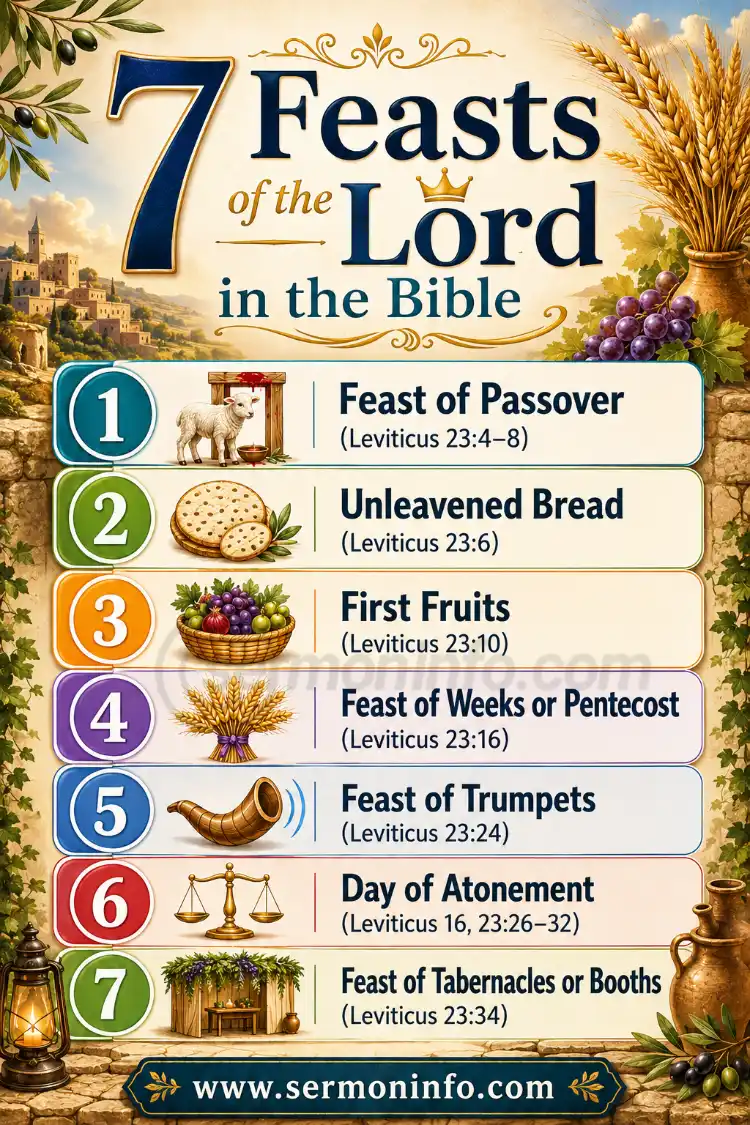
A: The seven feasts are Passover, Unleavened Bread, First Fruits, Weeks, Trumpets, the Day of Atonement, and Tabernacles. God gave these appointed feasts to Israel in Leviticus 23. They remembered His works, taught spiritual truths, and revealed important patterns within His redemptive program.
Q: How does the Feast of Passover relate to Jesus?
A: Passover remembered Israel’s deliverance from Egypt through the blood of a spotless lamb. Jesus fulfilled its central picture as “Christ, our Passover” who was sacrificed for us (1 Corinthians 5:7). His shed blood provides redemption for everyone who trusts Him for salvation.
Q: How does the Feast of First Fruits relate to Jesus’ resurrection?
A: First Fruits celebrated the beginning of Israel’s harvest and anticipated the greater harvest to follow. Paul calls the risen Christ “the firstfruits” of those who have died (1 Corinthians 15:20). His resurrection therefore guarantees the future bodily resurrection of believers who belong to Him.
Q: What does the Feast of Trumpets mean in the Bible?
A: The Feast of Trumpets called Israel together for sacred rest, worship, and preparation before the Day of Atonement. Its trumpet blast demanded attention and readiness before God. For believers today, it provides a strong reminder to remain spiritually alert, obedient, and prepared for God’s purposes.
Q: What is the significance of the Feast of Tabernacles?
A: The Feast of Tabernacles reminded Israel how God protected and provided for them during their wilderness journey. Families lived in temporary shelters and remembered His faithful presence. The feast teaches believers to trust God’s provision while looking forward confidently to the future blessings He has promised.
BONUS: Why did God give Israel the seven feasts?
God gave Israel the seven feasts to help them remember His mighty works, provision, holiness, and covenant faithfulness. Leviticus 23 calls them “the feasts of the LORD.” Each appointed time taught Israel to worship, remember, and obey. The feasts also marked important seasons in the nation’s spiritual life.
God also used the feasts to reveal truths within His redemptive program. Passover pictured redemption, First Fruits anticipated resurrection, and Atonement emphasized forgiveness through sacrifice. Several feasts also point forward to Christ and future events. Therefore, the feasts help us see God’s plan with greater clarity and confidence.
BONUS:What is the prophetic meaning of the seven feasts?
The seven feasts form a prophetic pattern within God’s redemptive program. Passover points to Christ’s sacrifice, Unleavened Bread to holiness, and First Fruits to His resurrection. Weeks connects with Pentecost and the Spirit’s ministry (Acts 2:1–4). These spring feasts highlight major truths fulfilled through Christ’s first coming.
The fall feasts point toward events still connected with Israel’s future. Trumpets pictures gathering and readiness, Atonement points to national repentance, and Tabernacles anticipates future kingdom blessing. Zechariah 12:10 and 14:16 support this future hope. Together, the feasts display God’s orderly plan and His faithfulness to Israel.
BONUS: How did Jesus fulfill the Feasts of Israel?
Jesus fulfilled the spring feasts through His first coming and saving work. Passover points to His sacrificial death (1 Corinthians 5:7). Unleavened Bread reflects His sinless character, and First Fruits points to His resurrection (1 Corinthians 15:20). Pentecost followed as the risen Christ sent the Holy Spirit (Acts 2:1–4).
The fall feasts point toward truths connected with His future return and Israel’s restoration. Trumpets pictures gathering and readiness, Atonement points to national repentance, and Tabernacles anticipates kingdom blessing. Zechariah 12:10 and 14:16 support this future hope. Jesus stands at the center of God’s redemptive plan.
BONUS: Should Christians celebrate the Feasts of Israel today?
Christians do not need to observe Israel’s feasts as a requirement for salvation, holiness, or acceptance with God. Paul warns believers against judging one another over festivals and special days (Colossians 2:16–17; Romans 14:5–6). Christ fulfilled the shadows, so believers rest in His finished work.
Christians may study or even commemorate these feasts voluntarily if they use them to understand Scripture and honor Christ. However, they should never treat them as binding commands for believers today. The feasts belong to Israel’s covenant calendar, while believers now serve God under the blessings of the New Covenant.
BONUS: Why are the Feasts of Israel called appointed times?
The Feasts of Israel are called appointed times because God set specific seasons for Israel to meet with Him. Leviticus 23:2 calls them “the feasts of the LORD.” God fixed their timing, purpose, and order so Israel could worship, remember His works, and follow His calendar faithfully.
These appointed times also reveal God’s order and purpose in redemption. Each feast marked an important truth about His dealings with Israel. Leviticus 23:4 says Israel should proclaim them “at their appointed times.” The feasts remind us that God works according to His perfect plan and keeps every promise on time.
BONUS: What order did Israel celebrate the biblical feasts?
Israel celebrated the feasts in a God given yearly order. Passover came first, followed by Unleavened Bread and First Fruits (Leviticus 23:5–10). Fifty days later came the Feast of Weeks (Leviticus 23:15–16). These spring feasts reminded Israel of redemption, holiness, harvest, and God’s faithful provision.
Later came the fall feasts: Trumpets, the Day of Atonement, and Tabernacles (Leviticus 23:24–34). This order moved Israel from solemn preparation to cleansing and joyful celebration. God arranged each feast purposefully. The calendar taught His people to remember His works, trust His timing, and look forward to His future promises.
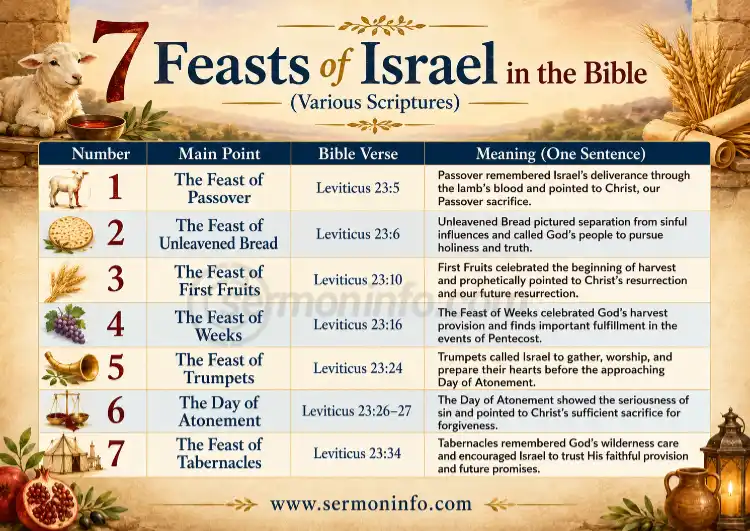
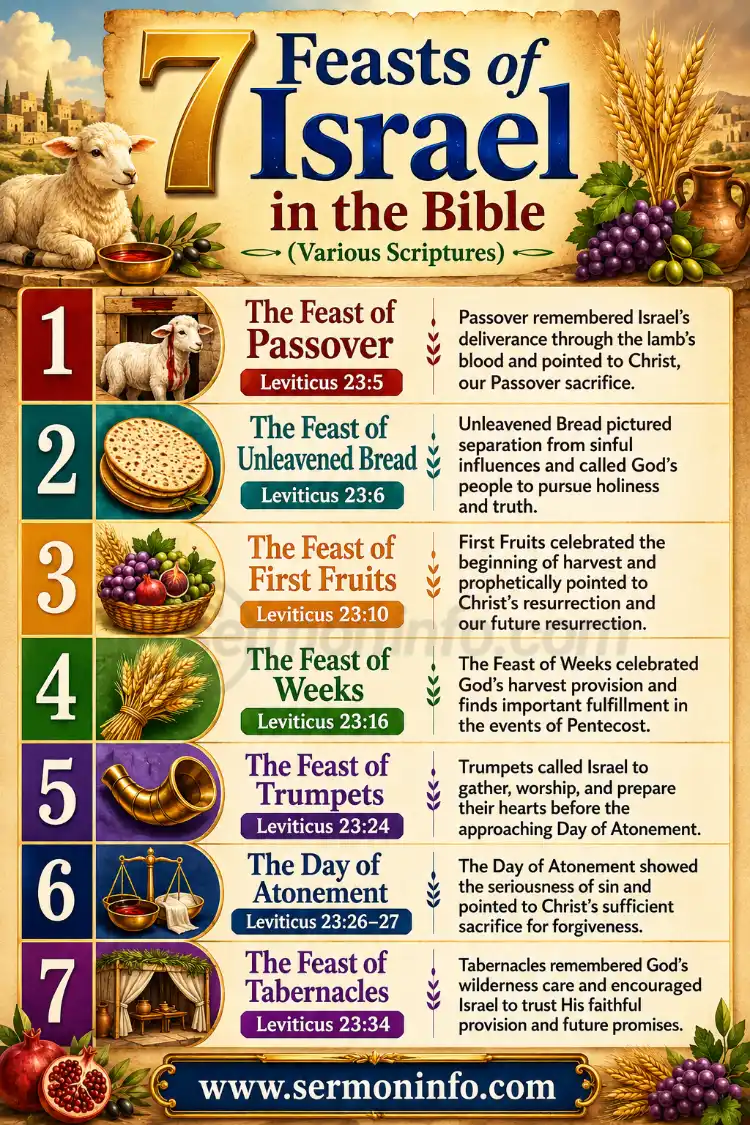
| 7 Feasts of Israel in the Bible – 7 Feasts of the Lord | |||
|---|---|---|---|
| Number | Main Point | Bible Verse | Meaning |
| 1 | The Feast of Passover | Leviticus 23:5 | Passover remembered Israel’s deliverance through the lamb’s blood and pointed to Christ, our Passover sacrifice. |
| 2 | The Feast of Unleavened Bread | Leviticus 23:6 | Unleavened Bread pictured separation from sinful influences and called God’s people to pursue holiness and truth. |
| 3 | The Feast of First Fruits | Leviticus 23:10 | First Fruits celebrated the beginning of harvest and prophetically pointed to Christ’s resurrection and our future resurrection. |
| 4 | The Feast of Weeks | Leviticus 23:16 | The Feast of Weeks celebrated God’s harvest provision and finds important fulfillment in the events of Pentecost. |
| 5 | The Feast of Trumpets | Leviticus 23:24 | Trumpets called Israel to gather, worship, and prepare their hearts before the approaching Day of Atonement. |
| 6 | The Day of Atonement | Leviticus 23:26–27 | The Day of Atonement showed the seriousness of sin and pointed to Christ’s sufficient sacrifice for forgiveness. |
| 7 | The Feast of Tabernacles | Leviticus 23:34 | Tabernacles remembered God’s wilderness care and encouraged Israel to trust His faithful provision and future promises. |
Resource Material
The Feasts of the Lord by Kevin Howard and Marvin Rosenthal
7 Feasts That Point To Christ Explained – An article overview of the 7 Feasts That Point To Christ!
7 Feasts of the Lord in the Bible – An article overview of the 7 Feasts of the Lord in the Bible!