The Sermon Outline From James 4:13–17 teaches three principles for planning and living God’s way: recognize life’s uncertainty, submit every plan to God’s will, and practice faithful obedience. These principles remind us that we cannot control tomorrow. Therefore, we must reject pride, depend upon God’s sovereignty, and do what His Word commands.

Key Takeaways – Sermon From James 4:13-17
- Recognize Our Limitations (James 4:13–14): Life is brief, and tomorrow remains uncertain. Acknowledge your limitations and trust God with your future.
- Submit Plans to God (James 4:15–16): God controls our future, so we must seek His will in every decision. Reject pride and depend upon His wisdom and guidance.
- Honor God Through Obedience (James 4:17): Knowing God’s Word brings responsibility. Put biblical truth into practice by doing what is right and honoring God through daily obedience.
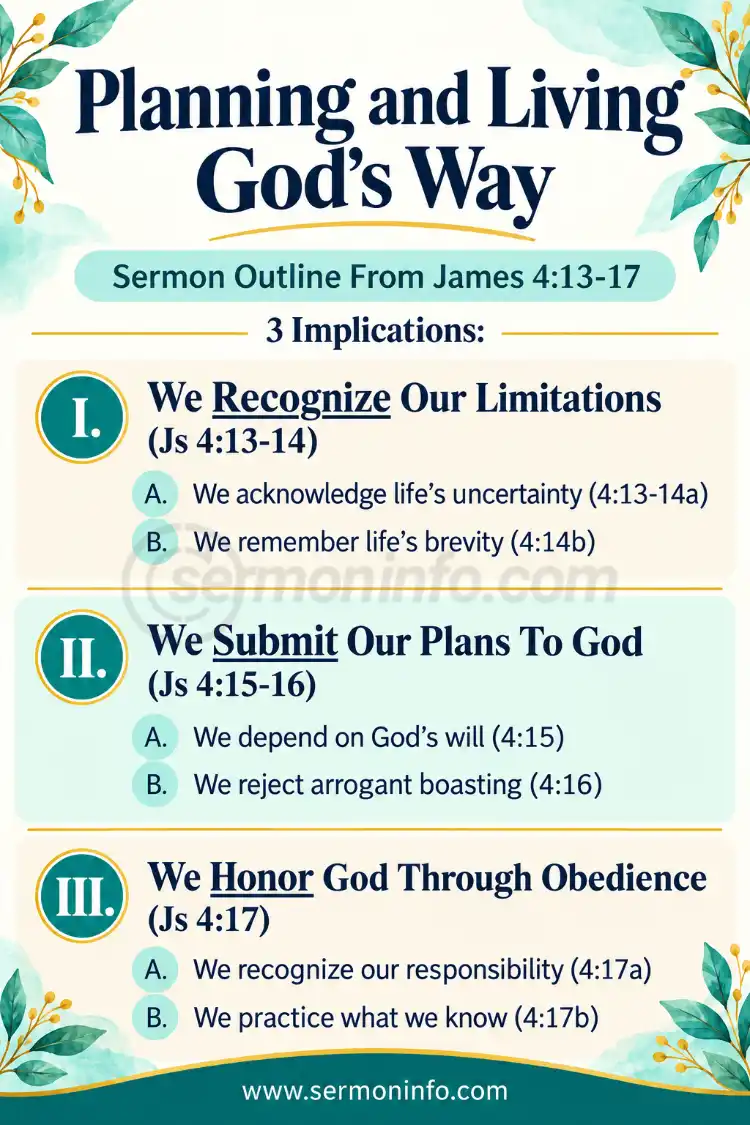
Sermon Outline From James 4:13-17
We all make plans for tomorrow, but none of us knows what the future holds. We plan our work, family activities, finances, and personal goals, expecting life to unfold as we imagine. Yet unexpected circumstances can change everything in a moment. Our limited knowledge reminds us that we need God’s wisdom, guidance, and help. Proverbs 16:9 reminds us that we plan our way, but the Lord directs our steps.
In James 4:13–17, God teaches us how to plan wisely and live according to His will. First, we must recognize our limitations because tomorrow remains uncertain. Second, we must submit our plans to God and trust His sovereign direction. Third, we must honor God through obedience by practicing what we know is right. These three principles will help us plan and live God’s way as we journey through life.
1. We Recognize Our Limitations (James 4:13–14)
“Come now, you who say, ‘Today or tomorrow we will go to such and such a city, spend a year there, buy and sell, and make a profit’; whereas you do not know what will happen tomorrow. For what is your life? It is even a vapor that appears for a little time and then vanishes away.” (James 4:13-14)
A. We Acknowledge Life’s Uncertainty (James 4:13–14a)
James addresses people who confidently planned their business activities, travel, and profits without considering God’s will. They expected tomorrow to unfold exactly as they planned. However, James 4:14 reminds us that we do not know what tomorrow will bring. We can make careful plans, but only God knows what lies ahead in our lives.
Think about how quickly our circumstances can change. A sudden illness, unexpected phone call, or financial setback can interrupt our plans. Proverbs 27:1 warns us against boasting about tomorrow. Therefore, we should plan wisely while trusting God with the outcome. Our future rests securely in His hands, even when life seems uncertain.
B. We Remember Life’s Brevity (James 4:14b)
James compares our lives to a vapor that appears briefly and then disappears. Picture the morning mist rising over a quiet valley before the sunlight causes it to vanish. Our earthly lives pass just as quickly. Psalm 90:12 encourages us to number our days so that we may gain a heart of wisdom.
Because life is brief, we must make every day count for God’s glory. We should treasure our families, serve others, and share the gospel while opportunities remain. Ephesians 5:16 reminds us to redeem the time because the days are evil. Therefore, let us live with eternal priorities, trusting God with every moment He gives us. (Source Material: William MacDonald, Believer’s Bible Commentary, pp. 2238-2239)
2. We Submit Plans to God (James 4:15–16)
“Instead you ought to say, ‘If the Lord wills, we shall live and do this or that.’ But now you boast in your arrogance. All such boasting is evil.” (James 4:15-16)
James reminds us that every plan we make depends upon God’s sovereign will. He writes, “If the Lord wills, we shall live and do this or that” (James 4:15). These words teach us that God controls both our lives and our opportunities. We should make plans with humble hearts, recognizing His authority over tomorrow.
Consider how we plan our careers, family activities, finances, and future goals. We often assume everything will happen as expected. However, Proverbs 16:9 reminds us that the Lord directs our steps. Therefore, we should seek God’s wisdom through Scripture and prayer. When circumstances change, we can trust His guidance because He knows what lies ahead.
B. We Reject Arrogant Boasting (James 4:16)
James confronts those who proudly boast about their future plans without acknowledging God’s authority. He declares that such boasting comes from arrogance and calls it evil (James 4:16). Their confidence rests upon personal abilities rather than God’s sovereign care. Pride makes us forget that every breath, opportunity, and achievement comes from God’s gracious hand.
Think about someone who confidently predicts success because of their experience, wealth, or careful planning. Yet one unexpected event can change everything. Proverbs 27:1 warns against boasting about tomorrow because we cannot control the future. Therefore, let us replace pride with humility and self confidence with dependence upon God. Our greatest security rests in His faithful care. (Source Material: John MacArthur, The MacArthur Bible Commentary, p. 1895)
3. We Honor God Through Obedience (James 4:17)
“Therefore, to him who knows to do good and does not do it, to him it is sin.” (James 4:17)
A. We Recognize Our Responsibility (James 4:17a)
James reminds us that knowing what is right brings a personal responsibility to obey God. He writes, “Therefore, to him who knows to do good and does not do it, to him it is sin” (James 4:17). God expects us to act upon the truth He reveals. Ignoring His instructions is just as serious as deliberately doing wrong. We must resist the temptations to sin.
In the context of planning, James challenges us to acknowledge God’s will rather than follow our own desires. We may know that God wants honesty, kindness, generosity, and faithful service. Yet knowing these things is not enough. Luke 12:48 reminds us that greater knowledge brings greater responsibility. Therefore, we must respond to God’s truth with willing obedience.
B. We Practice What We Know (James 4:17b)
James teaches us that failing to do the good we know is right constitutes sin. This includes neglecting opportunities to help others, speak truthfully, or follow God’s direction. James 1:22 urges believers to become doers of the Word rather than hearers only. Genuine faith should produce practical obedience that honors God in everyday life.
Think about someone who sees a neighbor struggling but chooses to ignore their need. They recognize an opportunity to show kindness but fail to act. Similarly, we may understand God’s Word without applying its truth. Galatians 6:10 encourages us to do good whenever we have the opportunity. Therefore, let us turn biblical knowledge into faithful action. (Source Material: John F. Walvoord and Roy B. Zuck, The Bible Knowledge Commentary: New Testament, pp. 831-832)
Conclusion
James 4:13–17 reminds us that planning and living God’s way requires humility, dependence, and obedience. First, we must recognize our limitations because life is uncertain and brief. Second, we must submit our plans to God because He alone controls the future. Third, we must honor God through obedience by doing what we know is right. These truths remind us that every day belongs to God.
Therefore, let us approach each new day with humble hearts and a willingness to follow God’s direction. We should seek His wisdom through Scripture, commit our plans to Him, and obey His Word. Even when life takes an unexpected turn, we can trust His sovereign care. When we place God’s will above our own, we honor Him through faithful living.
Closing Prayer
Heavenly Father, we thank You for reminding us that our lives and futures rest securely in Your hands. Forgive us when we make plans without seeking Your wisdom and guidance. Help us recognize our limitations and remember that life is brief and uncertain. Teach us to trust Your sovereign will, knowing that You always know what is best for us.
Lord, give us humble hearts that willingly submit to Your plans and purposes. Help us reject pride and place our confidence in Your faithfulness rather than our own abilities. Give us the courage to obey Your Word and practice what we know is right. May our decisions, actions, and daily lives bring glory to Your name. In Jesus’ name, we pray. Amen.
Frequently Asked Questions (FAQ)
Q: What is the main message of James 4:13–17?
A: James 4:13–17 teaches us to recognize life’s uncertainty, submit our plans to God’s sovereign will, and obey His Word. Since tomorrow remains unknown, we must reject pride and depend upon God’s guidance. Faithful living means trusting God with our future and doing what we know is right.
Q: What does the Bible say about making plans for the future?
A: The Bible encourages wise planning while reminding us that God controls the future. James 4:15 teaches us to acknowledge God’s will in our decisions. Proverbs 16:9 reminds us that the Lord directs our steps. Therefore, we should plan carefully, pray faithfully, and trust God’s sovereign guidance.
Q: What does “If the Lord wills” mean in James 4:15?
A: “If the Lord wills” means recognizing that our lives and plans depend upon God’s sovereign authority. James 4:15 teaches us to submit our decisions to His will rather than trust our abilities. This attitude reflects humility, dependence, and confidence in God’s faithful care.
Q: Why does James compare life to a vapor?
A: James 4:14 compares life to a vapor because our earthly existence is brief and uncertain. Like morning mist that quickly disappears, our lives pass rapidly. This illustration reminds us to value each day, seek God’s wisdom, and use our limited time for His glory.
Q: What does James 4:17 teach about sin and obedience?
A: James 4:17 teaches that failing to do what we know is right constitutes sin. God holds us accountable for obeying His revealed truth. Therefore, believers must practice God’s Word, pursue righteousness, and take opportunities to do good rather than neglect their responsibilities.
BONUS: What does James 4:13–17 teach us?
James 4:13–17 teaches us to plan humbly, depend on God, and obey His instruction. We cannot predict tomorrow, and our lives pass quickly like a vapor. James challenges proud confidence that ignores God’s authority over our lives and activities.
God welcomes responsible planning, but He calls us to submit our intentions to His will (James 4:15). We should thank Him for each day and use our opportunities faithfully. Knowing the right thing also brings responsibility: neglecting that good constitutes sin (James 4:17).
BONUS: What do believers mean when they say “God willing”?
When believers say “God willing,” they acknowledge that their lives and plans depend upon God’s sovereign will. James 4:15 connects both our continued life and our future activities with His permission. These words should express sincere trust and humble submission.
Saying “God willing” does not excuse careless planning or guarantee that our desires reflect God’s will. We examine our choices through Scripture, pray for wisdom, and remain willing to change direction. Proverbs 16:9 reminds us that we plan our way, but the Lord directs our steps.
BONUS: What are some discussion questions from James 4:13–17?
James 4:13–14 invites us to examine our attitude toward tomorrow. What plans currently occupy your thoughts? How do those plans acknowledge your dependence on God? How should life’s uncertainty and brevity shape your priorities today?
James 4:15–17 challenges us to connect humble trust with practical obedience. What would submitting your plans to God look like this week? Where might pride influence your expectations? What good do you know you should do, and what step will you take today?
BONUS: What are the key lessons we can learn from James 4:17?
James 4:17 teaches that knowing the right thing brings a personal responsibility to act. We sin when we neglect the good we know we should do. In context, James calls us to acknowledge God’s authority and humbly submit our plans to His will.
This principle also guides our daily choices. When Scripture directs us to forgive, speak honestly, or help others, we should respond with obedience. James 1:22 urges us to practice God’s Word. Ask yourself, “What good should I do today?” Then trust God for strength to act.
BONUS: Why should we not boast about tomorrow?
We should not boast about tomorrow because we cannot predict its events or guarantee our continued life. James 4:14 compares life to a vapor that quickly disappears. Proverbs 27:1 also warns against boasting about tomorrow because we do not know what the day will bring.
God calls us to make plans with humility and dependence upon Him. Arrogant boasting treats future success as something we control, and James condemns that attitude (James 4:16). We can work diligently, pray for wisdom, and entrust the outcome to God. His faithful care encourages us when circumstances change.
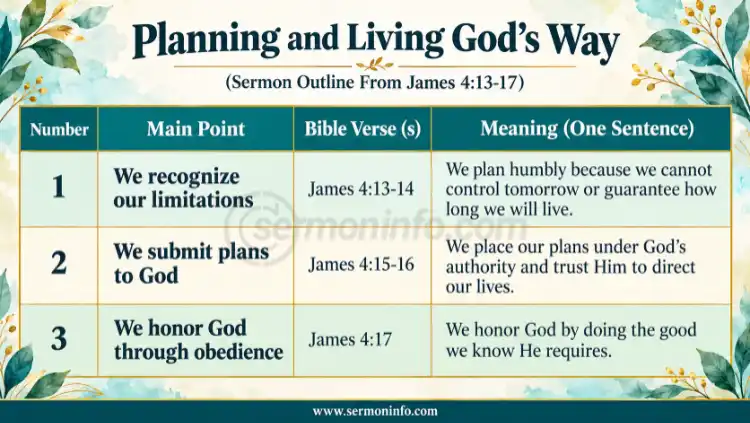
| Sermon Outline From James 4:13-17 – Sermons From James | |||
|---|---|---|---|
| Number | Main Point | Bible Verse | Meaning |
| 1 | We Recognize Our Limitations | James 4:13–14 | Life is brief and uncertain, so we must acknowledge our limitations and trust God with our future. |
| 2 | We Submit Plans to God | James 4:15–16 | God controls our future, so we must humbly submit our plans to His sovereign will and guidance. |
| 3 | We Honor God Through Obedience | James 4:17 | We honor God by obeying His Word and faithfully doing what we know is right. |
Source Material
William MacDonald, Believer’s Bible Commentary, rev. ed. (Nashville: Thomas Nelson, 1995), 2238-2239
John MacArthur, The MacArthur Bible Commentary (Nashville: Thomas Nelson, 2005), 1895
John F. Walvoord and Roy B. Zuck, eds., The Bible Knowledge Commentary: New Testament (Colorado Springs, CO: David C. Cook, 1985), 831-832