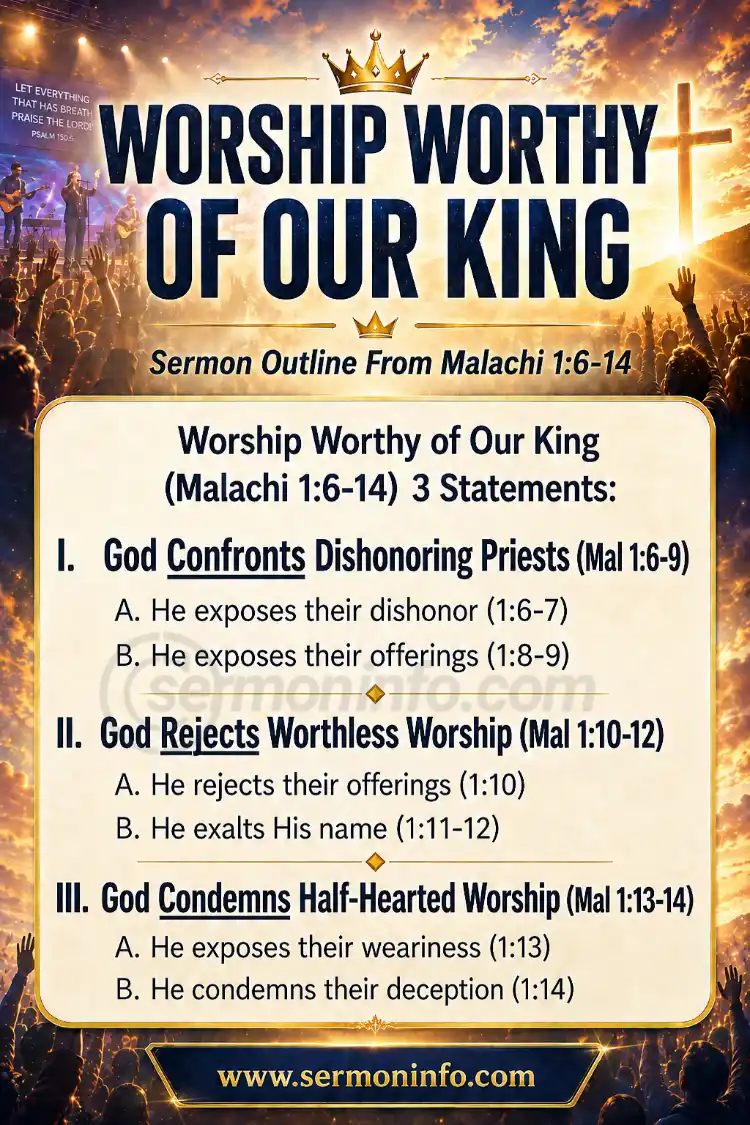
Sermon Outline From Malachi 1:6–14 teaches that God rejects worship that dishonors His name. The priests offered defective sacrifices and treated worship as a burden. God reminds them, “I am a great King” (Malachi 1:14). Therefore, biblical worship requires reverence, sincerity, and wholehearted devotion to God.

Key Takeaways – Sermon From Malachi 1:6-14
- Honor God With Your Best — God deserves sincere, wholehearted worship because He is our great King (Malachi 1:6, 14).
- Reject Empty Worship — God takes no pleasure in religious activity that lacks reverence, obedience, and genuine devotion (Malachi 1:10).
- Worship With a Willing Heart — Do not treat worship as a burden. Serve God with gratitude, joy, and faithful surrender (Malachi 1:13–14).
Sermon Outline From Malachi 1:6-14
Worship begins when we see God for who He truly is. He is our Father, our Master, and our great King. Malachi 1:6 asks, “Where is My honor?” What a privilege we have to worship the God of heaven. He deserves our best because His greatness, grace, and faithfulness never change.
Yet worship can become routine when our hearts lose sight of God’s worth. Malachi 1:6–14 exposes priests who dishonored God, offered worthless sacrifices, and served Him half heartedly. This message will challenge us to examine our worship and renew our devotion. Our great King deserves worship that reflects His greatness.
1. God Confronts Dishonouring Priests (Malachi 1:6–9)
God confronts the priests because their careless worship fails to give Him the honor He deserves. (Summary Statement)
A. He Exposes Their Dishonour (Malachi 1:6–7)
God asks, “If then I am the Father, where is My honor?” (Malachi 1:6). The priests served at His altar, yet they dishonored His name. Their worship looked religious, but their hearts treated holy things casually. God saw beyond their actions and exposed the disrespect hidden beneath their service.
We can also honor God outwardly while our hearts drift from Him. Familiar worship can become routine if we forget who God is. He is our Father and our Master. Therefore, we should approach Him with reverence, gratitude, and sincere devotion. True worship begins when our hearts recognize His greatness.
B. He Exposes Their Offerings (Malachi 1:8–9)
The priests offered blind, lame, and sick animals to God. Yet God asked, “Offer it then to your governor!” (Malachi 1:8). They would never present such gifts to an earthly ruler. Their sacrifices revealed that they valued human approval more than God’s honor.
God still deserves our best, not whatever remains after other priorities take first place. Romans 12:1 calls believers to present themselves as “a living sacrifice.” We honor our King through willing obedience, faithful service, and wholehearted devotion. Our lives should show that God holds first place in our hearts.
2. God Rejects Worthless Worship (Malachi 1:10–12)
God rejects worship that follows religious forms while failing to honor His holy and glorious name. (Summary Statement)
A. He Rejects Their Offerings (Malachi 1:10)
God would rather close the temple doors than accept worship that dishonors Him. He declares, “I have no pleasure in you” (Malachi 1:10). The priests kept the altar fires burning, but their sacrifices lacked sincere devotion. Religious activity cannot replace a heart that truly honors God.
This warning reaches our hearts today. God does not seek empty routines or service performed only from duty. He desires worship that flows from love, gratitude, and obedience. Christ gave Himself completely for us (Ephesians 5:2). His sacrifice should move us to give God willing hearts and devoted lives.
B. He Exalts His Name (Malachi 1:11–12)
The priests profaned God’s name, but their failure could never diminish His greatness. God declares, “My name shall be great among the Gentiles” (Malachi 1:11). His glory reaches far beyond Israel. The great King will receive the honor His name deserves among the nations.
God’s purpose still calls us beyond ourselves. We should live so others see the greatness of the God we worship. Jesus commands us to make disciples of “all the nations” (Matthew 28:19). Even when people dishonor God, His purposes will stand. Therefore, we can serve Him confidently and proclaim His great name faithfully.
3. God Condemns Half-hearted Worship (Malachi 1:13–14)
God condemns worship that treats serving Him as a burden while withholding the honor He deserves. (Summary Statement)
A. He Exposes Their Weariness (Malachi 1:13)
The priests said, “Oh, what a weariness!” and treated worship as a burden (Malachi 1:13). Their words revealed tired and careless hearts. They still brought sacrifices, but they no longer valued the privilege of serving God. God exposed the attitude behind their actions.
We can also serve God outwardly while our hearts grow cold. Worship becomes empty when duty replaces delight. Psalm 100:2 says, “Serve the Lord with gladness.” God deserves more than reluctant service. He calls us to worship with gratitude, joy, and a sincere desire to honor Him.
B. He Condemns Their Deception (Malachi 1:14)
God condemns the man who promises a worthy sacrifice but gives Him something inferior. Malachi calls such a person “the deceiver” (Malachi 1:14). The problem reaches deeper than the offering. The worshipper tries to keep something back while pretending to give God his best.
God deserves wholehearted devotion because He declares, “I am a great King” (Malachi 1:14). We should never offer Him leftovers from our time, energy, or obedience. Romans 12:1 calls us to present our bodies as “a living sacrifice.” Our great King deserves honest worship and surrendered lives.
Conclusion
Malachi 1:6–14 shows that God confronts dishonouring priests, rejects worthless worship, and condemns half hearted devotion. He exposes careless hearts and empty offerings. Yet the passage ends with God’s greatness, not human failure. He declares, “For I am a great King” (Malachi 1:14). Our worship must reflect His worth.
God’s Word calls us to examine how we honor Him today. We should not give Him leftovers from our time, obedience, or devotion. Instead, we should respond with reverence, gratitude, and wholehearted surrender. Romans 12:1 urges us to present ourselves as living sacrifices. Our great King deserves worship that matches His greatness.
Closing Prayer
Heavenly Father, You are our great King, and You deserve our highest honor. Forgive us when our worship becomes careless or half hearted. Give us grateful hearts that delight in Your presence. Help us offer You our best through sincere worship, faithful obedience, and wholehearted devotion.
Lord, let Your Word search our hearts and shape our lives. Keep our eyes fixed on Your greatness, grace, and faithfulness. May everything we say and do bring honor to Your holy name. Help us worship You with reverence and joy each day. We pray in Jesus’ name, Amen.
Frequently Asked Questions (FAQ)
Q: What is the main message of Malachi 1:6–14?
A: Malachi 1:6–14 teaches that God deserves sincere and wholehearted worship because He is “a great King” (Malachi 1:14). The priests dishonored God through defective sacrifices and careless attitudes. God calls His people to honor His name with reverence, obedience, and genuine devotion.
Q: Why did God reject the priests’ offerings in Malachi?
A: God rejected their offerings because the priests brought blind, lame, sick, and unacceptable sacrifices. Their actions revealed a deeper spiritual problem. They gave God what they would never offer an earthly ruler. Their worship dishonored His name instead of recognizing His holiness and greatness.
Q: What does “what a weariness” mean in Malachi 1:13?
A: The phrase reveals that the priests viewed serving God as tiresome and burdensome. Their complaint exposed hearts that had lost reverence and joy in worship. They continued religious activity, but they no longer treasured the privilege of serving God faithfully.
Q: What does Malachi 1:11 mean about God’s name among the nations?
A: Malachi 1:11 declares that God’s name will be great beyond Israel and honored among the nations. Israel’s unfaithfulness could not defeat God’s purposes. The verse emphasizes God’s universal greatness and anticipates the widespread recognition of His name among Gentiles.
Q: How can Christians apply Malachi 1:6–14 today?
A: Christians should examine whether their worship reflects God’s greatness. We should not give God leftover time, reluctant service, or empty religious activity. Instead, believers should worship with gratitude, reverence, obedience, and wholehearted devotion because our great King deserves our very best.

BONUS: What does “Where is My honor?” mean?
“Where is My honor?” in Malachi 1:6 exposes the priests’ failure to treat God with the reverence He deserves. God reminds them that a son honors his father and a servant respects his master. Yet they despised His name through careless worship. Their actions contradicted the honor they claimed to give Him.
The question also challenges believers today. God deserves more than outward religion or leftover devotion. We honor Him when we obey His Word, worship sincerely, and give Him first place. Jesus said, “If you love Me, keep My commandments” (John 14:15). True honor grows from a heart that values God above everything else.
BONUS: What is “polluted food” in Malachi 1:7?
“Polluted food” in Malachi 1:7 refers to unacceptable sacrifices placed on God’s altar. The priests brought blemished animals and treated the Lord’s table with contempt. Malachi 1:8 names blind, lame, and sick sacrifices. God had forbidden such offerings because they failed to honor His holiness and worth.
The polluted offerings revealed polluted attitudes. The priests gave God what they would never present to an earthly ruler. Believers must guard against similar carelessness today. Romans 12:1 calls us to present ourselves as “a living sacrifice.” God deserves sincere worship, willing obedience, and lives that reflect His greatness.
BONUS: Why does Malachi mention the governor?
Malachi mentions the governor to expose the priests’ double standard. God asks, “Would he be pleased with you?” (Malachi 1:8). They would never offer a governor blind, lame, or sick animals. Yet they brought such sacrifices to God. Their actions showed greater respect for human authority than for the Lord.
The comparison challenges us to examine our priorities. We often prepare carefully for important people while giving God whatever remains. Our great King deserves our first and best devotion. Colossians 3:23 says, “Whatever you do, do it heartily, as to the Lord.” Genuine worship gives God wholehearted honor.
BONUS: Why did God want the temple doors shut?
God wanted the temple doors shut because empty worship dishonored His name. Malachi 1:10 says, “Who is there even among you who would shut the doors?” God preferred no sacrifice over careless sacrifice. The priests kept religious activity going, but their offerings showed no reverence, obedience, or love for Him.
This warning reaches us today. God does not want routine worship without sincere devotion. He desires hearts that honor Him with truth and obedience. Jesus said, “Those who worship Him must worship in spirit and truth” (John 4:24). True worship values God’s greatness more than outward activity.
BONUS: What does “I am a great King” mean?
“I am a great King” in Malachi 1:14 declares God’s supreme authority, majesty, and worth. He rules above every earthly leader and deserves wholehearted honor. The priests treated worship casually, but God reminded them, “My name is to be feared among the nations.” His greatness demands reverence.
This truth still shapes our worship today. We do not approach God as common or ordinary. We honor Him as our sovereign King through obedience, gratitude, and sincere devotion. Revelation 19:16 calls Christ “KING OF KINGS AND LORD OF LORDS.” Our great King deserves our best worship and faithful service.
BONUS: What does Malachi teach about reverence for God?
Malachi teaches that reverence for God begins by recognizing His greatness and giving Him the honor He deserves. The priests feared earthly rulers more than God, so they brought Him defective sacrifices. Malachi 1:6 asks, “Where is My honor?” Reverence treats God as holy, worthy, and supreme.
Reverence also shapes how we worship and obey God each day. We should not approach Him carelessly or give Him leftover devotion. Malachi 1:14 declares, “I am a great King.” Therefore, believers should serve Him with gratitude, sincerity, and wholehearted obedience that reflects His worth.
| Sermon Outline From Malachi 1:6-14 – Sermon Outlines From Malachi | |||
|---|---|---|---|
| Number | Main Point | Bible Verse | Meaning |
| 1 | God Confronts Dishonouring Priests | Malachi 1:6–9 | God exposes the priests because their careless worship fails to give Him the honor He deserves. |
| 2 | God Rejects Worthless Worship | Malachi 1:10–12 | God refuses empty worship and declares that His great name deserves honor among all nations. |
| 3 | God Condemns Half Hearted Worship | Malachi 1:13–14 | God condemns reluctant and deceptive worship because He is “a great King” who deserves our best. |