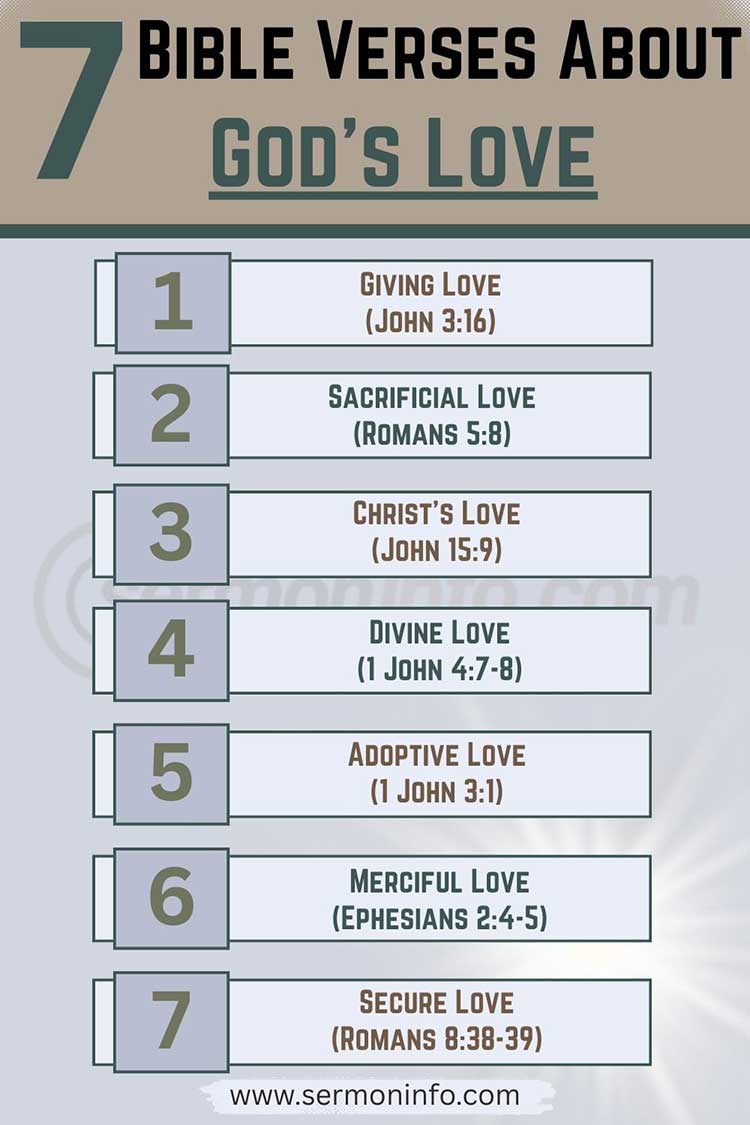
7 Bible Verses About God’s Love highlights how God actively loves through Christ, offering salvation, belonging, and unshakable security. His love lifts weary hearts, strengthens faith, and assures believers that His promises never fail.

Key Takeaways – 7 Bible Verses About God’s Love
- God’s love brings salvation. God showed His love by giving His Son so believers receive eternal life through faith (John 3:16).
- God’s love proves itself at the cross. Christ died for sinners while they were still in sin, demonstrating grace-driven love (Romans 5:8).
- Christ’s love invites daily fellowship. Jesus calls believers to abide in His love through obedience and dependence (John 15:9).
- God’s love defines true faith. Genuine love flows from knowing God and shows evidence of the new birth (1 John 4:7–8).
- God’s love adopts believers. The Father calls believers His children and gives them a secure identity (1 John 3:1).
- God’s love shows mercy and new life. God rescues spiritually dead sinners and makes them alive by grace (Ephesians 2:4–5).
- God’s love secures believers forever. Nothing can separate believers from God’s love in Christ Jesus (Romans 8:38–39).
7 Bible Verses About God’s Love
Many believers know God loves them, yet still wrestle with doubt during hardship, failure, or unanswered prayer. When life presses in, feelings often speak louder than truth. Scripture, however, anchors love in what God has done, not in how we feel. The Bible repeatedly points our hearts back to God’s faithful love (Psalm 103:8).
Understanding God’s love matters because it shapes how we trust Him, obey Him, and endure trials. When believers misunderstand God’s love, fear and insecurity grow. When believers know God’s love as Scripture reveals it, faith strengthens and hope steadies the heart. God’s Word defines love clearly and consistently (Romans 5:8).
In the verses we will study, God explains His love through action, sacrifice, relationship, mercy, adoption, and security. These truths prepare us to walk confidently with Him. As we look at each passage, listen for what God has done and what that means for your daily faith and assurance in Christ.
1. Giving Love (John 3:16)
God’s giving love shows the heart of the gospel by revealing how the Father acted to save sinners through His Son.
A. We trust God’s gift (John 3:16a)
God’s love begins with His initiative, not ours. John 3:16 tells us that God so loved the world that He gave His only begotten Son. The focus rests on God’s action, not human effort. Salvation starts with trusting what God has already done through Jesus Christ.
Trusting God’s gift means placing full confidence in Christ alone for salvation. We do not add works, feelings, or religious performance to God’s gift. Faith rests in the sufficiency of Christ’s sacrifice, knowing the Father willingly gave His Son to accomplish redemption (Romans 8:32).
B. We receive God’s promise (John 3:16b)
God’s giving love includes a clear and certain promise. Jesus declares that whoever believes in Him will not perish but have everlasting life. This promise offers assurance, not uncertainty, and it rests on God’s faithfulness rather than human consistency.
Receiving God’s promise means believing His Word and resting in eternal life as a present possession and future hope. Eternal life begins at salvation and continues forever with God. Believers walk forward with confidence, knowing God keeps His promises and finishes the work He begins (Philippians 1:6).
2. Sacrificial Love (Romans 5:8)
God’s sacrificial love stands at the center of the gospel by showing how He acted to save sinners through Christ’s death.
A. We observe God’s love (Romans 5:8a)
Romans 5:8 declares that God demonstrates His love toward us. Paul points to a visible, historical action rather than a hidden feeling. The cross stands as public proof that God loves sinners. We do not guess about God’s love; we observe it clearly in what Christ did.
This verse places God as the active giver and sinners as the undeserving recipients. God loved us while we lived in rebellion, not after we improved. That truth humbles pride and strengthens faith. When doubts arise, believers return to the cross where God settled the question of love forever.
B. We embrace God’s love (Romans 5:8b)
Paul adds that Christ died for us while we were still sinners. God’s love does not wait for repentance or reform before acting. Christ’s death shows love that reaches toward the unworthy and the helpless. This truth protects the gospel from becoming a message of self-improvement.
Embracing God’s love means resting in Christ’s finished work rather than personal performance. Believers accept that salvation flows from grace alone through faith alone (Ephesians 2:8–9). This assurance frees us to live gratefully and obediently, knowing God’s love secured our standing before Him.
3. Christ’s Love (John 15:9)
Christ’s love reveals the depth and stability of the relationship believers enjoy with Him as they walk in fellowship and obedience.
A. We receive Christ’s love (John 15:9a)
Jesus begins by stating a settled truth: “As the Father loved Me, I also have loved you.” His love for believers flows from the same perfect, faithful love shared within the Trinity. This love does not depend on circumstances, feelings, or performance. Believers receive Christ’s love as a gift rooted in divine relationship, not human effort.
Receiving Christ’s love means accepting it as unchanging and sufficient. Jesus speaks these words to disciples who would soon fail Him, yet His love remained. This truth encourages believers who struggle with weakness or inconsistency. Christ’s love rests on His character, not ours (Lamentations 3:22–23).
B. We abide in Christ’s love (John 15:9b)
After declaring His love, Jesus gives a command: “Abide in My love.” Abiding speaks of continued fellowship, not maintaining salvation. Christ calls believers to remain close to Him through obedience, prayer, and dependence. This abiding relationship allows His love to shape daily life and spiritual growth.
Abiding in Christ’s love brings joy, stability, and fruitfulness (John 15:10–11). Believers do not strive to earn His love; they learn to live within it. As we walk in obedience to His Word, we experience deeper fellowship and confidence, knowing we remain securely loved by Christ.
This material provides some ideas and thoughts for a message about God’s Love (7 Bible Verses About God’s Love).
4. Divine Love (1 John 4:7–8)
Divine love reveals God’s nature and shows how genuine love in believers flows from knowing Him personally.
A. We know God’s love (1 John 4:7)
John calls believers to love one another because love comes from God. He connects love directly to the new birth, not to personality or preference. Those who love give evidence that they have been born of God and truly know Him. Love grows from relationship, not religious effort.
Knowing God’s love means more than understanding a concept. It means living in a real relationship with Him through faith in Christ. As believers grow in the Word, they better understand God’s heart and character. This knowledge shapes attitudes, words, and responses toward others (John 17:3).
B. We reflect God’s love (1 John 4:8)
John states clearly that “God is love,” pointing to love as an essential part of His nature. When believers live without love, they misrepresent God’s character. Love does not define God fully, but it always reflects who He is. True love flows from knowing Him rightly.
Reflecting God’s love means allowing His character to shape our relationships. This love shows patience, truth, and commitment, not mere emotion. Believers reflect God’s love as they walk in obedience and depend on the Spirit’s work within them. Loving others becomes a visible testimony of God’s life at work in us (Galatians 5:22).
5. Adoptive Love (1 John 3:1)
God’s adoptive love gives believers a new identity and secure standing as His children through grace in Christ.
A. We rejoice in God’s love (1 John 3:1a)
John invites believers to pause and consider the greatness of the Father’s love. He urges us to behold it, not rush past it. God did not merely forgive us; He welcomed us into His family. This truth produces joy rooted in grace rather than achievement.
Rejoicing in God’s love means responding with gratitude and wonder. We remember that adoption flows from God’s initiative, not human worth. The Father chose to love us and call us His children. That truth reshapes how believers view themselves and approach God in prayer (Romans 8:15).
B. We rest in God’s love (1 John 3:1b)
John reminds believers that the world does not recognize them because it did not recognize Christ. This lack of recognition often brings misunderstanding or rejection. Yet God’s love provides a secure place to rest when the world fails to affirm us.
Resting in God’s love means finding security in our identity as His children. We do not depend on the world’s approval for value or direction. Believers walk forward with confidence, knowing the Father knows them, claims them, and will one day reveal fully who they are in Christ (1 John 3:2).
6. Merciful Love (Ephesians 2:4–5)
God’s merciful love reveals how He rescues spiritually dead sinners and gives them new life through grace in Christ.
A. We experience God’s love (Ephesians 2:4)
Paul begins by directing our attention to God’s character. He describes God as rich in mercy and motivated by great love. This mercy responds to our desperate condition described earlier in Ephesians 2:1–3. God did not ignore our sin or minimize it; He acted with compassion and purpose.
Experiencing God’s love means recognizing that mercy stands behind our salvation. We did not move toward God first; He moved toward us. His love met us in spiritual death and rebellion. That realization humbles pride and produces gratitude as believers remember where God found them and how He rescued them.
B. We walk in God’s love (Ephesians 2:5)
Paul explains that God made us alive together with Christ, even when we were dead in sins. This statement describes regeneration, not moral improvement. New life flows from God’s grace alone. Salvation begins with God’s action, not human decision or effort.
Walking in God’s love means living daily from this new life in Christ. Believers no longer walk as the spiritually dead but as those made alive by grace. This truth encourages obedience rooted in gratitude, not fear. As we depend on Christ, His merciful love shapes our attitudes, choices, and direction (Ephesians 2:10).
7. Secure Love (Romans 8:38–39)
God’s secure love assures believers that nothing in all creation can separate them from His love in Christ Jesus.
A. We trust God’s promise (Romans 8:38)
Paul lists powerful realities that often cause fear, including death, life, angels, and present or future events. He speaks with firm conviction, not uncertainty. His confidence rests in God’s unchanging character and completed work in Christ. God’s promise addresses real fears believers face.
Trusting God’s promise means choosing faith over anxiety. When circumstances feel overwhelming, believers return to what God has spoken. Paul reminds us that no unseen power or changing situation stands outside God’s control. This truth strengthens faith and steadies hearts during trials and uncertainty.
B. We stand on God’s promise (Romans 8:39)
Paul concludes that no created thing can separate believers from the love of God in Christ Jesus our Lord. He draws a clear boundary around God’s love and places every threat outside it. Salvation and security rest firmly in Christ, not human endurance.
Standing on God’s promise means living with assurance rather than fear. Believers do not question whether God will abandon them when they struggle. God’s love holds firm because Christ holds His people. This confidence encourages perseverance, obedience, and peace as believers walk faithfully with the Lord.
Conclusion
These seven passages show that God’s love is active, purposeful, and secure. Scripture presents love through God’s giving, Christ’s sacrifice, our adoption, and our eternal security in Christ. God defines love by what He has done, not by shifting feelings. His love stands firm in truth and grace (Romans 8:39).
Knowing God’s love strengthens faith and steadies the heart during trials. When believers trust God’s promises, fear loses its grip. God’s love invites obedience rooted in gratitude, not pressure. As we walk with Christ, His love shapes how we pray, endure suffering, and serve others faithfully (John 15:9–10).
Respond by trusting God’s Word and resting in His love today. Turn to Scripture when doubts arise and let truth guide your steps. Walk daily in obedience and gratitude, knowing God’s love will never fail. Live confidently, love others freely, and stand firm in Christ’s finished work (1 John 4:19).
Closing Prayer
Heavenly Father, we thank You for revealing Your great love through Your Word and through Your Son, Jesus Christ. Thank You for loving us when we were sinners, for giving us new life by grace, and for calling us Your children when we believe. Help us trust Your promises when doubts arise and rest in the assurance that nothing can separate us from Your love.
Lord, guide us to walk daily in obedience, gratitude, and confidence because of the love You have shown us. Shape our hearts to reflect Your love toward others in patience, truth, and faithfulness. Strengthen our faith, steady our hearts, and keep our eyes fixed on Christ as we live for Your glory. In Jesus’ name, Amen.
Frequently Asked Questions (FAQ)
Q: What is the best Bible verse about God’s love?
A: John 3:16 stands as the clearest summary of God’s love because it shows God giving His Son so sinners may receive eternal life. This verse anchors love in God’s action, not human worth, and presents salvation as a gift received by faith alone.
Q: How does the Bible define God’s love?
A: The Bible defines God’s love through His character and actions. Scripture shows that God gives, sacrifices, forgives, adopts, and secures believers in Christ. God’s love flows from who He is and remains faithful, purposeful, and grounded in truth (1 John 4:7–8).
Q: Does God still love sinners according to the Bible?
A: Yes, the Bible teaches that God loves sinners. Romans 5:8 explains that Christ died for us while we were still sinners. God’s love does not wait for moral improvement but reaches people in their lost condition with saving grace.
Q: Can anything separate believers from God’s love?
A: No, Scripture clearly states that nothing can separate believers from God’s love in Christ Jesus. Romans 8:38–39 lists every possible threat and declares God’s love secure. This truth gives believers assurance, confidence, and peace in their relationship with God.
Q: How should Christians respond to God’s love?
A: Christians respond to God’s love by trusting His promises, abiding in Christ, and loving others. God’s love motivates obedience rooted in gratitude rather than fear. As believers walk in faith, God’s love shapes daily living and spiritual growth (John 15:9–10).

The MacArthur Bible Commentary
BONUS: Does God’s love guarantee eternal security for believers?
God’s love guarantees eternal security for believers because salvation rests on God’s promise, not human performance. Scripture teaches that nothing can separate believers from God’s love in Christ Jesus (Romans 8:38–39). Jesus also affirmed that those given to Him will never be lost (John 10:28–29). God keeps those He saves.
Eternal security flows from God’s faithful character and Christ’s finished work. Believers stand justified, adopted, and sealed by the Holy Spirit (Ephesians 1:13–14). God’s love does not waver with failure or weakness. Instead, His love preserves believers and carries them safely to final glorification (Philippians 1:6).
BONUS: What does the Bible say about God’s love for humanity?
The Bible teaches that God loves humanity by acting to rescue sinners through Jesus Christ. God showed His love by giving His only begotten Son so the world might be saved through Him (John 3:16). Scripture presents God’s love as intentional, gracious, and rooted in His character, not human worth or achievement.
God’s love reaches people in their sinful condition and invites them to salvation by grace. While humanity stood separated from God, Christ died for sinners to restore relationship (Romans 5:8). God’s love also offers forgiveness, adoption, and new life to all who believe, revealing His desire to save rather than condemn (1 John 4:9–10).
BONUS: How does God’s love relate to God’s righteousness?
God’s love and God’s righteousness work together in perfect harmony, not in opposition. God loves sinners, yet His righteous nature requires justice for sin. At the cross, God demonstrated both love and righteousness by judging sin in Christ while offering salvation to sinners (Romans 3:25–26; Romans 5:8).
God’s righteousness ensures that His love never ignores truth or holiness. Through faith in Christ, God justifies believers righteously, not by overlooking sin, but by fully satisfying justice (2 Corinthians 5:21). God’s love provides salvation, and His righteousness guarantees that salvation rests on a just and unchanging foundation.
| Number | Main Point | Bible Verse | Meaning |
|---|---|---|---|
| 1 | Giving Love | John 3:16 | God shows His love by giving His only Son so believers may receive eternal life through faith. |
| 2 | Sacrificial Love | Romans 5:8 | God proves His love by sending Christ to die for sinners while they were still in rebellion. |
| 3 | Christ’s Love | John 15:9 | Jesus loves believers with the same steadfast love the Father has for Him and invites them to abide in it. |
| 4 | Divine Love | Romans 12:1–2 | God’s love flows from His nature and becomes evident in those who truly know Him. |
| 5 | Adoptive Love | 1 John 3:1 | God’s love adopts believers as His children and gives them a new identity and belonging. |
| 6 | Merciful Love | Ephesians 2:4–5 | God’s rich mercy and great love bring spiritually dead sinners to life through grace in Christ. |
| 7 | Secure Love | Romans 8:38–39 | God’s love in Christ eternally secures believers, ensuring nothing can separate them from Him. |
The ABCD of Salvation In Christ
A — Admit You Are a Sinner
God’s Word tells us that all have sinned and fall short of His glory (Romans 3:23). Sin separates us from God and leaves us unable to save ourselves. Salvation begins when we admit our need and turn from self-reliance to God’s mercy.
B — Believe in Jesus Christ
God showed His love by sending His Son to die for our sins and rise again (John 3:16; Romans 5:8). Believe that Jesus Christ is the Son of God who paid the full penalty for sin and offers forgiveness and eternal life to all who trust Him.
C — Confess Christ as Lord
The Bible calls us to confess Jesus openly and personally (Romans 10:9–10). Confession means agreeing with God about who Jesus is and submitting to Him as Lord. Salvation rests on faith in Christ, not works, but true faith gladly acknowledges Him.
D — Dedicate Your Life to Christ
Salvation involves a personal decision to trust Christ and follow Him by faith (John 1:12). This decision marks the beginning of a new life, not the end of the journey. God saves you by grace and then leads you to grow in obedience and fellowship with Him.
If you are ready, you can pray simply and sincerely, trusting God’s promise:
“Lord, I admit I am a sinner. I believe Jesus died and rose again for me. I confess Him as my Lord and Savior; I receive Your gift of eternal life. In Jesus’ Name! Amen.”