Great sermons don’t happen by accident—learn the “6 Parts to Homiletic Sermon Structure” and start preaching with confidence, conviction, and a clear gospel impact!

6 Parts To Homiletic Sermon Structure
Preaching is more than speaking—it’s delivering God’s truth with clarity, passion, and purpose. I remember my first sermon. My hands shook, my voice cracked, and I barely made sense. But I learned that preaching isn’t about perfection; it’s about faithfully communicating God’s Word. That’s where homiletic sermon structure helps.
A well-structured sermon keeps listeners engaged and the message clear. Jesus used order in His teachings, and we should, too. Let’s break down the six essential parts that make a sermon effective, impactful, and unforgettable.
1. The Topic
A. Explanation
The topic is the foundation of your sermon, setting the tone and direction. Proverbs 29:18 says, “Where there is no vision, the people perish.” A clear, Spirit-led topic gives focus and ensures your message aligns with God’s Word. Without direction, sermons become scattered, leaving listeners lost. As the old saying goes, “A mist in the pulpit is a fog in the pew.”
Your topic should address a real need, answer a pressing question, or bring clarity to a biblical truth. Choosing a strong topic makes the difference between a message that resonates and one that is easily forgotten.
B. Examples
If you’re preaching on faith, a topic like “Trusting God in Uncertain Times” provides clarity. Instead of “The Gospel,” narrow it to “The Power of the Cross.” Specificity strengthens impact, giving the congregation a solid takeaway.
C. Wise Counsel
If you can’t summarize your topic in one sentence, it’s too broad. The best topics answer a real question people are asking.
2. The Introduction
A. Explanation
Your introduction must capture attention and set the stage. Jesus often began with questions or stories (Luke 10:25-37). An effective introduction makes people lean in, ready to receive truth. It should be short, compelling, and connected to the main topic, preparing hearts for the message.
A well-crafted introduction builds curiosity, stirs emotion, and sets the tone for what’s to come. It should transition smoothly into the first main point, ensuring a natural flow of thought.
B. Examples
Start with a personal story: “I remember the time my faith was tested…” Or pose a question: “Have you ever wondered why God allows suffering?” The goal is to make listeners engage emotionally or intellectually right away.
C. Wise Counsel
If your introduction doesn’t hook them in the first 30 seconds, you’ve lost them. Speak to the heart before you reach the head.
3. The Main Points
A. Explanation
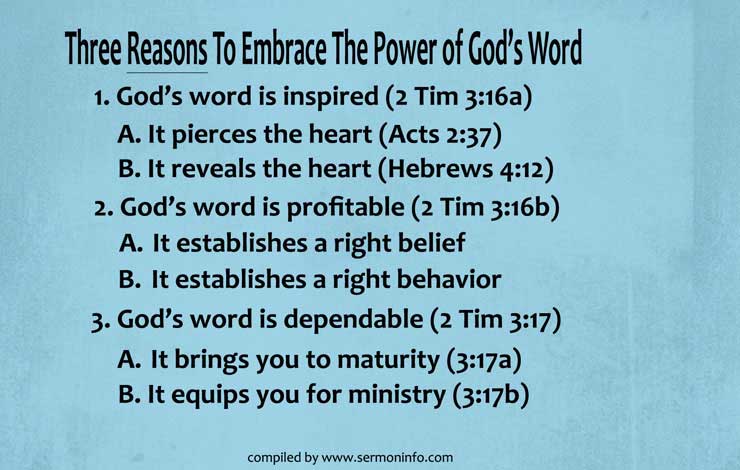
Main points are the backbone of your sermon, giving structure and clarity. Jesus used clear, logical teaching (Matthew 5-7). Each main point should build on the topic, supporting the message with Scripture, explanation, and application. Strong main points make your sermon memorable and impactful.
They should be arranged logically, ensuring each point flows naturally into the next. Avoid overloading your sermon with too many main points—three to five well-developed points are enough to keep people engaged without overwhelming them.
B. Examples
For “Trusting God in Uncertain Times,” main points might be: (1) God’s Promises are Secure (Romans 8:28), (2) Faith Requires Action (James 2:17), (3) God is Always Present (Hebrews 13:5). Each point should stand alone while supporting the whole.
C. Wise Counsel
If you have more than three to five main points, you have too many. People remember simplicity—don’t overload them with information.
4. The Sub-points
A. Explanation
Sub-points expand and reinforce main points. They provide depth and biblical support. Jesus often explained His teachings in layers (John 15:1-8). Sub-points should include Scripture, practical application, and relevant insight. They break complex ideas into digestible truths, making it easier for people to grasp and apply.
Each sub-point should serve a distinct function—clarifying, illustrating, or reinforcing the main idea.
B. Examples
Under “Faith Requires Action,” sub-points might be: (a) Faith Moves Beyond Feelings (2 Corinthians 5:7), (b) Faith is Proven in Obedience (Genesis 22:12), (c) Faith Trusts God’s Timing (Habakkuk 2:3). Each sub-point supports the main idea, helping listeners understand faith’s role in action.
C. Wise Counsel
Every sub-point must strengthen the main point, not distract from it. If a sub-point doesn’t add value, cut it.
5. The Illustrations
A. Explanation
Illustrations bring truth to life, making abstract concepts tangible. Jesus mastered this with parables (Matthew 13:34). Good illustrations—whether personal stories, analogies, or cultural references—help people visualize spiritual truths. They should be relatable, relevant, and reinforce the main message rather than distract from it.
A strong illustration makes biblical truth concrete, helping listeners connect emotionally and intellectually. Choose illustrations wisely, ensuring they clarify rather than confuse.
B. Examples
If preaching on God’s provision, share about a time God provided unexpectedly. If teaching on grace, use the story of the prodigal son (Luke 15). A great illustration makes the truth stick long after the sermon ends.
C. Wise Counsel
A weak illustration weakens the message. Choose stories that connect deeply, not just entertain.
6. The Conclusion
A. Explanation
A strong conclusion brings everything together and calls for a response. Jesus often ended with a challenge (Matthew 7:24-27). The conclusion should reinforce the main points, inspire change, and point back to Jesus. A sermon without a solid close leaves people uncertain about how to respond.
The best conclusions summarize key takeaways, issue a challenge, and encourage action, ensuring the message lingers beyond the final amen.
B. Examples
Wrap up with a question: “What will you do with this truth today?” Give a challenge: “This week, take one step of faith.” End with a Scripture or a powerful statement that lingers in their hearts.
C. Wise Counsel
Never end a sermon without a clear call to action. Leave people stirred, not stuck.
Conclusion
Preaching is a privilege and a calling, and using the 6 Parts to Homiletic Sermon Structure will help you preach with clarity and confidence. When you prepare with purpose, your message lands with impact, and lives change. Structure doesn’t limit the Spirit—it creates space for God to move.
Now, take what you’ve learned and put it into practice. Start small, stay faithful, and trust God to use your words. Preach boldly, lean on Him, and watch Him work!
Resource Material
Biblical Preaching by Haddon Robinson
Christ-Centered Preaching by Bryan Chapell
Communicating For A Change by Andy Stanley
How To Preach Without Notes by Charles Koller
How To Prepare Bible Messages by James Braga
Preach and Deliver by Brandon Hilgemann
Preaching Nuts and Bolts by Brandon Hilgemann
Preaching Sticky Sermons by Brandon Kelley
The Homiletical Plot by Eugene Lowry