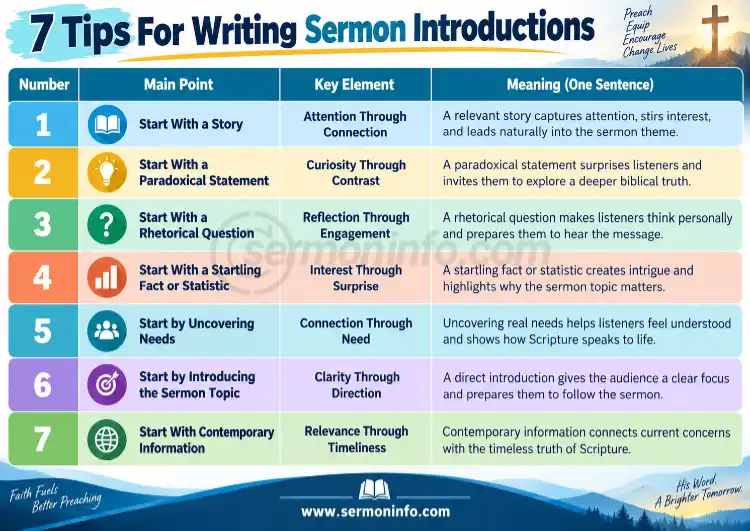
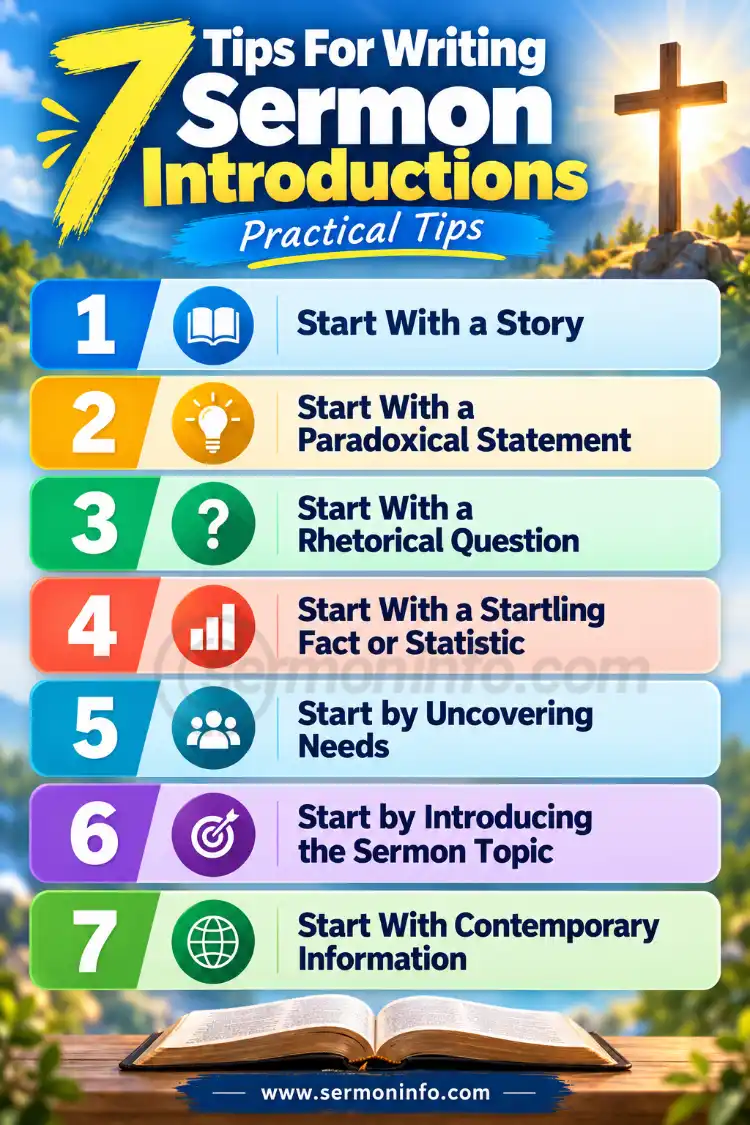
7 Tips For Writing Sermon Introductions are practical ways to begin a sermon with clarity, interest, and biblical purpose. They help preachers capture attention, connect with listeners, and prepare hearts for God’s Word. Effective introductions support the biblical message without distracting from the truth of Scripture.

7 Tips For Writing Sermon Introductions
Crafting a great sermon introduction is key to capturing attention and preparing hearts for the message. A well-chosen opening draws listeners in and sets the stage for powerful preaching. Whether you use a story, question, or surprising fact, each approach serves a unique purpose.
These 7 tips will help you create engaging introductions that connect with your audience and highlight the truth of Scripture. Let’s explore how to start your sermon strong!
1. Start With a Story
A. Explanation
Starting with a story is one of the best ways to grab attention. Stories stir emotions, create curiosity, and help your audience relate. People remember stories far better than facts alone, which makes this approach both engaging and memorable right from the start.
A well-chosen story connects with your sermon’s theme and sets the tone for what’s coming. It could be a personal experience, a biblical story, or even a historical event. Keep it relevant and concise to ensure it draws listeners in quickly.
B. Examples
Imagine opening your sermon with a personal story: “When I hit rock bottom, I thought my life was over. But God met me there.” This vulnerable start grabs attention, stirs emotions, and introduces a theme of hope and restoration, leading naturally into your message.
You can also use a biblical story: “Picture David standing before Goliath, armed only with faith and a few stones. Have you ever faced a giant like that?” This approach immediately connects your audience to Scripture while making them reflect on their own challenges.
- Personal Story: “When I was 16, I made a decision that changed my life. I didn’t know it at the time, but that choice shaped my future in ways I couldn’t imagine—just like the decision the disciples made when they followed Jesus.”
- Biblical Story: “Imagine being Moses, standing at the edge of the Red Sea with no way out. The pressure, the fear… sometimes, life feels just like that moment, doesn’t it?”
2. Start With a Paradoxical Statement
A. Explanation
Starting with a paradoxical statement shocks the audience and instantly captures their attention. It presents an unexpected contradiction that seems puzzling at first but holds a deeper truth. This approach creates curiosity, encouraging listeners to lean in and explore the meaning behind the paradox.
Paradoxes challenge assumptions and offer a fresh perspective on familiar truths. They also prepare hearts for the surprising and countercultural wisdom found in Scripture. When used thoughtfully, paradoxes are powerful tools that invite deeper reflection and open the door for transformation.
B. Examples
A great example of a paradox is Jesus’ statement: “To find your life, you must lose it.” This line challenges conventional thinking. It draws listeners into the message, inviting them to discover how surrendering to God leads to true freedom and fulfillment.
Another powerful statement is, “Strength is found in weakness.” This paradox points to God’s grace and how His power is made perfect in our struggles. It stirs curiosity while offering a message of hope and encouragement for those feeling weak or overwhelmed.
- “To truly live, you must first die.” (John 12:24)
- “Strength is found in weakness.” (2 Corinthians 12:9)
3. Start With a Rhetorical Question
A. Explanation
Starting with a rhetorical question invites your audience to reflect. It isn’t meant to be answered aloud but prompts internal thought and personal engagement. A well-crafted question creates anticipation and helps introduce the message, leading your listeners to explore their own experiences and beliefs.
The question should connect directly to your sermon’s theme. Avoid generic questions and focus on those that resonate with real-life challenges. This approach builds curiosity and makes your audience eager to hear the biblical perspective that follows.
B. Examples
“Have you ever felt completely overwhelmed by life’s struggles?” This question draws people in, inviting them to consider their own burdens and emotions. It naturally leads into a sermon on God’s peace, helping listeners feel personally connected to the message.
“What would you do if you only had 24 hours to live?” This question introduces the urgency of living with purpose and trusting God. It stirs reflection while preparing hearts to engage with the deeper truths of Scripture.
- “Have you ever felt completely overwhelmed by life?”
- “What would you do if you only had 24 hours to live?”
4. Start With a Startling Fact or Statistic
A. Explanation
Starting with a startling fact or statistic grabs attention immediately. Surprising information creates intrigue and makes listeners eager to learn more. This approach also adds credibility and context to your message, helping people understand the significance of the topic before diving into Scripture.
The fact or statistic should be relevant to your sermon’s theme. Choose something relatable that highlights a spiritual or real-life issue. Keep it concise and impactful to ensure it resonates with your audience and introduces the message effectively.
B. Examples
“Did you know the average person spends 90,000 hours at work in their lifetime?” This fact surprises listeners and naturally introduces a sermon on calling, purpose, or balancing work and faith. It invites reflection on how we spend our time.
“Anxiety disorders affect 40 million adults in the U.S. every year.” This startling statistic instantly engages those struggling with stress and fear, preparing them for a message on God’s peace and His promise to calm our hearts.
- “Did you know that the average person will spend 90,000 hours at work in their lifetime?”
- “Studies show that anxiety disorders affect 40 million adults in the U.S. each year. What does the Bible say about peace in the storm?”
5. Start by Uncovering Needs
A. Explanation
Starting by uncovering needs focuses on identifying a common problem your audience faces. This approach connects with real-life struggles and builds empathy. When people feel understood, they are more likely to listen, seeking answers to the challenges they experience daily.
Addressing a shared need also creates a natural transition into your sermon. By recognizing their struggles, you show that Scripture offers hope and practical solutions. This approach engages both hearts and minds, setting the stage for meaningful application.
B. Examples
“Are you tired of feeling like you’re never enough?” This question uncovers a deep emotional need and introduces a sermon on God’s grace. It reassures listeners that their worth isn’t based on performance but on God’s unconditional love.
“Many of us are searching for purpose, wondering if our lives truly matter.” This statement highlights a universal need and prepares the audience for a message on identity in Christ. It offers hope and direction from the start.
- “Are you tired of carrying the weight of guilt and shame? Today’s message will show you how to live in the freedom God offers.”
- “Many of us are searching for purpose, wondering if our lives truly matter. Scripture has something powerful to say about that.”
6. Start by Introducing the Sermon Topic
A. Explanation
Starting by introducing the sermon topic is the simplest approach, yet it remains highly effective. It tells your audience exactly what to expect, providing a clear focus from the beginning. This method works especially well for expository sermons, where clarity and structure are essential.
By stating the topic upfront, you help listeners engage their minds early and prepare to follow along. It builds anticipation while keeping the introduction brief. With this approach, your message feels intentional, organized, and easy to follow.
B. Examples
“Today, we’ll explore Romans 8:28 and discover how God works all things together for good.” This introduction sets a clear direction for the sermon and invites listeners to think about God’s providence in their own lives.
“This morning, we’ll talk about what it means to live by faith, even when we can’t see the full picture.” This direct approach connects the audience with the theme and encourages them to consider how faith shapes their everyday choices.
- “Today, we’re diving into Romans 8:28 and exploring how God works all things together for good.”
- “This morning, we’ll talk about what it means to walk in faith even when we can’t see the full picture.”
7. Start With Contemporary Information
A. Explanation
Starting with relevant and contemporary information connects your sermon to what’s happening in the world today. This approach makes your message feel fresh and timely. It helps listeners see how Scripture speaks into current events, personal struggles, or cultural challenges they’re already thinking about.
Using contemporary examples shows that God’s truth is never outdated. Whether referencing news, trends, or cultural shifts, you engage your audience and build bridges between their everyday experiences and the timeless truths of Scripture. Keep it relatable and focused.
B. Examples
“This week, headlines were filled with stories of division and conflict. What does God say about unity and peace in troubled times?” This introduction addresses a current issue and transitions into a sermon on reconciliation, helping listeners apply biblical truths to today’s struggles.
“Many people today feel anxious about the future. Rising uncertainty is everywhere. How can we find peace in an unstable world?” This opening taps into a widespread concern and invites listeners into a message on God’s sovereignty and enduring promises.
- “Last week, the world watched in awe as rescue teams saved lives from disaster. It reminded me of how God rescues us from our own situations.”
- “In a world where social media dominates our attention, what does it mean to truly connect? Scripture gives us a beautiful answer.”
Conclusion
Crafting an engaging sermon introduction takes thought and practice, but it’s worth the effort. A strong opening grabs attention, stirs emotions, and prepares hearts for the message. Whether you start with a story, question, or surprising fact, each approach helps connect God’s Word to real life.
Remember to stay authentic and focused on your message’s purpose. Choose an introduction that resonates with your audience and points them to the truth of Scripture. Master these seven tips, and you’ll set the tone for a powerful, life-changing sermon every time.
Source Material
Biblical Preaching by Haddon Robinson
Communicating For A Change by Andy Stanley
Preach and Deliver by Brandon Hilgemann
God Allows U-Turns by Allison Gappa Bottke
More God Allows U-Turns by Allison Gappa Bottke