The Cross Words of Calvary present three clear responses to Jesus: rejection, repentance, and redemption. The passage teaches that salvation comes by grace through faith alone, and it shows that true repentance leads to immediate assurance of eternal life in Christ.
Key Takeaways – The Cross Words of Calvary
- Every person responds to Jesus differently. At the cross, one man rejected Christ while another repented and believed. Your response to Jesus determines your eternal destiny (Luke 23:39–43).
- True repentance includes fear of God and confession of sin. The repentant criminal admitted his guilt and turned to Christ. God honors a humble heart that takes sin seriously and seeks His mercy (Luke 23:40–41).
- Salvation comes by grace through faith in Christ alone. Jesus promised immediate paradise to a believing sinner. You can receive forgiveness and eternal life today by trusting in Him (Luke 23:42–43; Ephesians 2:8).
The Cross of Calvary (Luke 23:39-43)
The cross of Calvary draws every heart. Some come close with faith, while others stand back in doubt. In life’s hardest moments, our response to Jesus reveals what we truly believe. Pain, pressure, and fear often bring out what lies deep within us. That is why this scene speaks so clearly to us today.
In Luke 23:39–43, we hear three voices from the cross that reveal three responses to Jesus. We will see words of rejection, words of repentance, and words of redemption. Each response shows a different heart before God. As we walk through this passage, ask yourself where you stand and how you respond to Christ.
1. Words of Rejection (Luke 23:39)
“Then one of the criminals who were hanged blasphemed Him, saying, ‘If You are the Christ, save Yourself and us'” (Luke 23:39).
A. His words were not new (23:35–37)
As Jesus hangs on the cross, this criminal joins a chorus already in motion. The rulers sneer, “He saved others; let Him save Himself” (Luke 23:35). The soldiers mock Him and offer sour wine (Luke 23:36–37). Now this man echoes the same words, proving his heart stands with them.
Sin rarely speaks alone; it follows a pattern. This man does not create new rejection, he repeats it. Psalm 22:7 foretold this scorn. Many today follow the crowd instead of the truth. When pressure rises, the natural heart joins unbelief unless God opens the eyes.
B. His words are still here today (23:39a)
This criminal says, “If You are the Christ, save Yourself and us” (Luke 23:39). He treats Jesus as a means of escape, not as Lord. His words reveal a heart that wants rescue from pain but not freedom from sin.
We still hear these words today in different forms. People call on Jesus in crisis but ignore Him in daily life. John 3:19 says men love darkness rather than light. True faith seeks Christ for who He is, not just for what He gives.
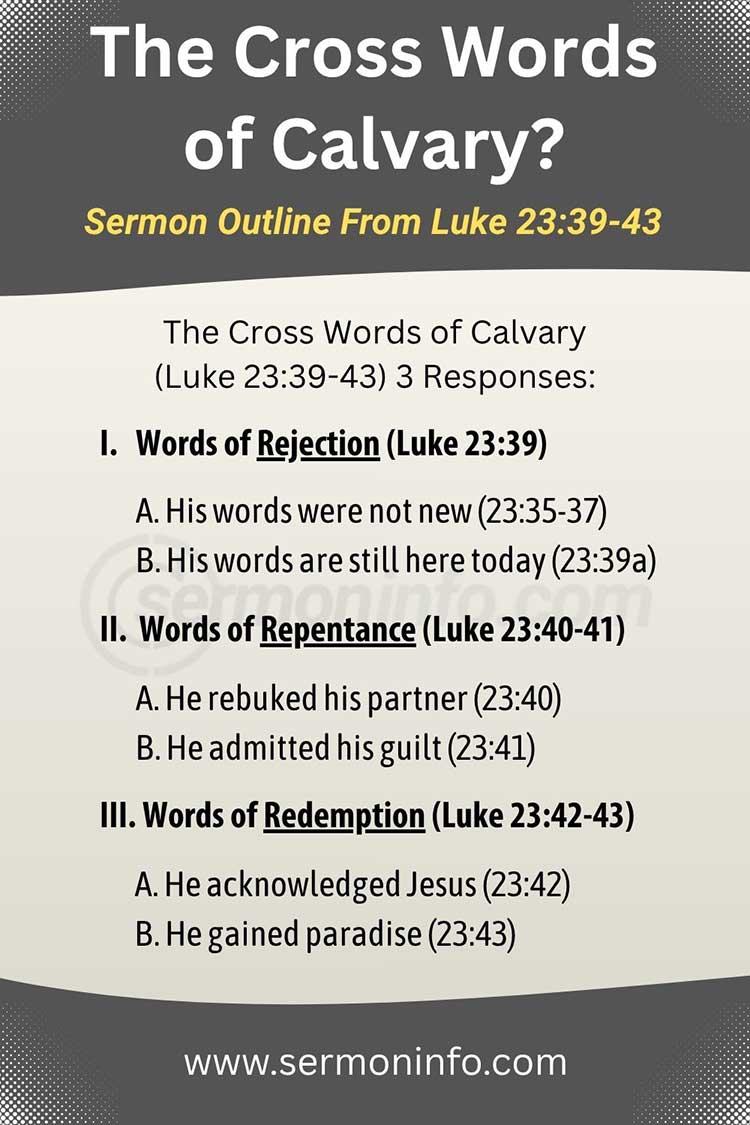
This material provides some ideas and thoughts for a sermon outline from Luke 23:39-43 (The Cross Words of Calvary).
2. Words of Repentance (Luke 23:40–41)
“But the other, answering, rebuked him, saying, ‘Do you not even fear God, seeing you are under the same condemnation? And we indeed justly, for we receive the due reward of our deeds; but this Man has done nothing wrong'” (Luke 23:40-41).
A. He rebuked his partner (23:40)
In the middle of pain, this man speaks with clarity and courage. He says, “Do you not even fear God?” (Luke 23:40). He confronts the other criminal’s sin and calls him to see the coming judgment. Even on a cross, he understands that God must be feared.
True repentance does not stay silent about sin. Proverbs 9:10 says the fear of the Lord is the beginning of wisdom. This man turns from mocking to warning. In our day, love often stays quiet, but real love speaks truth. It points others to God before it is too late.
B. He admitted his guilt (23:41)
This man then looks inward and speaks honestly. He says, “We indeed justly… for we receive the due reward of our deeds” (Luke 23:41). He does not excuse his sin or blame others. In fact, he accepts that his punishment is right before a holy God.
Repentance always includes confession. Psalm 51:3 says, “My sin is always before me.” This man owns his wrongdoing and stops defending himself. Many today explain away sin, but grace begins where excuses end. When we confess, we open the door for God’s mercy to meet us.
3. Words of Redemption (Luke 23:42–43)
“Then he said to Jesus, ‘Lord, remember me when You come into Your kingdom.’ And Jesus said to him, ‘Assuredly, I say to you, today you will be with Me in Paradise'” (Luke 23:42-43).
A. He acknowledged Jesus (23:42)
In his final moments, this man turns to Jesus and says, “Lord, remember me when You come into Your kingdom” (Luke 23:42). He sees more than a dying man; he sees a King. While others mock, he believes. He places his trust in Jesus alone for salvation.
This is true saving faith. Romans 10:9 says we must confess the Lord Jesus and believe in our heart. This man has no works to offer, only faith. Like a drowning man reaching for rescue, he looks to Christ. Salvation begins when we trust who Jesus is.
B. He gained paradise (23:43)
Jesus answers with grace and certainty, “Today you will be with Me in Paradise” (Luke 23:43). There is no delay and no uncertainty. At that moment, the man receives full assurance of salvation. Though his body hangs on a cross, his soul is secure with Christ.
This shows the power of grace. Ephesians 2:8 reminds us that we are saved by grace through faith. This man brings nothing but belief, yet gains everything. Like stepping from darkness into light, he moves from judgment to joy. Christ still saves all who come to Him.
Conclusion
We have seen three voices at the cross. One man rejected Christ and mocked Him. Another man repented, feared God, and confessed his sin. Then we heard words of redemption as Jesus promised paradise to a believing sinner. These moments show how each person responds to Christ, even in life’s final hour.
Now the same choice stands before you. Will you reject Christ, or will you turn to Him in faith? Jesus still saves all who call on Him. Acknowledge your sin, believe in His finished work, confess Him as Lord, and give Him your life. Come to Him today and receive the gift of eternal life.
Closing Prayer
Heavenly Father, we thank You for the cross of Calvary and the clear truth it reveals. You show us the danger of rejection, the beauty of repentance, and the power of redemption. Thank You for sending Your Son to bear our sin and open the way to eternal life. Help us take these truths to heart and walk in Your ways.
Lord Jesus, we come with humble hearts and place our trust in You. Forgive our sin and lead us in Your truth. Strengthen our faith in times of trial and help us live for Your glory. Give us courage to speak of Your grace and love. We ask this in Your holy name, Amen.
Frequently Asked Questions (FAQ)
Q: What did the thief on the cross say to Jesus?
A: The repentant thief said, “Lord, remember me when You come into Your kingdom” (Luke 23:42). He recognized Jesus as King and trusted Him for salvation. His words show simple, sincere faith in Christ, even in his final moments of life.
Q: Why did Jesus forgive the thief on the cross?
A: Jesus forgave the thief because he repented and believed. Salvation comes by grace through faith, not works (Ephesians 2:8). The thief admitted his sin and trusted Christ, so Jesus promised him eternal life, showing God’s mercy to all who believe.
Q: What does Luke 23:39–43 teach about salvation?
A: This passage teaches that salvation comes through faith in Jesus Christ alone. One criminal rejected Him, while the other believed and was saved. It shows that anyone can receive forgiveness instantly by turning to Christ in repentance and faith, even at life’s end.
Q: Did the thief on the cross go to heaven immediately?
A: Yes, Jesus said, “Today you will be with Me in Paradise” (Luke 23:43). This promise shows immediate assurance of salvation. The believer’s soul goes to be with Christ at death, confirming that eternal life begins the moment a person trusts in Him.
Q: What is the main message of the two thieves on the cross?
A: The two thieves represent two responses to Jesus: rejection and repentance. One mocked Christ and remained lost, while the other believed and was saved. The passage calls every person to choose how they will respond to Jesus and His offer of salvation.

The Bible Knowledge Commentary (2 Volumes) by John F. Walvoord
BONUS: What is the meaning of “today you will be with Me in Paradise” in Luke 23:43?
Jesus gives a clear and immediate promise. He says, “Today you will be with Me in Paradise” (Luke 23:43). This shows that salvation takes effect at once. The moment a person believes, God forgives sin and grants eternal life. There is no waiting period, because Christ’s finished work secures it.
This promise also reveals personal fellowship with Christ after death. “With Me” points to relationship, not just a place. Paul writes, “to be absent from the body… present with the Lord” (2 Corinthians 5:8). Paradise is the place of blessing where believers enjoy Christ’s presence forever.
BONUS: Why did one thief believe in Jesus while the other rejected Him?
One thief continued in unbelief, while the other saw the truth. God opened his eyes to see Jesus as Lord. Jesus said, “No one can come to Me unless the Father… draws him” (John 6:44). In that moment, the repentant man responded to God’s call with faith.
At the same time, each man made a personal choice. One hardened his heart, while the other feared God and confessed his sin (Luke 23:40–41). Scripture says, “Whoever calls on the name of the Lord shall be saved” (Romans 10:13). Salvation comes when a person turns to Christ in faith.
BONUS: What does the story of the two criminals teach about grace?
The story shows that grace is free and undeserved. Both men suffer the same judgment, yet only one receives salvation. Jesus promises paradise to a guilty sinner who simply believes (Luke 23:43). Ephesians 2:8 says we are saved by grace through faith, not by works.
This account also shows that grace is available to all but received by faith. One man rejects Christ, while the other turns to Him. Titus 2:11 says God’s grace brings salvation to all men. Grace reaches the worst sinner, but it saves only those who trust Christ.
BONUS: Can a person be saved at the last moment like the thief on the cross?
Yes, a person can be saved at the last moment if they truly repent and believe. The thief turned to Jesus and received the promise of paradise that same day (Luke 23:43). Salvation depends on faith in Christ, not on time or works, as Ephesians 2:8 makes clear.
However, no one should delay repentance. Life is uncertain, and the heart can grow hard. Scripture says, “Now is the accepted time” (2 Corinthians 6:2). The thief was saved at the end, but many never get that chance. Come to Christ today while you can.
BONUS: What does it mean to truly repent according to Luke 23:40–41?
True repentance begins with a right view of God and sin. The repentant criminal says, “Do you not even fear God?” (Luke 23:40). He recognizes God’s authority and coming judgment. Proverbs 9:10 teaches that the fear of the Lord is the beginning of wisdom. Repentance starts when the heart turns toward God.
True repentance also includes honest confession and personal responsibility. The man admits, “We receive the due reward of our deeds” (Luke 23:41). He does not excuse his sin. First John 1:9 says God forgives those who confess. Repentance means turning from sin and trusting Christ for mercy.
BONUS: How does Luke 23:39–43 show that salvation is not by works?
Luke 23:39–43 shows a man who cannot perform any works. He hangs on a cross with no time to earn anything. Yet he turns to Jesus in faith and receives the promise of paradise (Luke 23:42–43). This proves that salvation comes through faith, not effort or deeds.
Paul confirms this truth in Ephesians 2:8–9, where he says salvation is a gift of God, not of works. The thief brings nothing but belief, and Christ gives him everything. This moment shows that grace saves fully, and faith alone receives it.

Believer’s Bible Commentary by William MacDonald
| The Cross Words of Calvary (Luke 23:39-43) – Free Evangelistic Sermon Outlines | |||
|---|---|---|---|
| Number | Main Point | Bible Verse | Meaning |
| 1 | Words of Rejection | Luke 23:39 | One criminal rejects Jesus, showing how a hardened heart refuses to believe even in the face of truth. |
| 2 | Words of Repentance | Luke 23:40–41 | The repentant criminal fears God and confesses his sin, showing that true repentance begins with humility and honesty before God. |
| 3 | Words of Redemption | Luke 23:42–43 | Jesus promises paradise to the believing criminal, showing that salvation comes instantly by grace through faith in Him. |