3 Marks of Genuine Repentance (Sermon Outline From Hosea 6:1–11) reveal God’s call for His people to return to Him with sincere hearts. Genuine repentance produces steadfast love, faithful obedience, and a transformed life instead of empty religion. God desires inward change that results in outward faithfulness and lasting fellowship with Him.

Key Takeaways – Sermon From Hosea 6:1-11
- Genuine repentance begins with returning to God. God lovingly calls His people to leave sin behind, trust His grace, and seek His restoring fellowship with sincere hearts (Hosea 6:1–3).
- Genuine repentance produces faithful obedience. God desires steadfast love and the true knowledge of Him, not empty religious activity or temporary devotion (Hosea 6:4–6).
- Genuine repentance transforms daily living. A changed heart rejects sinful patterns and reflects God’s holiness through consistent obedience and Christlike character (Hosea 6:7–11; 2 Corinthians 5:17).
Sermon Outline From Hosea 6:1-11
God never delights in judging His people. Throughout Hosea, He lovingly called Israel to return because He desired restoration, not destruction. Although they repeatedly rejected His covenant, His invitation remained open. His discipline reflected His holy love and aimed to bring them back into fellowship. The Lord still calls wandering believers to return because His mercy is greater than their failure (Hos. 6:1; Lam. 3:22–23).
Hosea 6:1–11 reveals the difference between outward religion and genuine repentance. We will see that God calls His people to return to Him, remain faithful to Him, and reject sin. Each mark exposes the condition of the heart and reveals God’s desire for lasting transformation. As we study this passage, may the Holy Spirit search our hearts and help us respond with sincere faith, steadfast love, and joyful obedience.
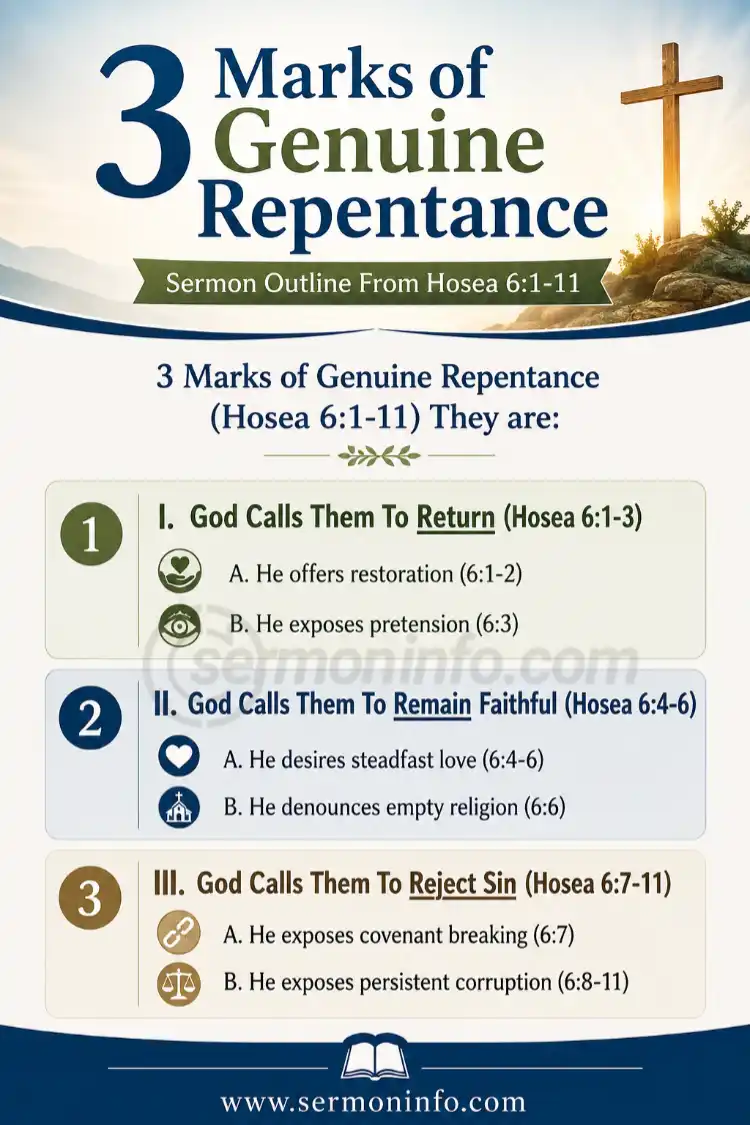
1. God Calls Them to Return (Hosea 6:1–3)
God lovingly invites His people to return to Him so He can heal, restore, and renew their fellowship with Him. (Summary Statement)
A. He Offers Restoration (Hos. 6:1–2)
God graciously invited Israel to return because He alone could heal the wounds caused by their sin. He had disciplined them, yet He also promised restoration for those who truly repented. His loving heart desired their renewal, not their destruction. This reveals both His holiness and His compassion (Lam. 3:31–33).
This invitation still speaks today. Sin wounds the heart, damages relationships, and separates people from fellowship with God. Yet the Lord lovingly calls every believer to return through confession and repentance (1 John 1:9). Like the father welcoming the prodigal son, God delights to restore those who sincerely come back to Him (Luke 15:20–24).
B. He Exposes Pretension (Hos. 6:3)
Israel spoke about seeking the Lord, but God saw beyond their words. Their desire appeared sincere, yet it lacked lasting repentance and obedient faith. They wanted God’s blessings without a transformed heart. The Lord knew their motives because nothing remains hidden from His perfect sight (Heb. 4:12–13).
Many people today profess faith while resisting God’s authority in daily life. Outward worship cannot replace inward surrender. God examines every heart, every thought, and every motive. He calls His people to love Him sincerely and follow Him faithfully, not merely appear religious before others (1 Sam. 16:7; James 1:22). (Source Material: William MacDonald, Believer’s Bible Commentary, p. 1100)
This material provides some ideas and thoughts for a sermon outline from Hosea 6:1-11 (3 Marks of Genuine Repentance).
2. God Calls Them to Remain Faithful (Hosea 6:4–6)
God desires His people to remain faithful through steadfast love, obedience, and a growing knowledge of Him. (Summary Statement)
A. He Desires Steadfast Love (Hos. 6:4–6)
God lovingly called Israel to show steadfast love that endured through every season. Their devotion appeared briefly, then disappeared like the morning cloud and early dew. The Lord desired faithful hearts that remained devoted to Him because covenant love reflects a genuine relationship with God, not passing emotion.
The same call remains for believers today. God wants faithfulness that continues after trials, disappointments, and blessings. A healthy marriage grows through daily commitment, not occasional affection. Likewise, believers honor God through consistent love and obedience. Jesus said, “If you love Me, keep My commandments” (John 14:15).
B. He Denounces Empty Religion (Hos. 6:6)
God declared that He desired mercy rather than sacrifice and the knowledge of God more than burnt offerings. Israel faithfully performed religious ceremonies, yet their hearts remained distant from Him. The Lord rejected outward ritual without inward obedience because true worship begins with a transformed heart (Hos. 6:6).
This truth challenges every believer today. God does not seek religious performance but spiritual transformation. Attending worship, serving others, and giving generously cannot replace a surrendered heart. Paul urged believers to “be transformed by the renewing of your mind” (Rom. 12:2). God changes people from the inside so their outward lives reflect His character. (Source Material: John MacArthur, The MacArthur Bible Commentary, pp. 976-977)
3. God Calls Them to Reject Sin (Hosea 6:7–11)
God exposes persistent sin and calls His people to genuine repentance that transforms their lives. (Summary Statement)
A. He Exposes Covenant Breaking (Hos. 6:7)
God revealed that Israel had broken His covenant despite His repeated calls to return. Like Adam, they knowingly transgressed His commands and acted treacherously against Him (Hos. 6:7). Their outward religion could not hide their inward rebellion. God always sees beyond appearances and examines every heart (1 Sam. 16:7).
This warning speaks clearly today. People may impress others with religious activity, yet God knows every motive and thought. Nothing escapes His sight (Heb. 4:12–13). Genuine faith begins with an honest heart before God. When believers confess their sin, the Lord graciously forgives, restores, and renews fellowship with Himself (1 John 1:9).
B. He Exposes Persistent Corruption (Hos. 6:8–11)
God uncovered the violence, deceit, and immorality that filled Israel’s cities and even its priesthood. Their sinful actions proved their hearts remained unchanged. Instead of reflecting God’s holiness, they practiced evil without shame. Their lives exposed the emptiness of their profession and confirmed their need for genuine repentance.
The same principle applies today. Genuine repentance always produces a changed life because God transforms the heart before He changes the conduct. Paul declared, “If anyone is in Christ, he is a new creation” (2 Cor. 5:17). A transformed heart displays honesty, purity, kindness, and obedience, revealing the reality of God’s saving grace. (Source Material: John F. Walvoord and Roy B. Zuck, The Bible Knowledge Commentary: Old Testament, pp. 1393-1394)
Conclusion
As we close, Hosea 6:1–11 reminds us that God desires genuine repentance, not empty religion. We have seen that God calls us to return, because He delights in restoration. God calls us to remain faithful, because He desires steadfast love and the knowledge of Him. God calls us to reject sin, because genuine repentance produces a transformed life that honors Him.
Now the Lord invites each of us to examine our own hearts. His Word calls us beyond outward religion to sincere faith and joyful obedience. Let us respond to His loving call with humble repentance and renewed devotion. As we walk daily with Christ, His Spirit transforms our hearts and shapes our lives according to His truth. May we trust His grace, obey His Word, and reflect His character until He comes again.
Closing Prayer
Heavenly Father, we thank You for Your faithful love that continually calls us back when we wander. Thank You for speaking through Hosea and reminding us that You desire restoration, not destruction. Forgive us when our devotion becomes shallow or our obedience grows weak. Create in us clean hearts, renew steadfast spirits within us, and help us love You with sincerity and truth. May our lives reflect genuine repentance that honors Your holy name.
Gracious Lord, help us return to You with humble hearts, remain faithful through every season, and reject every sinful path. Fill us with the Holy Spirit so that we may walk in joyful obedience and grow in the knowledge of Jesus Christ. Transform us each day into His likeness, and use our lives to point others to Your saving grace. We ask these things in the precious name of our Lord and Savior, Jesus Christ. Amen.
Frequently Asked Questions (FAQ)
Q: What does Hosea 6:1–11 teach about genuine repentance?
A: Hosea 6:1–11 teaches that genuine repentance is more than saying the right words. It involves returning to God with a sincere heart, remaining faithful in covenant love, and rejecting sinful living. God desires lasting obedience and a transformed life, not temporary emotions or empty religion.
Q: What does “I desire mercy and not sacrifice” mean in Hosea 6:6?
A: God values steadfast love, faithful obedience, and the knowledge of Him above outward religious rituals. Sacrifices without a surrendered heart cannot please God. True worship begins with an inward relationship that produces outward obedience and compassion toward others.
Q: Why did God reject Israel’s repentance in Hosea 6?
A: God rejected Israel’s repentance because it was shallow and short lived. Their devotion disappeared like the morning dew, and their lives continued in rebellion. God saw beyond their words and exposed hearts that refused genuine change and covenant faithfulness.
Q: What is the meaning of Hosea 6:2?
A: Hosea 6:2 expresses confidence that God can revive and restore His repentant people after discipline. In its original context, it speaks of Israel’s hope for national restoration. It also reveals God’s gracious desire to bring life, healing, and renewed fellowship to those who return to Him.
Q: How can believers apply Hosea 6:1–11 today?
A: Believers apply Hosea 6:1–11 by responding to God’s loving call with sincere repentance, steadfast obedience, and holy living. Instead of relying on religious activity alone, they should pursue a growing knowledge of God and allow His Word to transform their hearts and daily conduct.
BONUS: What does Hosea 6:3 mean when it says, “Let us know, let us pursue the knowledge of the Lord”?
Hosea 6:3 calls God’s people to know Him personally and pursue Him wholeheartedly. The word “know” speaks of an ongoing relationship, not simply learning facts about God. Israel needed to seek the Lord with sincere repentance and steadfast faith. God promised that He would reveal Himself faithfully, just as surely as the sunrise and the life giving rain (Hos. 6:3; Jer. 29:13).
This verse encourages believers today to pursue a growing relationship with God through His Word, prayer, and obedience. Knowing the Lord transforms the heart and shapes daily living. Jesus said that eternal life is to know the only true God and Jesus Christ whom He sent (John 17:3). As we draw near to God, He graciously draws near to us (James 4:8).
BONUS: Why does God desire mercy rather than sacrifice in Hosea 6:6?
God desired mercy rather than sacrifice because Israel faithfully performed religious rituals while neglecting covenant love and obedience. Their worship lacked sincere devotion, so their sacrifices became empty acts. God values hearts that love Him and show compassion toward others above outward ceremonies alone (Hos. 6:6; 1 Sam. 15:22).
Jesus quoted Hosea 6:6 when confronting the Pharisees for their legalism and lack of compassion (Matt. 9:13; 12:7). God still desires transformed hearts that produce loving obedience rather than mere religious performance. Genuine faith expresses itself through mercy, humility, and faithful living because true worship always begins in the heart before it appears in our actions.
BONUS: What does Hosea 6:7 mean by “like Adam they transgressed the covenant”?
Hosea 6:7 declares that Israel, “like Adam,” broke God’s covenant and acted unfaithfully toward Him. Just as Adam knowingly disobeyed God’s command in the Garden of Eden (Gen. 3:6), Israel deliberately violated God’s covenant despite receiving His blessings and clear instructions. Their sin revealed rebellious hearts rather than faithful obedience.
This verse reminds believers that God expects faithfulness from those who know His truth. He sees beyond outward actions and examines the heart (1 Sam. 16:7). Yet God’s grace remains available to those who confess their sin and return to Him in genuine repentance (1 John 1:9). Through Christ, believers receive forgiveness and the power to walk in faithful obedience.
BONUS: How does Hosea 6 contrast genuine repentance with superficial repentance?
Hosea 6 contrasts superficial repentance with genuine repentance by exposing Israel’s temporary devotion. Their commitment disappeared like the morning cloud and early dew (Hos. 6:4). They spoke about returning to God, yet their lives remained unchanged. God desired steadfast love, faithful obedience, and the true knowledge of Him rather than empty religious rituals (Hos. 6:6).
Genuine repentance produces a transformed heart that leads to faithful obedience. It turns from sin and follows God’s truth with lasting commitment. Paul taught that anyone in Christ becomes a new creation (2 Cor. 5:17). James also reminded believers that faith reveals itself through obedient actions (James 2:17). True repentance changes both the heart and the life.
BONUS: What can Christians learn from Israel’s unfaithfulness in Hosea 6:1–11?
Israel’s unfaithfulness teaches Christians that outward religion cannot replace wholehearted devotion to God. Although Israel spoke of returning to the Lord, their obedience quickly faded (Hos. 6:1–4). God desired steadfast love and the knowledge of Him because genuine faith grows from a surrendered heart (Hos. 6:6).
Believers should respond to God’s grace with consistent obedience and sincere repentance. The Lord still examines every heart and calls His people to walk faithfully before Him (Heb. 4:12–13). As we abide in Christ, His Spirit transforms our lives and produces lasting spiritual fruit that honors God (John 15:4–5; Gal. 5:22–23).
BONUS: How does Hosea 6:1–11 point believers toward a transformed life in God?
Hosea 6:1–11 points believers toward a transformed life by calling them to return to God with sincere repentance. God desires more than outward religion. He seeks steadfast love, faithful obedience, and a growing knowledge of Him (Hos. 6:6). True repentance begins in the heart and changes the way we live each day.
Through Jesus Christ, God gives believers the power to live transformed lives. Those who belong to Christ become new creations, and the Holy Spirit produces lasting spiritual fruit (2 Cor. 5:17; Gal. 5:22–23). As we know God through His Word and obey His truth, He shapes our character to reflect His holiness and grace.
BONUS: Does genuine repentance means we will never sin again?
Genuine repentance does not mean believers will never sin again. It means they turn from sin, confess it honestly, and desire to obey God. Although Christians still struggle with the flesh, they no longer live comfortably in continual rebellion. God faithfully forgives those who confess their sins and restores fellowship with Him (1 John 1:8–9).
A transformed life shows a new direction rather than sinless perfection. The Holy Spirit produces ongoing growth in holiness as believers walk with Christ (Gal. 5:16–17, 22–23). When they fall, they respond with repentance instead of excuses. God continues His work of sanctification until the day believers stand complete in Christ (Phil. 1:6).
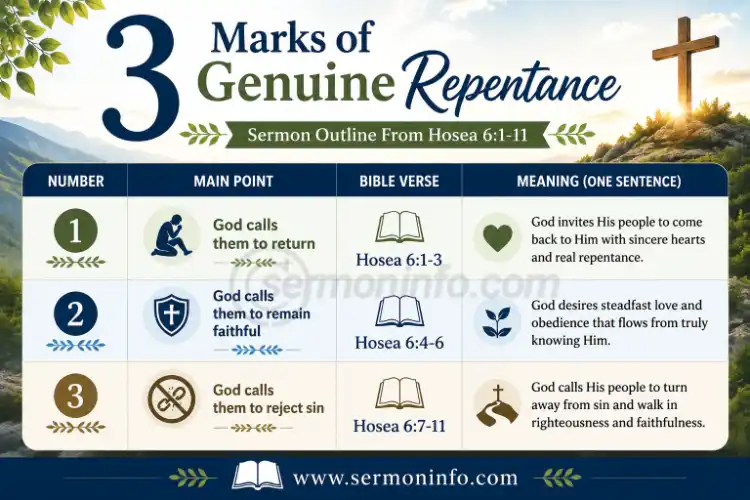
| Sermon Outline From Hosea 6:1-11 – Free Expository Sermon Outline | |||
|---|---|---|---|
| Number | Main Point | Bible Verse | Meaning |
| 1 | God calls them to return | Hosea 6:1–3 | God lovingly invites His people to return to Him so He can heal, restore, and renew their fellowship with Him. |
| 2 | God calls them to remain faithful | Hosea 6:4–6 | God desires steadfast love, faithful obedience, and the true knowledge of Him instead of empty religious rituals. |
| 3 | God calls them to reject sin | Hosea 6:7–11 | God exposes persistent sin and calls His people to genuine repentance that produces a transformed and obedient life. |
Source Material
William MacDonald, Believer’s Bible Commentary, rev. ed. (Nashville: Thomas Nelson, 1995), 1100
John MacArthur, The MacArthur Bible Commentary (Nashville: Thomas Nelson, 2005), 976-977
John F. Walvoord and Roy B. Zuck, eds., The Bible Knowledge Commentary: Old Testament (Colorado Springs, CO: David C. Cook, 1985), 1393-1394