The Triumph of God’s Restoring Love (Sermon Outline From Hosea 2:14-23) reveals how God graciously pursues, renews, and restores His covenant people after their unfaithfulness. His love remains faithful, and His grace transforms judgment into hope, leading His people back into fellowship, blessing, and a renewed relationship with Him.
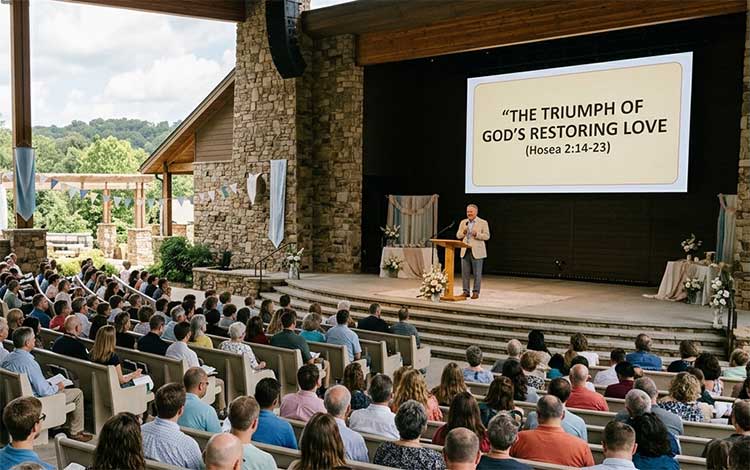
Key Takeaways – The Triumph of God’s Restoring Love
- God lovingly pursues His people even after failure. Hosea 2:14-15 shows that God’s discipline aims at restoration, not rejection. He speaks to wandering hearts, turns trouble into hope, and draws believers back into close fellowship with Himself.
- God faithfully renews His covenant relationship. Hosea 2:16-20 reveals that God removes idols and calls His people to wholehearted devotion. His righteousness, mercy, lovingkindness, and faithfulness provide a secure foundation for a growing relationship with Him.
- God restores what sin has damaged. Hosea 2:21-23 teaches that God’s grace transforms judgment into blessing and restores broken fellowship. Believers can rejoice because God keeps His promises, forgives repentant sinners, and provides lasting hope for the future.
Sermon Outline From Hosea 2:14-23
Hosea’s marriage to Gomer served as a living illustration of God’s relationship with Israel. Just as Gomer repeatedly left Hosea for other lovers, Israel continually abandoned the Lord to pursue idols and false gods (Hosea 1:2; 2:5). Yet God commanded Hosea to love his unfaithful wife, demonstrating His steadfast covenant love toward a nation that had broken fellowship with Him.
The story highlights God’s grace, patience, and faithfulness. Hosea redeemed Gomer and brought her back into relationship (Hosea 3:1-3), just as God promised to restore Israel after discipline and repentance (Hosea 2:14-23). This picture reveals that God’s love does not depend on human faithfulness. Instead, He pursues His people, calls them to return, and remains committed to His covenant promises (Jeremiah 31:3).
This material provides some ideas and thoughts for a sermon outline from Hosea 2:14-23 (The Triumph of God’s Restoring Love).
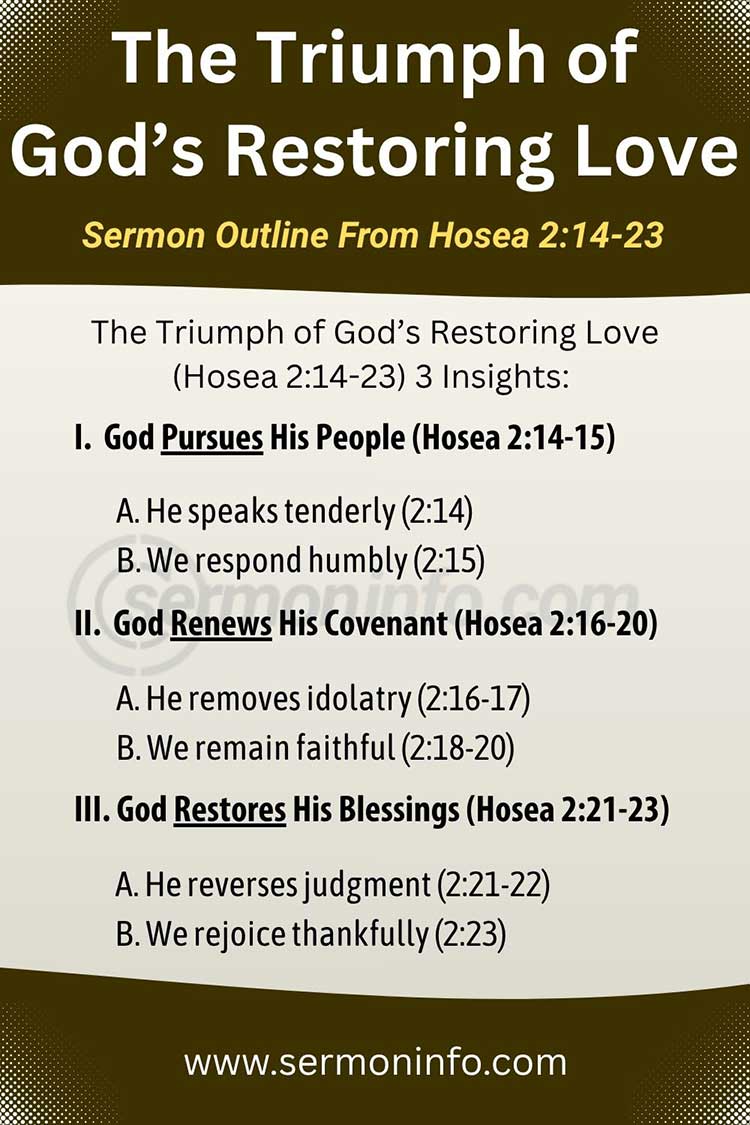
1. God Pursues His People (Hosea 2:14-15)
God lovingly seeks His wandering people and draws them back into a restored relationship with Himself (Summary Statement).
A. He Speaks Tenderly (Hosea 2:14)
God had just confronted Israel’s spiritual adultery and announced coming discipline. Yet His purpose was never destruction but restoration. Hosea 2:14 opens with the word “therefore,” revealing an amazing transition from judgment to grace. God promises to allure Israel into the wilderness and speak tenderly to her heart. His covenant love remains steadfast despite her unfaithfulness.
The wilderness recalls Israel’s early relationship with God after the Exodus. There, away from distractions and idols, she learned dependence upon Him. God often uses difficult seasons similarly today. A hospital room, financial setback, or personal loss may become a place where His voice grows clearer. Like a shepherd calling wandering sheep, He lovingly draws His people back because His love never fails (Jeremiah 31:3).
B. We Respond Humbly (Hosea 2:15)
Next, God promises to transform the Valley of Achor into a door of hope. The Valley of Achor reminded Israel of Achan’s sin and God’s judgment (Joshua 7:24-26). Yet God would take a place associated with trouble and turn it into a place of blessing. His grace is powerful enough to redeem even painful memories and past failures.
When believers repent and return to the Lord, He restores fellowship and renews joy. David experienced this after confessing his sin and praying, “Restore to me the joy of Your salvation” (Psalm 51:12). God often uses hard circumstances to deepen our trust and dependence upon Him. What seems like a dead end today may become God’s doorway to greater hope, spiritual growth, and renewed communion with Him. (Source Material: John MacArthur, The MacArthur Bible Commentary, pp. 973-974)
2. God Renews His Covenant (Hosea 2:16-20)
God reestablishes a faithful covenant relationship with His people based on His unchanging character (Summary Statement).
A. He Removes Idolatry (Hosea 2:16-17)
In that future day, Israel will no longer address the Lord as “My Baal” but as “My Husband.” The change reflects more than different words. It reveals a restored relationship marked by love, trust, and covenant devotion. God promises to remove the names of false gods from the nation so that idolatry will no longer compete for Israel’s affection.
Notice the tenderness of this picture. A faithful husband desires the undivided love of his bride. Likewise, God desires wholehearted worship from His people. Idols today may not be carved images, but they can still capture the heart. Money, success, pleasure, and self can replace God. True worship flourishes when Christ occupies the highest place in our lives (Matthew 22:37).
B. We Remain Faithful (Hosea 2:18-20)
Next, God promises peace, security, and an everlasting covenant relationship. Three times He declares, “I will betroth thee unto me” (Hosea 2:19-20). His commitment rests upon righteousness, justice, lovingkindness, mercy, and faithfulness. These qualities reveal God’s unchanging character. Israel’s future restoration depends upon His faithfulness, not upon human merit or effort.
Because God remains faithful to every promise, believers should respond with steadfast devotion. A healthy marriage grows stronger through daily fellowship, trust, and commitment. Our relationship with the Lord grows the same way. As we spend time in His Word and prayer, competing affections lose their appeal. “Draw near to God and He will draw near to you” (James 4:8). A growing love for Christ guards the heart from wandering. (Source Material: William MacDonald, Believer’s Bible Commentary, pp. 1098–1099)
3. God Restores His Blessings (Hosea 2:21-23)
God graciously reverses the effects of judgment and restores fellowship, favor, and future hope (Summary Statement).
A. He Reverses Judgment (Hosea 2:21-22)
As the chapter closes, God paints a beautiful picture of restoration. The heavens, earth, grain, wine, and oil respond to His command. The land that once experienced discipline will enjoy abundance again. Israel’s rebellion brought loss and hardship, but God’s grace will bring blessing and fruitfulness. He demonstrates His power to restore what sin has damaged.
This promise points to Israel’s future national restoration under Messiah’s reign. The names of judgment given in Hosea chapter 1 will no longer define the nation. God will replace rejection with acceptance and sorrow with blessing. Like a skilled craftsman restoring a broken masterpiece, God can redeem ruined circumstances. “I will restore to you the years that the swarming locust has eaten” (Joel 2:25).
B. We Rejoice Thankfully (Hosea 2:23)
Finally, the Lord declares, “Thou art my people,” and His people answer, “Thou art my God.” These words reveal restored fellowship and renewed covenant relationship. Those once called Lo Ammi, meaning “not My people,” will again belong to Him. God’s grace triumphs over failure, and His faithfulness secures the future He has promised.
This truth encourages every believer today. God welcomes repentant sinners and restores those who return to Him through faith. The apostle Peter applied this principle when describing believers as God’s special people (1 Peter 2:10). When we remember His mercy, gratitude fills our hearts. We rejoice because God keeps every promise, forgives every confessed sin, and never abandons those who trust in Him. (Source Material: John F. Walvoord and Roy B. Zuck, The Bible Knowledge Commentary: Old Testament, pp. 1385–1386)
Conclusion
Hosea 2:14-23 reveals a God who pursues, renews, and restores. Though Israel wandered far from Him, the Lord never abandoned His covenant purposes. His discipline aimed at restoration, His covenant promised faithfulness, and His grace secured future blessing.
The same God still calls sinners to Himself today. He offers forgiveness, reconciliation, and hope through Jesus Christ. No failure is beyond His grace, and no repentant heart is beyond His mercy. Trust Him, follow Him, and rejoice in His restoring love.
Closing Prayer
Heavenly Father, we thank You for the triumph of Your restoring love. Like Israel, we have often wandered from Your will and pursued things that cannot satisfy. Yet You remain faithful to Your promises and rich in mercy. Thank You for seeking us when we stray, speaking to our hearts with grace, and drawing us back into fellowship with Yourself. Your love is greater than our failures, and Your faithfulness never ends.
Lord, help us to respond with humble and obedient hearts. Remove every idol that competes for our devotion and deepen our love for Jesus Christ. Strengthen us to trust You during difficult seasons and to rejoice in the hope You provide. May we live as Your people and boldly declare, “Thou art my God.” We praise You for Your grace, Your covenant faithfulness, and the future restoration You have promised. We pray in Jesus’ Name. Amen.
Frequently Asked Questions (FAQ)
Q: What is the main message of Hosea 2:14-23?
A: Hosea 2:14-23 reveals God’s restoring love toward His unfaithful people. After discipline, God promises restoration, renewed fellowship, covenant faithfulness, and future blessing. The passage shows that God’s grace triumphs over failure and that He remains faithful to His promises despite human unfaithfulness.
Q: Why does God lead Israel into the wilderness in Hosea 2:14?
A: God leads Israel into the wilderness to restore her relationship with Him. The wilderness becomes a place of renewal where He speaks tenderly to her heart. Just as God used the wilderness after the Exodus, He often uses difficult seasons to draw His people back to Himself.
Q: What does the Valley of Achor symbolize in Hosea 2:15?
A: The Valley of Achor symbolizes God’s ability to turn trouble into hope. Once associated with Achan’s sin and judgment (Joshua 7), it becomes a “door of hope.” The image reminds believers that God can redeem painful circumstances and use them for spiritual growth.
Q: What does “I will betroth thee unto me forever” mean?
A: This phrase describes God’s enduring covenant commitment to Israel. It highlights His righteousness, mercy, lovingkindness, and faithfulness. From a dispensational perspective, it points to Israel’s future restoration and reminds believers that God never abandons those whom He loves.
Q: How does Hosea 2:23 apply to Christians today?
A: Hosea 2:23 demonstrates God’s grace toward repentant sinners. God restores fellowship and calls His people His own. Believers can rejoice because God forgives sin, keeps His promises, and welcomes all who come to Him through faith in Jesus Christ.
The Bible Knowledge Commentary (2 Volumes) by John F. Walvoord
BONUS: How does Hosea’s marriage to Gomer illustrate God’s love for Israel?
Hosea’s marriage to Gomer served as a living illustration of God’s relationship with Israel. Just as Gomer repeatedly left Hosea for other lovers, Israel continually abandoned the Lord to pursue idols and false gods (Hosea 1:2; 2:5). Yet God commanded Hosea to love his unfaithful wife, demonstrating His steadfast covenant love toward a nation that had broken fellowship with Him.
The story highlights God’s grace, patience, and faithfulness. Hosea redeemed Gomer and brought her back into relationship (Hosea 3:1-3), just as God promised to restore Israel after discipline and repentance (Hosea 2:14-23). This picture reveals that God’s love does not depend on human faithfulness. Instead, He pursues His people, calls them to return, and remains committed to His covenant promises (Jeremiah 31:3).
BONUS: What does Hosea 2 teach about God’s covenant faithfulness?
Hosea 2 teaches that God’s covenant faithfulness remains firm even when His people fail. Although Israel pursued idols and broke covenant fellowship, God promised restoration rather than abandonment. He declared, “I will betroth thee unto me for ever” (Hosea 2:19). His commitment rests on His character, not on Israel’s performance. God remains righteous, merciful, loving, and faithful to every promise He makes.
The chapter also reveals that God’s discipline serves His covenant purposes. He confronts sin, calls His people to repentance, and restores them to fellowship (Hosea 2:14-23). God’s faithfulness ultimately guarantees Israel’s future restoration and blessing. As Lamentations 3:22-23 declares, “Great is thy faithfulness.” Believers today can trust that God never breaks His word and always accomplishes His redemptive plan.
BONUS: Why does God restore Israel after her unfaithfulness?
God restores Israel after her unfaithfulness because of His covenant love and faithfulness. Israel repeatedly turned to idols, yet God remained committed to the promises He made to Abraham, Isaac, and Jacob. In Hosea 2:14, God says, “I will allure her,” revealing His desire to bring His people back to Himself. His love pursues restoration rather than permanent rejection.
God also restores Israel to display His grace and fulfill His redemptive plan. Hosea 2:19-20 emphasizes His righteousness, mercy, lovingkindness, and faithfulness. Through discipline, God brings His people to repentance and renewed fellowship. Romans 11:29 declares, “For the gifts and the calling of God are irrevocable.” Israel’s future restoration demonstrates that God always keeps His covenant promises and accomplishes His purposes.
BONUS: What idols can hinder a believer’s relationship with God today?
Many idols can hinder a believer’s relationship with God today. While people may not worship carved images, they often place money, success, pleasure, possessions, relationships, or personal ambition above the Lord. Anything that captures the heart’s highest affection can become an idol. God commands, “You shall have no other gods before Me” (Exodus 20:3), because He alone deserves our worship.
Idols slowly compete with God’s rightful place in our lives. Jesus warned that no one can serve two masters (Matthew 6:24). A believer may begin trusting wealth more than God or seeking approval more than obedience. Therefore, we should regularly examine our hearts and ask God to reveal hidden idols. As 1 John 5:21 says, “Little children, keep yourselves from idols.” True joy grows when Christ remains first in every area of life.
BONUS: How does God turn seasons of discipline into opportunities for spiritual growth?
God often uses seasons of discipline to draw His people back into close fellowship with Him. In Hosea 2:14, He leads Israel into the wilderness and speaks tenderly to her heart. What appeared to be a place of hardship became a place of restoration. Likewise, God uses trials to remove distractions and help believers focus on Him. His discipline flows from love, not rejection (Hebrews 12:6).
Through discipline, God develops spiritual maturity, obedience, and dependence upon His grace. Hebrews 12:11 teaches that God’s correction produces “the peaceable fruit of righteousness” in those who respond properly. Difficult seasons can deepen prayer, strengthen faith, and refine character. Like a gardener pruning a vine for greater fruitfulness (John 15:2), God uses discipline to shape His people and prepare them for greater usefulness and spiritual growth.
BONUS: What future restoration does Hosea 2:14-23 promise for Israel?
Hosea 2:14-23 promises a future national restoration for Israel after a long period of discipline and unbelief. God will draw Israel back to Himself, restore her covenant relationship, and remove idolatry from the nation. The Lord declares, “I will betroth thee unto me for ever” (Hosea 2:19). This promise points to a future time when Israel will know the Lord in faithfulness and truth.
The passage also promises peace, security, fruitfulness, and renewed blessing in the land. God will reverse the judgments symbolized by the names Lo Ruhamah and Lo Ammi, replacing rejection with mercy and acceptance (Hosea 2:23). From a dispensational perspective, these promises find their ultimate fulfillment in Israel’s future restoration under the reign of the Messiah (Romans 11:26-27). God will fulfill every covenant promise He made to His people because His faithfulness never fails.
| The Triumph of God’s Restoring Love – Sermons That Work | |||
|---|---|---|---|
| Number | Main Point | Bible Verse | Meaning |
| 1 | God Pursues His People | Hosea 2:14-15 | God lovingly seeks His wandering people, speaks to their hearts, and turns places of trouble into places of hope and restoration. |
| 2 | God Renews His Covenant | Hosea 2:16-20 | God restores a faithful relationship with His people, removes idolatry, and reaffirms His covenant through His righteousness, mercy, and steadfast love. |
| 3 | God Restores His Blessings | Hosea 2:21-23 | God reverses the effects of judgment, restores fellowship, and fulfills His promises by showing grace, mercy, and future blessing to His people. |
Source Material
John MacArthur, The MacArthur Bible Commentary (Nashville: Thomas Nelson, 2005), 973-974
William MacDonald, Believer’s Bible Commentary, rev. ed. (Nashville: Thomas Nelson, 1995), 1098–1099
John F. Walvoord and Roy B. Zuck, eds., The Bible Knowledge Commentary: Old Testament (Colorado Springs, CO: David C. Cook, 1985), 1385–1386