When Pride Replaces Trust (Sermon Outline From Hosea 12:1–14) shows how self reliance, dishonest gain, and empty religion draw God’s people away from Him. God confronts pride, calls His people to return, and reminds them to trust Him with obedient, humble hearts.

Key Takeaways – Sermon From Hosea 12:1-14
- Pride replaces trust when we depend on ourselves instead of God. Hosea 12 warns us against false confidence in wealth, plans, and human strength.
- God calls us to return, obey, and wait on Him. Hosea 12:6 shows that faithful trust includes mercy, justice, and continual dependence on the Lord.
- Persistent rebellion brings serious consequences. God confronts sin with truth and calls us to respond with humility, repentance, and renewed obedience.
Sermon Outline From Hosea 12:1-14
Self reliance promises control, but it often leaves us anxious, proud, and spiritually weak. Israel trusted wealth, alliances, and clever plans instead of the Lord. Hosea called them back: “Return to your God; observe mercy and justice, and wait on your God continually” (Hosea 12:6). God still calls us to trust Him when life feels uncertain.
In this message, we will see how God confronts deceit, exposes pride, and judges stubborn rebellion. Hosea also shows us the better path. God invites His people to return, obey, and wait for Him. When pride replaces trust, our hearts drift. When trust replaces pride, we walk closely with God.
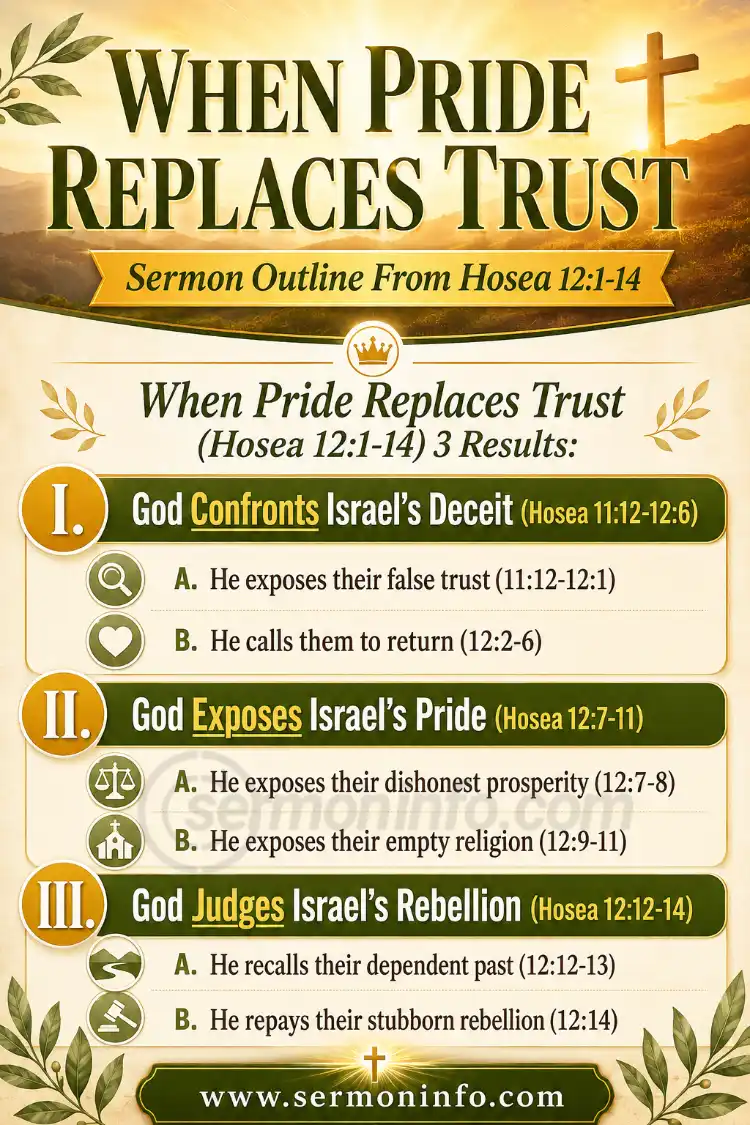
1. God Confronts Israel’s Deceit (Hosea 11:12–12:6)
God exposes Israel’s misplaced trust and calls His people to return to Him with mercy, justice, and faithful dependence. (Summary Statement)
A. He Exposes Their False Trust (Hosea 11:12–12:1)
Israel surrounded God with “lies and deceit” and chased help that could never satisfy (Hosea 11:12). Ephraim “feeds on the wind” and makes agreements with Assyria and Egypt (Hosea 12:1). Instead of trusting the Lord, Israel chased political security. Their choices promised protection but delivered emptiness.
We can repeat Israel’s mistake when trouble comes. We may trust money, people, plans, or our own wisdom before seeking God. These things have value, but they cannot replace Him. Proverbs 3:5 says, “Trust in the LORD with all your heart.” Tough times reveal where we place our confidence.
B. He Calls Them To Return (Hosea 12:2–6)
God recalls Jacob because his story held a mirror before Israel. Jacob struggled, wept, and sought God’s favor (Hosea 12:3–4). Israel needed that same humble dependence. Therefore, God commands, “Return to your God; observe mercy and justice” (Hosea 12:6). God wanted repentance, not greater self reliance.
That call still speaks powerfully to us. When pride draws our hearts away, God calls us back to faithful obedience and trust. Hosea says, “wait on your God continually” (Hosea 12:6). Waiting means we keep trusting when answers seem delayed. Instead of running ahead of God, we faithfully follow Him each day. (Source Material: William MacDonald, Believer’s Bible Commentary, p. 1103)
This material provides some ideas and thoughts for a sermon outline from Hosea 12:1-14 (When Pride Replaces Trust).
2. God Exposes Israel’s Pride (Hosea 12:7–11)
God reveals how wealth, dishonest gain, and empty religion had filled Israel with pride. (Summary Statement)
A. He Exposes Their Dishonest Prosperity (Hosea 12:7–8)
Israel used dishonest scales and loved oppression, yet Ephraim boasted, “I have become rich” (Hosea 12:7–8). Wealth had blinded their hearts. They treated prosperity as proof of innocence. However, financial success never cancels moral guilt before a holy God.
We can make the same mistake when success becomes our measure of spiritual health. A full bank account cannot prove a clean heart. Jesus warned, “one’s life does not consist in the abundance of the things he possesses” (Luke 12:15). God values integrity more than impressive results.
B. He Exposes Their Empty Religion (Hosea 12:9–11)
God reminded Israel that He had cared for them since Egypt and had spoken through His prophets (Hosea 12:9–10). Yet Gilead remained sinful, and Gilgal filled its altars with sacrifices (Hosea 12:11). Their worship looked active, but idolatry still ruled their hearts.
Religious activity cannot hide an unchanged heart from God. We may sing, serve, give, and still resist His truth. God desires worship that flows from obedience and faith. Jesus said, “those who worship Him must worship in spirit and truth” (John 4:24). True worship begins with surrendered hearts. (Source Material: John MacArthur, The MacArthur Bible Commentary, p. 980)
3. God Judges Israel’s Rebellion (Hosea 12:12–14)
God reminds Israel of His past grace and warns that persistent rebellion will bring righteous judgment.
A. He Recalls Their Dependent Past (Hosea 12:12–13)
God reminds Israel that Jacob once served for a wife and depended on others for his future (Hosea 12:12). Israel also depended on God for deliverance from Egypt. The Lord “brought Israel out of Egypt” through a prophet (Hosea 12:13). Their history should have taught them humility and gratitude.
We also need to remember how often God has carried us through difficult seasons. Pride forgets grace, but faith remembers it. Deuteronomy 8:18 says, “you shall remember the LORD your God.” When we remember His past faithfulness, we find fresh courage to trust Him today.
B. He Repays Their Stubborn Rebellion (Hosea 12:14)
Ephraim “provoked Him to anger most bitterly” and refused to turn from sin (Hosea 12:14). God did not ignore their guilt. He held them accountable and returned their reproach upon them. Persistent rebellion always carries serious consequences before a holy and righteous God.
This warning calls us to respond quickly when God exposes sin. We should not excuse what He condemns or delay repentance. Galatians 6:7 reminds us, “whatever a man sows, that he will also reap.” God shows mercy to the humble, but stubborn pride invites painful discipline. (Source Material: John F. Walvoord and Roy B. Zuck, The Bible Knowledge Commentary: Old Testament, pp. 1402-1403)
Conclusion
Hosea shows us what happens when pride replaces trust. God confronts deceit, exposes pride, and judges stubborn rebellion. Israel trusted wealth, alliances, and empty religion instead of the Lord. Yet God still called them to return, obey, and wait on Him continually (Hosea 12:6).
God’s Word calls us to examine where we place our confidence. We must reject self reliance and trust the Lord with humble hearts. When Scripture exposes pride, we should respond with repentance and obedience. God remains faithful, and His wisdom never fails. Let us return to Him, walk in truth, and trust Him each day.
Closing Prayer
Heavenly Father, forgive us when pride replaces trust in our hearts. Help us reject false confidence and depend upon You completely. Teach us to walk in mercy and justice and to wait upon You continually.
Lord, thank You for Your faithful Word and patient grace. Give us humble hearts that respond quickly when You expose our sin. Help us trust Your wisdom, obey Your truth, and follow You faithfully each day. We pray in Jesus’ name, Amen.
Frequently Asked Questions (FAQ)
Q: What is the main message of Hosea 12?
A: Hosea 12 warns Israel against deceit, pride, dishonest gain, and false confidence. God reminds them of Jacob, exposes their rebellion, and calls them to return. The chapter teaches that God wants His people to practice mercy and justice while trusting and waiting on Him continually.
Q: Why does Hosea mention Jacob in chapter 12?
A: Hosea mentions Jacob because his life illustrates struggle, dependence, and the need to seek God. Jacob wrestled with God and sought His favor. Hosea uses his example to urge Israel to stop trusting human strength and return humbly to the Lord in faithful obedience.
Q: What does Hosea 12:6 mean?
A: Hosea 12:6 calls Israel to return to God, practice mercy and justice, and wait for Him continually. True repentance changes both our relationship with God and our treatment of others. Believers apply this truth by rejecting self reliance and trusting God with patient, obedient faith.
Q: What do the dishonest scales mean in Hosea 12:7?
A: The dishonest scales in Hosea 12:7 picture Israel’s greed, fraud, and corrupt business practices. Their wealth did not prove God’s approval. Instead, prosperity hid their pride. God values honesty and righteousness, reminding believers that financial success can never excuse sinful choices or replace faithful obedience.
Q: What can believers learn from Hosea 12 today?
A: Hosea 12 teaches believers to reject pride, remember God’s faithfulness, live with integrity, and trust Him continually. Success, wealth, religious activity, and human plans cannot replace dependence on God. When His Word exposes sin, we should respond with humility, repentance, obedience, and renewed confidence in Him.
BONUS: Why Did Israel Trust Foreign Alliances?
Israel trusted foreign alliances because fear and unbelief replaced confidence in God. Ephraim made agreements with Assyria and sent oil to Egypt (Hosea 12:1). These nations seemed powerful and practical. Yet Israel chased security from human strength instead of seeking protection from the Lord who had faithfully cared for them.
We can repeat Israel’s mistake when pressure pushes us toward money, influence, or human solutions before prayer. God calls His people to “return to your God” and “wait on your God continually” (Hosea 12:6). Wise planning has value, but nothing should replace humble trust in the Lord.
BONUS: Why Did Ephraim Boast About Wealth?
Ephraim boasted about wealth because prosperity fed pride and blinded them to sin. They said, “I have become rich; I have found wealth for myself” (Hosea 12:8). Yet dishonest scales and oppression marked their conduct (Hosea 12:7). They mistook financial success for proof of innocence.
We can make the same mistake when possessions become our measure of God’s approval. Wealth cannot cleanse guilt or replace obedience. Jesus warned, “one’s life does not consist in the abundance of the things he possesses” (Luke 12:15). God calls us to value integrity, humility, and faithful trust above material success.
BONUS: What Does Hosea 12 Teach About Self Reliance?
Hosea 12 teaches that self reliance pulls the heart away from God. Ephraim trusted foreign alliances, dishonest gain, and personal success (Hosea 12:1, 7–8). Their confidence in human strength produced pride and spiritual blindness. God exposed those false supports because they could never provide lasting security.
God gives the remedy in Hosea 12:6: “Return to your God; observe mercy and justice, and wait on your God continually.” Believers should plan wisely, but they must depend on God above every resource. Self reliance says, “I can manage.” Faith says, “Lord, I trust You.”
BONUS: Why Does Hosea Recall Egypt in Hosea 12:9?
Hosea recalls Egypt to remind Israel that God alone had rescued and sustained them. The Lord says, “I am the LORD your God, ever since the land of Egypt” (Hosea 12:9). Their history proved His faithfulness. Israel’s pride therefore ignored the very God who had given them freedom and security.
Hosea also recalls Egypt to expose Israel’s dependence on God’s grace. “By a prophet the LORD brought Israel out of Egypt” (Hosea 12:13). God wanted them to remember His past deliverance and trust Him again. Remembered grace should produce humility, obedience, and renewed confidence in the Lord.
BONUS: Does Prosperity Prove God’s Approval?
Prosperity does not prove God’s approval. Ephraim boasted, “I have become rich” (Hosea 12:8), yet dishonest gain and pride filled their lives. Material success can hide spiritual danger. God looks at the heart, values righteousness, and judges sin regardless of wealth.
Believers should receive prosperity with gratitude, humility, and faithful stewardship. Jesus warned, “one’s life does not consist in the abundance of the things he possesses” (Luke 12:15). God may bless materially, but His approval rests on faithful obedience, not financial success. We must trust Him above every possession.
BONUS: How Does Hosea Balance Judgment and Mercy?
Hosea balances judgment and mercy by showing that God confronts sin without abandoning His covenant purposes. Israel’s pride and rebellion deserved judgment (Hosea 12:14). Yet God still called them, “Return to your God; observe mercy and justice” (Hosea 12:6). His discipline exposed sin while His invitation opened the way back.
God’s mercy never ignores holiness, and His judgment never cancels His faithfulness. Hosea 11:8–9 reveals God’s compassion, while Hosea 12 warns against stubborn rebellion. Believers should never treat grace lightly. God calls us to repent, trust Him, and walk humbly under His righteous and merciful care.
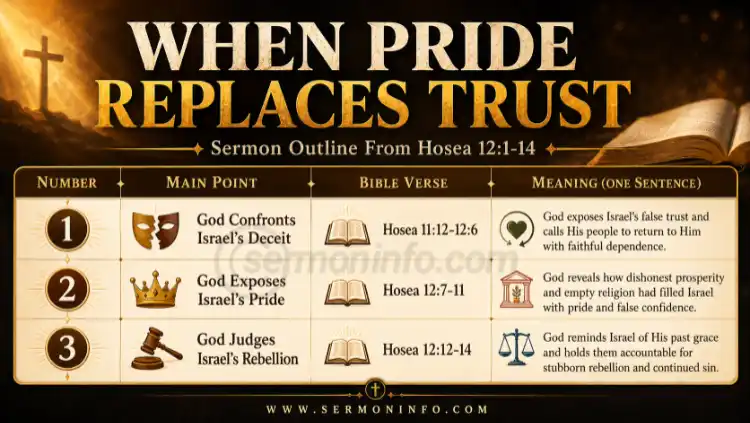
| Sermon Outline From Hosea 12:1-14 – Sermon Outlines From Hosea | |||
|---|---|---|---|
| Number | Main Point | Bible Verse | Meaning |
| 1 | God Confronts Israel’s Deceit | Hosea 11:12–12:6 | God exposes Israel’s false trust and calls His people to return to Him with faithful dependence. |
| 2 | God Exposes Israel’s Pride | Hosea 12:7–11 | God reveals how dishonest prosperity and empty religion had filled Israel with pride and false confidence. |
| 3 | God Judges Israel’s Rebellion | Hosea 12:12–14 | God reminds Israel of His past grace and holds them accountable for stubborn rebellion and continued sin. |
Source Material
William MacDonald, Believer’s Bible Commentary, rev. ed. (Nashville: Thomas Nelson, 1995), 1103
John MacArthur, The MacArthur Bible Commentary (Nashville: Thomas Nelson, 2005), 980
John F. Walvoord and Roy B. Zuck, eds., The Bible Knowledge Commentary: Old Testament (Colorado Springs, CO: David C. Cook, 1985), 1402-1403