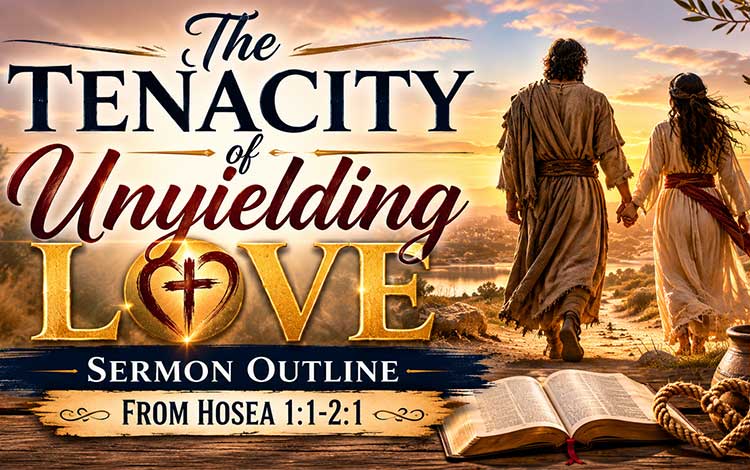
The Tenacity of Unyielding Love (Sermon Outline From Hosea 1:1-2:1) reveals God’s steadfast covenant love for His people despite their unfaithfulness. Through Hosea’s marriage and family, God demonstrates both His righteous judgment and His promise of future restoration. The passage highlights God’s faithfulness and His determination to fulfill His covenant purposes.
Key Takeaways – The Tenacity of Unyielding Love
- God’s love remains faithful even when His people fail. Hosea 1:1–2:1 shows that God’s covenant love does not give up on those who wander from Him.
- Sin brings consequences, but God’s purposes never fail. Israel faced righteous judgment for idolatry, yet God still promised future restoration according to His covenant promises.
- God’s grace offers hope beyond failure. Those who repent and trust the Lord can experience forgiveness, restoration, and the assurance that His unyielding love will never let them go.
Sermon Outline From Hosea 1:1-2:1
Hosea ministered during a spiritually dark period in Israel’s history. While the nation enjoyed material prosperity, it had abandoned the Lord and pursued idols. God called Hosea to live out a message that would illustrate Israel’s relationship with Him. Through Hosea’s marriage to Gomer, God revealed both the seriousness of sin and the tenacity of His unyielding covenant love.
Hosea 1:1–2:1 introduces us to a God whose love refuses to let go. Though Israel repeatedly turned from Him, the Lord remained faithful to His covenant promises. These verses reveal a God who confronts sin, announces judgment, and yet promises restoration. They remind us that God’s steadfast love endures despite human failure and ultimately points us to the redeeming grace found in Jesus Christ.
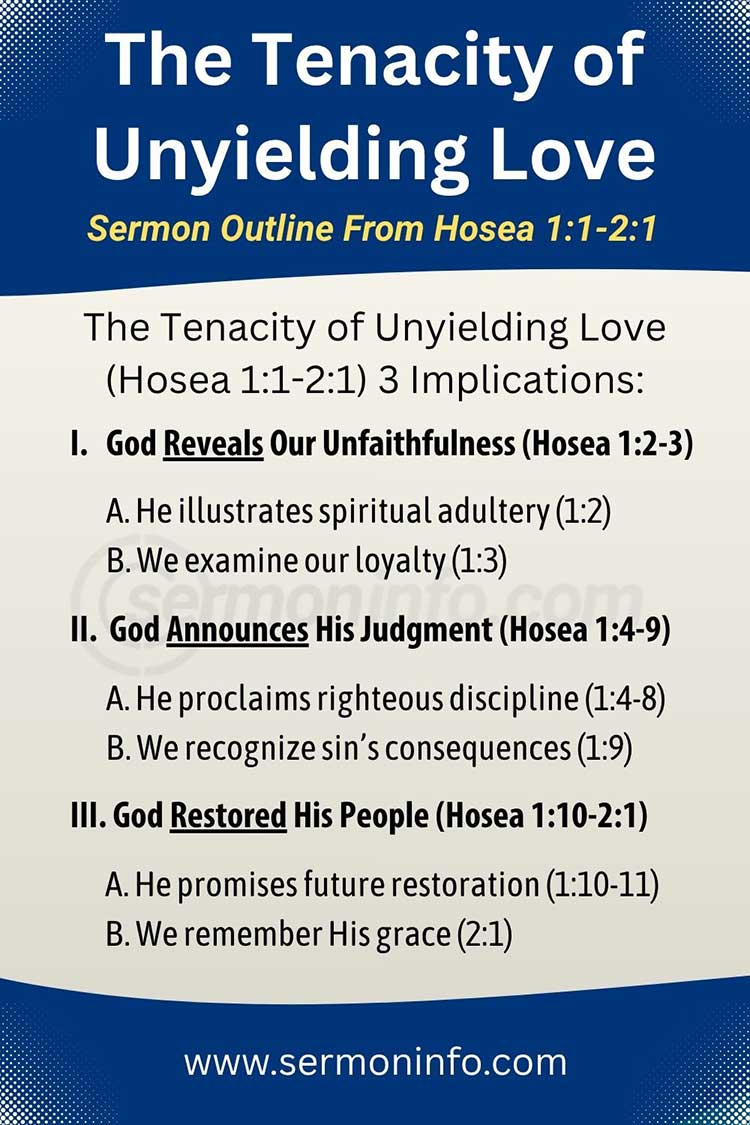
1. God Reveals Our Unfaithfulness (Hosea 1:2-3)
God used Hosea’s marriage to expose Israel’s spiritual unfaithfulness and reveal the depth of His covenant love (Summary Statement).
A. He Illustrates Spiritual Adultery (Hosea 1:2)
God commanded Hosea to marry Gomer as a living illustration of Israel’s relationship with Him. This unusual command revealed the pain of spiritual unfaithfulness. Just as Gomer would betray her husband, Israel had forsaken the Lord and pursued false gods. Their idolatry broke covenant fellowship and grieved the heart of God.
Notice that God did not merely speak this message; He displayed it through Hosea’s life. Israel chased after other lovers, believing idols could provide security and blessing. Yet every good gift came from the Lord alone. Like a spouse who abandons a faithful partner, Israel turned away from the God who had redeemed her (Exodus 20:3-5).
B. We Examine Our Loyalty (Hosea 1:3)
Hosea obeyed the Lord and took Gomer as his wife. His obedience stands in sharp contrast to Israel’s rebellion. This account invites us to examine our own hearts. While believers may not bow before carved idols, many allow success, possessions, careers, hobbies, or relationships to compete with God for first place.
Jesus taught that we must love the Lord with all our heart, soul, and mind (Matthew 22:37). Idolatry often begins when we treasure God’s gifts more than God Himself. A boat remains safe in the water, but danger comes when water enters the boat. In the same way, believers must guard their hearts so worldly desires do not replace wholehearted devotion to Christ. (Source Material: William MacDonald, Believer’s Bible Commentary, pp. 1097–1098)
2. God Announces His Judgment (Hosea 1:4-9)
God declared that persistent rebellion would bring righteous discipline and serious consequences upon Israel (Summary Statement).
A. He Proclaims Righteous Discipline (Hosea 1:4-8)
God used the names of Hosea’s children to announce His coming judgment upon Israel. Jezreel reminded the nation that God would punish the sins connected to the house of Jehu. Though judgment seemed delayed, God had not forgotten their rebellion. His discipline revealed His holiness and His commitment to righteousness.
Next, Lo Ruhamah meant “No Mercy,” and Lo Ammi meant “Not My People.” These names signaled the loss of covenant blessings because of persistent sin. Israel had repeatedly rejected the Lord’s warnings. Like storm clouds gathering on the horizon, God’s judgment approached because the nation refused to repent and return to Him.
B. We Recognize Sin’s Consequences (Hosea 1:9)
The name Lo Ammi revealed a broken relationship between God and His people. Israel’s rebellion had damaged their fellowship with the Lord. Sin always carries consequences. While God remained faithful to His covenant promises, the nation experienced the painful results of its disobedience and spiritual neglect.
This truth remains important for believers today. God loves His children too much to ignore persistent sin. Hebrews 12:6 reminds us that the Lord disciplines those He loves. Like a caring father correcting a wandering child, God uses discipline to restore fellowship and draw His people back to Himself. Discipline is not rejection; it is evidence of His faithful love. (Source Material: John MacArthur, The MacArthur Bible Commentary, pp. 972-973)
3. God Restores His People (Hosea 1:10-2:1)
God promised that His covenant purposes would prevail through future restoration and blessing (Summary Statement).
A. He Promises Future Restoration (Hosea 1:10-11)
After announcing judgment, God immediately revealed His gracious plan for restoration. Israel’s future would not end in ruin. The Lord promised that His people would become as numerous as the sand of the sea. Those once called “Not My People” would again be known as “sons of the living God” because His covenant promises cannot fail.
Notice also that God promised national reunification. Israel and Judah, long divided, would one day gather under one leader. This points ultimately to the Messiah and His future kingdom. Though God’s discipline was severe, His purposes remained secure. Like the sunrise after a dark night, restoration would follow judgment according to God’s perfect plan.
B. We Remember His Grace (Hosea 2:1)
The chapter closes with a remarkable reversal. The names that once signaled judgment now point toward blessing. God instructed His people to call one another Ammi, meaning “My People,” and Ruhamah, meaning “Shown Mercy.” Grace triumphed where sin had brought failure. God’s mercy spoke the final word.
This truth encourages every believer today. Our failures do not cancel God’s saving grace. Those who repent and trust Him receive forgiveness, restoration, and a secure future. Peter later echoed this promise, saying, “Once you were not a people, but are now the people of God” (1 Peter 2:10, NKJV). God’s grace still transforms lives and restores broken hearts. (Source Material: John F. Walvoord and Roy B. Zuck, The Bible Knowledge Commentary: Old Testament, pp. 1379–1386)
Conclusion
Hosea 1:1–2:1 reveals the tenacity of God’s unyielding love. Though Israel repeatedly turned away from Him, the Lord remained faithful to His covenant promises. He exposed their unfaithfulness, announced righteous judgment, and promised future restoration. This passage reminds us that God takes sin seriously, yet His steadfast love never fails.
Perhaps you have wandered from the Lord. Today, hear His gracious call to return. Acknowledge your sin, believe in Christ’s finished work on the cross, confess Him as Lord, and dedicate your life to Him. The God whose love would not let go of Israel is the same God who welcomes and restores all who come to Him through faith in Jesus Christ.
Closing Prayer
Heavenly Father, we thank You for the message of Hosea and the reminder of Your unyielding love. Even when Your people wandered from You, Your covenant faithfulness remained steadfast. Thank You for pursuing us with grace, confronting our sin with truth, and extending mercy through Your Son, Jesus Christ. Help us to love You wholeheartedly and to remain faithful in our walk with You each day.
Lord, if there are areas of our lives where we have drifted from You, bring us to repentance and renewal. Strengthen our faith, deepen our devotion, and help us trust in Your unfailing promises. May we never doubt the greatness of Your love or the certainty of Your grace. As we leave today, help us live as grateful children of the living God, bringing glory to Your name through our words and actions. In Jesus’ name we pray, Amen.
Frequently Asked Questions (FAQ)
Q: What is the main message of Hosea 1:1–2:1?
A: Hosea 1:1–2:1 reveals God’s unyielding covenant love despite Israel’s unfaithfulness. Through Hosea’s marriage and family, God illustrates Israel’s spiritual adultery, announces judgment for sin, and promises future restoration. The passage highlights God’s faithfulness, holiness, and grace.
Q: Why did God tell Hosea to marry Gomer?
A: God commanded Hosea to marry Gomer as a living illustration of Israel’s unfaithfulness. Just as Gomer would betray her husband, Israel had forsaken the Lord for idols. Hosea’s marriage vividly demonstrated both the pain of sin and the persistence of God’s covenant love.
Q: What do the names of Hosea’s children mean?
A: The names carried prophetic messages. Jezreel pointed to coming judgment, Lo Ruhamah meant “No Mercy,” and Lo Ammi meant “Not My People.” Together they warned Israel of the consequences of rebellion while preparing the way for God’s future restoration and blessing.
Q: How does Hosea 1:1–2:1 reveal God’s love?
A: The passage shows that God’s love remains steadfast even when His people fail. Although He announced judgment for Israel’s sin, He also promised restoration. God’s covenant love refused to abandon His people and guaranteed the fulfillment of His redemptive purposes.
Q: What can Christians learn from Hosea 1:1–2:1 today?
A: Christians learn that sin has consequences, but God’s grace offers hope. Believers must guard against spiritual idolatry and remain devoted to Christ. The passage encourages us to trust God’s faithfulness, knowing that He restores those who repent and return to Him.
The Bible Knowledge Commentary (2 Volumes) by John F. Walvoord
BONUS: What does Hosea teach about God’s covenant faithfulness?
Hosea teaches that God’s covenant faithfulness remains steadfast even when His people are unfaithful. Israel repeatedly pursued idols and broke covenant with the Lord, yet God refused to abandon His promises. Through Hosea’s marriage to Gomer, God illustrated His enduring commitment to His covenant people despite their rebellion (Hosea 1:2; 2:19-20).
God’s covenant faithfulness also guarantees future restoration. Although He disciplined Israel for sin, He promised that they would again be called “sons of the living God” and be restored to blessing (Hosea 1:10-11). This reveals that God’s promises rest on His character, not human performance. As Lamentations 3:22-23 declares, His mercies are new every morning and His faithfulness is great.
BONUS: Why is Israel called an unfaithful wife in the Book of Hosea?
Israel is called an unfaithful wife in Hosea because God entered into a covenant relationship with the nation, yet they repeatedly turned to idols and false gods. Just as a wife commits adultery by abandoning her husband, Israel committed spiritual adultery by forsaking the Lord and worshiping Baal (Hosea 2:13). Hosea’s marriage to Gomer vividly illustrated this tragic reality.
The image also highlights God’s remarkable covenant love. Although Israel broke faith with Him, God continued to pursue and call them back to Himself. Hosea 3:1 captures this truth when God tells Hosea to love his unfaithful wife again. The relationship pictures God’s steadfast love toward a rebellious people and His desire for their restoration and repentance.
BONUS: What is the significance of Jezreel in Hosea 1?
Jezreel carries both historical and prophetic significance in Hosea 1. God instructed Hosea to name his son Jezreel because He would soon judge the house of Jehu for the bloodshed associated with Jezreel and bring an end to the northern kingdom of Israel (Hosea 1:4-5). The name served as a warning that God’s judgment on persistent sin was approaching.
Yet Jezreel also became a symbol of future hope and restoration. The name can mean “God sows,” pointing to a day when God would regather and bless His people. Hosea 1:11 and 2:23 look beyond judgment to restoration, when Israel would once again experience God’s favor. Jezreel reminds us that God’s discipline is real, but His covenant promises will ultimately prevail.
BONUS: How does Hosea 1 point to God’s future restoration of Israel?
Hosea 1 points to God’s future restoration of Israel by moving from judgment to hope. Although God declared that Israel would face discipline for its unfaithfulness, He promised that their descendants would become as numerous as the sand of the sea (Hosea 1:10). God’s covenant with Abraham would remain secure despite Israel’s failure.
The passage also promises national and spiritual restoration. Those once called “Not My People” would again be called “sons of the living God” (Hosea 1:10). Israel and Judah would be reunited under one leader (Hosea 1:11), ultimately fulfilled in the Messiah’s future kingdom. Hosea teaches that God’s covenant promises will prevail because His faithfulness never fails.
BONUS: What does the phrase “children of the living God” mean in Hosea 1:10?
The phrase “children of the living God” in Hosea 1:10 describes the restoration of a broken relationship between God and His people. Earlier, God declared, “You are not My people” through the name Lo Ammi (Hosea 1:9). Yet His grace would reverse that judgment. Those separated by sin would once again belong to Him and enjoy covenant fellowship.
This title also points to God’s life giving power and faithfulness. Unlike the lifeless idols Israel pursued, the Lord is the living God who saves, restores, and keeps His promises. Hosea 1:10 looks ahead to a future restoration of Israel, while the New Testament applies this truth to all who come to God through faith in Christ (Romans 9:25-26; 1 Peter 2:10). God’s grace transforms outsiders into members of His family.
BONUS: How can believers avoid spiritual idolatry in their relationship with God today?
Believers can avoid spiritual idolatry by keeping God first in their hearts and lives. Jesus said, “You shall love the Lord your God with all your heart” (Matthew 22:37). Idolatry begins when we place money, success, relationships, or possessions above God. Regular prayer, Bible study, and worship help us maintain our devotion to Him.
We must also examine our hearts honestly and surrender anything that competes with Christ. First John 5:21 warns, “Keep yourselves from idols.” Like weeds in a garden, idols grow when left unchecked. As believers delight in God’s presence and trust His provision, they develop a deeper love for the Giver rather than merely enjoying His gifts.
BONUS: What hermeneutic is used in the marriage analogy?
The marriage analogy in Hosea uses a literal, grammatical, historical hermeneutic combined with typological illustration. Hosea’s marriage to Gomer was a real historical event that occurred in the prophet’s life (Hosea 1:2-3). The marriage itself is not an allegory but an actual relationship that God used to illustrate Israel’s covenant unfaithfulness. Israel is repeatedly portrayed as God’s wife in the Old Testament covenant relationship (Isaiah 54:5; Jeremiah 3:14; Ezekiel 16:8).
This analogy should be interpreted typologically rather than allegorically. The historical marriage serves as a divinely intended picture of God’s relationship with Israel. The analogy communicates one central truth: Israel’s idolatry was spiritual adultery against the Lord. Interpreters should avoid assigning symbolic meanings to every detail. Instead, they should focus on the author’s intended message, namely God’s covenant faithfulness despite Israel’s unfaithfulness (Hosea 2:19-20). This approach preserves the historical reality of the text while recognizing its theological significance.
| Sermon Outline From Hosea 1:1-2:1 – Sermons That Work From Hosea | |||
|---|---|---|---|
| Number | Main Point | Bible Verse | Meaning |
| 1 | God Reveals Our Unfaithfulness | Hosea 1:2-3 | God used Hosea’s marriage to Gomer to expose Israel’s spiritual adultery and show how His people had forsaken Him for idols. |
| 2 | God Announces His Judgment | Hosea 1:4-9 | Through the names of Hosea’s children, God warned Israel that persistent rebellion would bring righteous discipline and serious consequences. |
| 3 | God Restores His People | Hosea 1:10–2:1 | Despite Israel’s failure, God promised future restoration, renewed covenant blessings, and the assurance of His unfailing grace. |
Source Material
William MacDonald, Believer’s Bible Commentary, rev. ed. (Nashville: Thomas Nelson, 1995), 1097–1098
John MacArthur, The MacArthur Bible Commentary (Nashville: Thomas Nelson, 2005), 972-973
John F. Walvoord and Roy B. Zuck, eds., The Bible Knowledge Commentary: Old Testament (Colorado Springs, CO: David C. Cook, 1985), 1379–1386