The silence of God doesn’t mean the absence of God. When heaven seems quiet, remember: some of our greatest growth happens in seasons when God feels distant – a sermon outline from Psalm 10.

Key Takeaways – When God Feels Distant
- God’s silence is not absence — When God feels distant, He is still near, working behind the scenes to strengthen our faith and trust.
- Faith grows in stillness — Seasons of divine silence test our hearts, teaching us to rely on God’s Word rather than our emotions.
- God sees and remembers — Though the wicked may seem to prosper, God’s justice is certain, and His timing is always perfect (Psalm 10:14–18).
- Prayer remains powerful — Like David, we can cry out to God in confusion and still find confidence in His sovereignty and care.
- Silence invites surrender — When God seems far away, He calls us to deeper obedience, patience, and hope in His unchanging presence.
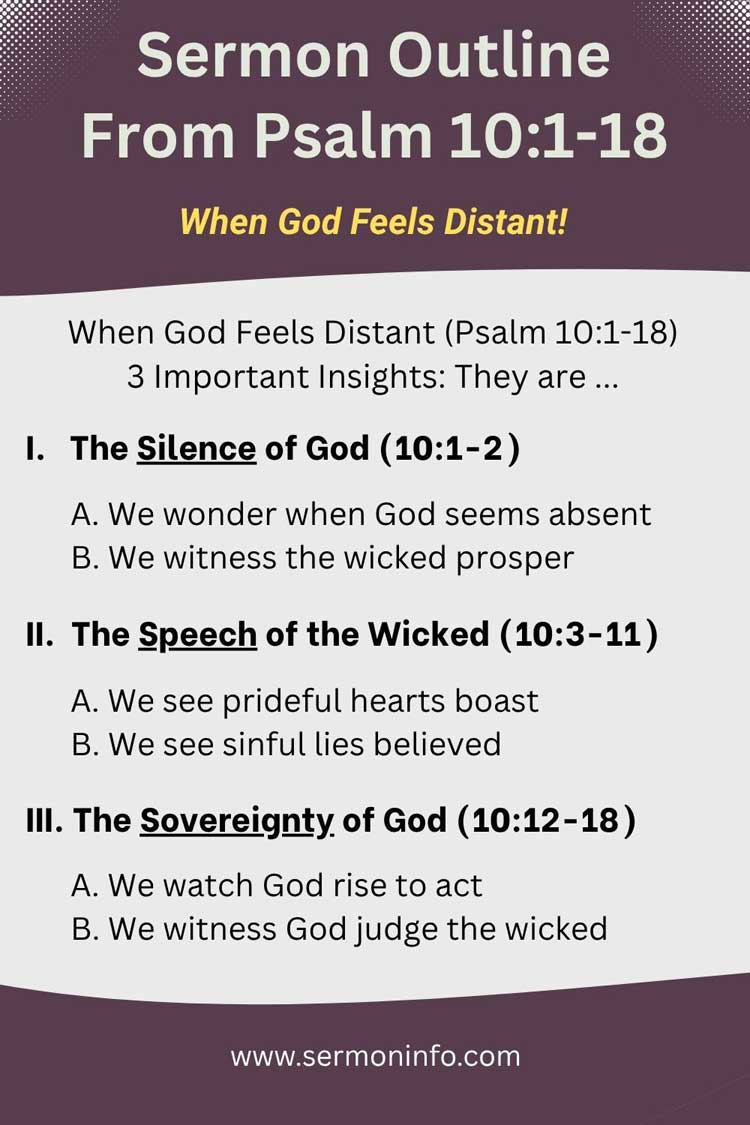
Sermon Outline From Psalm 10:1-18
There are moments when God feels far away. We pray, but heaven seems quiet. We search for answers, but none come. David felt that same ache when he cried, “Why do You stand afar off, O Lord?” (Psalm 10:1). It’s a question born not from doubt, but from deep longing for God’s nearness.
In Psalm 10, David watched evil rise while God appeared still. The proud mocked righteousness, and the helpless suffered without relief. Yet even in silence, David’s faith didn’t break. He questioned, but he never walked away. His cry was not rebellion—it was relationship.
Today, we’ll see that when God feels distant, He is never truly absent. Through His silence, His Word, and His sovereignty, He is still working—shaping faith, testing trust, and drawing us closer to Himself.
1. The Silence of God
Why do You stand afar off, O Lord? Why do You hide in times of trouble? The wicked in his pride persecutes the poor; Let them be caught in the plots which they have devised. (Psalm 10:1–2)
A. We Wonder When God Seems Absent
There are seasons when prayer feels like speaking into the wind. David felt it too when he asked, “Why do You stand afar off, O Lord?” (Psalm 10:1). It wasn’t a lack of faith—it was the cry of a faithful heart that longed for God’s nearness. Sometimes, silence is God’s invitation to deeper trust.
Many of us have faced moments when heaven seems quiet. Yet Scripture reminds us that God’s silence does not mean His absence. In Exodus 2:23–25, Israel groaned for years before God moved to deliver them. When He seems still, He is watching, shaping, and preparing the right moment to act. His timing may test us, but His purpose never fails.
B. We Witness the Wicked Prosper
David looked around and saw injustice everywhere. “The wicked in his pride persecutes the poor” (Psalm 10:2). It troubled him deeply, just as it troubles us when evil men prosper while godly people suffer. But even when God seems inactive, His justice is not asleep. His silence is not indifference—it is patience and mercy in motion.
We see the same struggle today—corruption rewarded, truth mocked, and faith marginalized. Yet Scripture assures us, “Do not fret because of evildoers” (Psalm 37:1). God allows wickedness to run its course, but not without purpose. One day His righteous judgment will set everything right. Until then, our task is to trust, pray, and walk uprightly before Him.
To All My Students: This material provides some ideas and thoughts for a message from Psalm 10:1-18 (When God Feels Distant).
2. The Speech of the Wicked
“For the wicked boasts of his heart’s desire; He blesses the greedy and renounces the Lord … He has said in his heart, ‘God has forgotten; He hides His face; He will never see.'”(Psalm 10:3–11)
A. We See Prideful Hearts Boast
David describes the wicked as those who “boast of their heart’s desire” and “bless the greedy” (Psalm 10:3). Pride blinds them to truth and deafens them to conviction. They worship self, not God. In our world today, this same spirit thrives—people glorify sin and mock holiness as if judgment will never come.
Yet God sees through the arrogance. Proverbs 16:18 warns, “Pride goes before destruction.” The proud may appear powerful, but their triumph is temporary. Every boast against heaven will be silenced when God speaks. Our role is to stay humble, remembering that all we have and all we are comes by His grace alone.
B. We See Sinful Lies Believed
The wicked convince themselves that “God has forgotten” and “He will never see” (Psalm 10:11). They mistake God’s patience for weakness. That lie fuels rebellion. But God’s silence is never ignorance—it is restraint born of mercy. He delays judgment to give time for repentance, not because He is unaware.
We hear similar voices today saying, “Where is God?” or “There’s no consequence for sin.” Yet 2 Peter 3:9 reminds us that the Lord is patient, not wanting any to perish. The longer He waits, the more grace He offers. But make no mistake—every hidden act will one day come into the light of His holiness.
3. The Sovereignty of God
“Arise, O Lord! O God, lift up Your hand! Do not forget the humble … Break the arm of the wicked and the evil man; Seek out his wickedness until You find none … Lord, You have heard the desire of the humble; You will prepare their heart; You will cause Your ear to hear, To do justice to the fatherless and the oppressed, That the man of the earth may oppress no more.”(Psalm 10:12–18)
A. We Watch God Rise to Act
After describing the wicked, David’s tone changes. He prays, “Arise, O Lord; O God, lift up Your hand” (Psalm 10:12). When faith feels small, prayer reminds us that God still reigns. His timing may stretch us, but His power never fades. David’s cry shows that silence doesn’t stop prayer—it strengthens it.
God always rises at the right time. Just as He delivered Israel from Egypt, He delivers His people from every oppression. Psalm 34:17 promises, “The righteous cry out, and the Lord hears.” He may allow trouble to test faith, but He never abandons His children. His silence prepares the stage for His mighty action.
B. We Witness God Judge the Wicked
David ends with confidence, declaring that God “will break the arm of the wicked” (Psalm 10:15). Evil never escapes His justice. Though the proud believe they rule unchecked, God will call every deed to account. Judgment delayed is not judgment denied. The Sovereign Lord rules now, even when we cannot see His hand.
We can rest knowing that God defends the helpless and comforts the brokenhearted. Psalm 10:17–18 assures us that He hears the cry of the humble and strengthens their hearts. One day, His justice will be complete, and all wrongs will be made right. Until then, we walk by faith, knowing the King is still on His throne.
Conclusion
When God feels silent, remember—He is still sovereign. David’s pain turned into prayer, and prayer into praise. The wicked may boast for a time, but God always has the final word. He sees, He remembers, and He will act in His perfect moment.
Like David, we must learn to trust God’s timing more than our own understanding. His silence is not rejection; it is preparation. Every unanswered prayer becomes an invitation to deeper faith and a clearer view of His character.
So when God feels far away, do what David did—cry out, hold on, and wait with hope. Because silence is not absence. The same God who seemed distant in verse one is gloriously near in verse eighteen.
Source Material
Holman Old Testament Commentary of the Psalms (Volume 1 & Volume 2) by Steven J. Lawson
An Expositional Commentary of the Psalms (Volume 1, Volume 2 and Volume 3) by James Montgomery Boice
A Commentary of the Psalms (Volume 1, Volume 2 and Volume 3) by Allen P. Ross
The NIV Application Commentary of the Psalms (Volume 1) by Gerald H. Wilson
Sermon Outline on Psalms
Sermon Outline From Psalm 1 True Happiness is found in the Lord
Sermon Outline From Psalm 2 God is Still on the Throne
Sermon Outline From Psalm 3 Peace in the Midst of Trouble
Sermon Outline From Psalm 4 Finding Confidence in Troubled Times
Sermon Outline From Psalm 5 Morning Prayer and Holy Living
Sermon Outline From Psalm 6 The Conquering Power of Confessing Sin
Sermon Outline From Psalm 7 A Heart Cry For Justice
Sermon Outline From Psalm 8 The Glory of the Lord in Creation
Sermon Outline From Psalm 9 Find Confidence in God in Times of Trouble
Sermon Outline From Psalm 139:23-24 3 Prayers of Examination
Frequently Asked Questions (FAQ)
Q: Why does God seem distant in times of trouble?
A: Psalm 10:1 expresses the psalmist’s feeling of abandonment during distress. This perceived distance often prompts believers to seek God more earnestly, trusting His timing and wisdom.
Q: What does Psalm 10 reveal about God’s justice?
A: Despite the apparent silence, Psalm 10 assures that God sees the oppression of the helpless and will act in His perfect timing to bring justice.
Q: How should we respond when God feels distant?
A: The psalmist’s example encourages us to bring our honest emotions to God in prayer, trusting that He is attentive to our cries even when His presence feels distant.
Q: Is it wrong to question God during difficult times?
A: No, questioning God is a natural part of faith. Psalm 10 demonstrates that expressing our doubts and seeking understanding is acceptable and can lead to deeper trust in God’s sovereignty.
Q: What can we learn from Psalm 10 about God’s presence?
A: Psalm 10 teaches that even when God seems silent, He is near, observing, and will act justly. Our role is to remain faithful, trust in His timing, and continue seeking Him through prayer and Scripture.
| Number | Main Point | Bible Verse | Meaning |
|---|---|---|---|
| 1 | The Silence of God | Psalm 10:1–2 | God may seem distant during suffering, but His apparent silence tests and strengthens our faith. |
| 2 | The Speech of the Wicked | Psalm 10:3–11 | The wicked boast and believe God does not see, yet their arrogance is temporary under His judgment. |
| 3 | The Sovereignty of God | Psalm 10:12–18 | God is actively defending the helpless and will bring justice, showing His power and perfect timing. |