A powerful Sermon Outline From Psalm 7:1-17 showing how God vindicates His people and judges the wicked with perfect righteousness.
Key Takeaways –
- God is our protection – Psalm 7 reminds us that true safety comes from trusting God’s shield in times of danger and difficulty.
- God searches our hearts – We surrender our innocence to Him, knowing He judges motives, not appearances, with perfect righteousness (Psalm 7:3-5).
- The Lord vindicates the righteous – When wronged, we rest in His testing and appeal to His supreme authority, not human opinion (Psalm 7:6-9).
- The Lord defends His people – He is our shield and refuge, fighting for those who walk uprightly (Psalm 7:10).
- God delivers justice – The psalm assures us that He will judge the wicked and bring deliverance to the faithful (Psalm 7:11-17).
- God deserves our praise – Even before deliverance arrives, we rejoice and give thanks, trusting His justice and mercy will prevail.
Sermon Outline From Psalm 7:1-17
Life has a way of pressing us with injustices. False words, unfair treatment, and hidden motives can weigh heavily on our hearts.
David knew that weight. In Psalm 7, he cried out when accused unjustly, entrusting his case to the God who judges rightly.
Like David, we bring our burdens to the Lord, praying for intervention, vindication, and justice. God alone protects, defends, and delivers.
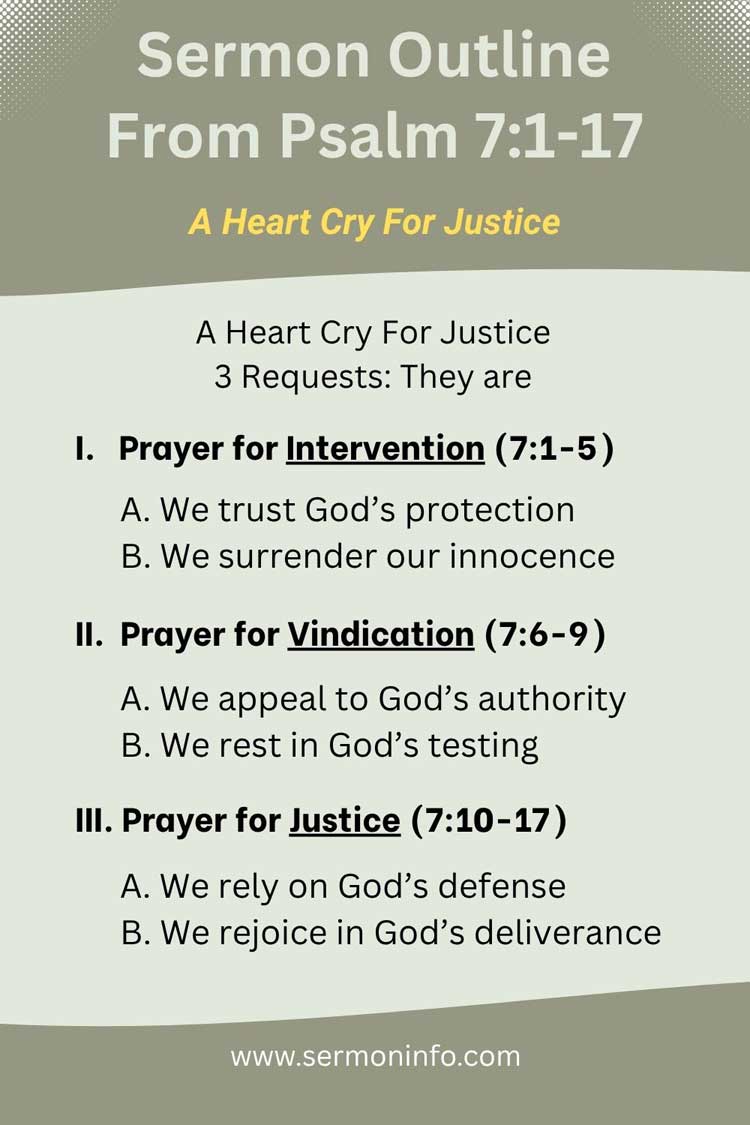
1. Prayer for Intervention
A. We trust God’s protection
“O Lord my God, in You I put my trust; Save me from all those who persecute me; And deliver me, Lest they tear me like a lion, Rending me in pieces, while there is none to deliver.” (Psalm 7:1-2)
When David faced false accusations, he cried, “O Lord my God, in you do I take refuge” (Psalm 7:1). He knew his safety did not rest in his strength but in God’s shield. We also face trials where no earthly defense feels strong enough, yet God never fails to guard His children.
Think about the storms that suddenly rise in our lives—betrayal, sickness, or slander. We are tempted to fight in our own power, but the Lord calls us to trust His covering. Like a child running into a father’s arms, we find peace in His protection. Faith rests not in circumstances but in the God who reigns over them.
B. We surrender our innocence
“O Lord my God, if I have done this: If there is iniquity in my hands, If I have repaid evil to him who was at peace with me, Or have plundered my enemy without cause, Let the enemy pursue me and overtake me; Yes, let him trample my life to the earth, And lay my honor in the dust.” (Psalm 7:3-5)
David boldly said that if he had wronged his accusers, let God judge him accordingly (Psalm 7:3-5). That was not arrogance but trust in God’s searching eye. We may claim innocence before men, but only God truly knows our hearts. When we confess honestly, we place our character in His hands.
We must ask the Lord to expose hidden pride, selfish motives, or wrong desires. This surrender is freeing, not frightening, because God forgives those who come clean. When He finds integrity, He strengthens us to stand firm. Our prayer must echo David’s: “Search me, O God, and know my heart” (Psalm 139:23).
To All My Students: This material provides some ideas and thoughts for a message from Psalm 7:1-17 (A Heart Cry For Justice).
2. Prayer for Vindication
A. We appeal to God’s authority
“Arise, O Lord, in Your anger; Lift Yourself up because of the rage of my enemies; Rise up for me to the judgment You have commanded! So the congregation of the peoples shall surround You; For their sakes, therefore, return on high. The Lord shall judge the peoples; Judge me, O Lord, according to my righteousness, And according to my integrity within me.” (Psalm 7:6-8)
David asked the Lord to rise in anger against injustice (Psalm 7:6). He knew God’s authority is supreme and unchallenged. We also face moments when we cannot fight back, but we can appeal to the Lord who rules heaven and earth. His throne is not shaken by false accusations or human schemes.
Injustice tempts us to take matters into our own hands, but God calls us to trust His authority. He alone judges rightly. Romans 12:19 reminds us, “Vengeance is mine, I will repay, says the Lord.” Our hope is not in earthly courts but in the final judgment of the righteous King.
B. We rest in God’s testing
“Oh, let the wickedness of the wicked come to an end, But establish the just; For the righteous God tests the hearts and minds.” (Psalm 7:9)
David trusted God to test both the righteous and the wicked (Psalm 7:9). This testing is not meant to crush us but to reveal what is true. We may struggle under trials, but God’s refining hand strengthens our faith and purifies our hearts.
Instead of fearing His testing, we rest in it. Like gold refined in the fire, we emerge stronger, not weaker. God never misjudges. He knows the difference between false accusations and real guilt. This truth frees us to rest, knowing His evaluation is always accurate and His verdict always just.
3. Prayer for Justice
“My defense is of God, Who saves the upright in heart. God is a just judge, And God is angry with the wicked every day. If he does not turn back, He will sharpen His sword; He bends His bow and makes it ready. He also prepares for Himself instruments of death; He makes His arrows into fiery shafts. Behold, the wicked brings forth iniquity; Yes, he conceives trouble and brings forth falsehood. He made a pit and dug it out, And has fallen into the ditch which he made. His trouble shall return upon his own head, And his violent dealing shall come down on his own crown. I will praise the Lord according to His righteousness, And will sing praise to the name of the Lord Most High.” (Psalm 7:10-17)
A. We rely on God’s defense
David declared, “My shield is with God, who saves the upright in heart” (Psalm 7:10). This was not wishful thinking but deep assurance. We also find strength in knowing that God defends us when we walk in His ways. No weapon formed against us can succeed without His permission.
Life often brings battles we cannot win alone. The enemy whispers lies, friends misunderstand, and circumstances press us hard. Yet we have a defender greater than any accuser. The Lord fights for His people. Exodus 14:14 says, “The Lord will fight for you, and you have only to be silent.”
B. We rejoice in God’s deliverance
David ended his prayer with worship: “I will give to the Lord the thanks due to his righteousness” (Psalm 7:17). He praised God before the final answer came. That is faith. We also rejoice in advance, trusting that God will deliver according to His justice and mercy.
Rejoicing does not deny pain, but it anchors hope in God’s character. Even when wrongs seem unpunished, we sing because God reigns. Justice may feel delayed, but it is never denied. Joy flows when we know God has the last word, and His word is always good.
Concluding Summary
When life presses us with injustice, we remember that God is both our shield and the Judge of all the earth.
He vindicates His people and brings down the wicked, so we can rest assured that no evil escapes His sight.
Therefore, let us trust Him fully, pray boldly, and rejoice deeply, knowing that His justice is sure and His mercy everlasting.
Source Material
Holman Old Testament Commentary of the Psalms (Volume 1 & Volume 2) by Steven J. Lawson
An Expositional Commentary of the Psalms (Volume 1, Volume 2 and Volume 3) by James Montgomery Boice
A Commentary of the Psalms (Volume 1, Volume 2 and Volume 3) by Allen P. Ross
The NIV Application Commentary of the Psalms (Volume 1) by Gerald H. Wilson
Frequently Asked Questions (FAQ)
Q: What is the main theme of Psalm 7?
A: Psalm 7 centers on David’s plea for God’s justice and protection against false accusations. He appeals to God as the righteous judge who will vindicate the innocent and punish the wicked. The psalm emphasizes trust in God’s sovereignty and the assurance that He will act justly on behalf of His people.
Q: How does David express his innocence in Psalm 7?
A: David asserts his innocence by inviting God’s examination of his heart and actions. In verses 3–5, he challenges, “O Lord my God, if I have done this … let the enemy pursue my soul.” This bold statement reflects his confidence in God’s ability to discern truth and his desire for divine justice.
Q: What does Psalm 7 teach about God’s judgment?
A: Psalm 7 portrays God as a just judge who is angry with the wicked every day. Verses 11–13 describe God preparing instruments of judgment against the unrighteous. This underscores the certainty of divine retribution and the importance of living righteously before God.
Q: How does Psalm 7 conclude, and what is its significance?
A: The psalm concludes with David vowing to give thanks to the Lord according to His righteousness (Psalm 7:17). This act of praise signifies trust in God’s justice and a commitment to acknowledge His righteous acts. It reflects a heart of gratitude and faith, even before the deliverance is fully realized.
Q: How can Psalm 7 be applied in daily life?
A: Psalm 7 encourages believers to trust in God’s justice when facing false accusations or persecution. It teaches the importance of integrity, the value of seeking God’s examination of our hearts, and the assurance that God will defend and deliver those who are righteous. By applying these principles, individuals can navigate challenges with confidence in God’s righteous judgment.
| Number | Main Point | Bible Verse | Meaning |
|---|---|---|---|
| 1 | Prayer for Intervention | Psalm 7:1-5 | We call on God to protect us in danger and search our hearts for true integrity. |
| 2 | Prayer for Vindication | Psalm 7:6-9 | We appeal to God’s authority and trust His righteous testing to vindicate the upright. |
| 3 | Prayer for Justice | Psalm 7:10-17 | We rely on God’s defense and rejoice in His deliverance, knowing He will judge the wicked. |