“7 Perspectives on God’s Providence” presents seven biblical ways God actively governs, guides, sustains, and provides in life. It highlights His sovereign control and personal care, showing that nothing happens outside His wise plan and loving purpose for His people.

Key Takeaways – 7 Perspectives on God’s Providence
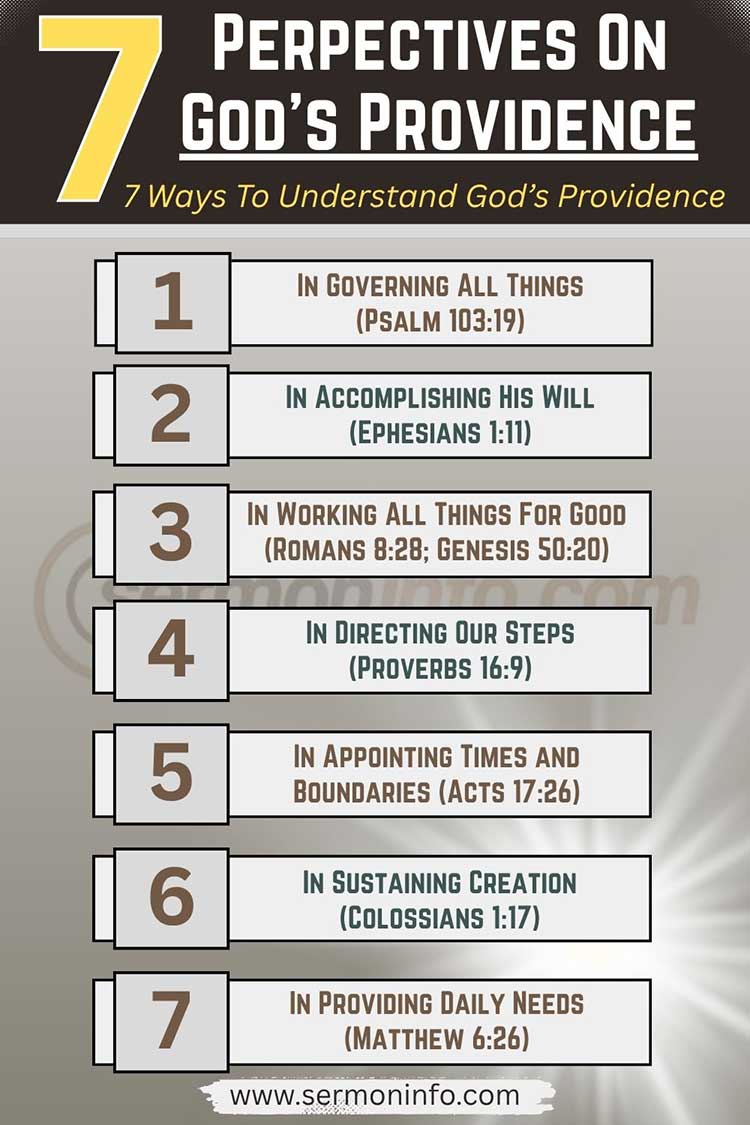
- God rules over all things with perfect authority. Trust His sovereign control, even when life feels uncertain (Psalm 103:19).
- God accomplishes His will in every situation. Rest in His purpose, knowing nothing happens outside His plan (Ephesians 1:11).
- God works all things together for your good. Hold onto hope in trials, because God uses them for growth (Romans 8:28).
- God directs your steps each day. Seek His guidance through His Word and trust His leading (Proverbs 16:9).
- God appoints your times and seasons. Accept His timing and trust His wisdom in every stage of life (Acts 17:26).
- God sustains all creation by His power. Find peace knowing Christ holds your life together (Colossians 1:17).
- God provides for your daily needs. Depend on Him with confidence, because He cares for you (Matthew 6:26).
7 Perspectives on God’s Providence
Life often feels uncertain, and many people ask who truly controls what happens next. Believers trust God, yet still face fear, loss, and questions. Others wonder if life has purpose or direction at all. In these moments, Scripture reminds us that God’s providence is real, active, and personal in every detail.
Today we will explore seven perspectives on God’s providence from His Word. We will see how He governs, guides, provides, and works all things for good. Each truth will help us trust Him more in daily life. As we walk through these verses, let your heart rest in His faithful care.
1. In Governing All Things (Psalm 103:19)
God rules over all creation with complete authority and nothing escapes His control.
A. Explanation
Psalm 103:19 declares that the LORD has established His throne in heaven and rules over all. This uses imagery, presenting God as King over a real kingdom. Scripture also uses anthropomorphism, giving God human traits, to help us grasp His rule. These figures reveal His authority in ways we understand.
This verse comforts believers who face chaos. God does not react to events. He reigns over them. Isaiah 46:10 says He declares the end from the beginning. When life feels uncertain, we remember our King still rules. His throne stands firm, and His purposes never fail.
B. Examples
Psalm 2:4 says, “He who sits in the heavens shall laugh.” This uses anthropomorphism. God is not amused as men are, but the image shows His complete control over rebellious nations. Their rage cannot shake Him. This helps us trust Him when leaders act against His truth.
Psalm 47:8 declares, “God reigns over the nations; God sits on His holy throne.” This imagery presents God as a sovereign King. Israel sang this in worship, affirming His rule over all peoples. Today, we rest in the same truth. No ruler escapes His authority.
2. In Accomplishing His Will (Ephesians 1:11)
God actively carries out His perfect plan in every detail of life.
A. Explanation
Ephesians 1:11 teaches that God works all things according to His will. Paul uses comprehensive language to show nothing falls outside God’s plan. This includes metaphor, as “working” presents God as actively accomplishing His purposes. It reveals His wisdom, not chance, governs every event.
This truth strengthened early believers in hardship. They knew God did not lose control. He carried out His eternal purpose in Christ. Romans 11:36 reminds us all things are from Him and through Him. When we feel uncertain, we trust that God still fulfills His perfect will.
B. Examples
Psalm 33:11 says, “The counsel of the LORD stands forever.” This uses contrast between human plans and God’s eternal purpose. Nations rise and fall, but His plans remain. Israel sang this in uncertain times. Today, we stand firm knowing God’s purpose cannot fail.
Psalm 135:6 declares, “Whatever the LORD pleases He does.” This uses absolute language to show God’s complete freedom and authority. Nothing limits His will in heaven or earth. When life feels out of control, this truth assures us God still acts with power and purpose.
3. In Working All Things For Good (Romans 8:28; Genesis 50:20)
God uses every situation to bring about good for those who love Him.
A. Explanation
Romans 8:28 teaches that God works all things together for good. This uses inclusive language to show every event fits His purpose. Genesis 50:20 adds contrast, where evil intent meets God’s good design. These expressions reveal divine providence that transforms suffering into blessing for His people.
Joseph spoke these words after great suffering. Betrayal and hardship did not defeat God’s plan. God used them to save many lives. Today, we face trials, yet trust His hand. James 1:2 reminds us trials produce growth. God shapes good even through painful moments.
B. Examples
Psalm 105:17 says, “He sent a man before them—Joseph.” This uses historical reflection with divine emphasis. What looked like betrayal became God’s preparation. Israel saw God’s hand in Joseph’s story. We also see that God moves ahead of us, preparing good through unseen means.
Psalm 119:71 declares, “It is good for me that I have been afflicted.” This uses personal testimony to express growth through suffering. The psalmist learned God’s statutes through hardship. Today, we understand that trials teach us dependence, shaping our hearts to trust God more deeply.
4. In Directing Our Steps (Proverbs 16:9)
God guides our decisions and leads our lives according to His wisdom.
A. Explanation
Proverbs 16:9 shows a contrast between human planning and divine direction. A man plans his way, but the LORD directs his steps. This uses parallelism, a key feature of Hebrew poetry, to emphasize God’s guiding hand. It teaches that God actively orders the details of life.
Believers make plans, yet trust God to guide outcomes. Psalm 37:23 says the steps of a good man are ordered by the LORD. This truth brings peace when plans change. God’s direction often differs from ours, yet His path leads to blessing and growth.
B. Examples
Psalm 37:23 says, “The steps of a good man are ordered by the LORD.” This uses metaphor, presenting life as a journey guided by God. David wrote during conflict, yet trusted God’s direction. Today, we follow God’s path even when the road feels uncertain.
Psalm 119:133 says, “Direct my steps by Your word.” This is a prayer using imperative language. The psalmist seeks guidance through Scripture. In daily life, we allow God’s Word to guide decisions. His truth becomes our map, leading us in righteousness.
5. In Appointing Times and Boundaries (Acts 17:26)
God determines the timing and circumstances of every person’s life.
A. Explanation
Acts 17:26 teaches that God appoints times and boundaries. Paul uses structured language to show God’s control over history and nations. This reflects sovereignty through divine ordering. It assures us that human life unfolds within God’s determined plan, not random chance.
Paul spoke this to people who trusted human wisdom. He revealed that God governs every nation’s rise and fall. Daniel 2:21 confirms God changes times and seasons. Today, we trust that our lives unfold within His timing, even when we do not understand.
B. Examples
Psalm 31:15 says, “My times are in Your hand.” This uses metaphor, placing life in God’s hand. David wrote this during distress, yet trusted God’s control. Today, we rest knowing every season of life sits securely in God’s care.
Psalm 75:6–7 declares that promotion comes from God. This uses contrast to show that human effort does not determine success. God raises one and puts down another. In life, we trust God’s timing for advancement and trust His wisdom in every season.
6. In Sustaining Creation (Colossians 1:17)
God continually upholds and preserves all things by His power.
A. Explanation
Colossians 1:17 teaches that Christ holds all things together. Paul uses sustaining imagery to show ongoing divine power. Creation does not run on its own. Christ actively upholds it. This reveals constant providence, not distant oversight, but present and active care.
This truth assures believers that God remains involved in every moment. Hebrews 1:3 says He upholds all things by His word. When life feels unstable, we remember Christ sustains all things. His power keeps both the universe and our lives secure.
B. Examples
Psalm 104:14 says God causes grass to grow. This uses descriptive imagery to show God’s care in creation. The psalm celebrates His daily provision in nature. Today, we see God’s hand in every sunrise and harvest, reminding us He sustains life.
Psalm 145:15–16 declares that all look to God for food. This uses personification, showing creation depending on Him. God opens His hand and satisfies every living thing. This encourages us to trust His ongoing care in every season.
7. In Providing Daily Needs (Matthew 6:26)
God faithfully supplies what we need as we trust in His care.
A. Explanation
Matthew 6:26 uses illustration, pointing to birds as evidence of God’s care. Jesus teaches through comparison, showing that if God feeds birds, He will care for us. This figurative teaching reveals God’s fatherly provision and calls us to trust Him daily.
Jesus spoke to people burdened by worry. He directed their attention to God’s faithful care in creation. Philippians 4:19 promises that God supplies all needs. Today, we trust Him for daily provision, knowing He values us deeply.
B. Examples
< Psalm 34:10 says, “Those who seek the LORD shall not lack any good thing.” This uses promise language to assure provision. David testifies that God meets needs for those who trust Him. Today, we rely on God’s faithful care in every circumstance. Psalm 23:1 declares, “The LORD is my shepherd; I shall not want.” This uses metaphor, presenting God as a shepherd who provides and protects. David reflects on God’s care through life’s valleys. We also trust our Shepherd to meet every need.
Conclusion
We have seen that God governs all things and accomplishes His perfect will. God works all things for good and directs our steps each day. He appoints times and boundaries and sustains all creation. He also provides our daily needs. These truths show that God’s providence is real, active, and faithful in every detail.
Now respond to this truth with faith and trust. Bring your fears and questions to the Lord who cares for you. If you know Him, rest in His guidance and walk in obedience. If you do not know Him, come to Jesus Christ today. Trust Him as your Savior and Lord, and find peace in His perfect care.
Closing Prayer
Heavenly Father, we thank You for Your faithful providence over our lives. You govern all things with wisdom, love, and perfect care. You guide our steps, provide our needs, and sustain us each day. Help us trust You when life feels uncertain, and remind us that Your hand is always at work for our good.
Lord Jesus, draw every heart to Yourself. Strengthen those who believe, and give peace in every trial. For those who do not yet know You, open their eyes to Your truth and grace. Lead them to trust You as Savior and Lord. We place our lives in Your hands, and we rest in Your perfect plan. In Jesus’ Name, we pray. Amen.
Frequently Asked Questions (FAQ)
Q: What is God’s providence in simple terms?
A: God’s providence means He actively rules, guides, and cares for all creation. Scripture teaches that nothing happens outside His control (Ephesians 1:11). He directs events, provides for needs, and works everything according to His wise and loving purpose.
Q: Does God control everything that happens?
A: God sovereignly governs all things, yet people still make real choices. The Bible shows that God works through events, even human actions, to accomplish His plan (Genesis 50:20). Nothing surprises Him, and nothing falls outside His authority or purpose.
Q: How does God’s providence affect my daily life?
A: God’s providence means He guides your steps, provides your needs, and works through your circumstances (Proverbs 16:9; Matthew 6:26). You can trust Him in decisions, trials, and ordinary moments, knowing He actively cares and leads your life.
Q: How can I trust God during difficult times?
A: You trust God by remembering His promises and His past faithfulness. Romans 8:28 teaches that God works all things for good for those who love Him. Even in suffering, He has a purpose, and He uses trials to strengthen faith and shape your character.
Q: What is the difference between God’s providence and coincidence?
A: Providence means God intentionally directs events with purpose, while coincidence suggests random chance. Scripture rejects randomness and shows God working behind the scenes in every detail (Colossians 1:17). What seems accidental is often God’s unseen hand guiding outcomes for His glory.
Systematic Theology by Wayne A. Grudem
BONUS: How do we reconcile God’s providential care with the evil within the world?
The Bible teaches that God remains sovereign, yet He does not author evil. James 1:13 says God does not tempt anyone with evil. Human sin brought corruption into the world, as Romans 5:12 explains. Still, God governs all things without compromising His holiness or righteousness.
God’s providence works even through evil to accomplish good purposes. Genesis 50:20 shows that God meant good through human wrongdoing. Acts 2:23 reveals that Christ’s crucifixion fulfilled God’s plan, though wicked men carried it out. These truths help us trust God’s wisdom when we face a broken world.
BONUS: Can I believe in both God’s providence and Free Will?
Yes, you can believe in both God’s providence and human responsibility. Scripture teaches that God rules over all, yet people make real choices. Proverbs 16:9 says a man plans his way, but the LORD directs his steps. This shows that human decisions operate under God’s sovereign guidance.
The Bible also shows both truths working together. Acts 2:23 says Jesus was delivered by God’s plan, yet men acted with wicked hands. Genesis 50:20 reveals human intent and God’s purpose in the same event. These passages teach that God’s providence and human responsibility exist together without contradiction.
BONUS: Why is there confusion between God’s providence and man’s free will?
Confusion arises because the human mind struggles to hold both truths together. Scripture teaches that God is fully sovereign and man is responsible. Isaiah 55:8–9 reminds us that God’s thoughts are higher than ours. Limited understanding often leads people to emphasize one truth while neglecting the other.
Confusion also comes from trying to explain mystery without Scripture’s balance. Proverbs 16:9 shows both planning and divine direction. Romans 9:20 warns us not to question God’s authority. When we trust His Word, we accept that God’s providence and human responsibility work together in perfect harmony.
BONUS: How do we explain God’s providential provision when our needs are not met?
When needs seem unmet, we remember that God defines our needs with perfect wisdom. Philippians 4:19 promises He supplies all our need in Christ, not all our wants. Jesus teaches in Matthew 6:33 that as we seek God first, He provides what is necessary. His provision often looks different than we expect.
We also trust God’s timing and purpose in seasons of lack. Psalm 37:25 shows that God sustains His people even in hardship. Sometimes He uses need to deepen faith, teach dependence, and draw us closer. In those moments, we walk by faith, knowing His care remains constant and faithful.
BONUS: What are examples of God’s providence in the Bible?
The Bible gives clear examples of God’s providence in real lives. In Genesis 50:20, Joseph says God used evil for good to save many people. In Esther, God protects His people through unseen guidance. These accounts show that God works through events to accomplish His purpose.
God’s providence also appears in daily provision and guidance. In 1 Kings 17:6, God feeds Elijah through ravens. In Exodus 16:4, He provides manna in the wilderness. These examples remind us that God still provides, directs, and cares for His people today.
BONUS: How is God’s providence different from His sovereignty?
God’s sovereignty refers to His supreme authority and rule over all things. Psalm 103:19 declares that His kingdom rules over all. Daniel 4:35 shows that no one can restrain His hand. Sovereignty emphasizes God’s right and power to reign over creation without challenge or limitation.
God’s providence describes how He actively carries out that sovereign rule in daily life. Ephesians 1:11 teaches that He works all things according to His will. Romans 8:28 shows He works for good in every situation. Providence reveals His ongoing care, guidance, and involvement in every detail.
Biblical Doctrine by MacArthur and Mayhue
BONUS: Where does the Bible teach that God provides for His people?
The Bible clearly teaches that God provides for His people. In Matthew 6:26, Jesus points to the birds and shows the Father feeds them. Philippians 4:19 promises that God supplies all our needs in Christ. These verses reveal His faithful care over both daily needs and spiritual life.
God also provides through real events in history. In Exodus 16:4, He sends manna to feed Israel in the wilderness. In 1 Kings 17:6, He feeds Elijah by ravens during famine. These accounts show that God meets needs in every season and proves His care through action.
BONUS: Why does God allow suffering if He is in control?
God allows suffering, yet He never loses control. Scripture shows that He uses trials to accomplish His purposes. Romans 8:28 teaches that God works all things for good for those who love Him. James 1:2–3 explains that trials produce patience and spiritual growth in believers.
God also uses suffering to draw hearts to Himself and reveal His glory. In John 9:3, Jesus says a man’s suffering displays God’s works. In 2 Corinthians 12:9, God shows His strength through weakness. These truths assure us that suffering has purpose under God’s wise care.
BONUS: How can I see God’s providence in my life today?
You see God’s providence as you notice His guidance in daily life. Proverbs 16:9 says the LORD directs your steps. James 1:17 reminds you that every good gift comes from Him. When you look back, you often see how God ordered events, opened doors, and provided help at the right time.
You also see His providence through His Word and faithful care. Psalm 119:105 says His Word is a lamp to your path. Matthew 6:33 teaches that as you seek Him first, He meets your needs. As you trust and obey, God reveals His hand in both small and great moments.
BONUS: What does it mean to trust God’s plan for your life?
To trust God’s plan means you rely on His wisdom over your own understanding. Proverbs 3:5–6 calls you to trust the LORD with all your heart and acknowledge Him in every way. You choose to believe that His direction is right, even when the path feels unclear or difficult.
Trusting God also means you rest in His purpose and timing. Romans 8:28 assures you that He works all things for good for those who love Him. Jeremiah 29:11 reminds you that His plans bring hope and a future. You follow Him with confidence, knowing He leads well.
BONUS: Explain the tension between suffering and God’s providential care?
The Bible shows a real tension between suffering and God’s care. Believers face trials, yet God remains sovereign. 1 Peter 5:10 says God uses suffering to perfect and establish us. Hebrews 12:6 teaches that He disciplines those He loves. These truths show that suffering does not cancel His care.
God’s providence works through suffering to accomplish good. Romans 8:28 assures that He works all things for good. In Genesis 50:20, Joseph sees God’s purpose in painful events. We may not see the full picture now, but we trust that God’s hand remains wise and faithful.
BONUS: Why does a loving God allow suffering?
A loving God allows suffering because sin has affected the world, yet He remains in control. Romans 5:12 shows that sin brought death and pain. Still, God uses suffering for good. Romans 8:28 teaches that He works all things together for those who love Him.
God also uses suffering to draw people to Himself and shape their lives. Hebrews 12:11 says discipline produces righteousness. 2 Corinthians 4:17 calls suffering a light affliction compared to eternal glory. Through trials, God reveals His love, strengthens faith, and points us to Christ.

Understanding the Times by Myers and Noebel
| 7 Perspectives on God’s Providence From God’s Word | |||
|---|---|---|---|
| Number | Main Point | Bible Verse | Meaning |
| 1 | In Governing All Things | Psalm 103:19 | God rules over all creation with complete authority and control. |
| 2 | In Accomplishing His Will | Ephesians 1:11 | God works out His perfect plan in every detail of life. |
| 3 | In Working All Things for Good | Romans 8:28 | God uses every situation for the good of those who love Him. |
| 4 | In Directing Our Steps | Proverbs 16:9 | God guides our decisions and directs the course of our lives. |
| 5 | In Appointing Times and Boundaries | Acts 17:26 | God determines the timing and place of every person’s life. |
| 6 | In Sustaining Creation | Colossians 1:17 | Christ continually holds all things together by His power. |
| 7 | In Providing Daily Needs | Matthew 6:26 | God faithfully provides for our needs as we trust in Him. |