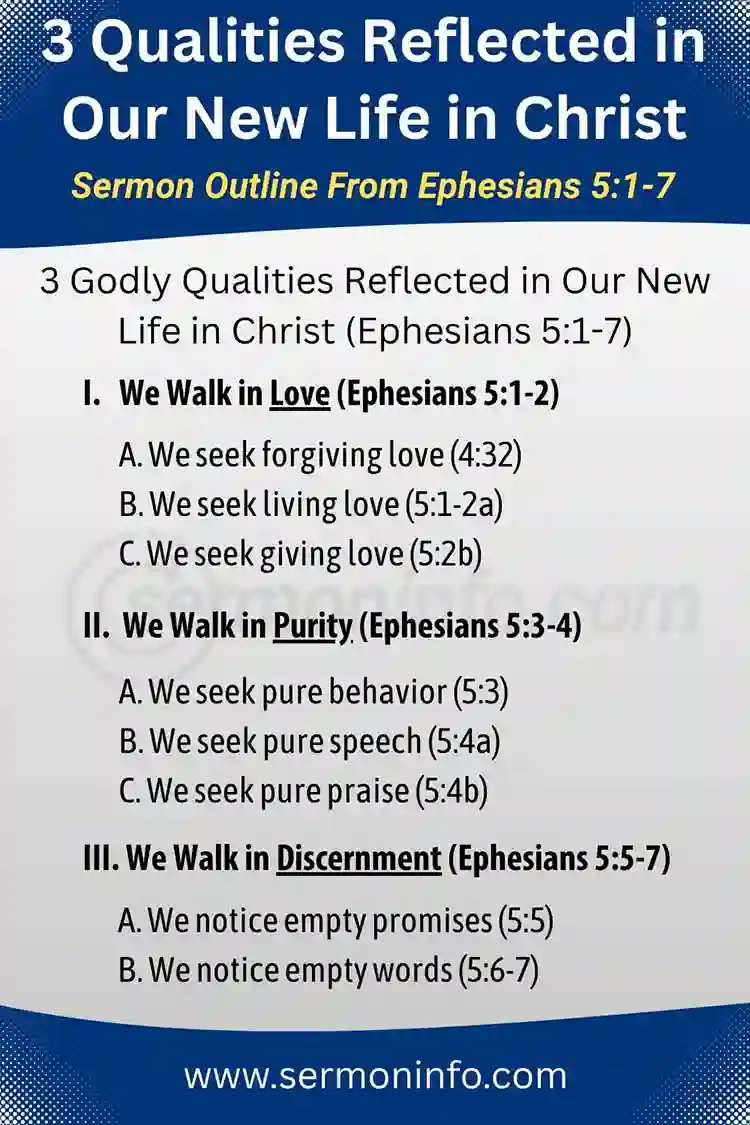
“3 Godly Qualities Reflected in Our New Life in Christ” (Sermon Outline From Ephesians 5:1-7) teaches that believers should walk in godly love, purity, and discernment as evidence of their transformed life in Christ. These qualities reflect God’s character and help Christians honor Him through their conduct, speech, relationships, and daily decisions.

Key Takeaways – Sermon From Ephesians 5:1-7
- Walk in Godly Love – Reflect Christ’s love by forgiving others, living compassionately, and serving sacrificially. Godly love demonstrates the reality of our new life in Christ and points others to the Savior (Ephesians 4:32; 5:1-2).
- Walk in Purity – Honor God through pure behavior, wholesome speech, and thankful praise. Believers glorify Christ when they reject sinful practices and pursue holiness in every area of life (Ephesians 5:3-4).
- Walk in Discernment – Recognize sin’s empty promises and reject deceptive influences. A believer who stands on God’s Word gains wisdom, avoids spiritual compromise, and walks faithfully with the Lord (Ephesians 5:5-7).
Sermon Outline Ephesians 5:1-7
Many people talk about the Christian life, but God calls us to walk it. Every day, we make choices that reveal what fills our hearts and directs our steps. As believers, God has given us a new life in Christ, and that new life should produce visible change. Our walk should reflect His character, His holiness, and His truth in a world that desperately needs His light.
In Ephesians 5:1-7, Paul urges believers to walk worthy of their calling by following God’s example. He highlights three qualities that should mark our daily walk. First, we walk in godly love. Next, we walk in purity. Finally, we walk in discernment. As we study these verses together, we will discover how God enables us to reflect Christ more clearly through every step of our new life in Him.
1. We Walk in Godly Love (Ephesians 5:1-2)
Paul calls believers to imitate God by displaying Christlike love that reflects their new identity as God’s beloved children (Summary Statement).
A. We Seek Forgiving Love (Ephesians 4:32)
Paul reminds believers to be kind, tenderhearted, and forgiving toward one another. Forgiveness does not begin with our feelings. It begins with God’s grace. Ephesians 4:32 says, “forgiving one another, even as God in Christ forgave you.” We forgive because Christ first forgave us.
When someone hurts us, forgiveness can feel difficult. Yet Christ forgave us while we were still sinners (Romans 5:8). Unforgiveness traps the heart like a prisoner behind locked doors. Forgiveness opens those doors and brings freedom. As we forgive others, we display the same love and grace God has shown to us.
B. We Seek Living Love (Ephesians 5:1-2a)
Paul calls believers to be “imitators of God as dear children” and to “walk in love.” A child often copies a loving parent. In the same way, God wants His children to reflect His character. Love should not appear only on special occasions. It should shape our daily attitudes, words, and actions.
This kind of love becomes a way of life. It appears in patience during conflict, kindness during pressure, and compassion during disappointment. Jesus said, “By this all will know that you are My disciples, if you have love for one another” (John 13:35). Every step of our walk should point others to Christ.
C. We Seek Giving Love (Ephesians 5:2b)
Paul points us to the greatest example of love. Christ “gave Himself for us, an offering and a sacrifice to God.” His love moved beyond words and expressed itself through sacrifice. At Calvary, Jesus willingly gave Himself so sinners could receive forgiveness and eternal life.
Godly love still gives today. It serves without demanding recognition. It helps without expecting repayment, and it places the needs of others before personal comfort. Philippians 2:3-4 calls believers to value others above themselves. When we serve with humility and generosity, we reflect the sacrificial love of our Savior. (Source Material: William MacDonald, Believer’s Bible Commentary, pp. 1940–1942)
This material provides some ideas and thoughts for a sermon outline from Ephesians 5:1-7 (3 Godly Qualities Reflected in Our New Life in Christ).
2. We Walk in Purity (Ephesians 5:3-4)
Paul urges believers to reject sinful conduct and speech so their lives honor the holiness of God (Summary Statement).
A. We Seek Pure Behaviour (Ephesians 5:3)
Paul reminds believers that sexual immorality, uncleanness, and covetousness should not characterize God’s people. These sins belong to the old life, not the new. Because we belong to Christ, we pursue holiness in our thoughts, actions, relationships, and desires. God calls us to stand apart from the values of the world.
Purity protects the heart like a fence protects a garden. When believers guard their minds and choices, spiritual fruit grows. Job made a covenant with his eyes (Job 31:1), and we should exercise similar care. In difficult times, purity honors God and strengthens our testimony before others.
B. We Seek Pure Speech (Ephesians 5:4a)
Paul moves from outward conduct to everyday conversation. He warns against filthy language, foolish talking, and coarse joking. Words reveal the condition of the heart. Jesus said, “Out of the abundance of the heart the mouth speaks” (Matthew 12:34). God desires speech that builds rather than tears down.
Our words can refresh people like cool water on a hot day, or they can wound like a sharp blade. Therefore, believers should carefully choose their conversations. Ephesians 4:29 encourages speech that ministers grace to hearers. When we speak with wisdom and kindness, we reflect Christ to those around us.
C. We Seek Pure Praise (Ephesians 5:4b)
Instead of sinful speech, Paul directs believers toward thanksgiving. Gratitude changes the atmosphere of the heart. A thankful believer focuses on God’s goodness rather than life’s frustrations. Every blessing, whether great or small, comes from the gracious hand of our Heavenly Father.
Thanksgiving also guards us during seasons of hardship. When trials come, praise reminds us that God remains faithful. Psalm 103:2 says, “Bless the Lord, O my soul, and forget not all His benefits.” As gratitude fills our hearts, worship flows from our lips and brings honor to God. (Source Material: John MacArthur, The MacArthur Bible Commentary, pp. 1697-1698)
3. We Walk in Discernment (Ephesians 5:5-7)
Paul warns believers to think biblically and avoid deception by recognizing God’s truth and judgment (Summary Statement).
A. We Notice Empty Promises (Ephesians 5:5)
Paul warns that immoral, impure, and covetous people have no inheritance in the kingdom of Christ and God. Sin often promises pleasure, freedom, and satisfaction. Yet those promises never deliver what they advertise. Like a mirage in the desert, sin attracts people but leaves them empty and thirsty.
Believers must remember the serious consequences of sin. Sin damages fellowship with God, weakens testimony, and brings divine discipline. Numbers 32:23 reminds us, “be sure your sin will find you out.” When we view sin through God’s eyes, we gain wisdom to reject its false promises and walk faithfully with Christ.
B. We Notice Empty Words (Ephesians 5:6-7)
Paul tells believers, “Let no one deceive you with empty words.” False teachers often minimize sin and question God’s truth. They offer attractive messages that appeal to human desires. Yet their words lack spiritual substance because they contradict God’s revealed Word and lead people away from obedience.
Today, many voices encourage compromise and excuse sinful behavior. Therefore, believers must test every message by Scripture. Acts 17:11 commends the Bereans because they searched the Scriptures daily. When we fill our minds with God’s truth, we recognize deception quickly and avoid becoming partners with those who reject His ways. (Source Material: John F. Walvoord and Roy B. Zuck, The Bible Knowledge Commentary: New Testament, pp. 637–638)
Conclusion
As we close, Paul reminds us that our new life in Christ should produce a new walk. We walk in godly love by forgiving, loving, and serving others. We walk in purity by guarding our actions, words, and attitudes, and we also walk in discernment by rejecting sin’s false promises and standing firmly on God’s truth.
Now the Lord calls each of us to examine our daily walk. Are we reflecting His character in our homes, workplaces, and relationships? If you know Christ, ask Him to strengthen your love, purity, and discernment. If you have never trusted Christ as Savior, acknowledge your sin, believe in His finished work, confess Him as Lord, and dedicate your life to Him today. He will forgive you, transform you, and guide every step of your walk.
Closing Prayer
Heavenly Father, we thank You for the new life we have in Jesus Christ. Thank You for Your forgiving love that reached us when we could not save ourselves. Help us walk in godly love, pursue purity in every area of life, and exercise discernment in a world filled with deception. Fill our hearts with gratitude and strengthen us through Your Holy Spirit so that our daily walk honors You.
Lord, help us reflect the character of Christ in our words, actions, and relationships. Give us wisdom to reject sin’s empty promises and courage to stand firmly upon Your truth. For those who do not yet know Christ as Savior, draw them to Yourself today. May they acknowledge their sin, believe in the Lord Jesus, confess Him as Lord, and dedicate their lives to Him. We ask these things in Jesus’ name. Amen.
Frequently Asked Questions (FAQ)
Q: What does it mean to walk in love according to Ephesians 5?
A: Walking in love means following Christ’s example of sacrificial love. Believers forgive others, show kindness, and serve selflessly. Just as Christ gave Himself for us, we demonstrate God’s love through our actions, attitudes, and relationships each day (Ephesians 5:1-2).
Q: Why is purity important in the Christian life?
A: Purity honors God’s holiness and reflects our new identity in Christ. Ephesians 5:3-4 teaches believers to avoid immorality, impurity, and sinful speech. A pure life protects our testimony, strengthens our fellowship with God, and points others toward Christ.
Q: How can Christians guard their speech?
A: Christians guard their speech by rejecting corrupt, foolish, and inappropriate talk. Instead, they use words that encourage, edify, and express gratitude to God. Ephesians 5:4 reminds believers that thankful praise should replace speech that dishonors the Lord.
Q: What are the dangers of sin’s false promises?
A: Sin promises satisfaction, freedom, and happiness, but it ultimately brings spiritual harm and separation from God’s purposes. Ephesians 5:5 warns believers about the serious consequences of sinful living and encourages them to pursue righteousness instead.
Q: How can believers develop spiritual discernment?
A: Believers develop discernment by studying Scripture, obeying < a href="https://www.sermoninfo.com/7-reasons-to-study-gods-word.html" title="7 Reasons To Study God's Word">God’s Word, and testing every message against biblical truth. Ephesians 5:6-7 warns against deception and empty words. A mind grounded in God’s truth recognizes error and walks wisely in a confusing world.

BONUS: What are the characteristics of a godly life according to Ephesians 5:1-7?
A godly life reflects God’s character through love, purity, and obedience. Paul commands believers to be “imitators of God” and to “walk in love” as Christ loved us and gave Himself for us (Ephesians 5:1-2, NKJV). Godly people forgive others, show kindness, and serve sacrificially because Christ first showed grace to them.
A godly life also pursues holiness and discernment. Believers reject immorality, impurity, covetousness, and corrupt speech, replacing them with thanksgiving and praise (Ephesians 5:3-4). They recognize sin’s empty promises and refuse deceptive influences (Ephesians 5:5-7). As they follow God’s Word, their conduct displays the transforming power of their new life in Christ.
BONUS: How does Christ’s love serve as an example for believers today?
Christ’s love serves as the perfect example because He willingly sacrificed Himself for others. Ephesians 5:2 says, “walk in love, as Christ also has loved us and given Himself for us.” Jesus placed our greatest need above His own comfort. His love was active, selfless, and unconditional, providing forgiveness and salvation through His death on the cross.
Believers follow Christ’s example by loving others through service, kindness, and forgiveness. Jesus taught, “love one another; as I have loved you” (John 13:34). When Christians show grace to difficult people, help those in need, and forgive those who offend them, they reflect the character of Christ and display His love to the world.
BONUS: What does the Bible teach about holiness in everyday living?
Holiness in everyday living means setting our lives apart for God and reflecting His character in our daily choices. First Peter 1:15-16 says, “be holy in all your conduct.” The Bible teaches that believers should honor God through their thoughts, actions, words, and relationships because they belong to Him through faith in Christ.
Holiness also involves rejecting sinful practices and pursuing obedience to God’s Word. Ephesians 5:3-4 instructs believers to avoid immorality, impurity, and corrupt speech while embracing thanksgiving and purity. As Christians walk in the Spirit and submit to Scripture, they grow in Christlikeness and display God’s transforming work to those around them.
BONUS: Why does Paul warn Christians about immorality and covetousness in Ephesians 5?
Paul warns Christians about immorality and covetousness because these sins contradict the new life believers have in Christ. Ephesians 5:3 says these behaviors “should not even be named among you, as is fitting for saints.” Immorality corrupts the heart, while covetousness elevates personal desires above God’s will and leads people away from faithful obedience.
Paul also warns that these sins carry serious spiritual consequences. Ephesians 5:5 identifies covetousness as idolatry because it places something above God. Sin often promises satisfaction but ultimately brings emptiness and discipline. By rejecting immorality and covetousness, believers protect their testimony, honor the Lord, and demonstrate His holiness in everyday life.
BONUS: How can believers identify and avoid spiritual deception?
Believers identify spiritual deception by measuring every teaching against God’s Word. Paul warned, “Let no one deceive you with empty words” (Ephesians 5:6, NKJV). False teaching often sounds appealing, but it contradicts Scripture. Like the Bereans, believers should search the Scriptures daily to confirm whether a message aligns with God’s truth (Acts 17:11).
Believers avoid spiritual deception by remaining close to Christ and growing in biblical discernment. Jesus said, “Take heed that no one deceives you” (Matthew 24:4). Regular Bible study, prayer, and obedience strengthen spiritual judgment. When believers fill their minds with God’s truth, they recognize error more quickly and walk confidently in the light of His Word.
BONUS: What practical steps can Christians take to walk worthy of their calling in Christ?
Walking worthy of our calling begins with imitating God’s character and walking in love. Ephesians 5:1-2 calls believers to follow Christ’s example of sacrificial love. Christians can practice this daily by forgiving others, serving selflessly, and showing kindness in their homes, workplaces, and relationships. These actions reflect the transforming power of Christ in everyday life.
Believers also walk worthy of their calling by pursuing holiness and exercising discernment. Ephesians 5:3-7 urges Christians to reject immorality, guard their speech, and avoid deception. Regular prayer, Bible study, and obedience to God’s Word strengthen spiritual growth. As believers submit to the Holy Spirit, they honor God and display a life that reflects their new identity in Christ.
| Sermon Outline From Ephesians 5:1-7 – Free Expository Sermon Outlines | |||
|---|---|---|---|
| Number | Main Point | Bible Verse | Meaning |
| 1 | We Walk in Godly Love | Ephesians 5:1-2 | Believers reflect God’s character by forgiving others, living in love, and serving sacrificially as Christ loved us. |
| 2 | We Walk in Purity | Ephesians 5:3-4 | Believers honor God by pursuing moral purity, guarding their speech, and expressing thankful praise in daily life. |
| 3 | We Walk in Discernment | Ephesians 5:5-7 | Believers recognize sin’s empty promises, reject deception, and follow God’s truth with wisdom and obedience. |
Source Material
William MacDonald, Believer’s Bible Commentary, rev. ed. (Nashville: Thomas Nelson, 1995), 1940–1942
John MacArthur, The MacArthur Bible Commentary (Nashville: Thomas Nelson, 2005), 1697-1698
John F. Walvoord and Roy B. Zuck, eds., The Bible Knowledge Commentary: New Testament (Colorado Springs, CO: David C. Cook, 1985), 637–638