3 Reasons to Be Aware of False Teachers and Workers of Evil (Sermon Outline From 2 Peter 2:1-3) highlights Peter’s warning that false teachers distort biblical truth, draw people into error, and exploit others for personal gain. They often disguise deception with persuasive words and ungodly influence. Believers must remain grounded in God’s Word and faithfully follow Jesus Christ, who is the source of truth.
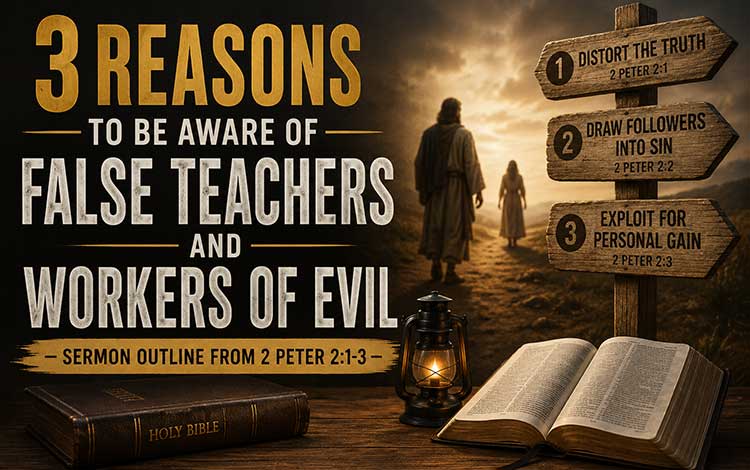
Key Takeaways – Sermon Outline From 2 Peter 2:1-3
- Guard the Truth Carefully — False teachers distort biblical truth through subtle deception and denial of essential doctrines about Jesus Christ. Believers must test every teaching against Scripture and remain anchored in God’s unchanging Word (2 Peter 2:1).
- Watch the Influence You Follow — False teachers attract followers by promoting ungodly living and weakening biblical convictions. Christians should follow Christ faithfully, pursue holiness, and ensure their lives honor the gospel before a watching world (2 Peter 2:2).
- Discern Motives and Messages — False teachers often seek personal gain, influence, and recognition through persuasive but deceptive words. Believers should look for leaders who exalt Christ, teach Scripture faithfully, and serve others with humility and integrity (2 Peter 2:3).
Sermon Outline From 2 Peter 2:1-3
Many believers sincerely want to follow the Lord, yet we live in a world filled with competing voices. Some voices speak God’s truth clearly, while others subtly distort it. Jesus warned about false prophets (Matthew 7:15), and Peter warned about false teachers among God’s people (2 Peter 2:1). Because error often sounds convincing, every believer must test what they hear against God’s Word. God’s voice remains the only voice of absolute truth.
This brings us to Peter’s serious warning in 2 Peter 2:1-3. In these verses, he reveals three reasons believers must be aware of false teachers and workers of evil. We will see how they distort the truth, draw people after themselves, and exploit others for personal gain. As we study this passage together, God will help us discern error, stand firmly in His truth, and follow Christ with greater confidence and faithfulness.
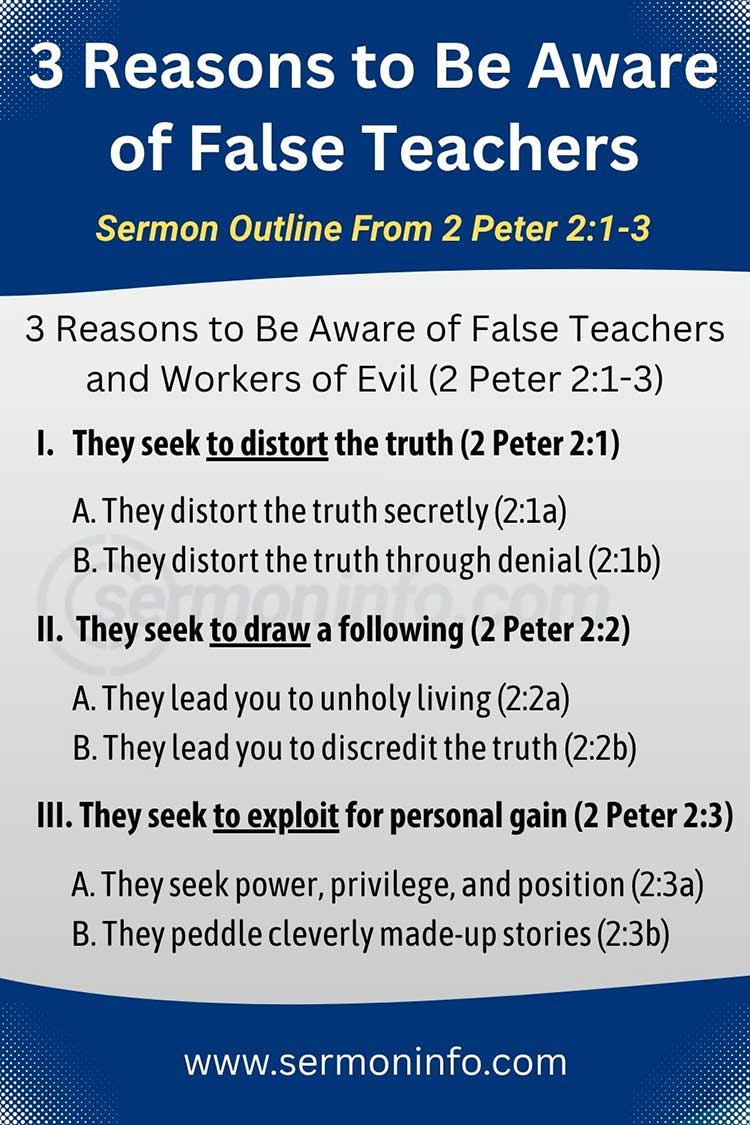
1. They Seek to Distort the Truth (2 Peter 2:1)
False teachers work to corrupt God’s truth by introducing destructive doctrines that lead people away from biblical faith and sound teaching (Summary Statement).
A. They Distort the Truth Secretly (2 Peter 2:1a)
Peter warned that false teachers would secretly bring in destructive heresies among God’s people. They do not usually announce their error openly. Instead, they mix truth with falsehood, much like a small amount of poison contaminates a glass of water. Their words sound appealing, but they gradually lead people away from God’s Word.
Today, many voices use Christian language while promoting ideas that contradict Scripture. Jesus warned, “Beware of false prophets” (Matthew 7:15, NKJV). Believers must test every teaching by God’s Word (Acts 17:11). When we know the truth of Scripture, we recognize error before it takes root in our hearts.
B. They Distort the Truth Through Denial (2 Peter 2:1b)
Peter declared that false teachers even deny “the Lord who bought them” (2 Peter 2:1, NKJV). Some reject Christ’s deity. Others deny His authority, His substitutionary death, or His bodily resurrection. By attacking these foundational truths, they undermine the very gospel that saves sinners and gives eternal life.
Notice how serious this danger remains today. If the foundation of a house crumbles, the entire structure collapses. Likewise, when people reject essential truths about Christ, spiritual ruin follows. Jesus said, “I am the way, the truth, and the life” (John 14:6, NKJV). Therefore, believers must hold firmly to Christ, trust His Word, and reject every teaching that diminishes His glory. (Source Material: William MacDonald, Believer’s Bible Commentary, pp. 2294–2295)
This material provides some ideas and thoughts for a sermon outline from 2 Peter 2:1-3 (3 Reasons to Be Aware of False Teachers and Workers of Evil).
2. They Seek to Draw a Following (2 Peter 2:2)
False teachers influence others to follow their error, spreading ungodly beliefs and damaging the testimony of God’s truth (Summary Statement).
A. They Lead You to Unholy Living (2 Peter 2:2a)
Peter warned that many would follow the destructive ways of false teachers. False teaching often weakens biblical convictions and lowers God’s standards for holy living. When people stop measuring life by Scripture, sin becomes acceptable. What once troubled the conscience soon becomes normal, and spiritual growth begins to fade.
Notice how God’s Word calls believers to holiness. First Peter 1:15 says, “Be holy in all your conduct” (NKJV). A compass that points in the wrong direction leads travelers astray. Likewise, false teaching leads people away from God’s path. We must stay grounded in Scripture and follow Christ faithfully each day.
B. They Lead You to Discredit the Truth (2 Peter 2:2b)
Peter said that because of false teachers, “the way of truth will be blasphemed” (2 Peter 2:2, NKJV). When people embrace error and live ungodly lives, others often blame Christianity itself. Their actions create confusion and cause unbelievers to question the truth of the gospel.
This warning remains important today. People often judge the message by the messenger. Jesus taught believers to let their light shine before others (Matthew 5:16). When Christians walk faithfully with the Lord, they honor His name. When false teachers influence conduct, they bring reproach upon the truth they claim to represent. (Source Material: John MacArthur, The MacArthur Bible Commentary, pp. 1933-1934)
3. They Seek to Exploit for Personal Gain (2 Peter 2:3)
False teachers use religion as a means of personal advantage, pursuing selfish interests rather than serving God’s people faithfully (Summary Statement).
A. They Seek Power, Privilege, and Position (2 Peter 2:3a)
Peter revealed that false teachers often act from selfish motives rather than sincere devotion to God. They desire influence, recognition, and control over others. Instead of exalting Christ, they promote themselves. Their ambition becomes more important than God’s glory and the spiritual well being of the people they influence.
In contrast, Jesus taught that true greatness comes through humble service (Mark 10:43-45). A faithful shepherd feeds the flock rather than using the flock for personal advancement. Believers should carefully examine those who teach God’s Word. Godly leaders point people to Christ, not to themselves.
B. They Peddle Cleverly Made Up Stories (2 Peter 2:3b)
Peter warned that false teachers use deceptive words to exploit people. They create persuasive stories and impressive claims that sound convincing but lack biblical truth. Their message appeals to emotions and personal desires. Through these fabricated accounts, they gain trust and often seek financial or personal benefit.
Notice the contrast with God’s Word. Peter later declared that the apostles did not follow “cunningly devised fables” (2 Peter 1:16, NKJV). Truth stands on God’s revelation, not human invention. Like counterfeit money resembles the real thing, false teaching can appear genuine. Therefore, believers must compare every message with Scripture and hold firmly to the truth. (Source Material: John F. Walvoord and Roy B. Zuck, The Bible Knowledge Commentary: New Testament, pp. 869–870)
Conclusion
False teachers remain a real danger because they seek to distort the truth, draw a following, and exploit others for personal gain. Peter warned that they secretly introduce error, deny essential truths about Christ, encourage ungodly living, and discredit the gospel. They pursue influence and use deceptive words to achieve their selfish goals. Therefore, believers must remain grounded in God’s Word and committed to the truth.
As we close, examine your heart and ask whether you are following God’s voice above every other voice. The Lord Jesus Christ alone is “the way, the truth, and the life” (John 14:6, NKJV). If you have never trusted Him, acknowledge your sin, believe in His death and resurrection, confess Him as Lord, and dedicate your life to Him. When you place your faith in Christ, He saves you, guides you in truth, and keeps you secure in His grace.
Closing Prayer
Heavenly Father, we thank You for the truth of Your Word and for the warnings You lovingly give to protect us from error. Help us recognize false teaching and remain faithful to the Lord Jesus Christ. Give us discernment through the Holy Spirit and a deep hunger for Scripture. Guard our hearts from deception and strengthen our commitment to walk in truth, holiness, and obedience each day.
Gracious Lord, help us follow Your voice above every competing voice in this world. Keep our eyes fixed on Jesus, the Author and Finisher of our faith. For those who need salvation, draw them to trust Christ as Savior and Lord today. For believers, deepen our love for You and Your truth. May our lives honor Your name, reflect Your character, and point others to the hope found in Jesus Christ alone. In His precious name we pray, Amen.
Frequently Asked Questions (FAQ)
Q: What are the signs of a false teacher according to the Bible?
A: The Bible teaches that false teachers distort God’s truth, deny essential doctrines about Christ, promote ungodly living, and seek personal gain (2 Peter 2:1-3). They often appear convincing but lead people away from sound biblical teaching and obedience to God’s Word.
Q: How can Christians identify false teaching?
A: Christians identify false teaching by comparing every message with Scripture (Acts 17:11). Any teaching that contradicts the Bible, diminishes Christ’s authority, or encourages sinful behavior should be rejected. God’s Word remains the final standard for truth and doctrine.
Q: Why are false teachers dangerous?
A: False teachers deceive people with persuasive words and subtle errors. They lead many away from biblical truth, damage spiritual growth, and bring reproach upon the gospel (2 Peter 2:2). Their influence can affect both beliefs and daily conduct.
Q: What does the Bible say about testing teachers?
A: Scripture commands believers to test teachings carefully. First John 4:1 says, “Do not believe every spirit, but test the spirits.” Christians should evaluate teachers by their doctrine, character, and faithfulness to God’s Word rather than popularity or charisma.
Q: What should believers do when confronted with false teaching?
A: Believers should remain grounded in Scripture, reject error, and hold firmly to the truth of Jesus Christ (2 Timothy 3:16-17). Prayer, biblical discernment, and faithful study of God’s Word help Christians recognize deception and walk confidently in truth.
Believer’s Bible Commentary by William MacDonald
BONUS: What does 2 Peter 2:1-3 teach about false teachers?
False teachers secretly introduce destructive errors among God’s people and distort biblical truth (2 Peter 2:1). Peter warns that they deny essential truths about the Lord Jesus Christ, even while appearing religious. Their teachings often sound convincing, but they lead people away from sound doctrine. Jesus also warned believers to beware of false prophets who come in sheep’s clothing (Matthew 7:15).
Peter also teaches that false teachers attract followers, encourage ungodly living, and exploit people for personal gain (2 Peter 2:2-3). They use persuasive words and deceptive methods to advance their own interests. In contrast, believers must test every teaching by Scripture (Acts 17:11) and remain firmly grounded in the truth of God’s Word and the gospel of Christ.
BONUS: Why do false teachers deny the Lord Jesus Christ?
False teachers deny the Lord Jesus Christ because His authority confronts their sinful desires and selfish ambitions. Peter says they deny “the Lord who bought them” and bring destruction upon themselves (2 Peter 2:1). Rather than submit to Christ’s lordship, they promote ideas that elevate human opinion above God’s truth. Their denial allows them to pursue influence without accountability to Christ.
Some deny Christ’s deity, others reject His saving work, and many refuse His right to rule their lives. John warned that those who deny the Son do not have the Father (1 John 2:22-23). False teachers attack Christ because He stands at the center of the gospel. In contrast, true believers confess Jesus as Lord and hold firmly to the faith once delivered in Scripture (Jude 3).
BONUS: How do false teachers deceive believers according to the Bible?
False teachers deceive believers by mixing error with truth and presenting false doctrine in appealing ways. Peter says they “secretly bring in destructive heresies” (2 Peter 2:1). Their teachings often sound biblical on the surface, but they subtly distort God’s Word. Like Satan in the Garden of Eden, they question and twist what God has clearly said (Genesis 3:1).
They also use persuasive speech, emotional appeals, and promises that attract followers. Peter warns that “by covetousness they will exploit you with deceptive words” (2 Peter 2:3). Paul cautioned that false teachers deceive “the hearts of the simple” through smooth words (Romans 16:18). Therefore, believers must test every teaching against Scripture and follow the example of the Bereans, who searched God’s Word daily (Acts 17:11).
BONUS: What are the dangers of following false teachers?
False teachers lead people away from biblical truth and toward spiritual error. Peter warns that their destructive teachings can bring ruin to those who follow them (2 Peter 2:1). When believers accept false doctrine, they weaken their understanding of God’s Word and become vulnerable to deception. Jesus warned, “Take heed that no one deceives you” (Matthew 24:4).
Following false teachers also harms a believer’s testimony and relationship with God. Peter says many follow their destructive ways, causing the truth to be slandered (2 Peter 2:2). False teaching often encourages ungodly living and compromises holiness. In contrast, God calls believers to grow in truth and maturity through His Word (Ephesians 4:14-15), remaining faithful to Christ in both belief and conduct.
BONUS: How can Christians protect themselves from false doctrine?
Christians protect themselves from false doctrine by knowing and studying God’s Word. The Bereans searched the Scriptures daily to verify what they heard (Acts 17:11). When believers fill their minds with biblical truth, they recognize error more easily. God’s Word acts like a lamp that guides our path and exposes spiritual deception (Psalm 119:105).
Believers also protect themselves by remaining close to Christ and exercising spiritual discernment. John urged Christians to “test the spirits” because many false prophets have gone into the world (1 John 4:1). The Holy Spirit guides believers into truth (John 16:13). Through prayer, sound teaching, and faithful obedience, Christians grow stronger and stand firm against false doctrine.
BONUS: What judgment does God promise for false teachers in Scripture?
False teachers may appear successful for a time, but God promises certain judgment upon them. Peter declares that their “judgment has not been idle, and their destruction does not slumber” (2 Peter 2:3, NKJV). God sees their deception and will hold them accountable. No false teacher will escape His perfect justice, regardless of influence, popularity, or wealth.
Peter continues by comparing their future judgment to God’s judgment on fallen angels and the ungodly world in Noah’s day (2 Peter 2:4-5). Jude also warns that false teachers face eternal condemnation (Jude 4). These warnings remind believers that God defends His truth and judges those who deliberately corrupt the gospel. Therefore, Christians should remain faithful to Christ and trust God’s righteous justice.
| Sermon Outline From 2 Peter 2:1-3 – Free Expository Sermon Outlines | |||
|---|---|---|---|
| Number | Main Point | Bible Verse | Meaning |
| 1 | They Seek to Distort the Truth | 2 Peter 2:1 | False teachers secretly introduce error and deny essential truths about Christ, leading people away from God’s revealed truth. |
| 2 | They Seek to Draw a Following | 2 Peter 2:2 | False teachers attract followers by promoting ungodly behavior and causing others to reject or criticize the gospel. |
| 3 | They Seek to Exploit for Personal Gain | 2 Peter 2:3 | False teachers use deception, persuasive words, and selfish motives to gain influence, wealth, or personal advantage from others. |
Source Material
William MacDonald, Believer’s Bible Commentary, rev. ed. (Nashville: Thomas Nelson, 1995), 2294–2295
John MacArthur, The MacArthur Bible Commentary (Nashville: Thomas Nelson, 2005), 1933-1934
John F. Walvoord and Roy B. Zuck, eds., The Bible Knowledge Commentary: New Testament (Colorado Springs, CO: David C. Cook, 1985), 869–870