Living humbly before God means submitting to His authority, repenting of sin, and refusing to slander others. Sermon Outline From James 4:7–12 emphasizes wholehearted devotion and obedient conduct. Believers draw near to God with pure hearts, acknowledge their need for His grace, and honor Him through loving speech.

Key Takeaways – Sermon From James 4:7-12
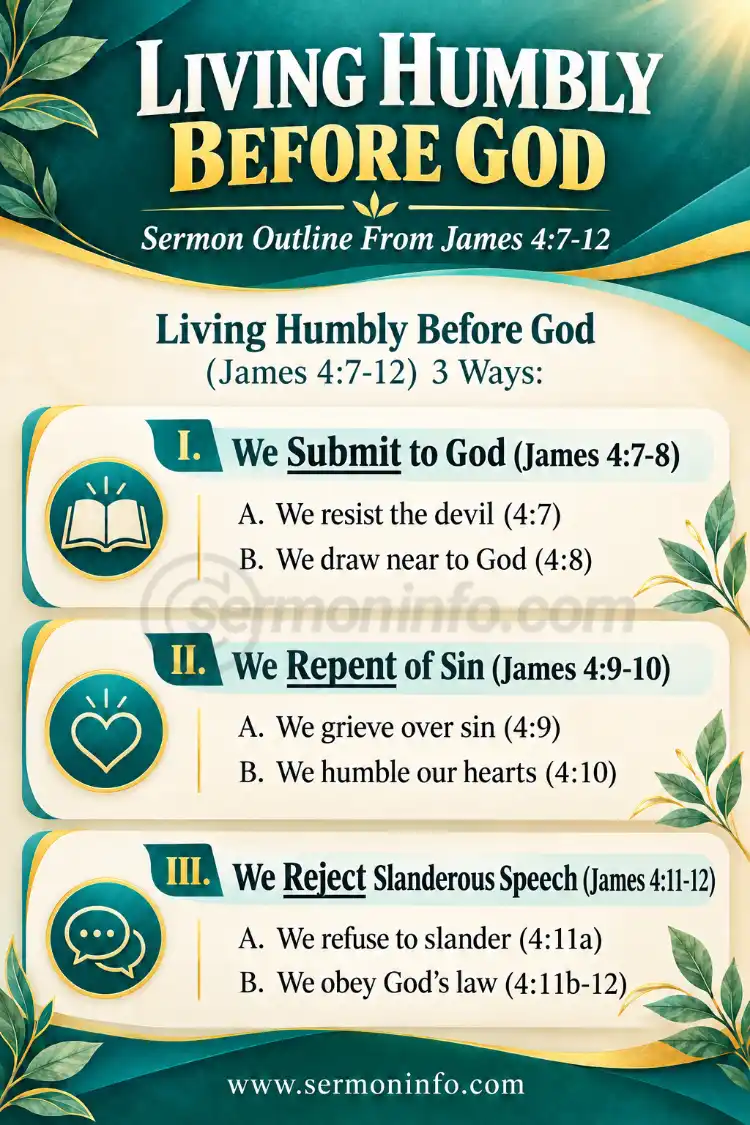
- Submit to God (James 4:7–8): Resist the devil, draw near to God, and surrender your actions and desires to His authority.
- Repent of sin (James 4:9–10): Grieve over sin, humble yourself before the Lord, and trust Him to lift you up.
- Reject slanderous speech (James 4:11-12): Refuse gossip and malicious criticism, and obey God’s command to love your neighbor.
Sermon Outline From James 4:7-12
We often defend our choices, excuse our sins, and criticize others before examining our own hearts. Living humbly before God begins when we acknowledge His authority and our need for His grace. James reminds us that God resists the proud but gives grace to the humble (James 4:6). His grace invites us to surrender.
In James 4:7–11, we discover three practical expressions of humility: we submit to God, repent of sin, and reject slanderous speech. These responses shape our devotion, choices, and relationships. As we open God’s Word, let us welcome His correction and trust His goodness. We begin by submitting ourselves to God.
1. We Submit to God (James 4:7–8)
“Therefore submit to God. Resist the devil and he will flee from you. Draw near to God and He will draw near to you. Cleanse your hands, you sinners; and purify your hearts, you double-minded.” (James 4:7-8)
A. We Resist the Devil (James 4:7)
James addresses believers whose selfish desires fuel conflict and friendship with the world (James 4:1–4). He calls them to submit to God and to resist the devil and his diabolical schemes. We cannot fight temptation while protecting the sins we enjoy. Submission means accepting God’s authority and following His Word, even when our desires pull us elsewhere.
When anger rises or temptation knocks, remember whose authority governs your life. Jesus answered the devil with Scripture (Matthew 4:1–11). We also resist by trusting God’s truth and refusing sinful choices. James promises that the devil will flee (James 4:7). This assurance encourages steady obedience, even when temptation returns.
B. We Draw Near to God (James 4:8)
James invites believers to draw near to God and promises that God will draw near to them (James 4:8). Yet he also commands them to cleanse their hands and purify their hearts. Hands represent sinful actions, while divided hearts reveal competing loyalties. Drawing near involves turning from sin and giving God our wholehearted devotion.
Perhaps we pray for peace while feeding resentment, or seek God’s guidance while hiding dishonest choices. James calls us to bring our actions and desires before God. Through Christ, we can approach Him confidently (Hebrews 4:16). Confess your sin, abandon divided loyalties, and seek His help. His gracious welcome encourages honest repentance and renewed fellowship. (Source Material: William MacDonald, Believer’s Bible Commentary, pp. 2237-2238)
This material provides some ideas and thoughts for a sermon outline from James 4:7-12 (Living Humbly Before God).
2. We Repent of Sin (James 4:9–10)
“Lament and mourn and weep! Let your laughter be turned to mourning and your joy to gloom. Humble yourselves in the sight of the Lord, and He will lift you up.” (James 4:9-10)
A. We Grieve Over Sin (James 4:9)
James calls believers to mourn because selfish desires and worldly loyalties have damaged their fellowship with God (James 4:1–4). His command confronts their careless enjoyment of sin. We grieve because our sin dishonors our holy God and hurts others. Genuine repentance begins when we stop excusing what God condemns.
Perhaps harsh words have wounded someone at home, yet we dismiss them as a difficult moment. God invites us to face that sin honestly. Godly sorrow leads to repentance (2 Corinthians 7:10). Confess your wrong, seek forgiveness, and change your conduct. Remember Christ’s sacrifice for sin, and let His grace encourage your return to God.
B. We Humble Our Hearts (James 4:10)
James commands believers to humble themselves before the Lord and promises that He will lift them up (James 4:10). Humility means surrendering our whole lives to God, including our hearts, choices, and relationships. We abandon pride and admit our need for His grace. God gives grace to the humble (James 4:6).
When we fail, pride urges us to hide, defend ourselves, or blame someone else. Humility brings our failure into God’s presence and asks for help. Through Christ, we approach Him with confidence (Hebrews 4:16). Trust His promise to lift you up in His way and time. His grace sustains you as you obey. (Source Material: John MacArthur, The MacArthur Bible Commentary, pp. 1893-1895)
3. We Reject Slanderous Speech (James 4:11-12)
“Do not speak evil of one another, brethren. He who speaks evil of a brother and judges his brother, speaks evil of the law and judges the law. But if you judge the law, you are not a doer of the law but a judge. There is oneLawgiver, who is able to save and to destroy. Who are you to judge another? (James 4:11-12)
A. We Refuse to Slander (James 4:11a)
James moves from humility before God to our treatment of fellow believers. He commands us to stop speaking evil of one another (James 4:11). The conflicts he addressed reveal how selfish desires can poison our words. We must refuse malicious comments, gossip, and harmful accusations because they damage people whom God calls us to love.
A whispered rumor or careless online comment can wound someone long after we forget our words. Before speaking, ask whether your words serve truth and help others. Ephesians 4:29 calls us to speak words that build others up. When correction becomes necessary, speak truth gently and seek restoration (Galatians 6:1).
B. We Obey God’s Law (James 4:11b-12)
James explains that speaking evil of others also speaks against God’s law (James 4:11). His royal law commands us to love our neighbor as ourselves (James 2:8). When we slander someone, we treat that command as unworthy of obedience. Humility accepts God’s authority and practices His command to love.
God alone holds final authority as Lawgiver and Judge (James 4:12). We honor Him by obeying His Word and leaving final judgment with Him. When someone disappoints you, resist the urge to attack their character. Address genuine wrongs with truth and love. Remember Christ’s mercy toward you, and ask Him to guide your words. (Source Material: John F. Walvoord and Roy B. Zuck, The Bible Knowledge Commentary: New Testament, pp. 830-831)
Conclusion
Living humbly before God shapes our devotion, choices, and relationships. We submit to God by resisting the devil and drawing near with sincere hearts; We repent of sin through genuine sorrow and humble surrender. We reject slanderous speech by guarding our words and obeying God’s law. Each response acknowledges His authority and our need for grace.
As we read God’s Word, let us welcome His correction and act on His commands. Confess the sin He exposes, surrender the desires you protect, and speak with love toward others. Through Christ, approach God confidently and seek His help. He gives grace to the humble and promises to lift them up (James 4:6, 10).
Closing Prayer
Heavenly Father, thank You for Your grace and the truth of Your Word. Help us submit to Your authority, resist the devil, and draw near to You. Cleanse our actions and purify our hearts. Teach us to grieve over sin, confess it honestly, and humble ourselves before You.
Lord, guard our words and help us love others as You command. Replace gossip and harsh criticism with truthful, gracious speech. Give us courage to obey You when life feels difficult. Keep our hearts dependent on Your grace, and help us trust Your promises. We pray in Jesus’ name. Amen.
Frequently Asked Questions (FAQ)
Q: What does it mean to submit to God in James 4:7?
A: Submitting to God means accepting His authority and obeying His Word rather than following selfish desires. James 4:7 connects submission with resisting the devil. Believers practice submission by surrendering their choices, rejecting temptation, and depending on God’s grace for daily obedience.
Q: What does it mean to resist the devil?
A: Resisting the devil means standing against his temptations and lies while submitting to God’s authority. James 4:7 promises that the devil will flee. Believers resist through faith, prayer, obedience, and Scripture, following Jesus’ example when He answered temptation with God’s Word (Matthew 4:1–11).
Q: How can we draw near to God according to James 4:8?
A: Drawing near to God means seeking fellowship with Him through sincere repentance and wholehearted devotion. James 4:8 calls believers to cleanse their sinful actions and purify divided hearts. We respond by confessing sin, abandoning competing loyalties, and approaching God with a willingness to obey.
Q: What does it mean to humble yourself before the Lord?
A: Humbling yourself before the Lord means acknowledging your sin, surrendering your pride, and depending on His grace. James 4:9–10 connects humility with genuine sorrow and repentance. God promises to lift up the humble, encouraging believers to trust His goodness rather than defend their wrongdoing.
Q: Why does James 4:11 forbid speaking evil of others?
A: James 4:11 forbids speaking evil of others because slander harms fellow believers and judges God’s law instead of obeying it. Humility honors God’s command to love our neighbor. We must reject gossip and malicious criticism while addressing genuine wrongdoing with truth, gentleness, and love.
BONUS: What does the Bible say about humility?
Biblical humility means recognizing God’s greatness, accepting His authority, and acknowledging our need for His grace. God resists the proud but gives grace to the humble (James 4:6). Jesus modeled humility through His obedience to the Father (Philippians 2:5–8). His example calls us to surrender our pride and serve others willingly.
Humility shapes how we respond to correction, handle disagreements, and treat other people. Philippians 2:3 teaches us to value others above ourselves. When we fail, humility admits wrongdoing and seeks forgiveness. We honor God when we listen to His Word, depend on His strength, and obey without demanding recognition.
BONUS: What does James 4:7–10 teach us?
James 4:7–10 teaches believers to respond to God’s grace through submission and sincere repentance. James addresses selfish desires, worldly loyalties, and pride (James 4:1–6). He commands us to resist the devil, draw near to God, cleanse sinful actions, and purify divided hearts. These commands call us to wholehearted devotion.
James also calls us to mourn over sin and humble ourselves before the Lord (James 4:9–10). We apply this teaching by confessing sin, rejecting temptation, and surrendering our choices to God. He promises His nearness and assures the humble that He will lift them up. His grace encourages us to return and obey.
BONUS: What is godly sorrow in James 4:9?
Godly sorrow in James 4:9 means grieving over sin because it dishonors God and reveals our divided devotion. James commands his readers to mourn instead of treating sin lightly. Although this verse does not use the phrase “godly sorrow,” it expresses sorrow that leads to repentance (2 Corinthians 7:10).
Godly sorrow moves us beyond regretting consequences to acknowledging our wrong before God. If harsh words wound someone, we confess our sin, seek forgiveness, and change our speech. We trust Christ’s sacrifice rather than our tears for forgiveness. Genuine sorrow turns us toward God’s mercy and produces a willing response to His Word.
BONUS: What does “purify your hearts” mean in James 4:8?
“Purify your hearts” means turning from divided loyalties and seeking God with sincere devotion. James addresses people who pursue friendship with the world while claiming loyalty to God (James 4:4, 8). He calls them to reject sinful desires and give God their wholehearted allegiance. God wants inward sincerity alongside outward obedience.
We apply this command by examining what controls our desires and decisions. Do we seek God’s approval while protecting habits that oppose His Word? Confess those competing loyalties and ask Him to renew your heart (Psalm 51:10). Through prayer and obedience, pursue fellowship with God and let His truth shape your motives.
BONUS: What does “cleanse your hands” mean in James 4:8?
“Cleanse your hands” means turning from sinful actions as you draw near to God. James uses hands to represent conduct, including the harmful behavior that grows from selfish desires (James 4:1–3, 8). He calls his readers to abandon wrongdoing. Together, clean hands and pure hearts describe obedient actions flowing from sincere devotion.
Perhaps dishonesty, angry words, or selfish choices have damaged your relationships. Confess your sin to God and take practical steps to change your conduct. Seek forgiveness from anyone you have hurt and make things right where possible. God promises forgiveness and cleansing when we confess our sins (1 John 1:9).
BONUS: What is meant by “who are you to judge another” in James 4:12?
The question appears in James 4:12 and completes the warning against slander in verse 11. James challenges anyone who assumes God’s place by condemning a neighbor. God alone holds final authority as Lawgiver and Judge. We must obey His law rather than act as though we stand above it (James 4:11–12).
James does not forbid discerning right from wrong or correcting sin. Scripture calls us to restore others gently while examining ourselves (Galatians 6:1). We must reject malicious criticism and judgments that claim knowledge of someone’s heart or final standing before God. Speak truth with love, seek restoration, and leave final judgment with Him.
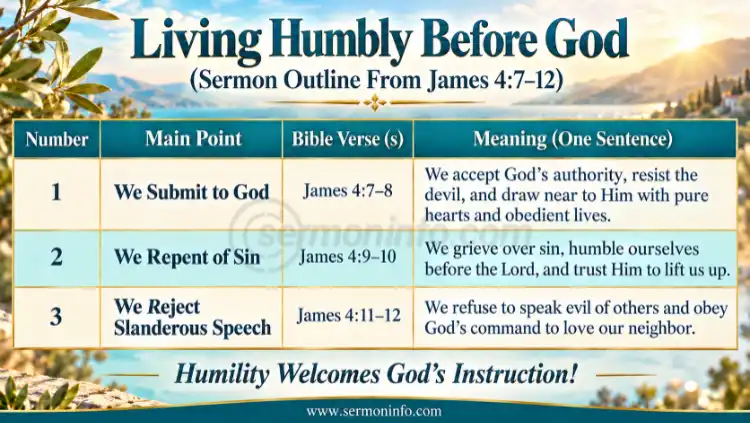
| Sermon Outline From James 4:7-12 – Sermons From James | |||
|---|---|---|---|
| Number | Main Point | Bible Verse | Meaning |
| 1 | We Submit to God | James 4:7–8 | We accept God’s authority, resist the devil, and draw near to Him with pure hearts and obedient lives. |
| 2 | We Repent of Sin | James 4:9–10 | We grieve over sin, humble ourselves before the Lord, and trust Him to lift us up. |
| 3 | We Reject Slanderous Speech | James 4:11-12 | We refuse to speak evil of others and obey God’s command to love our neighbor. |
Source Material
William MacDonald, Believer’s Bible Commentary, rev. ed. (Nashville: Thomas Nelson, 1995), 2237-2238
John MacArthur, The MacArthur Bible Commentary (Nashville: Thomas Nelson, 2005), 1893-1895
John F. Walvoord and Roy B. Zuck, eds., The Bible Knowledge Commentary: New Testament (Colorado Springs, CO: David C. Cook, 1985), 830-831