Sermon Outline From Hosea 11:1–11 teaches that God’s love includes both compassion and correction. He loved Israel, disciplined their rebellion, and promised future restoration. God’s holiness requires judgment, but His covenant faithfulness ensures that Israel’s failure will not cancel His purposes.

Key Takeaways – Sermon From Hosea 11:1-11
- God’s love remains faithful despite rebellion. Hosea 11:1–4 shows God’s tender care, patience, and commitment to His people.
- God’s discipline calls His people back. Hosea 11:5–7 teaches that rebellion brings consequences, but correction should lead us toward repentance and obedience.
- God’s promises preserve hope. Hosea 11:8–11 reveals His compassion and future restoration of Israel, reminding us to trust His Word and character.
Sermon Outline From Hosea 11:1-11
God’s people sometimes wander, rebel, and resist His loving call. Israel did exactly that in Hosea 11. Yet God did not abandon them. He remembered His love, confronted their sin, and showed deep compassion. His holiness required discipline, but His covenant faithfulness preserved hope. God’s love remained steadfast despite Israel’s failure.
Hosea 11 shows us a God whose love acts with purpose. First, God loves His people with tender care. Then, God disciplines His people when they rebel. Finally, God restores His people according to His faithful promises. As we walk through this passage, we will see why God’s love will not let go.
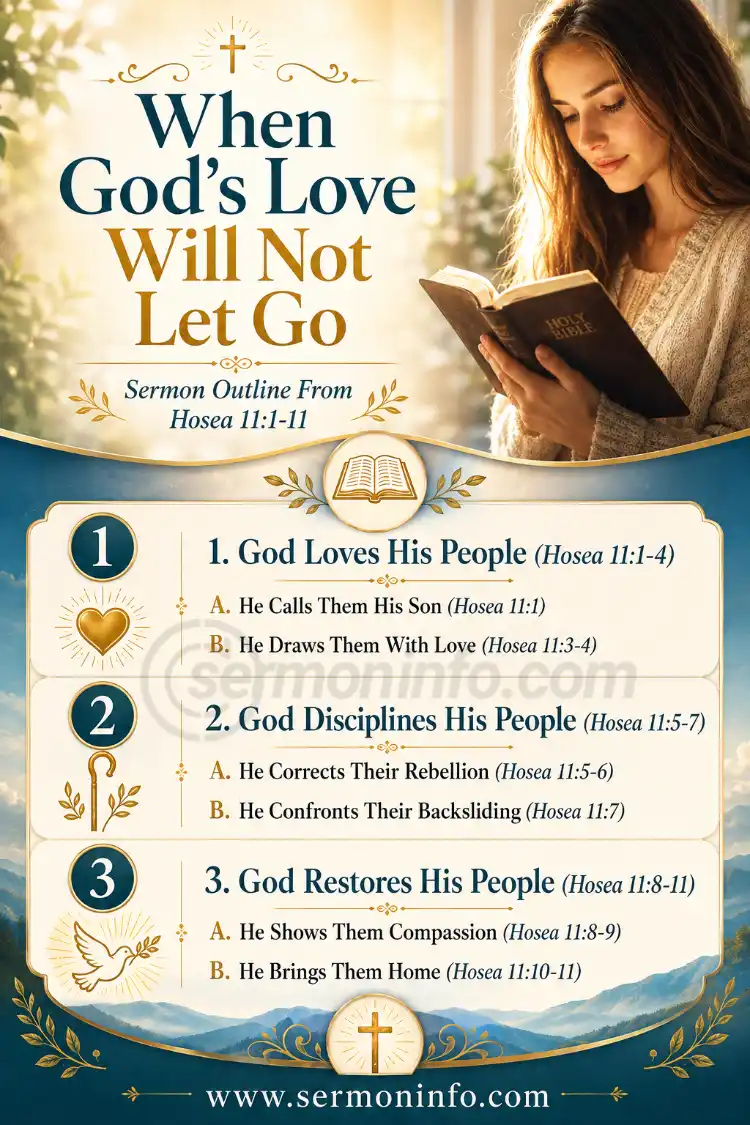
1. God Loves His People (Hosea 11:1–4)
God shows faithful love by remembering Israel, caring for them, and drawing them patiently to Himself. (Summary Statement)
A. He Calls Them His Son (Hosea 11:1)
God says, “When Israel was a child, I loved him, and out of Egypt I called My son.” Israel belonged to God by covenant. He remembered their helpless condition in Egypt and acted in love. He rescued them from slavery and brought them into freedom. God’s love took the first step.
That same truth encourages believers today. God does not forget those He has redeemed. In Christ, believers become children of God through faith (Galatians 3:26). Tough circumstances may shake our emotions, but they cannot change God’s faithful character. We can remember His past faithfulness and trust Him with our present needs.
B. He Draws Them With Love (Hosea 11:3–4)
God describes Himself teaching Ephraim to walk and taking them by their arms. He healed them, yet they failed to recognize His care. Then God says He drew them “with cords of a man, with bands of love.” His care was patient, gentle, and personal.
God still leads His people with loving care through His Word. Psalm 32:8 says, “I will instruct you and teach you.” Sometimes we notice His guidance only after the trial passes. Like a loving father guiding a child, God teaches us to walk faithfully. His love gives us courage to trust Him in difficult seasons. (Source Material: William MacDonald, Believer’s Bible Commentary, p. 1103)
This material provides some ideas and thoughts for a sermon outline from Hosea 11:1-11 (When God’s Love Will Not Let Go).
2. God Disciplines His People (Hosea 11:5–7)
God disciplines Israel because their persistent rebellion and refusal to return to Him demand righteous correction. (Summary Statement)
A. He Corrects Their Rebellion (Hosea 11:5–6)
Israel refused to return to God, so judgment would come through Assyria. Their rebellion brought painful consequences upon their cities and people. God had shown them remarkable love, yet they chose their own sinful counsels. His discipline showed that His holiness never ignores persistent rebellion.
God also corrects believers because He loves us and desires our growth. Hebrews 12:6 says, “For whom the LORD loves He chastens.” Loving parents correct children before destructive choices cause greater damage. Therefore, we should receive God’s correction humbly. His discipline calls us away from sin and toward faithful obedience.
B. He Confronts Their Backsliding (Hosea 11:7)
God exposed Israel’s deeper problem when He said, “My people are bent on backsliding from Me.” Their hearts repeatedly turned away despite His gracious calls. They could not solve this spiritual problem through empty religion or human effort. Israel needed genuine repentance and a wholehearted return to the Lord.
Believers must also guard against slowly drifting from God. Hebrews 2:1 warns us against drifting away from the truth we have heard. Spiritual decline often begins with small compromises, neglected Scripture, and tolerated sin. When God confronts us through His Word, we should respond quickly. His loving correction calls us back to faithful fellowship and obedience. (Source Material: John MacArthur, The MacArthur Bible Commentary, p. 979)
3. God Restores His People (Hosea 11:8–11)
God’s compassion preserves His covenant purposes and promises Israel a future return and restoration. (Summary Statement)
A. He Shows Them Compassion (Hosea 11:8–9)
God asks, “How can I give you up, Ephraim?” His words reveal deep compassion toward His rebellious people. Israel deserved judgment, yet God restrained complete destruction. His mercy did not cancel His holiness. Instead, His holy character governed both justice and compassion.
This truth gives believers hope when failure brings painful consequences. God never treats sin lightly, but He remains rich in mercy. Lamentations 3:22 says, “Through the LORD’S mercies we are not consumed.” When God corrects us, we can still trust His compassionate heart and return to Him.
B. He Brings Them Home (Hosea 11:10–11)
God promises that Israel will one day “walk after the LORD” and respond when He calls. He will gather them from distant lands and settle them again in their homes. This promise points to Israel’s future national restoration and confirms God’s faithfulness to His covenant purposes.
God’s promises also strengthen believers during uncertain seasons. What He has spoken, He will faithfully accomplish. Romans 11:29 reminds us that “the gifts and the calling of God are irrevocable.” We may not see every answer today, but we can trust the God who always keeps His word. (Source Material: John F. Walvoord and Roy B. Zuck, The Bible Knowledge Commentary: Old Testament, pp. 1402-1403)
Conclusion
Hosea 11 reminds us that God loves His people, disciplines His people, and restores His people. His love never excuses rebellion, but it never abandons His covenant purposes. He cares tenderly, corrects faithfully, and restores mercifully. Israel’s failure reveals the seriousness of sin, while God’s response reveals the greatness of His faithful love.
Therefore, we should receive God’s Word with humble hearts and responsive faith. His promises deserve our trust, and His warnings deserve our obedience. When God corrects us, we should return quickly. When trials come, we should remember His faithfulness. God’s Word teaches us to trust His character, follow His truth, and rest in His unfailing love.
Closing Prayer
Heavenly Father, thank You for loving us with faithful and patient love. Help us respond quickly when Your Word corrects our hearts. Keep us from rebellion and guide us into faithful obedience. When difficulties come, remind us that Your character never changes and Your promises never fail.
Lord, help us trust Your wisdom, receive Your discipline, and rest in Your compassion. Thank You for the grace You have shown us through Jesus Christ. May our lives honor You and reflect Your faithful love to others. We pray in Jesus’ name, Amen.
Frequently Asked Questions (FAQ)
Q: What is the main message of Hosea 11?
A: Hosea 11 shows God’s faithful love toward rebellious Israel. He remembers His past care, disciplines their sin, and promises future restoration. The chapter reveals that God’s holiness requires judgment, while His covenant love preserves hope. Israel’s rebellion cannot cancel God’s faithful purposes.
Q: Why does God call Israel His son in Hosea 11:1?
A: God calls Israel His son because He chose the nation for a special covenant relationship. He had already called Israel His “firstborn” in Exodus 4:22. Hosea recalls God’s loving deliverance from Egypt, while Matthew 2:15 later applies Hosea 11:1 to Jesus Christ.
Q: What does “How can I give you up, Ephraim?” mean?
A: Hosea 11:8 expresses God’s deep compassion toward rebellious Israel. Although Israel deserved severe judgment, God would not destroy the nation completely. His holiness required discipline, yet His covenant mercy preserved Israel. The verse marks a powerful transition from threatened judgment toward promised restoration.
Q: Why did God discipline Israel in Hosea 11?
A: God disciplined Israel because they repeatedly rejected Him, followed idols, and refused to return. Hosea 11:5–7 shows that rebellion brought serious consequences through Assyrian domination. God’s discipline demonstrated His holiness and exposed Israel’s sin, while calling His people to recognize their need for Him.
Q: Does Hosea 11 teach that God will restore Israel?
A: Yes. Hosea 11:10–11 anticipates Israel responding to God’s call and returning to their land. From a dispensational perspective, this supports God’s continuing covenant purposes for national Israel. Judgment does not erase His promises, because God remains faithful to what He has declared.
BONUS: What do the “bands of love” mean in Hosea 11:4?
The “bands of love” in Hosea 11:4 picture God’s tender care for Israel. He drew His people with kindness, patience, and compassion. Like a loving father guiding a child, God led Israel gently. His love did not force them, but it continually invited them to trust and follow Him.
This image also reminds believers that God leads with faithful love. Psalm 32:8 says, “I will instruct you and teach you in the way you should go.” His Word guides us, His grace encourages us, and His discipline corrects us. God’s loving guidance calls us to respond with trust, obedience, and gratitude.
BONUS: What does God teaching Ephraim to walk mean?
God teaching Ephraim to walk pictures His tender care for Israel. Hosea 11:3 says, “I taught Ephraim to walk, taking them by their arms.” Like a father helping a young child, God guided Israel, protected them, and patiently helped them grow. Yet Israel failed to recognize His loving care.
This picture reminds believers that God also teaches us through His Word and daily guidance. Psalm 32:8 says, “I will instruct you and teach you.” God patiently directs our steps, corrects our mistakes, and strengthens our faith. We should respond by trusting His wisdom, following His truth, and remembering His faithful care.
BONUS: Why did Israel keep turning away from God?
Israel kept turning away from God because their hearts remained stubborn and attracted to idolatry. Hosea 11:2 says, “They sacrificed to the Baals.” Despite God’s love and care, they preferred false gods and their own ways. Hosea 11:7 adds, “My people are bent on backsliding from Me.”
Israel’s example warns believers about the danger of repeated compromise. Sin grows when we ignore God’s Word and resist His correction. Proverbs 14:12 warns that a way may seem right but end in death. We should guard our hearts, reject idols, and respond quickly when God calls us back to faithful obedience.
BONUS: What does Hosea 11 teach about God’s compassion?
Hosea 11 reveals God’s compassion through His deep concern for rebellious Israel. In Hosea 11:8, God asks, “How can I give you up, Ephraim?” His heart moves with mercy. Although Israel deserved judgment, God restrained complete destruction because His holy compassion remained active toward His covenant people.
God’s compassion never ignores sin, but it works alongside His holiness and faithfulness. Hosea 11:9 says, “I will not execute the fierceness of My anger.” God disciplines, yet He preserves hope. Believers can trust that His mercy remains strong, His character never changes, and His promises never fail.
BONUS: How does Hosea 11:1 relate to Jesus?
Hosea 11:1 first looks back to Israel’s exodus from Egypt: “Out of Egypt I called My son.” God called Israel His son and delivered the nation from slavery. Matthew 2:15 later applies this verse to Jesus, who returned from Egypt after Herod’s death.
Matthew presents Jesus as the true Son who fulfills Israel’s pattern perfectly. Israel often failed God, but Christ obeyed the Father completely. Jesus retraced Israel’s history and remained faithful where Israel failed. This connection highlights God’s sovereign plan and points us to Christ as the faithful Son and promised Messiah.
BONUS: How can Hosea 11 encourage believers today?
Hosea 11 encourages believers by revealing God’s patient, faithful character. He loved Israel, corrected their rebellion, and still showed compassion (Hosea 11:8–9). When believers struggle or fail, they can remember that God remains holy, merciful, and trustworthy. His discipline calls us back to obedience, not despair.
The passage also encourages us to trust God’s promises during difficult seasons. God will fulfill His covenant purposes for Israel (Hosea 11:10–11). Likewise, believers can rely on every promise God gives them in Christ. Hebrews 13:5 assures us, “I will never leave you nor forsake you.” His faithfulness gives lasting hope.
| Sermon Outline From Hosea 11:1-11 – Sermon Outlines From Hosea | |||
|---|---|---|---|
| Number | Main Point | Bible Verse | Meaning |
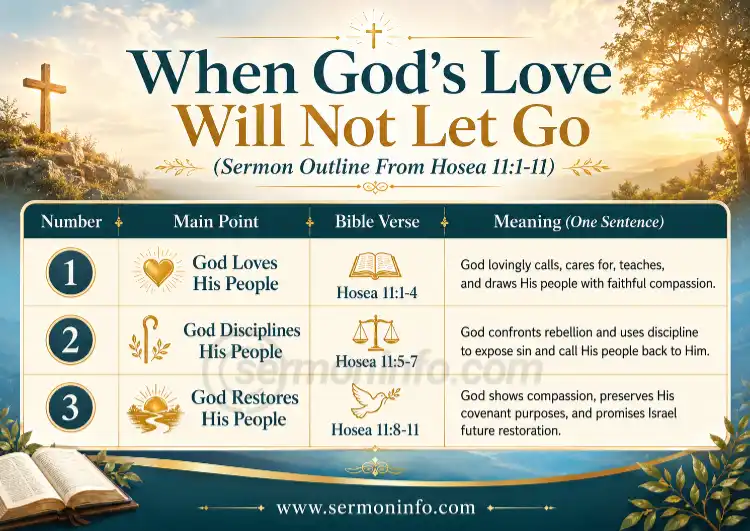
| 1 | God Loves His People | Hosea 11:1–4 | God lovingly calls, cares for, teaches, and draws His people with faithful compassion. |
| 2 | God Disciplines His People | Hosea 11:5–7 | God confronts rebellion and uses discipline to expose sin and call His people back to Him. |
| 3 | God Restores His People | Hosea 11:8–11 | God shows compassion, preserves His covenant purposes, and promises Israel future restoration. |
Source Material
William MacDonald, Believer’s Bible Commentary, rev. ed. (Nashville: Thomas Nelson, 1995), 1103
John MacArthur, The MacArthur Bible Commentary (Nashville: Thomas Nelson, 2005), 979
John F. Walvoord and Roy B. Zuck, eds., The Bible Knowledge Commentary: Old Testament (Colorado Springs, CO: David C. Cook, 1985), 1402-1403