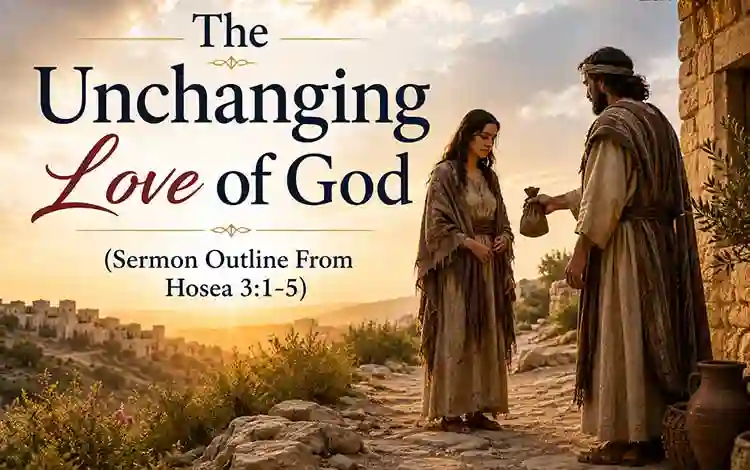
The Unchanging Love of God (Sermon Outline From Hosea 3:1–5) reveals God’s faithful covenant love that pursues, disciplines, and restores His people despite their unfaithfulness. Hosea’s redemption of Gomer foreshadows Christ’s redeeming work, showing that God’s love remains constant and His promises never fail.
Key Takeaways – The Unchanging Love of God
- God’s love never changes. He pursues His people with redeeming love, even when they wander, and His grace always points them back to Himself through Jesus Christ.
- God’s discipline has a loving purpose. He corrects His people to remove unfaithfulness, strengthen obedience, and restore close fellowship with Him.
- God always keeps His promises. Hosea 3:5 points to Israel’s future restoration through the Messiah, giving believers confidence that God’s Word and His faithfulness never fail.
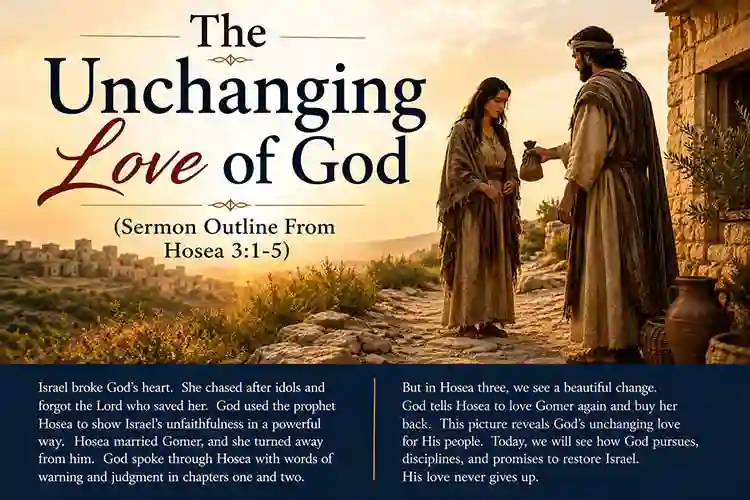
Israel had turned from the Lord and pursued false gods. After announcing judgment in the earlier chapters, God gave Hosea an unexpected command. He told him to love Gomer again and redeem her. This remarkable account reveals that God’s covenant love remains faithful even when His people fail.
Hosea 3:1-5 reveals God’s unchanging love through Hosea’s redemption of Gomer. This remarkable account points us to God’s redeeming work through Jesus Christ. Today we will discover how God pursues His people, purifies His people, and promises complete restoration. His faithful love still rescues, restores, and gives hope to everyone who trusts Him.
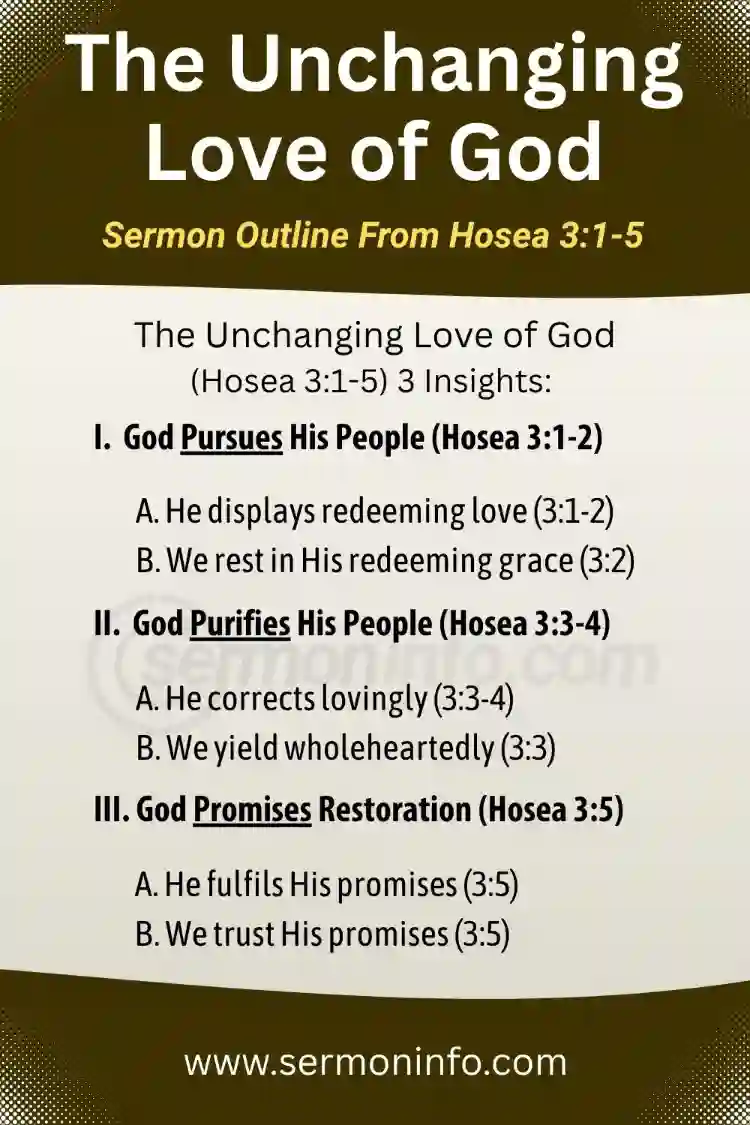
1. God Pursues His People (Hosea 3:1–2)
God lovingly seeks His wandering people and demonstrates His covenant love through redemption (Summary Statement).
A. He displays redeeming love (Hosea 3:1–2)
God commanded Hosea to love Gomer again after her unfaithfulness. Hosea paid the price to redeem her from slavery. This powerful act pictured God’s faithful love for Israel despite her repeated rebellion. God’s covenant love never failed, even when His people failed Him (Hosea 3:1).
Hosea’s redemption points us to Jesus Christ, who redeemed us through His own blood (Ephesians 1:7). Christ sought us when we wandered from Him. Like a loving father rescuing a lost child, He paid the full price for our salvation. His redeeming love still pursues every sinner today (Romans 5:8).
B. We rest in His redeeming grace (Hosea 3:2)
Hosea willingly paid fifteen shekels of silver and barley to redeem Gomer. His payment reminds us that redemption always carries a cost. Jesus paid that greater price through His sacrifice on the cross. We receive that gift by faith and not through our own works (1 Peter 1:18, 19).
Because Christ has redeemed us, we can rest securely in His grace each day. We no longer strive to earn God’s acceptance because Christ has accomplished our salvation. Like a weary traveller finding shelter from a storm, we find peace in His finished work (Ephesians 2:8, 9). (Source Material: William MacDonald, Believer’s Bible Commentary, pp. 1098–1099)
This material provides some ideas and thoughts for a message about the unchanging love of God (Sermon Outline From Hosea 3:1-5).
2. God Purifies His People (Hosea 3:3–4)
God uses loving discipline to restore His people and draw them back into faithful fellowship with Him (Summary Statement).
A. He corrects lovingly (Hosea 3:3–4)
After redeeming Gomer, Hosea instructed her to remain with him in faithful commitment. This season of restraint pictured God’s loving discipline of Israel. God removed sinful influences, not to destroy His people, but to restore their hearts. Hebrews 12:6 reminds us that the Lord disciplines those He loves.
God also declared that Israel would experience a period without king, sacrifice, or idols. This discipline prepared the nation for future restoration. Like a skilled gardener pruning a fruitful vine, God removes what hinders spiritual growth so His people produce lasting obedience (John 15:2).
B. We yield wholeheartedly (Hosea 3:3)
God called Gomer to remain faithful to Hosea during her time of restoration. Likewise, God calls us to submit willingly to His loving correction. Obedience grows when we trust His wisdom instead of following sinful desires. His correction always aims to restore and strengthen us.
When God corrects us, we should respond with humble and willing hearts. A child who accepts loving instruction grows in wisdom and maturity. In the same way, we experience spiritual growth as we obey God’s Word and pursue holiness each day (James 1:22; Hebrews 12:11). (Source Material: John MacArthur, The MacArthur Bible Commentary, pp. 973-974)
3. God Promises Restoration (Hosea 3:5)
God promises to restore His people and bless them through the future reign of the Messiah (Summary Statement).
A. He fulfils His promises (Hosea 3:5)
After Israel’s season of discipline, God promised that His people would return and seek the Lord and David their king. This points to the coming reign of the Messiah, Jesus Christ. God never forgets His covenant promises. His plan for Israel will reach its glorious fulfilment (Romans 11:26, 29).
God’s promises stand firm because His character never changes. Every promise rests on His truth and faithfulness. Like the sunrise that arrives each morning, His Word never fails. “For all the promises of God in Him are Yes, and in Him Amen” (2 Corinthians 1:20, NKJV).
B. We trust His promises (Hosea 3:5)
Hosea declared that Israel would one day seek the Lord with reverence and experience His goodness. That future hope encouraged God’s people during difficult days. We also trust God’s promises because He remains faithful in every season. “If we are faithless, He remains faithful” (2 Timothy 2:13, NKJV).
When trials surround us, God’s promises become an anchor for our souls. We may not understand every circumstance, but we know the One who guides our future. Therefore, we walk by faith, rejoice in His goodness, and wait confidently for His perfect timing (Hebrews 10:23). (Source Material: John F. Walvoord and Roy B. Zuck, The Bible Knowledge Commentary: Old Testament, pp. 1387–1389)
Conclusion
Today we have seen that God pursues His people with redeeming love, purifies His people through loving correction, and faithfully fulfils every promise of restoration. Hosea’s redemption of Gomer points us to Jesus Christ, our Redeemer. God’s love remains constant because His character never changes.
Now respond to God’s gracious invitation. If you know Christ, thank Him for His faithful love and walk closely with Him each day. If you have never trusted Christ, acknowledge your sin, believe that Jesus died and rose again for you, confess Him as your Lord, and dedicate your life to Him. His unchanging love still welcomes every repentant heart.
Closing Prayer
Heavenly Father, thank You for Your unchanging love that never gives up on Your people. Thank You for pursuing us when we wandered, correcting us with wisdom, and giving us the hope of complete restoration through Jesus Christ. Help us treasure Your grace, obey Your Word, and trust every promise You have spoken. Fill our hearts with gratitude as we remember that Your love never fails.
Lord Jesus, strengthen us to walk faithfully before You each day. Give us willing hearts that respond to Your loving correction with humility and joy. If anyone has not trusted You as Savior and Lord, draw them to Yourself today. May they receive Your redeeming grace through faith alone. We praise You because You remain faithful forever, and we ask these things in Your precious name. Amen.
Frequently Asked Questions (FAQ)
Q: What is the main message of Hosea 3:1–5?
A: Hosea 3:1–5 reveals God’s unchanging covenant love for His people. Hosea’s redemption of Gomer illustrates how God pursues sinners, disciplines His people with love, and promises future restoration. The passage ultimately points to Jesus Christ, the Redeemer who secures salvation through His sacrificial death.
Q: Why did God tell Hosea to redeem Gomer?
A: God instructed Hosea to redeem Gomer as a living picture of His faithful love for unfaithful Israel. Hosea’s costly redemption demonstrates God’s willingness to restore those who repent. The account also foreshadows Christ, who paid the full price to redeem sinners from the bondage of sin.
Q: How does Hosea 3 point to Jesus Christ?
A: Hosea’s purchase of Gomer foreshadows Christ’s work of redemption. Just as Hosea paid a price to restore his wife, Jesus gave His life to redeem sinners. Hosea 3 also points to Israel’s future restoration under the Messiah, the greater Son of David.
Q: What does Hosea 3 teach about God’s discipline?
A: Hosea 3 teaches that God’s discipline flows from His love, not His rejection. He corrects His people to remove unfaithfulness, restore fellowship, and produce obedience. Hebrews 12:6 confirms that the Lord disciplines those He loves for their spiritual good.
Q: What does Hosea 3:5 teach about Israel’s future?
A: Hosea 3:5 promises that Israel will one day return to the Lord and seek “David their king,” a reference to the Messiah, Jesus Christ. From a dispensational perspective, this prophecy finds its complete fulfilment in Christ’s future kingdom when Israel is spiritually restored.
BONUS: What hermeneutic is used to interpret Hosea?
A literal, grammatical, and historical hermeneutic best interprets Hosea. This approach understands Hosea’s marriage to Gomer as a real historical event that illustrates God’s covenant relationship with Israel. The prophet addressed the northern kingdom’s unfaithfulness while revealing God’s righteous judgment and future restoration (Hosea 1:2; Hosea 3:1–5).
This hermeneutic also recognizes prophecy according to its normal meaning unless the text indicates symbolism. Hosea’s promises of Israel seeking “the LORD their God and David their king” point to the nation’s future restoration under the Messiah (Hosea 3:5). Paul likewise anticipated Israel’s future salvation in Romans 11:25–29, affirming God’s unchanging covenant faithfulness.
BONUS: Why did Hosea have to buy Gomer back?
God commanded Hosea to buy Gomer back to demonstrate His faithful covenant love for unfaithful Israel. Although Gomer had abandoned her husband, Hosea redeemed her at a personal cost, illustrating God’s willingness to restore His wayward people (Hosea 3:1–2). This living illustration revealed that God’s love remains steadfast despite human rebellion.
Hosea’s redemption also foreshadows Jesus Christ, who paid the ultimate price to redeem sinners from the bondage of sin. Christ purchased our salvation with His precious blood, not with silver or gold (1 Peter 1:18–19). Romans 5:8 declares that God demonstrated His love by sending Christ to die for us while we were still sinners.
BONUS: What does Gomer represent in the Book of Hosea?
Gomer represents the unfaithfulness of Israel in the Book of Hosea. Her repeated adultery illustrates how Israel abandoned the Lord to pursue idols and false gods (Hosea 1:2; Hosea 2:13). Through Gomer’s life, God revealed the seriousness of spiritual adultery while exposing His people’s need for repentance.
Gomer also highlights God’s amazing grace and redeeming love. Although she failed her husband, Hosea redeemed and restored her, picturing God’s desire to forgive and restore repentant sinners (Hosea 3:1–3). This account ultimately points to Jesus Christ, who redeems His people through His sacrificial death (Ephesians 1:7; Titus 2:14).
BONUS: What does Hosea 3 teach about God’s covenant love?
Hosea 3 teaches that God’s covenant love remains faithful even when His people prove unfaithful. God commanded Hosea to love and redeem Gomer again, illustrating His steadfast commitment to Israel despite her idolatry (Hosea 3:1–2). His covenant rests on His faithful character, not on human performance.
Hosea 3 also reveals that God’s covenant love disciplines in order to restore. Israel would experience correction for a time, yet God promised a future return to Himself and to “David their king,” pointing to the Messiah (Hosea 3:4–5). Romans 11:29 affirms that “the gifts and the calling of God are irrevocable,” demonstrating His enduring covenant faithfulness.
BONUS: Who is “David their king” in Hosea 3:5?
“David their king” in Hosea 3:5 refers to the promised Messiah, Jesus Christ, not to King David raised to reign again. Hosea foretold a future day when restored Israel would seek “the LORD their God and David their king” (Hosea 3:5). This points to Christ, the greater Son of David, who fulfils the Davidic Covenant (2 Samuel 7:12–16; Luke 1:32–33).
From a dispensational perspective, this prophecy awaits its complete fulfilment in Christ’s future millennial kingdom. Israel will repent, turn to the Lord, and joyfully submit to the Messiah’s righteous rule (Jeremiah 23:5–6; Ezekiel 37:24–25). God will faithfully fulfil every covenant promise because His Word never fails (Romans 11:25–29).
BONUS: How does Hosea 3 reveal God’s plan for Israel’s future?
Hosea 3 reveals that God has not abandoned Israel despite her unfaithfulness. After a season of discipline without king, sacrifice, or national blessing, Israel will return to the Lord in repentance (Hosea 3:4–5). God’s covenant promises remain certain because His faithfulness never changes (Deuteronomy 7:9).
Hosea also reveals Israel’s future restoration under the Messiah. The nation will seek “the LORD their God and David their king,” referring to Jesus Christ, the Son of David (Hosea 3:5). From a dispensational perspective, this prophecy finds its complete fulfilment in Christ’s millennial kingdom, when Israel is spiritually restored and God’s covenant promises are fully realized (Romans 11:25–29).
BONUS: What practical lessons can Christians learn from Hosea 3:1–5?
Hosea 3:1–5 teaches Christians to reflect God’s forgiving love by extending grace to those who have failed. Hosea obeyed God’s command to redeem Gomer, illustrating Christ’s redeeming love for sinners (Hosea 3:1–2). Believers should forgive others as God has forgiven them in Christ (Ephesians 4:32).
Hosea 3 also encourages Christians to accept God’s loving discipline and trust His promises. God corrects His children to produce holiness and spiritual growth (Hebrews 12:6, 11). Even during difficult seasons, believers can remain confident that God is faithful to complete His good work and fulfil every promise (Philippians 1:6; 2 Corinthians 1:20).
| Sermon Outline From Hosea 3:1-5 – Sermon Outlines From Hosea | |||
|---|---|---|---|
| Number | Main Point | Bible Verse | Meaning |
| 1 | God Pursues His People | Hosea 3:1–2 | God lovingly pursues His unfaithful people and demonstrates His redeeming love by paying the price to restore them, pointing to Christ’s work of redemption. |
| 2 | God Purifies His People | Hosea 3:3–4 | God lovingly disciplines His people to remove unfaithfulness, develop obedience, and prepare them for a restored relationship with Him. |
| 3 | God Promises Restoration | Hosea 3:5 | God faithfully fulfils His covenant promises by restoring His people and ultimately bringing them to the Messiah in His future kingdom. |
Source Material
William MacDonald, Believer’s Bible Commentary, rev. ed. (Nashville: Thomas Nelson, 1995), 1098–1099
John MacArthur, The MacArthur Bible Commentary (Nashville: Thomas Nelson, 2005), 973-974
John F. Walvoord and Roy B. Zuck, eds., The Bible Knowledge Commentary: Old Testament (Colorado Springs, CO: David C. Cook, 1985), 1387–1389