The sermon outline from Acts 6:8–15 shows how God displays His power, truth, and peace through a faithful believer (Stephen) who serves Christ with Spirit-filled courage and wisdom, even when facing opposition.

Key Takeaways – Stephen’s Godly Witness Revealed
- God uses faithful servants, not positions. Stephen was not an apostle, yet God worked powerfully through his faith, wisdom, and obedience.
- Faithful witness often invites opposition. Standing for biblical truth may bring resistance, misunderstanding, and false accusations, just as Stephen experienced.
- The Holy Spirit supplies wisdom and courage. God equips believers to speak truth clearly and confidently when they depend on Him, not on themselves.
- God grants peace and approval in trials. Even in hardship, God’s presence brings calm assurance to those who faithfully serve and honor Christ.
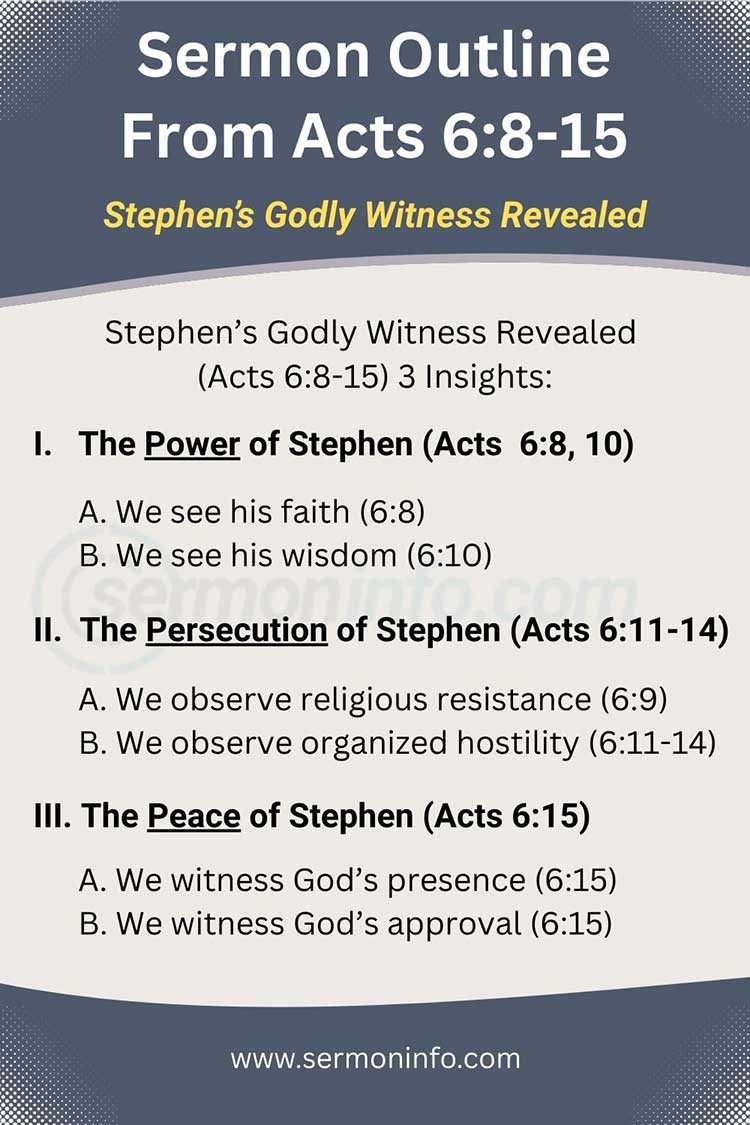
Sermon Outline From Acts 6:8-15
The early church grows quickly, and with growth comes pressure, conflict, and opposition. Stephen enters this moment not as an apostle, but as a servant who faithfully meets practical needs. Yet his devotion to Christ soon places him at the center of fierce resistance. Many believers today know this tension—serving faithfully while facing misunderstanding or opposition for standing on God’s truth.
In this passage, God shows how a faithful servant becomes a powerful witness. Stephen’s life reveals how God supplies strength for ministry, courage for conflict, and peace in moments of trial. His example matters because it reminds us that God works through ordinary believers who walk closely with Him and remain faithful under pressure.
As we look carefully at Acts 6:8–15, we will see how God reveals His presence through Stephen’s service and testimony. This passage prepares us to examine our own walk with the Lord and to consider how faithfulness today can point others to Christ tomorrow.
1. The Power of Stephen (Acts 6:8, 10)
These verses show how God works powerfully through an ordinary believer who walks closely with Him and depends fully on the Holy Spirit.
A. We see his faith (Acts 6:8)
Stephen’s power flows from a life anchored in faith, not from a public position or personal ambition. Luke tells us Stephen was “full of faith and power,” reminding us that spiritual effectiveness always begins with trust in God. Stephen believes God’s promises, relies on God’s strength, and serves with confidence that God is at work.
His faith expresses itself through grace-filled ministry and visible acts of God’s power. Stephen does not seek attention, yet God works through him in unmistakable ways. This encourages believers today that faithful service, even in unseen roles, matters deeply to God and bears eternal fruit.
B. We see his wisdom (Acts 6:10)
Stephen’s wisdom comes from the Holy Spirit, not from human learning alone. When opposition rises, his enemies cannot refute his words because he speaks with Spirit-directed clarity. God gives Stephen the right words at the right time, proving that truth grounded in Scripture stands firm against resistance.
This wisdom reminds believers that God equips those who walk faithfully with Him. Stephen does not argue aggressively or compromise truth; he speaks with conviction and grace. When believers depend on the Spirit, God provides wisdom to stand for Christ in difficult conversations and challenging moments.
This material provides some ideas and thoughts for a sermon outline from Acts 6:8-15 (Stephen’s Godly Witness Revealed).
2. The Persecution of Stephen (Acts 6:9, 11–14)
These verses reveal how faithful witness to Christ often provokes resistance and opposition from those who reject God’s truth.
A. We observe religious resistance (Acts 6:9)
Stephen’s ministry stirs strong opposition from members of the Synagogue of the Freedmen, men deeply committed to tradition and religious identity. They challenge Stephen because his message confronts their understanding of the Law and points clearly to Jesus as Messiah. When truth exposes the heart, resistance often follows.
These men engage Stephen in debate, yet they cannot overcome the wisdom and Spirit by which he speaks. Their resistance shows that religious activity without submission to Christ hardens the heart. Believers today should expect resistance when they speak truth clearly and trust God to sustain them.
B. We observe organized hostility (Acts 6:11–14)
Unable to defeat Stephen through honest discussion, his opponents turn to deception and manipulation. They secretly persuade others, stir up the people, and bring false witnesses against him. This organized hostility reflects a deliberate effort to silence truth rather than respond to it.
Stephen faces accusations similar to those once brought against Jesus, revealing how opposition often follows familiar patterns. Faithful believers may face misrepresentation and injustice, yet God remains in control. This passage encourages Christians to stand firm, knowing that obedience to Christ matters more than public approval.
3. The Peace of Stephen (Acts 6:15)
This verse highlights how God grants calm assurance and visible peace to those who faithfully stand for Christ in the midst of severe opposition.
A. We witness God’s presence (Acts 6:15)
As Stephen stands before the council, those who look at him see a face like the face of an angel. This calm expression reflects God’s nearness, not confidence in the court or the outcome. Stephen knows he does not stand alone because the Lord stands with him.
God’s presence steadies Stephen’s heart even when accusations surround him. Scripture often connects God’s presence with peace, especially in moments of trial. Believers today can rest in the same promise, knowing that God draws near when obedience becomes costly.
B. We witness God’s approval (Acts 6:15)
Stephen’s radiant countenance also signals God’s approval of his faithful witness. Though rejected by men, Stephen receives confirmation that his life pleases the Lord. God does not remove the trial, but He clearly affirms His servant in it.
This moment reminds believers that God values faithfulness over comfort or success. When we walk in obedience, God’s approval outweighs human judgment. Stephen’s peace assures us that living for Christ brings eternal reward, even when earthly outcomes seem uncertain.
Conclusion
Stephen’s life shows that God reveals His power, truth, and peace through faithful service. Though Stephen faced strong opposition, God filled him with faith, wisdom, and calm assurance. His witness reminds us that obedience to Christ, not public approval, defines a life that honors God.
This passage challenges believers to remain faithful when service becomes difficult. Like Stephen, we may face resistance for standing on biblical truth. God does not always remove the trial, but He supplies strength, wisdom, and peace to endure it. Faithful service still matters, even when it leads to hardship.
Therefore, walk closely with the Lord and serve Him with confidence. Depend on the Holy Spirit for wisdom and courage. Trust God’s approval more than human praise. As you live faithfully, let your life quietly testify to the truth and power of Jesus Christ.
Closing Prayer
Heavenly Father, we thank You for the example of Stephen and for the reminder that faithful service brings honor to Your name. Help us to walk closely with You, to depend on the Holy Spirit for wisdom and courage, and to remain faithful when obedience becomes difficult. Strengthen our faith so that our lives reflect Your truth and grace.
Lord, grant us peace when we face opposition and confidence in knowing that Your presence never leaves us. May we seek Your approval above all else and serve You with humble hearts. Use our lives as a witness to point others to Jesus Christ, in Jesus’ name we pray. Amen.
Frequently Asked Questions (FAQ)
Q: Who was Stephen in Acts 6:8–15?
A: Stephen was a Spirit-filled believer chosen to serve the early church who powerfully testified to Christ. God used him to perform wonders, defend biblical truth with wisdom, and model faithful obedience even when facing persecution and false accusations.
Q: Why was Stephen persecuted for his faith?
A: Stephen faced persecution because his Christ-centered message challenged religious traditions and exposed hardened hearts. When opponents could not refute his Spirit-given wisdom, they responded with resistance, false testimony, and organized hostility rather than repentance.
Q: What does it mean that Stephen was “full of faith and power”?
A: Being “full of faith and power” means Stephen trusted God completely and depended on the Holy Spirit. His ministry flowed from spiritual fullness, not personal ability, showing that God empowers faithful believers to serve effectively and boldly.
Q: Why did Stephen’s face look like the face of an angel?
A: Stephen’s radiant face reflected God’s presence and approval. Even under accusation, God granted him supernatural peace and assurance, visibly confirming that the Lord stood with him despite human rejection.
Q: How does Stephen’s example apply to Christians today?
A: Stephen’s life teaches believers to serve faithfully, speak truth courageously, and trust God during opposition. God still provides wisdom, strength, and peace to those who walk closely with Him and remain obedient to Christ.

Believer’s Bible Commentary by William MacDonald
BONUS: How does religious tradition sometimes oppose biblical truth?
Religious tradition can oppose biblical truth when people elevate customs above God’s revealed Word. Jesus rebuked this mindset, saying traditions can nullify God’s commands (Mark 7:8–9). When people defend long-held practices instead of Scripture, they resist correction and reject truth that challenges their beliefs.
Acts 6:9 shows this resistance as religious leaders oppose Stephen, not because he spoke falsely, but because truth threatened their system. Scripture warns that zeal without knowledge leads people astray (Romans 10:2). God calls believers to submit tradition to Scripture, allowing His Word to remain the final authority.
BONUS: How can believers respond biblically to opposition without compromising truth?
Believers respond biblically to opposition by standing firmly on God’s Word while speaking with grace and humility. Jesus taught His followers to speak truth boldly without fear (Matthew 10:19–20). Dependence on the Holy Spirit provides wisdom and courage to answer opposition without anger or compromise.
Scripture also calls believers to respond with gentleness and respect while holding fast to truth (1 Peter 3:15). Stephen models this balance by trusting God and remaining faithful under pressure (Acts 6:10, 15). God honors obedience that combines conviction with Christlike character.
BONUS: What does Stephen’s example teach Christians about faithfulness under pressure?
Stephen’s example teaches that faithfulness under pressure flows from a life filled with the Holy Spirit and anchored in God’s truth. Though opposition surrounded him, Stephen continued to speak with wisdom and confidence because he trusted God’s presence and purpose (Acts 6:10, 15).
His life also shows that God values obedience more than immediate relief. Stephen did not escape hardship, yet God granted peace and approval in the trial (Acts 6:15). Scripture reminds believers that enduring faithfulness brings eternal reward (2 Timothy 4:7–8).
BONUS: What is religious resistance in Acts 6:9, and why did Stephen face it?
Religious resistance in Acts 6:9 appears when devout men oppose Stephen because his message challenges their beliefs and traditions. Stephen proclaims Christ as the fulfillment of the Law, which confronts their understanding of righteousness. When truth exposes error, religious pride often resists correction (Acts 6:9; John 5:39–40).
Stephen faces resistance because his Spirit-filled wisdom threatens a system built on tradition rather than faith in Christ. His opponents cannot refute his message, so they reject it instead (Acts 6:10). Scripture warns that zeal without knowledge can oppose God’s work (Romans 10:2).
| Number | Main Point | Bible Verse | Meaning |
|---|---|---|---|
| 1 | The Power of Stephen | Acts 6:8, 10 | God works powerfully through a believer who serves in faith and relies on Spirit-given wisdom. |
| 2 | The Persecution of Stephen | Acts 6:9, 11–14 | Faithful witness to Christ often provokes resistance and hostility from those who reject God’s truth. |
| 3 | The Peace of Stephen | Acts 6:15 | God grants visible peace and assurance to those who remain faithful under pressure and opposition. |